Once again, we arrived in a new city after midnight. Our flight from Granada got into Barcelona around midnight and after a speedy Uber, we made it to our Airbnb in no time. We stayed in the city center, only a five-minute walk from Casa Batlló and Las Ramblas, and passed out quickly to make sure we were feeling good for our next two days in the city.
Day 9 – December 13th
Our first excursion in the city was our tour of Sagrada Família at 10:30AM – we booked a tour that included a guided walk of the interior followed by a visit to one of the towers. After a quick breakfast at Little Croffee including a delicious pistachio latte, we got to the church (fun fact – it is NOT a cathedral because it doesn’t hold the seat of the local bishop) and I was astounded by how many people there were waiting to get in – thank goodness we got our tickets ahead of time! We received an audio headset so we could hear our guide as we walked through the church, which was the weirdest and most modern place of religion I’ve ever experienced. A summary of what we learned:
- La Sagrada Familia is considered Gaudí’s greatest unfinished masterpiece. He initially took over construction in 1883, and construction is still ongoing. He dedicated over half of his life to the construction of the church, and tragically was struck and killed by a tram while still working on his magnum opus – he’s buried in the crypt below the church.
- As of very recently, i.e., October 2025, the Sagrada Família became the tallest church in the world after the central Tower of Jesus Christ was installed, with a current height of 534.5 feet.
- Because La Sagrada Familia is owned by a private foundation, and ongoing construction is funded 100% by donations and ticket sales, there’s a conspiracy that all of the construction delays are intentional so that the foundation can keep making money, because after its completion, the building passes hands to the Church.
- Gaudi was obsessed with incorporating elements of nature into all of his works, so there are many odes to the natural world in the building i.e., the interior columns formed to look like trees.
- It’s already considered a UNESCO World Heritage site, even though its still under construction.
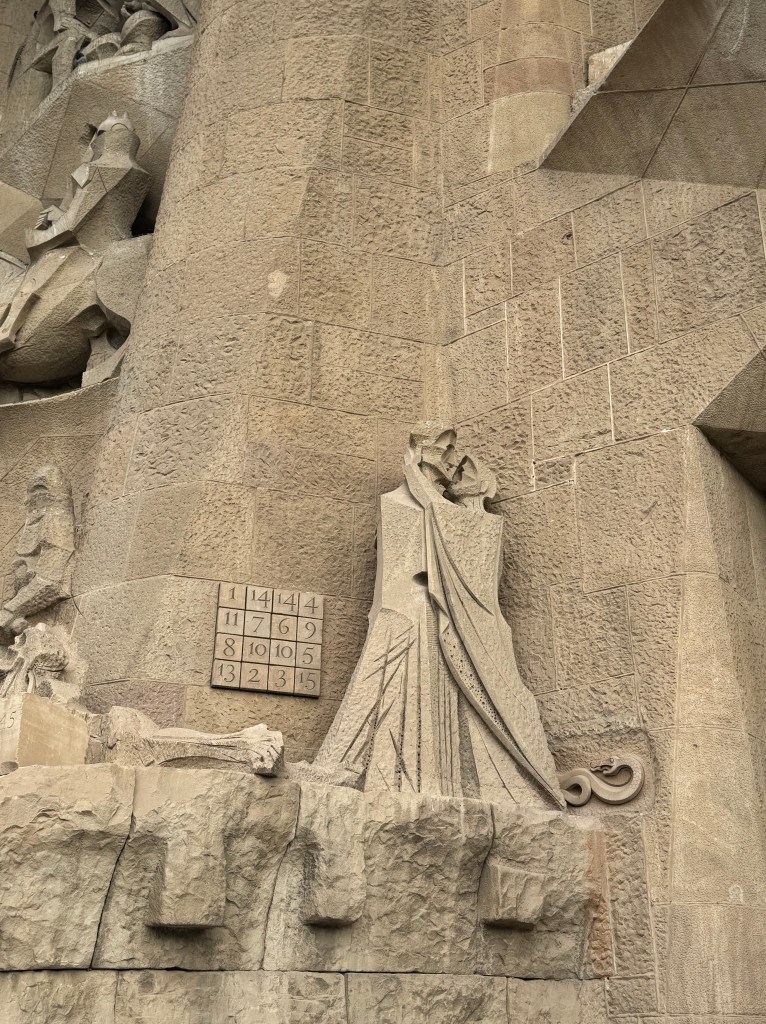
- There are three exterior facades that tell the story of Jesus Christ – Nativity, Passion and Glory. We saw the former two, and there were so many juxtapositions. The Nativity facade is full of flora and fauna, and focuses on the organic elements surrounding Christ’s birth; conversely, the Passion facade is meant to depict the death of Jesus Christ, and all of the statues are blocky and very modern. There’s just so much symbology everywhere you look. For example, on the Passion facade, there’s a magic square (think sudoku board) that sums up to 33 in all directions, or the age of Jesus at crucifixion.
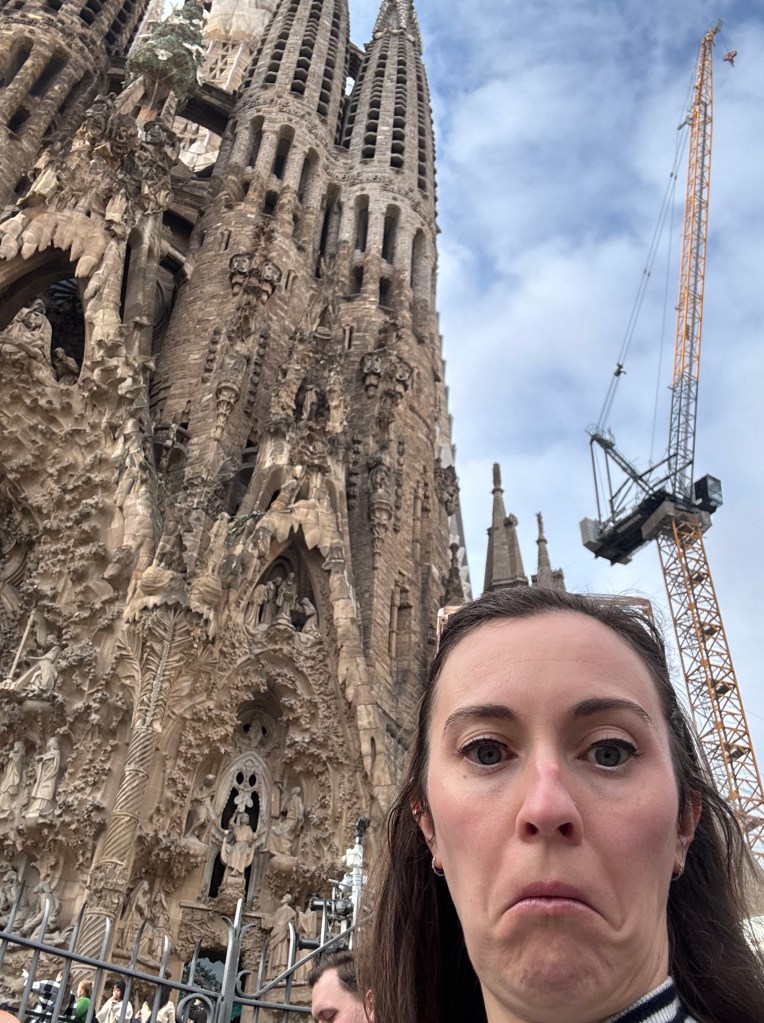

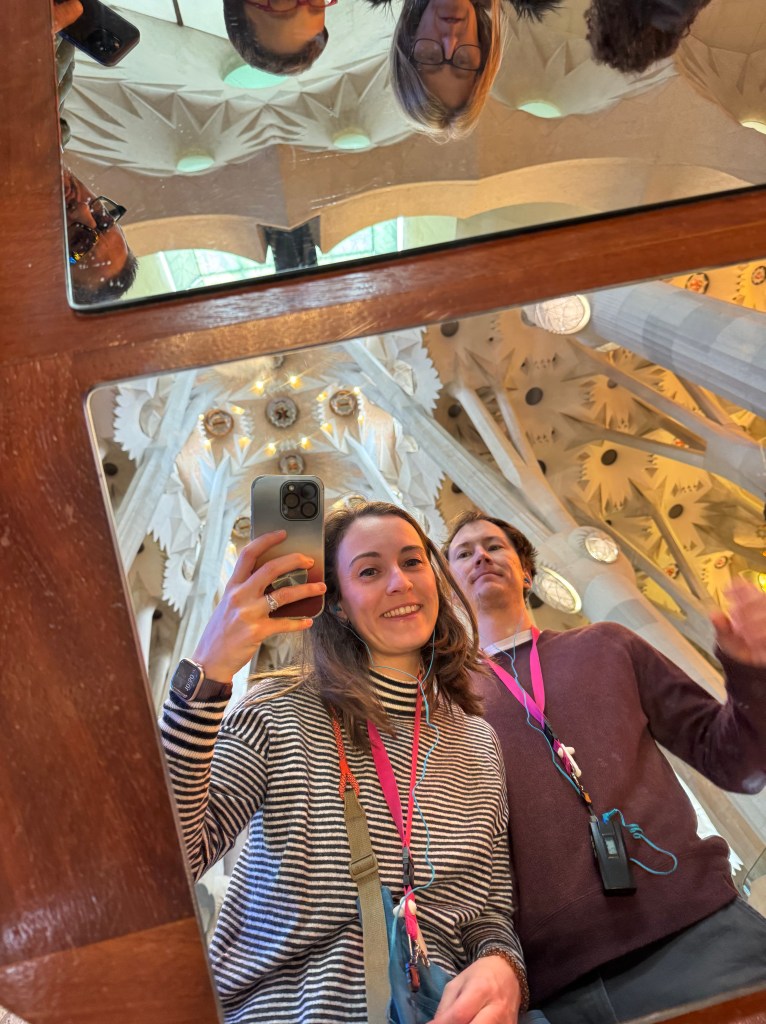
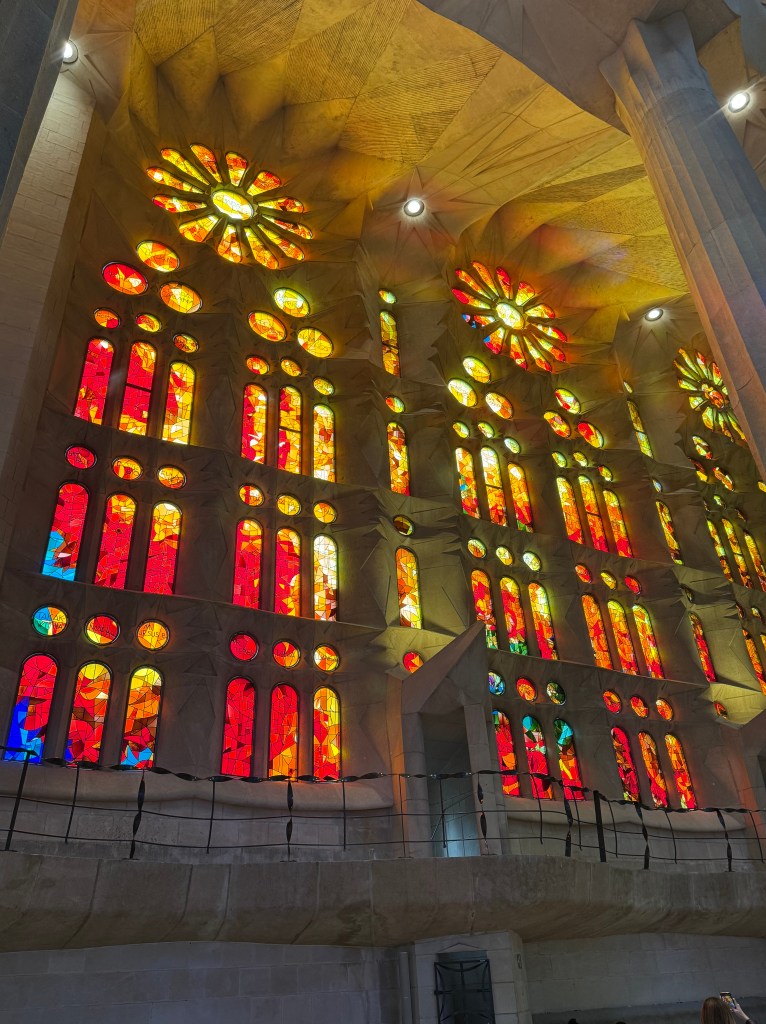


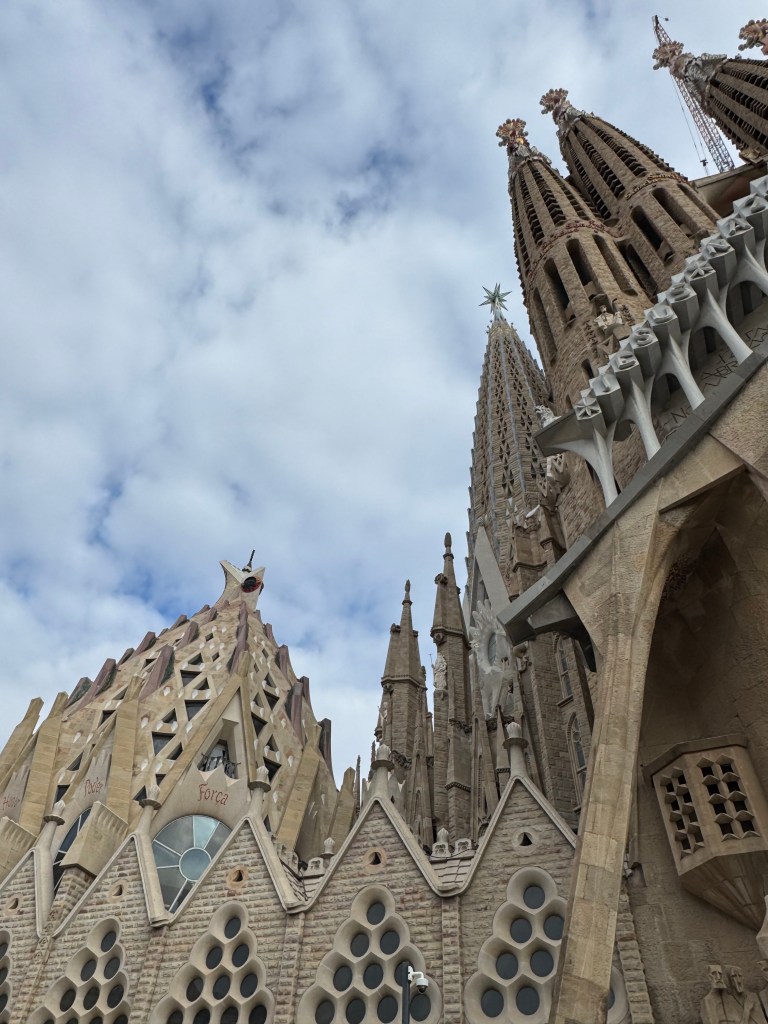
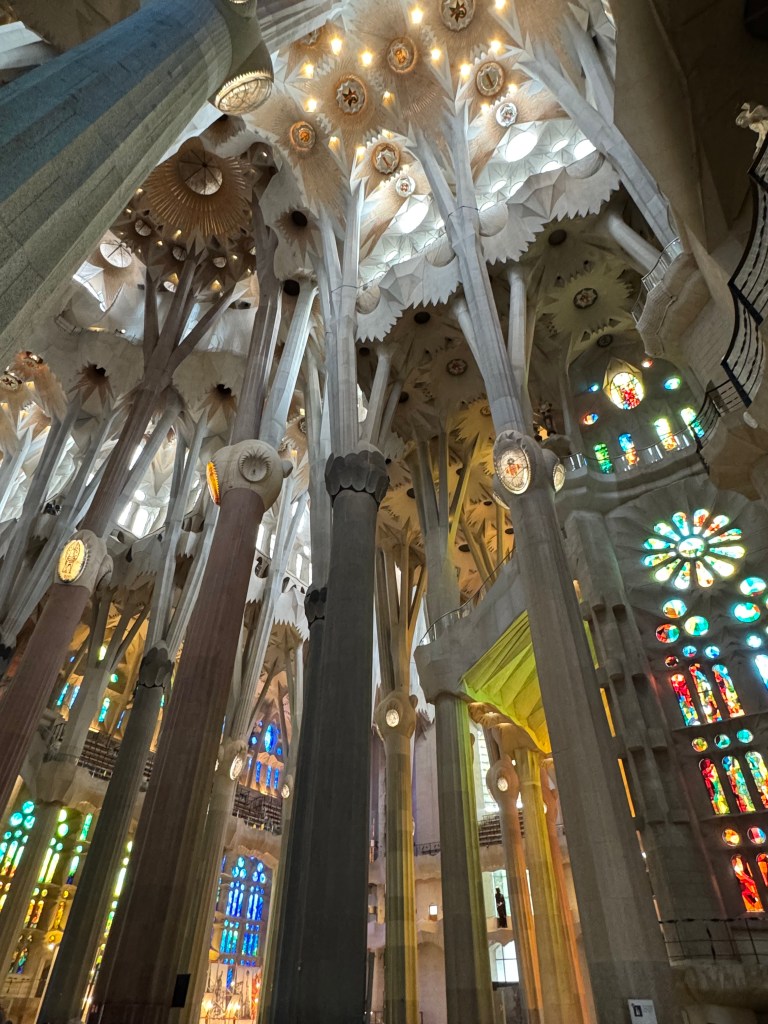
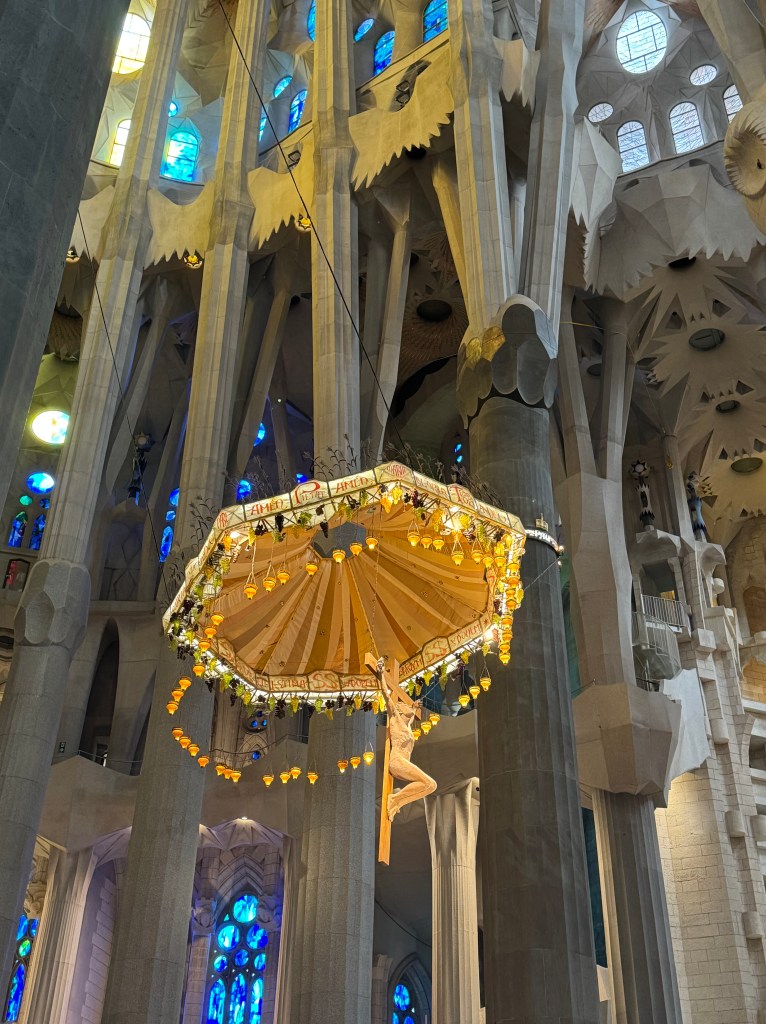


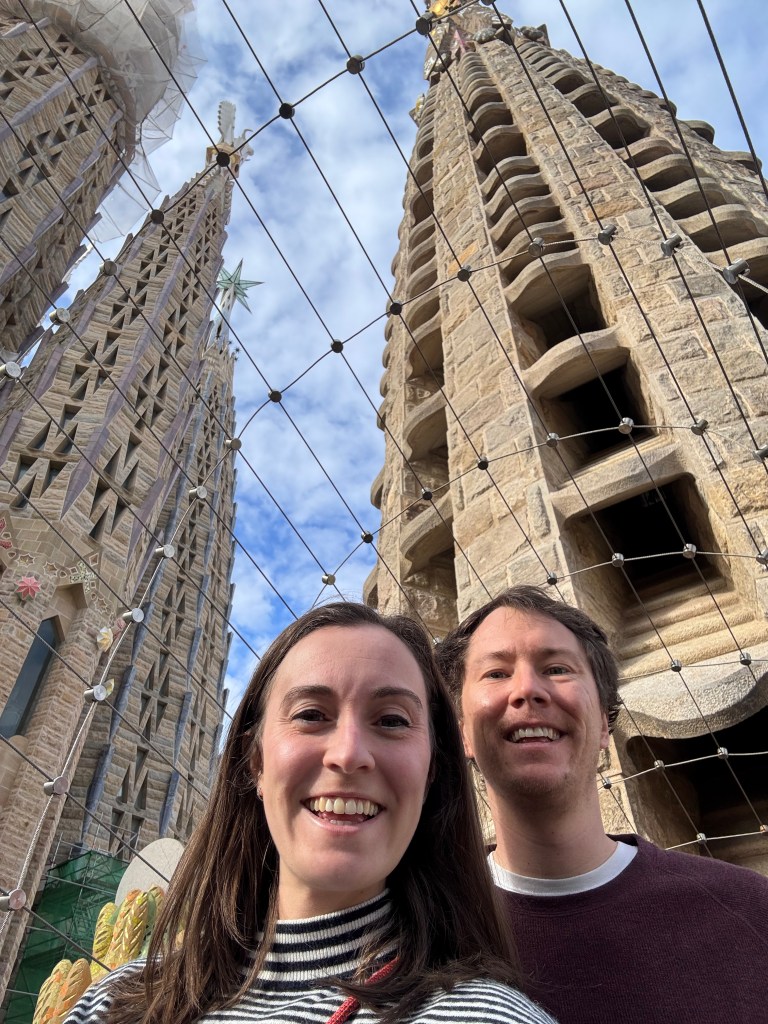
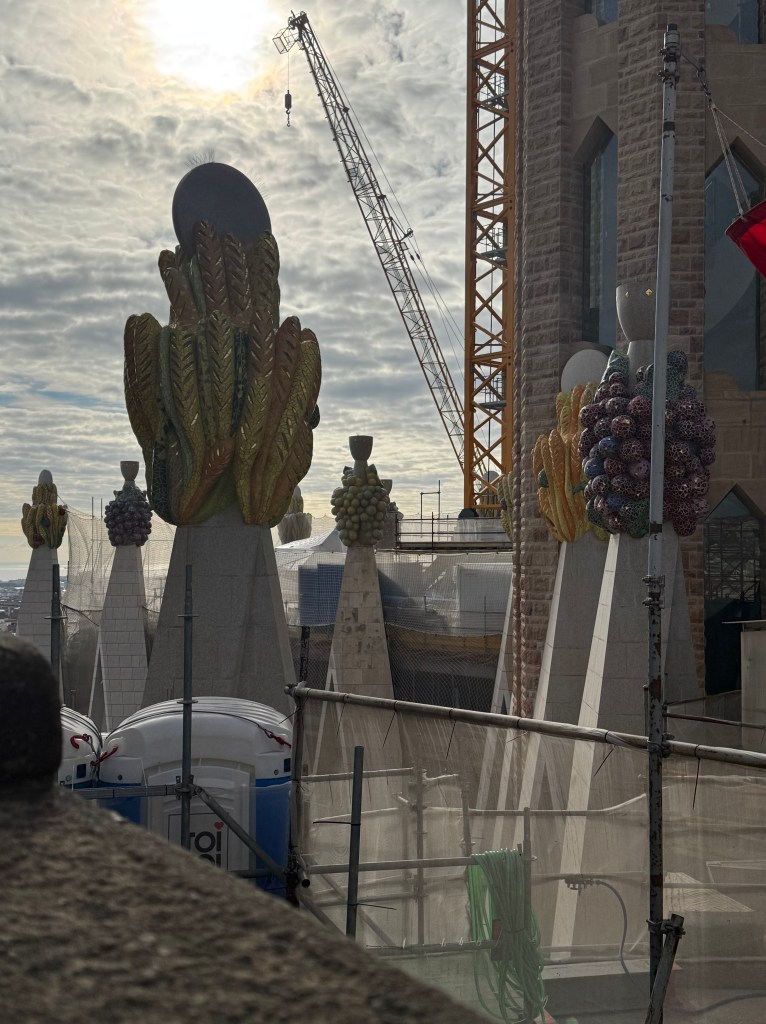

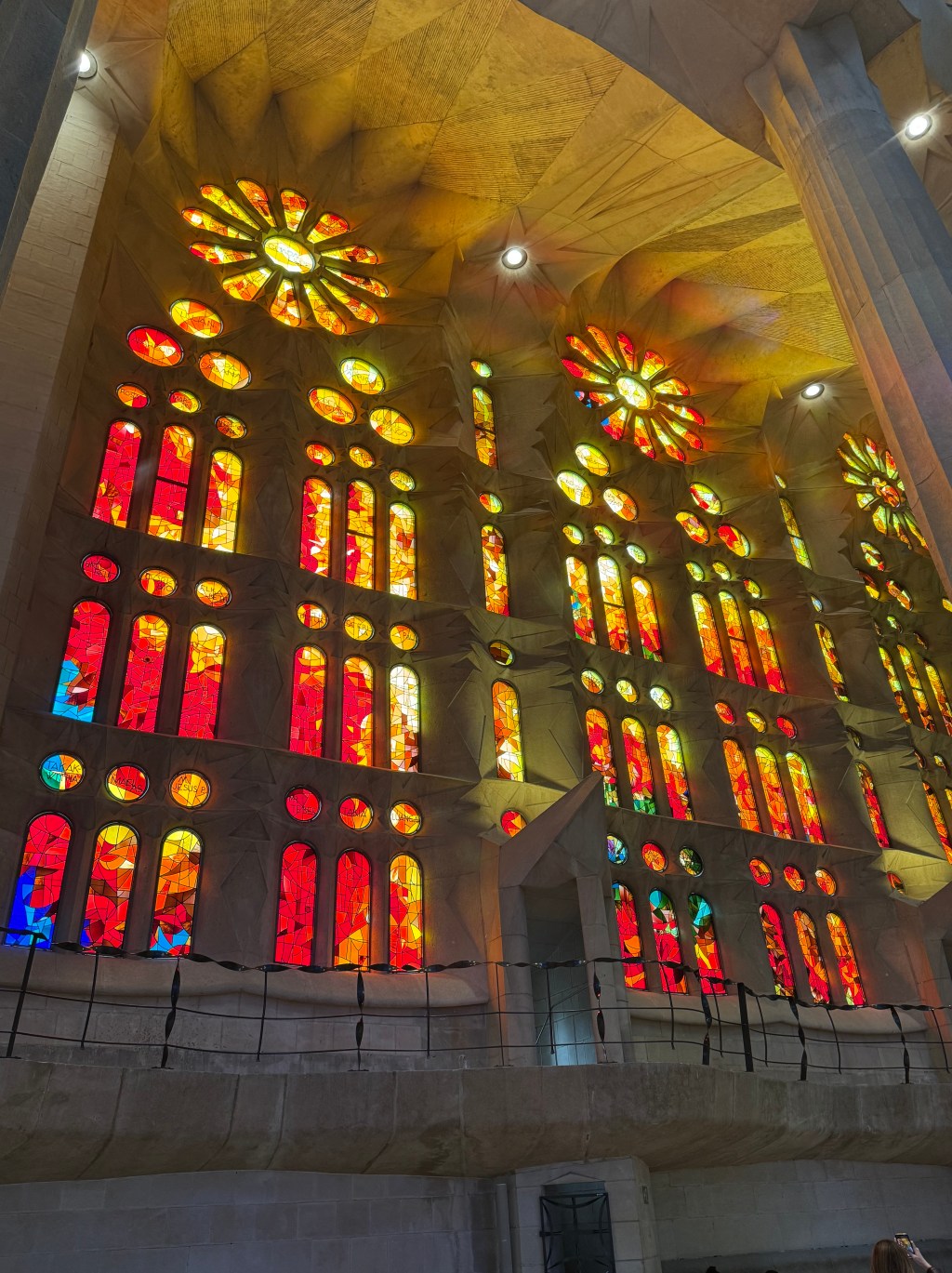
I especially loved all of the stained glass in the church – there is a rhyme and reason to the different cool vs. warm colors used on the different sides of the church, and the windows are meant to illuminate the church in different ways throughout the day based on the position of the sun. After walking through the interior of the church, Gaudi’s school outside, and the exterior of the facades, we went to the elevator to ride up to the Nativity Tower for our 12PM slot. We essentially took the elevator up, walked along the walkway to another tower, and then walked the winding staircase back down to the base of the church. It was cool to be up close to the “fruit towers” (yes, specific fruits like oranges, grapes and cherries representing various seasons) and see other various oddities on different parts on the tower.
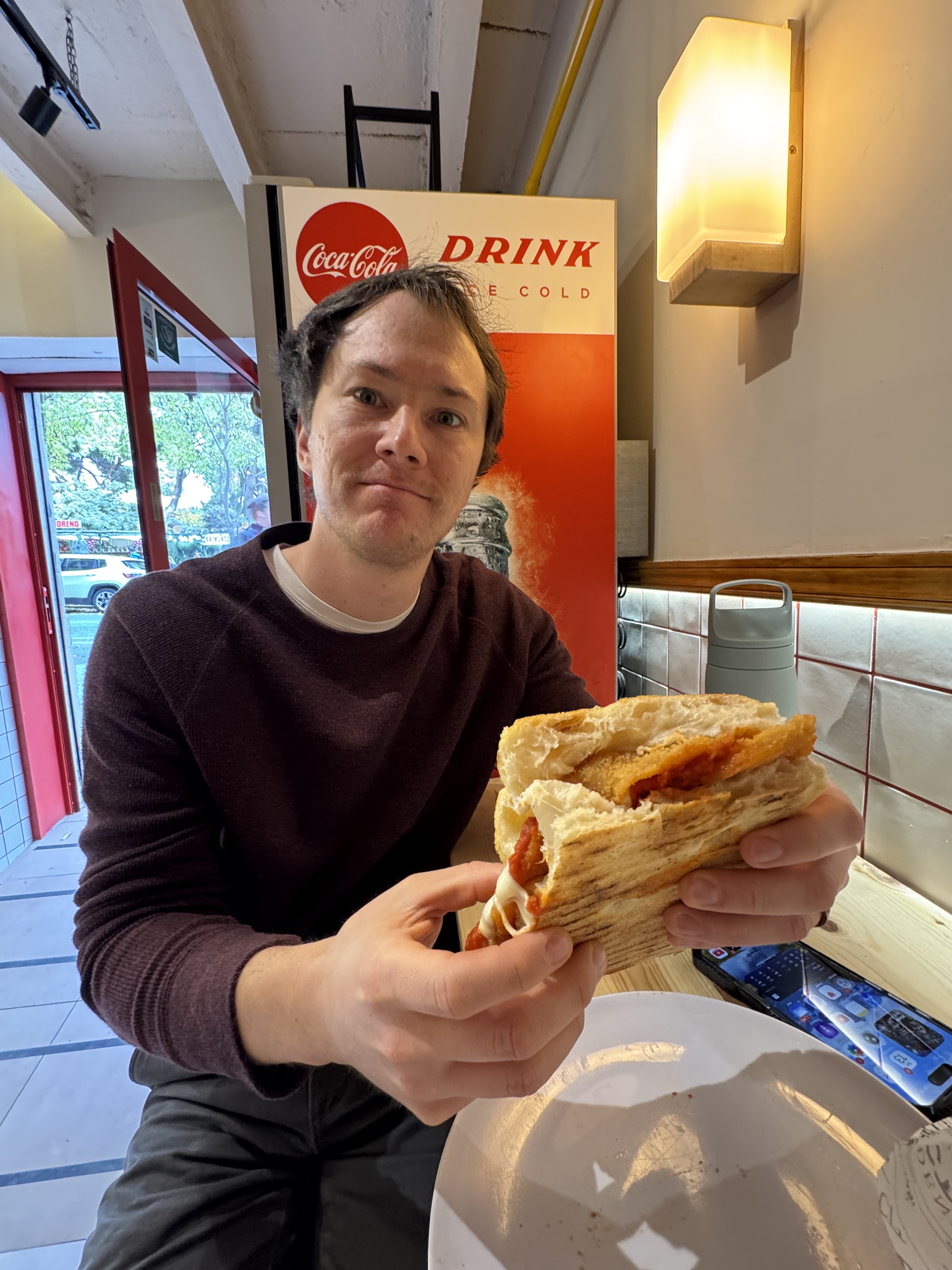
After two hours of being lost in the mind of Gaudí, we exited the church and walked around the Christmas Market that was right outside. We then went to Tuscania Lab for a delicious Italian sandwich and stumbled upon another Christmas market (this felt more like a farmer’s market with local products) on Las Ramblas where we got glasses of vermut (herb-infused fortified wine) and people-watched for a bit before heading back to our Airbnb for a quick rest before our evening plans – Barcelona fútbol game!!

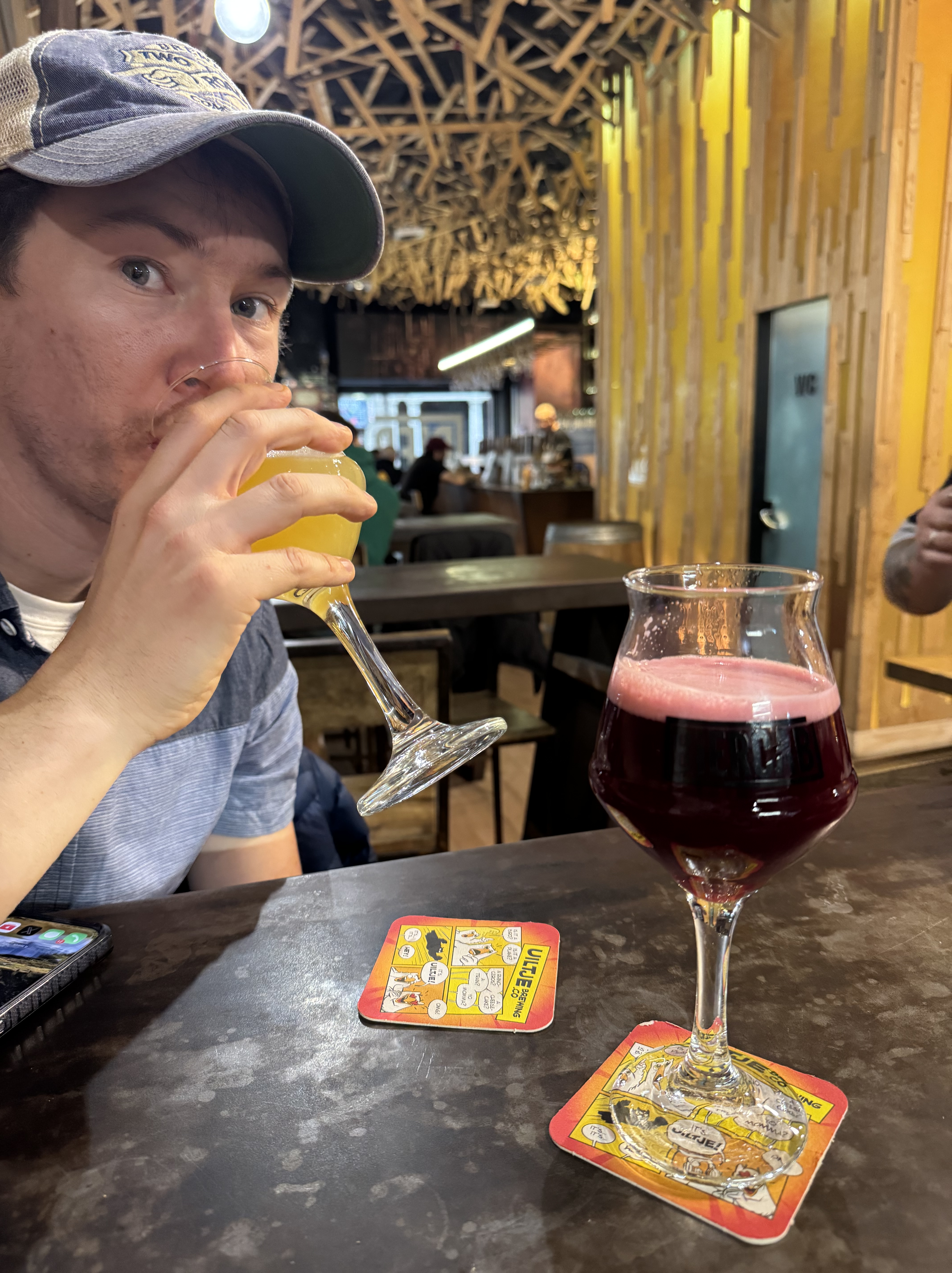
With Camp Nou undergoing construction, we weren’t sure we’d be able to get tickets for a game but luckily we scored some pricey tickets for Barcelona vs. Osasuna. Before taking an Uber to the game, we went to BierCab, a fun craft beer spot (at the end, I had my own sticker to add next to the collection of other Colorado-based brewery stickers).

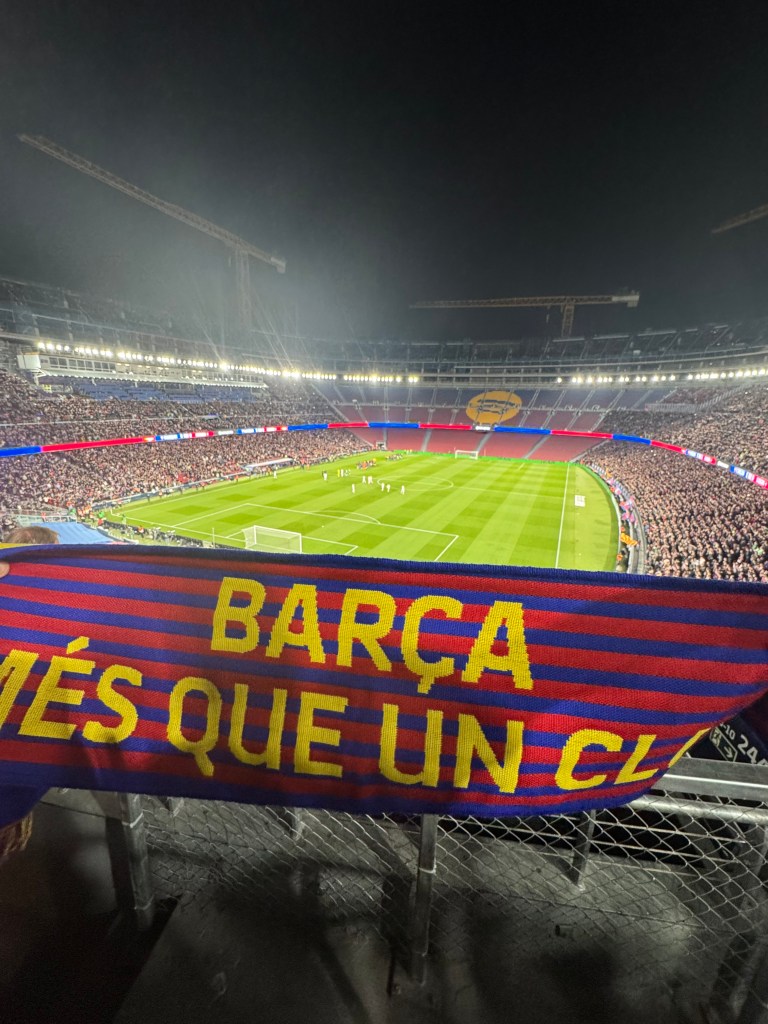
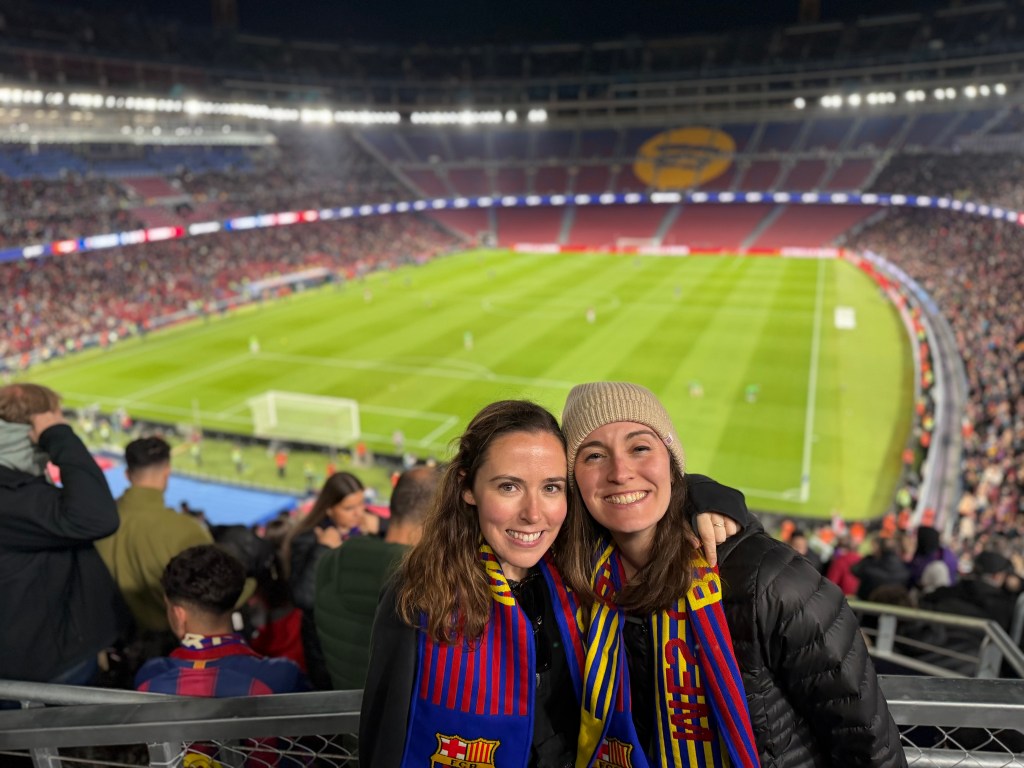
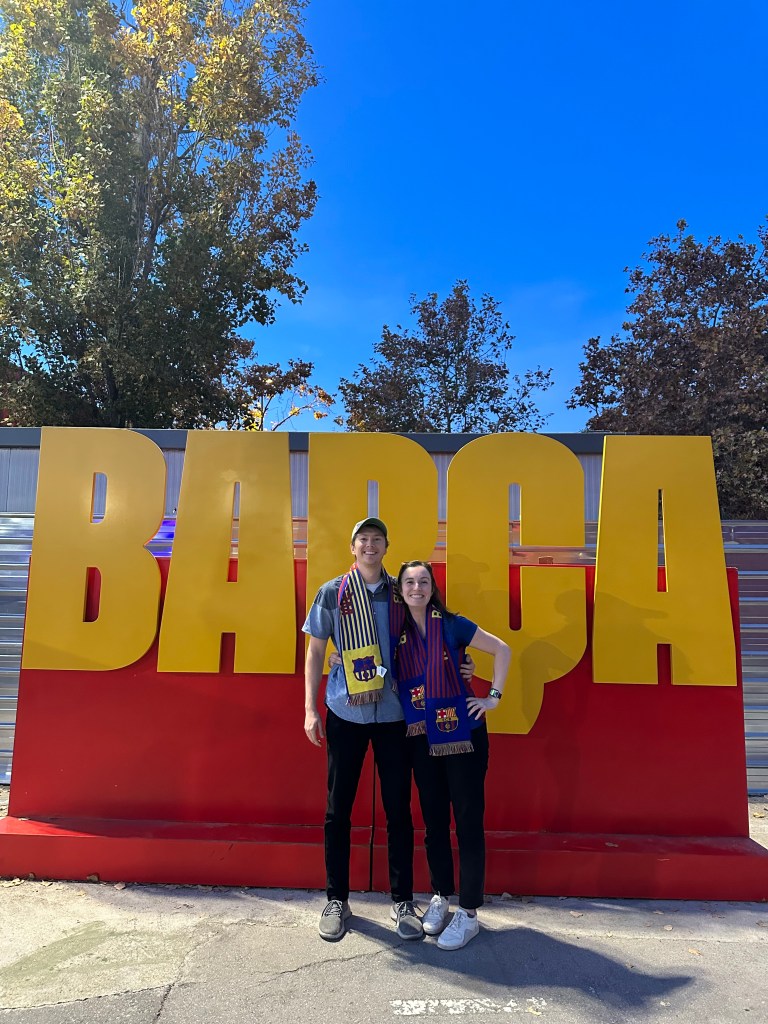
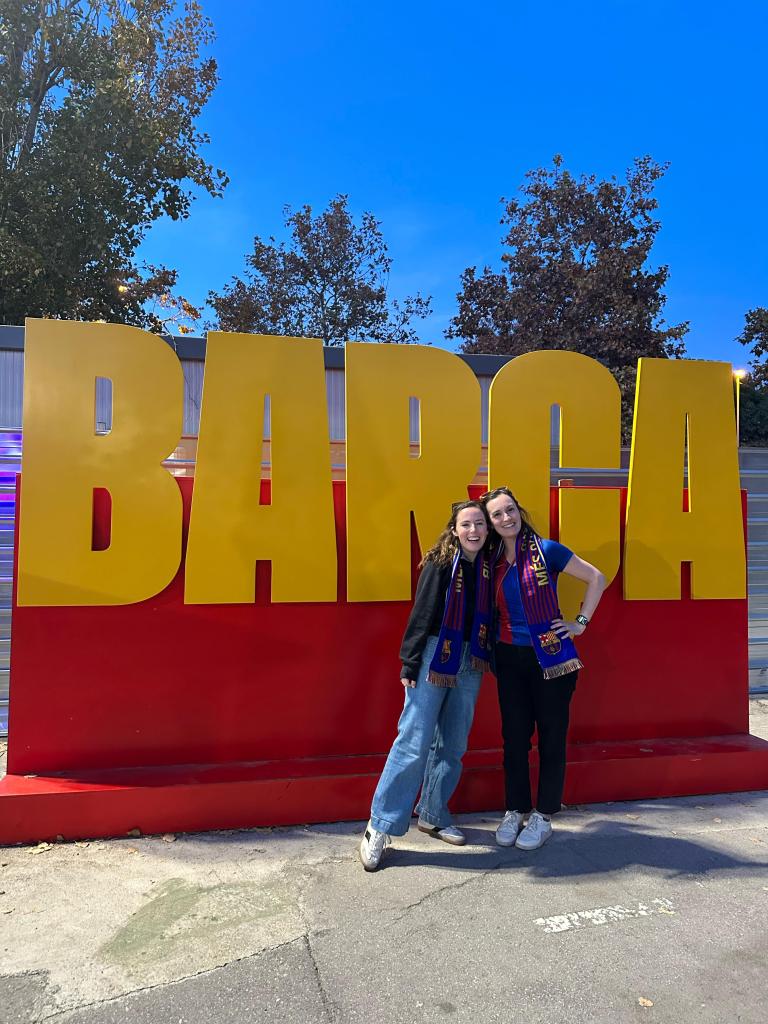
We got there early enough to get some drinks in the bar/restaurant section outside the gates (you can’t bring drinks into the stadium, nor can you buy any beer inside) and after a nice radler, we made our way into the stadium to watch the game! The experience was different than American sports – no flashy jumbo-tron (so no replays), no big intermission show, no food and drink carts every gate – it was kinda nice to just be there to watch the sport without distractions! Barca ended up winning 2-0 and it was fun waving our scarves around and listening to all the team chants. We of course had to go to the team store after the game and get some swag – I’m not a huge sports fan but telling myself I’m going to be a Barca fan and follow the team now!


After the game, we had to eat of course so as true Spaniards we had a late dinner at Casa Amàlia before walking back to the Airbnb – great first full day in Barcelona!
Day 10 – December 14th
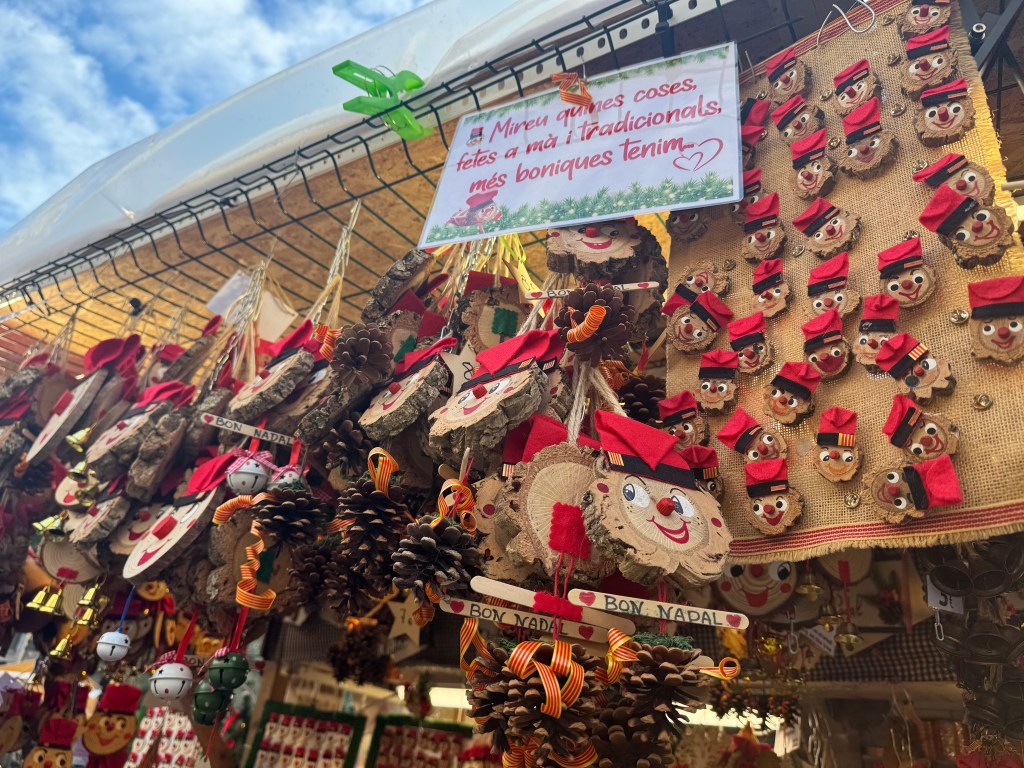
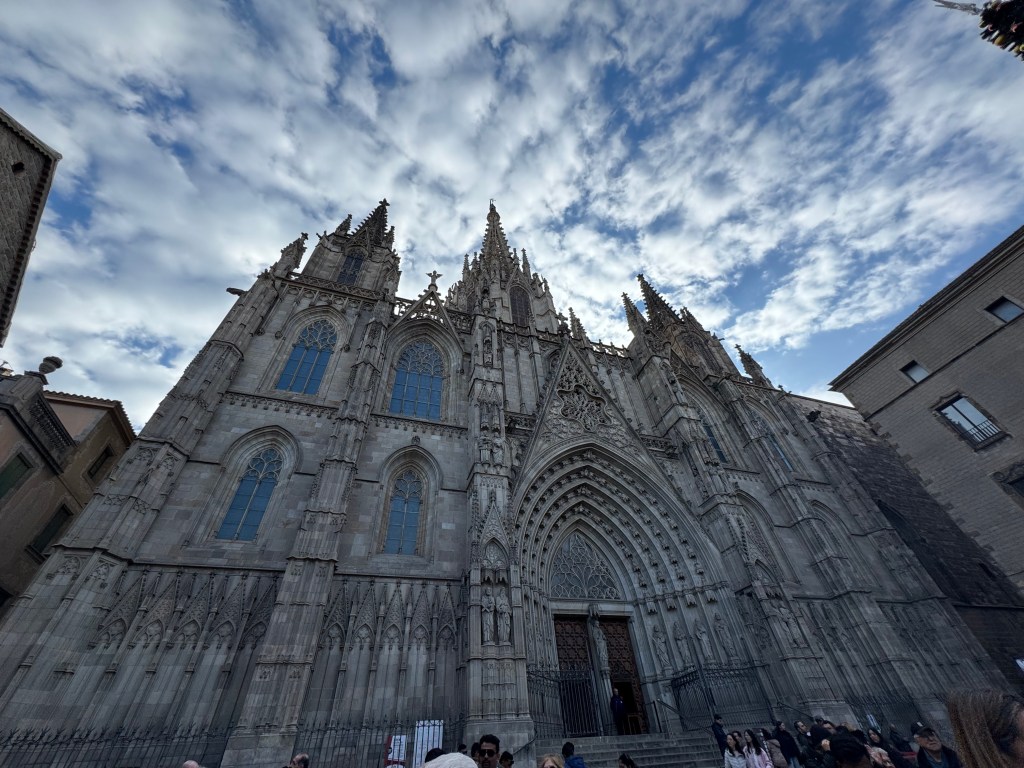
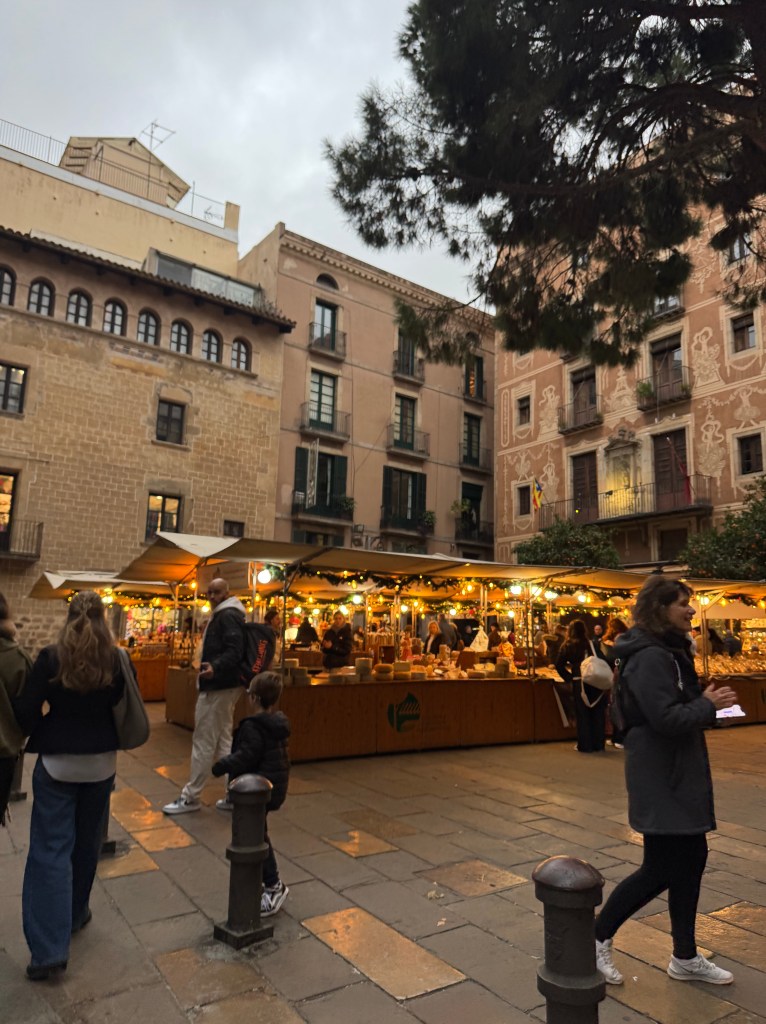
Sad – this was our last full day of the trip, but we had a good amount of activities planned! The day started with a free walking tour of the old section of the city (Gothic Quarter and Borne). We met out front of the Barcelona Cathedral, where there happened to be a huge Christmas market right outside in the square.
We got to visit and learn about Catalan history at all of the following locations around the city; the history of Barcelona is almost too much to comprehend, with its history spanning over two millennia!
- Cathedral of Saint Eulalia
- Remains of the Roman aqueduct
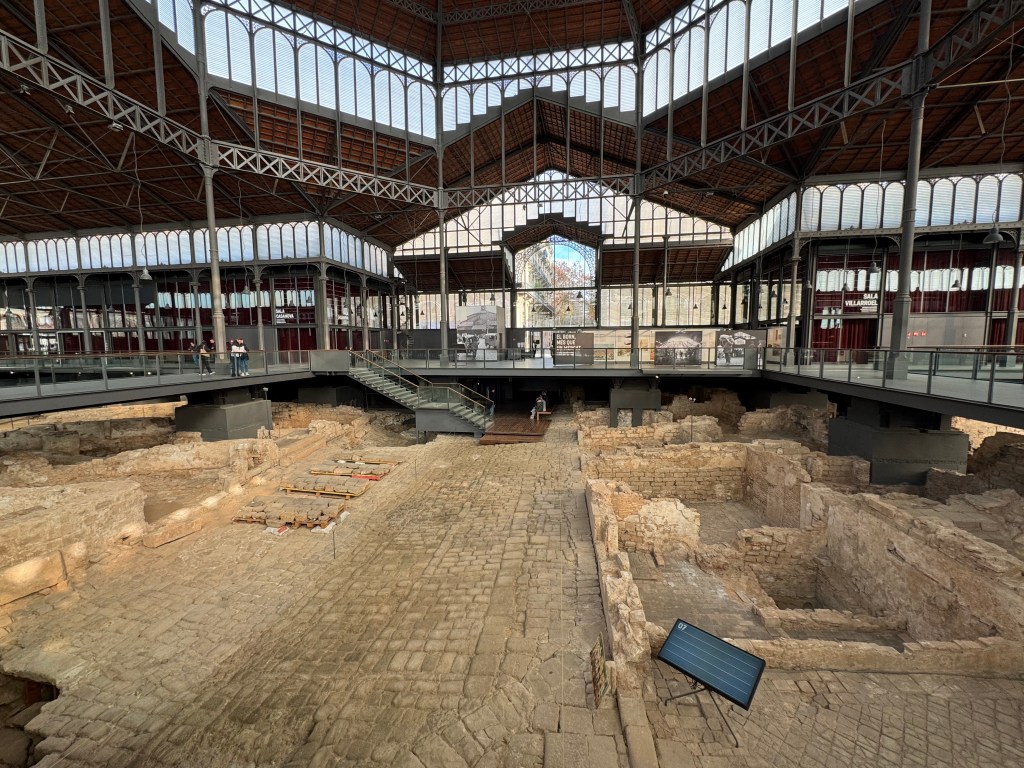
- Borne Market
- The “Born Market”, or Mercat del Born, is a cast-iron building that used to be a vibrant social and cultural meeting place. Now, it showcases the 18th-century ruins beneath it, where the original market structure is now preserved for all to visit.
- Les Moreres Cave
- Saint Mary of the Sea
- Roman Wall
- King’s Square
- Also known as the Plaça del Rei, this is a historic Gothic square from the 14th-century, once part of the Royal Palace.
- Temple of Augustus
- Saint Philip Neri
- Jewish Quarter
- Also known as “El Call”, this historic area within the Gothic Quarter is famous for its narrow medieval streets and showcases the remnants of Jewish life.
- Sant Jaume Square
- Sant Miquel Square

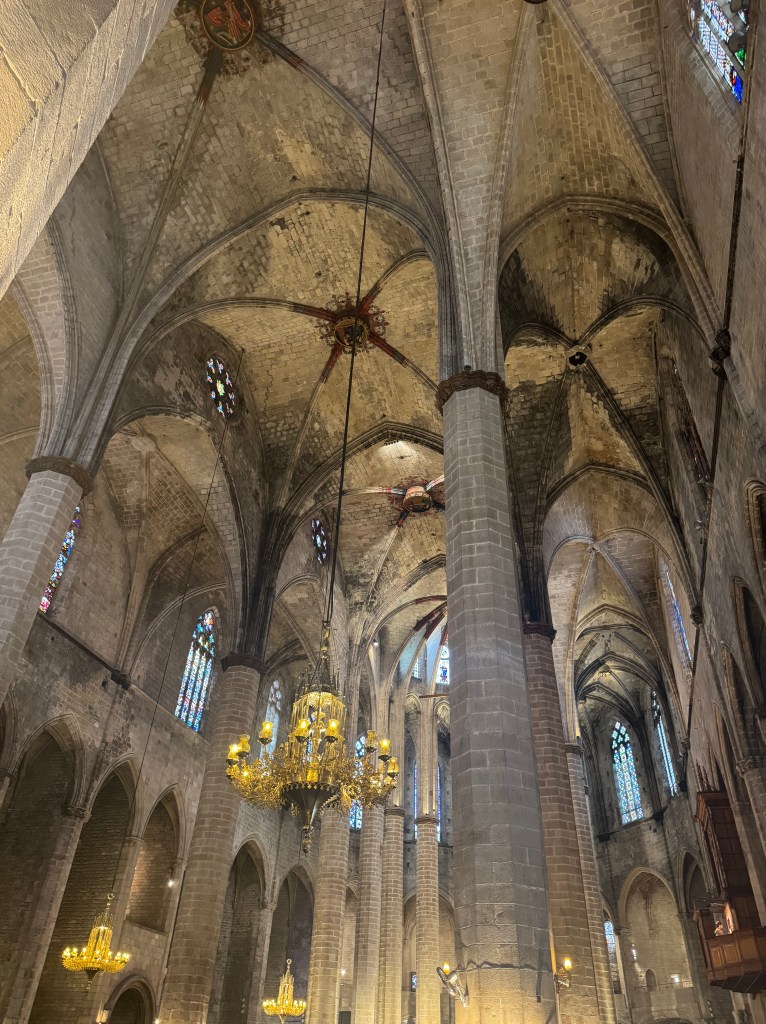

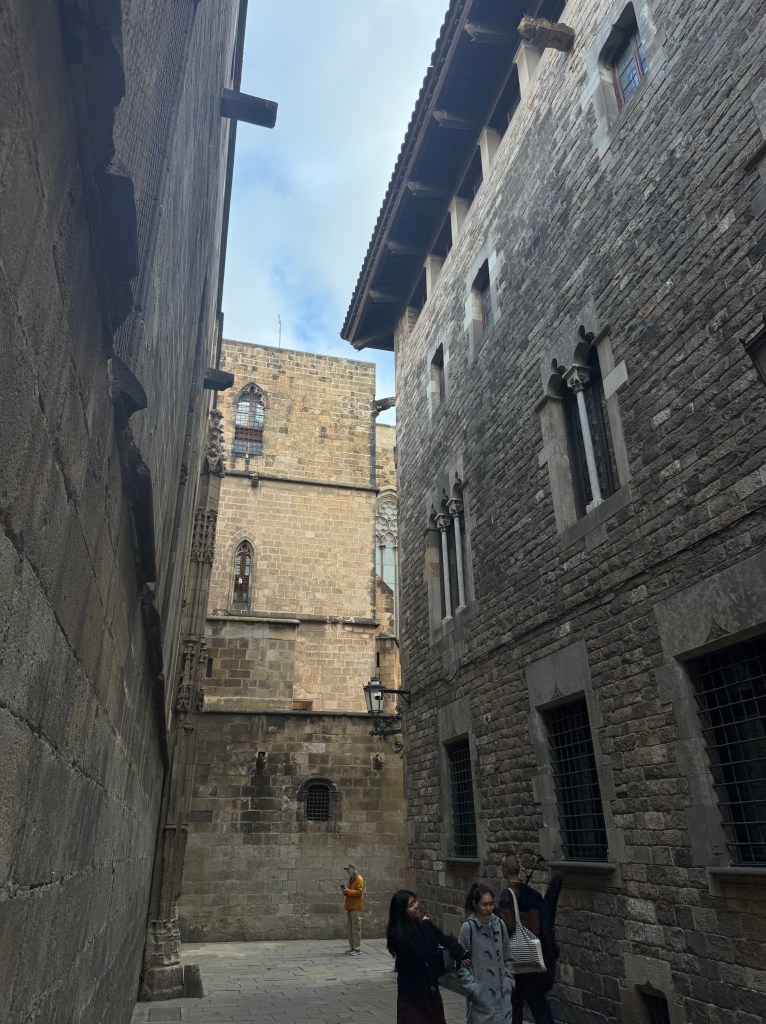
After working up an appetite, we were ready to get some lunch. We walked along Port Vell, where there was another smaller Christmas market, and unfortunately the place I wanted to check out didn’t have room. However, it worked out because we got to try LAMAI THAI TAPAS – a delicious Thai tapas restaurant! We got a papaya salad, pad thai, Suer rong hai and Lamai Verr. The restaurant only had enough seating for 3-4 groups, and it was a very cozy and small place. We got to see the cooks working right behind the counter and it was so good! Lovely fuel up spot.
The rest of the afternoon was pretty free until our Casa Batlló time slot, we browsed some more through the Barcelona Cathedral Christmas market, got some churros and Torrons, and wandered around the Gothic Quarter a little bit longer before going back to the Airbnb and relaxing a bit.


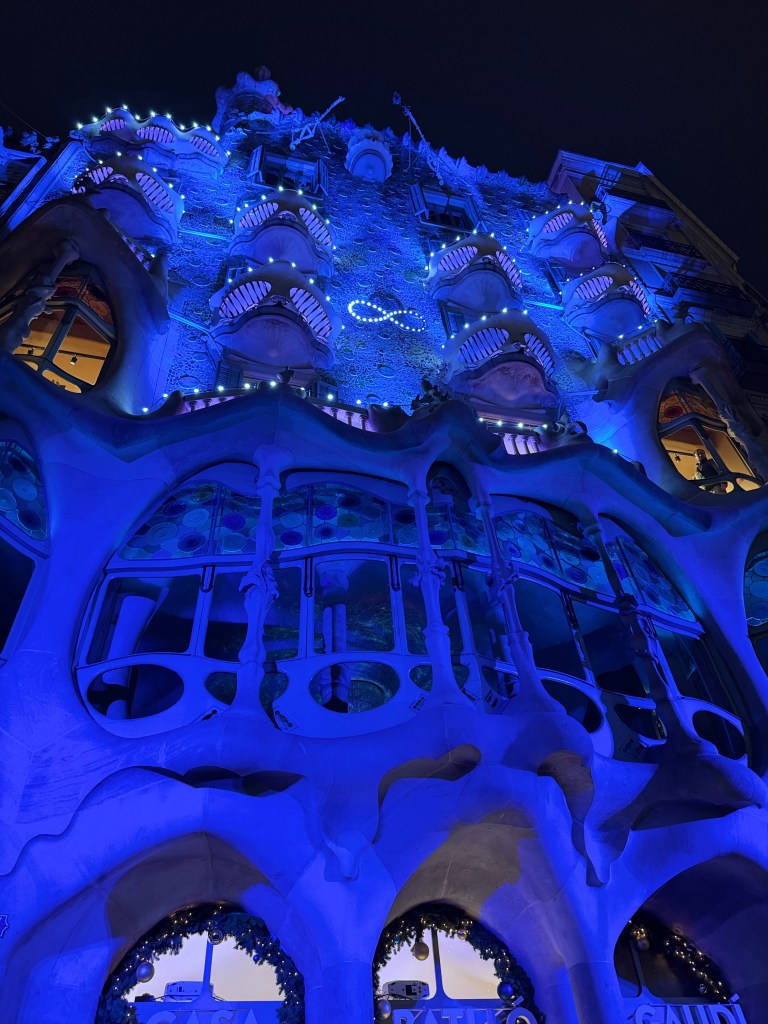
We walked the short distance to Casa Batlló for our 6:30PM “A Winter Night” night visit – an immersive tour of the UNESCO World Heritage site complete with special lighting, projections and an AI tablet. Each night during the holiday season, the house has a light show on the exterior facade where people can go and watch for ~ 5 minutes – I didn’t realize how publicly located this house was, nor that an actual family lived here at some point (and brought Gaudí in to design it!). More specifically, homeowner Josep Batlló gave Antoni Gaudí complete creative freedom to transform his family’s house. Instead of demolishing it, Gaudí completely transformed the façade and created a true work of art on the interior – see below!
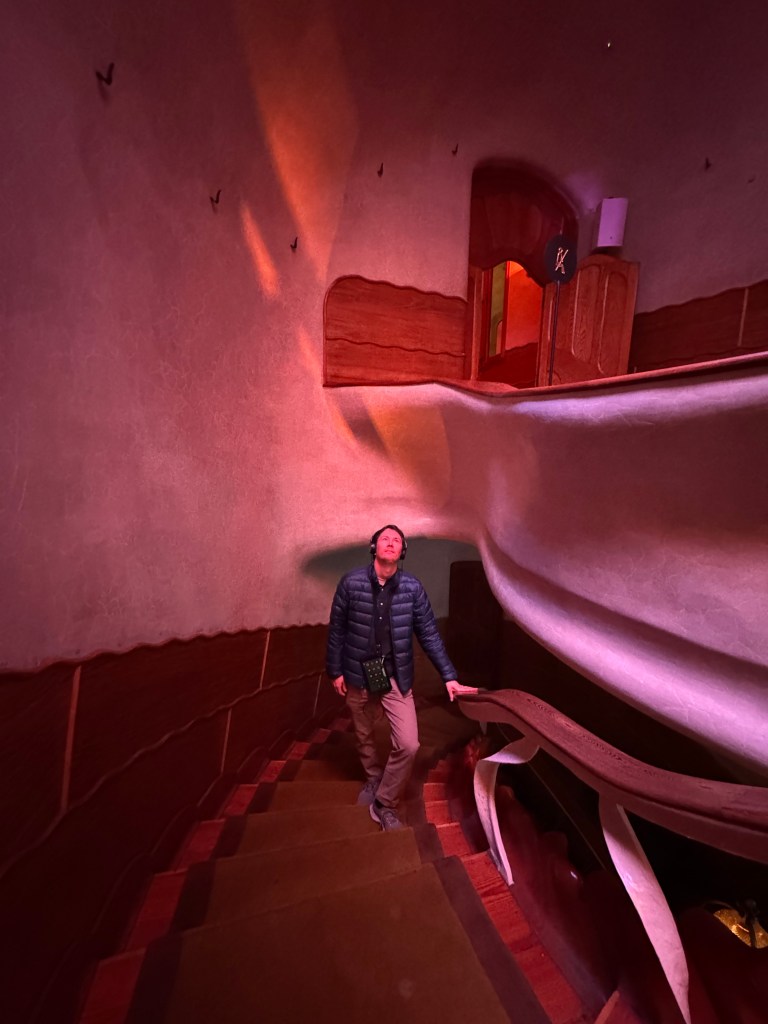
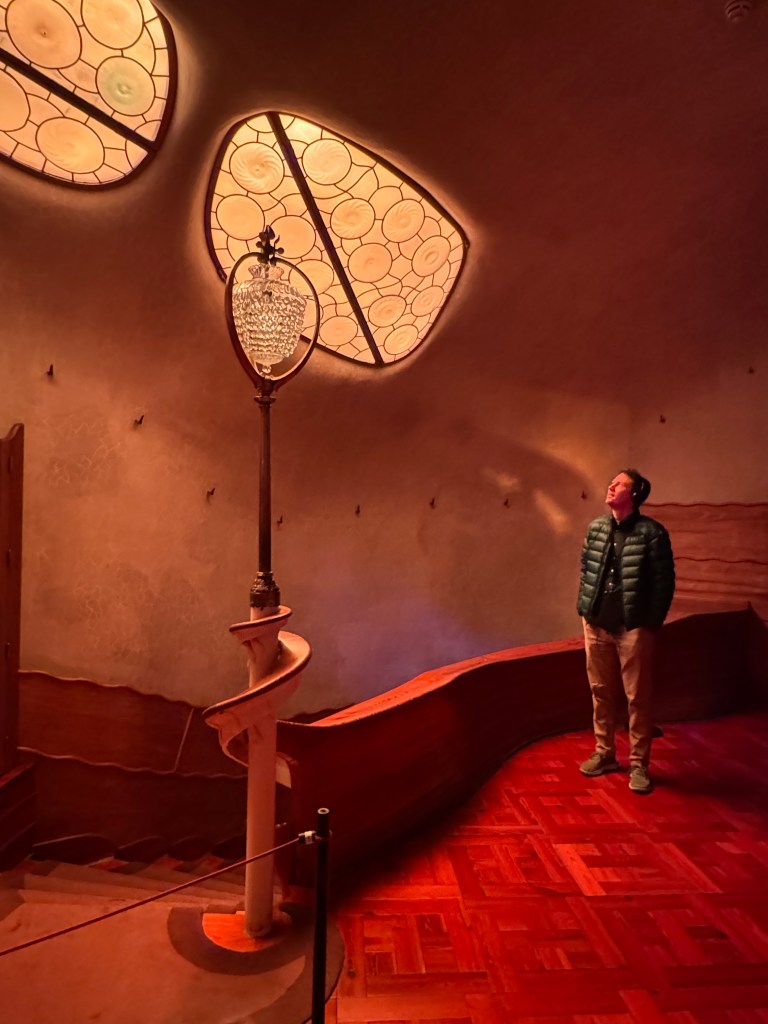

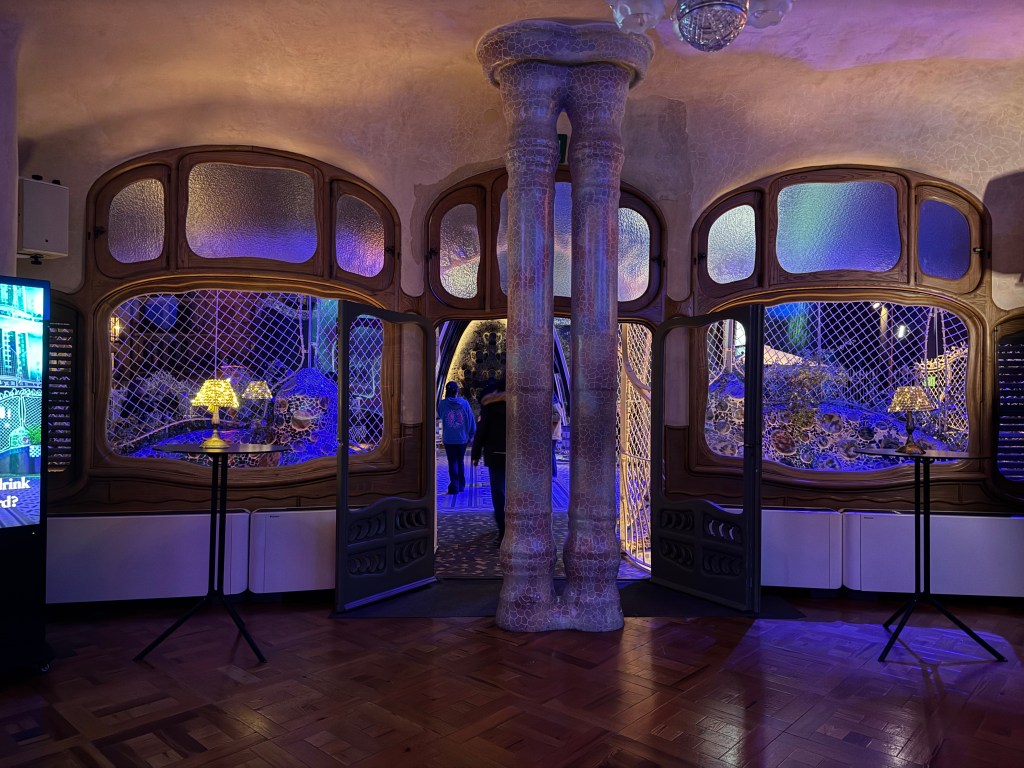


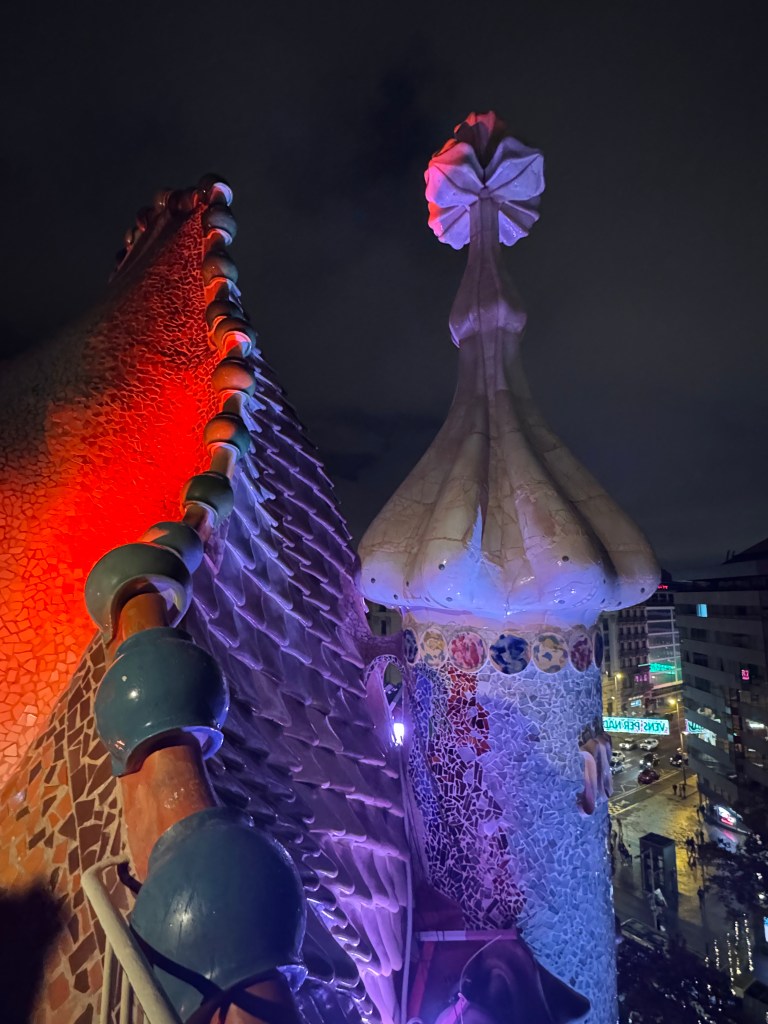
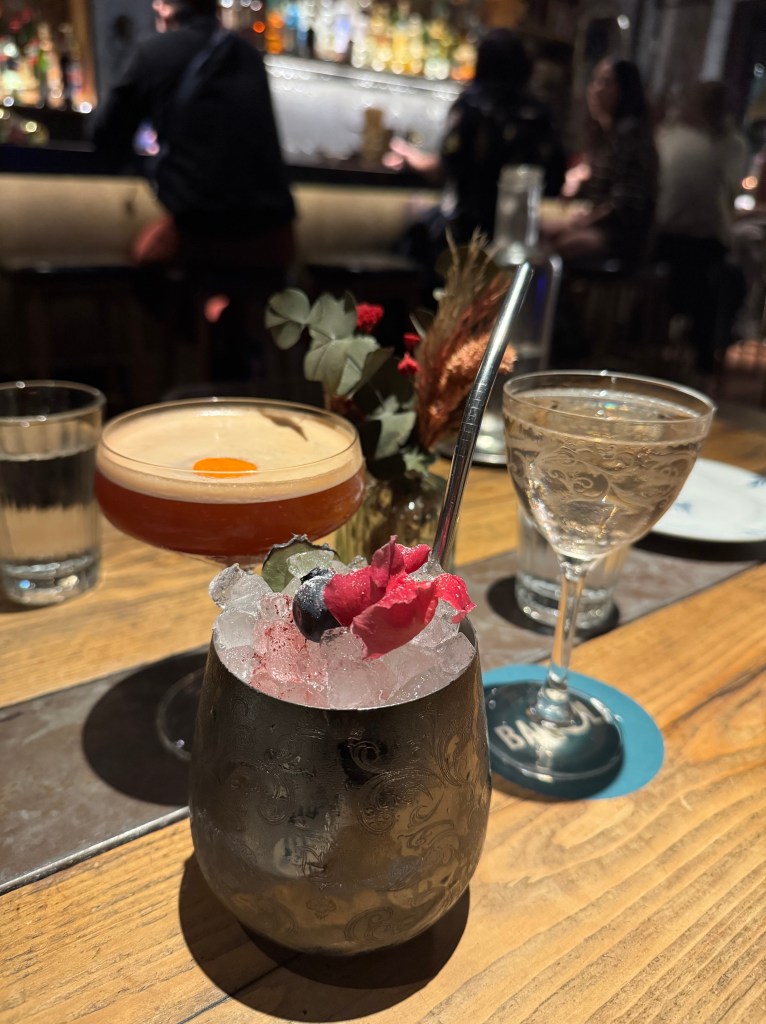
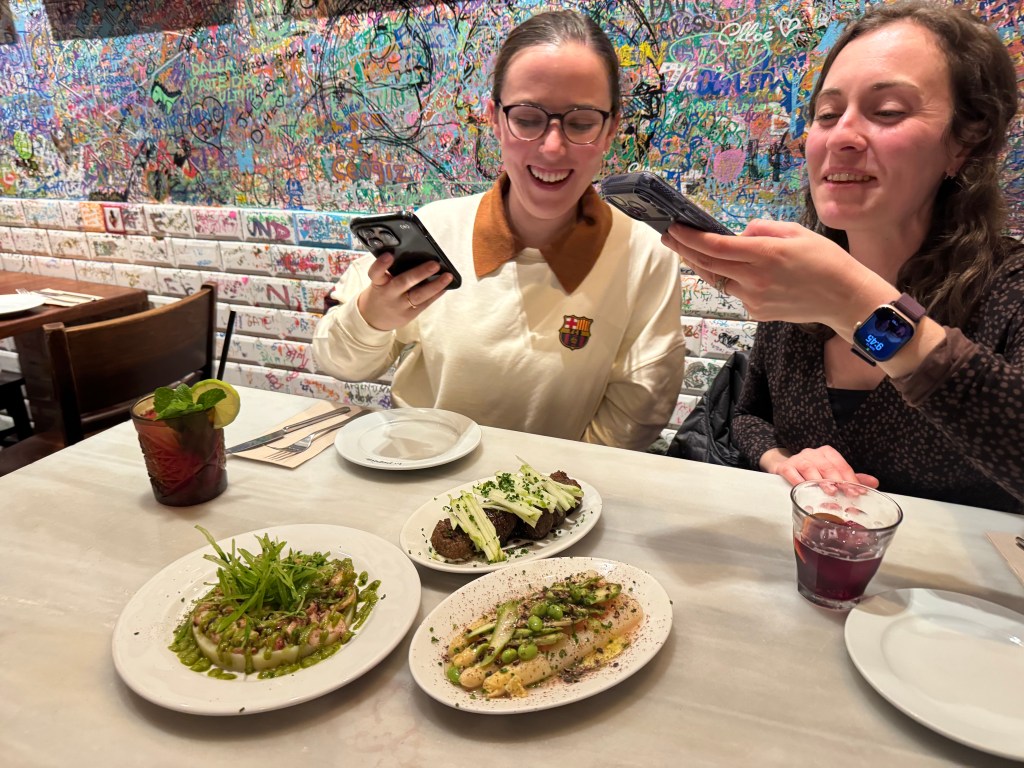
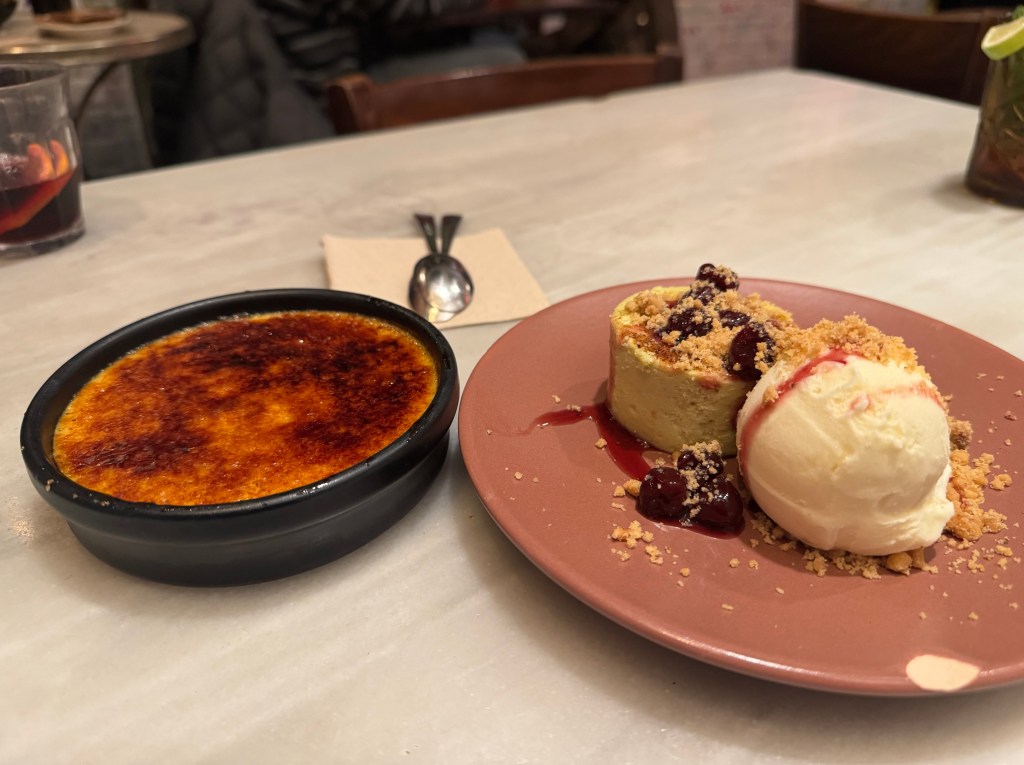
After wandering through this enchanting home, we worked up an appetite for the Last Supper, but not before getting delicious cocktails at Babula Bar 1937. Our last meal of our trip we booked reservations for was at La Pepita, another Spanish tapas bar. It was a very colorful and eclectic restaurant – there were scribbled notes all across the walls from various diners throughout the years (yes we left our mark too!). We got some white asparagus, beef cubes, fried eggplant, and ceviche – the ceviche was so good that we ordered a second plate, before stuffing ourselves with dessert. At the end of the meal, the staff came by with free digestif shots for us to choose from – lovely ending touch to a lovely meal. Afterwards, we made the responsible choice to go back to the Airbnb and pack our bags for our early flight the following AM.

Between the cultural history, the architecture, and the amazing food, we definitely loved our time in Spain and would love to go back and explore other parts of the country!
 Tiff & Jared's adventures
Leave a comment