
Seville
Day 4 – December 8th
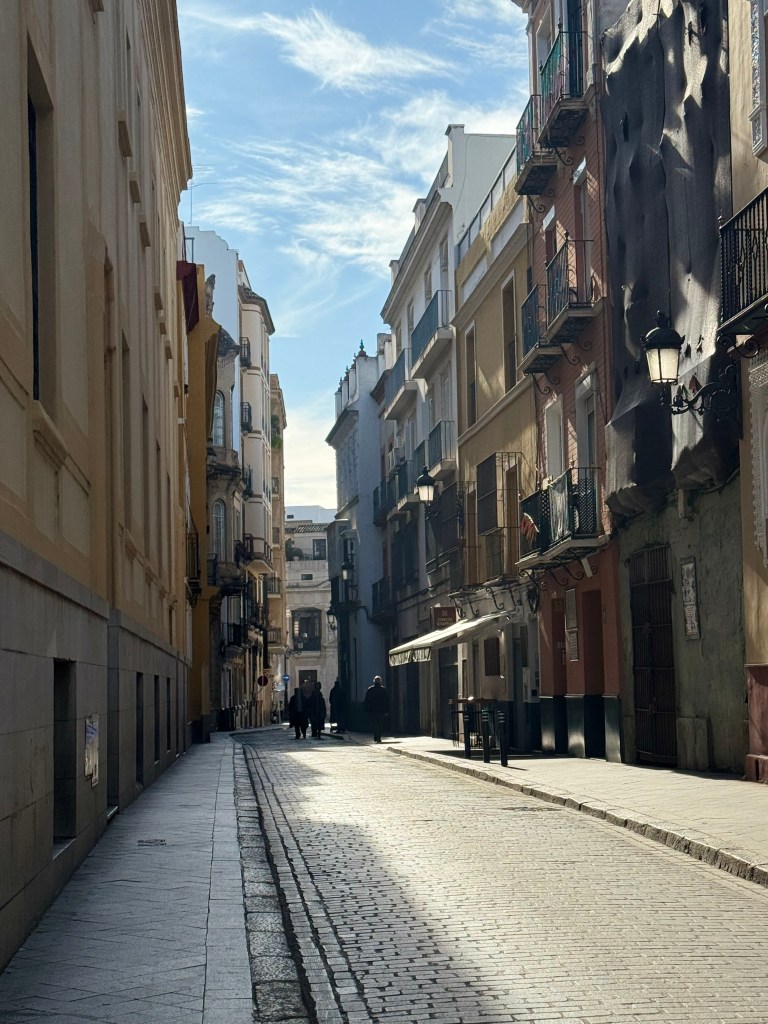
The first morning was rough and started quite early. We landed in the city around midnight local time, and were able to secure an Uber for a quick ride to the historic center of Seville to our hotel Eurostars Sevilla Boutique. We didn’t expect how narrow the streets would be – it was almost comical driving through the various winding roads that in no way looked like they could support two-way traffic. Once we were within 200 meters or so of the hotel, we had to get out and walk because our Uber car simply couldn’t make the turns! We felt completely safe walking the streets of Seville at 1AM. After a quick check-in, we crashed until we had to wake up for our 10AM tour in the morning (yes, yes a little ambitious).

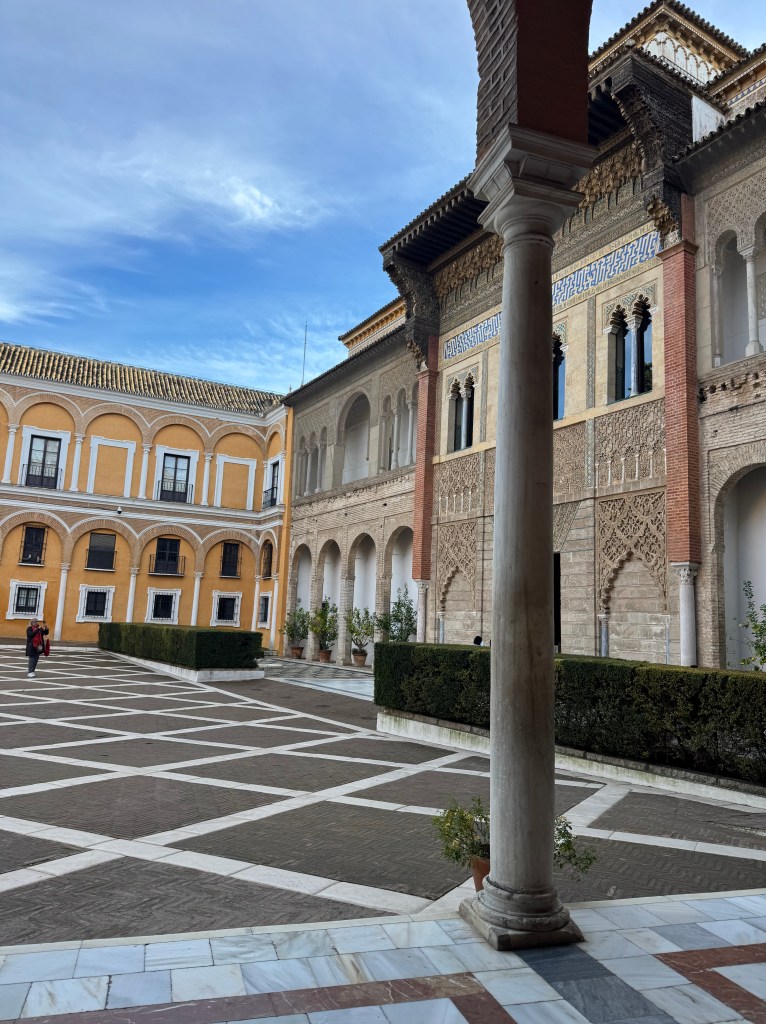
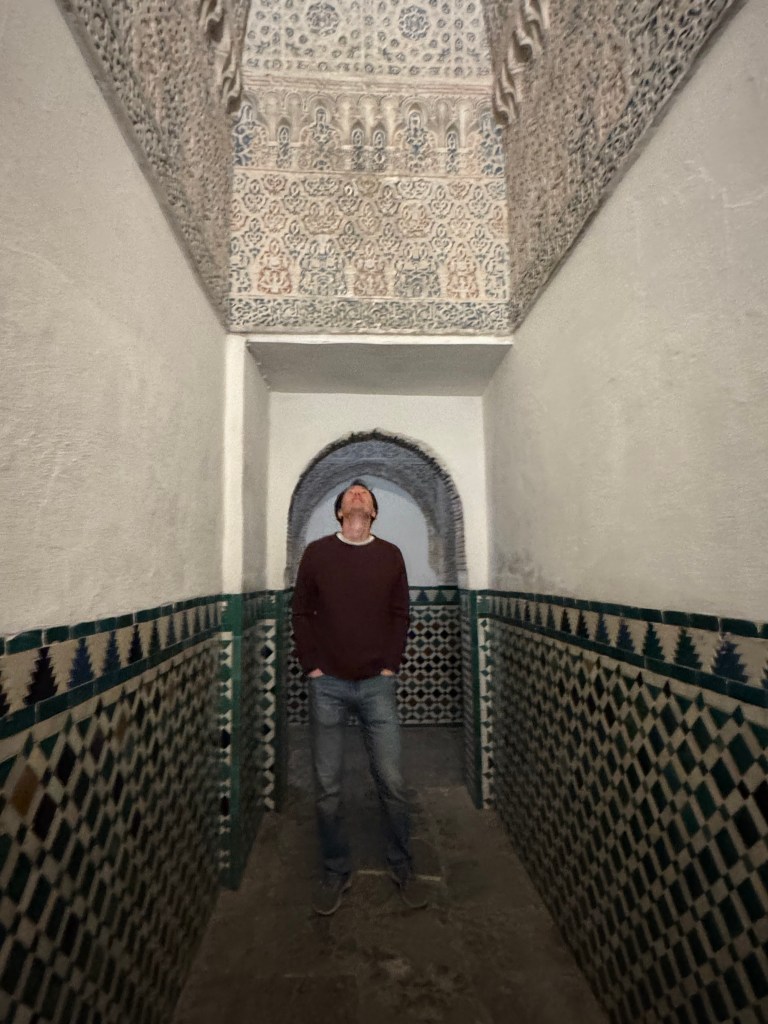
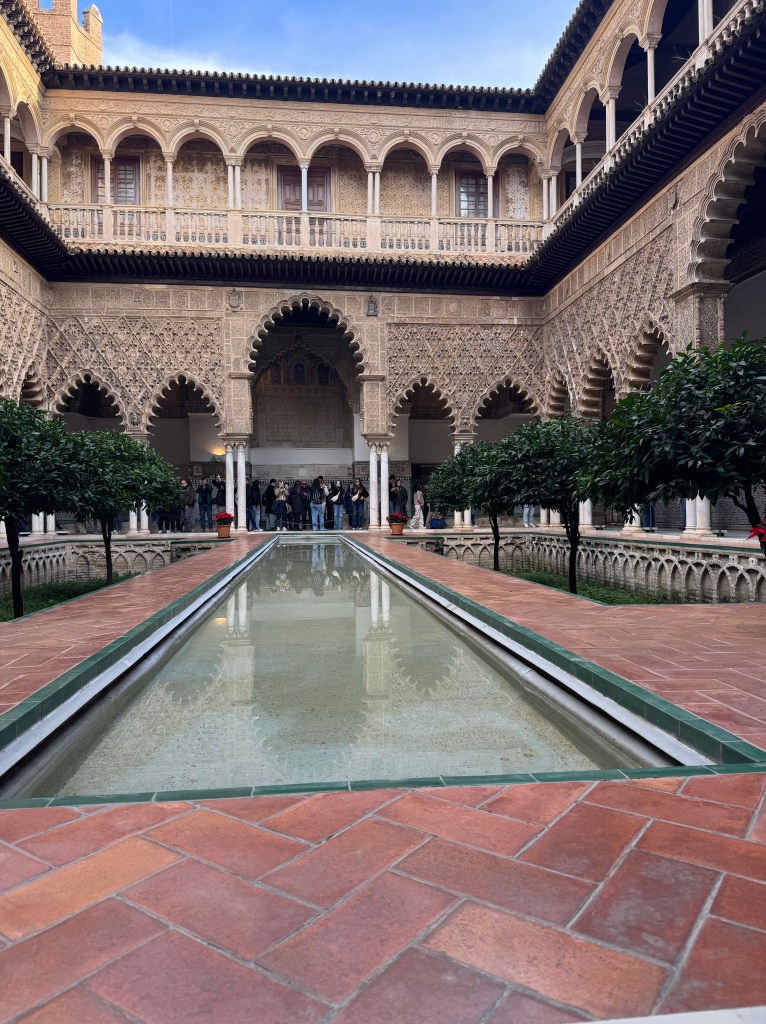
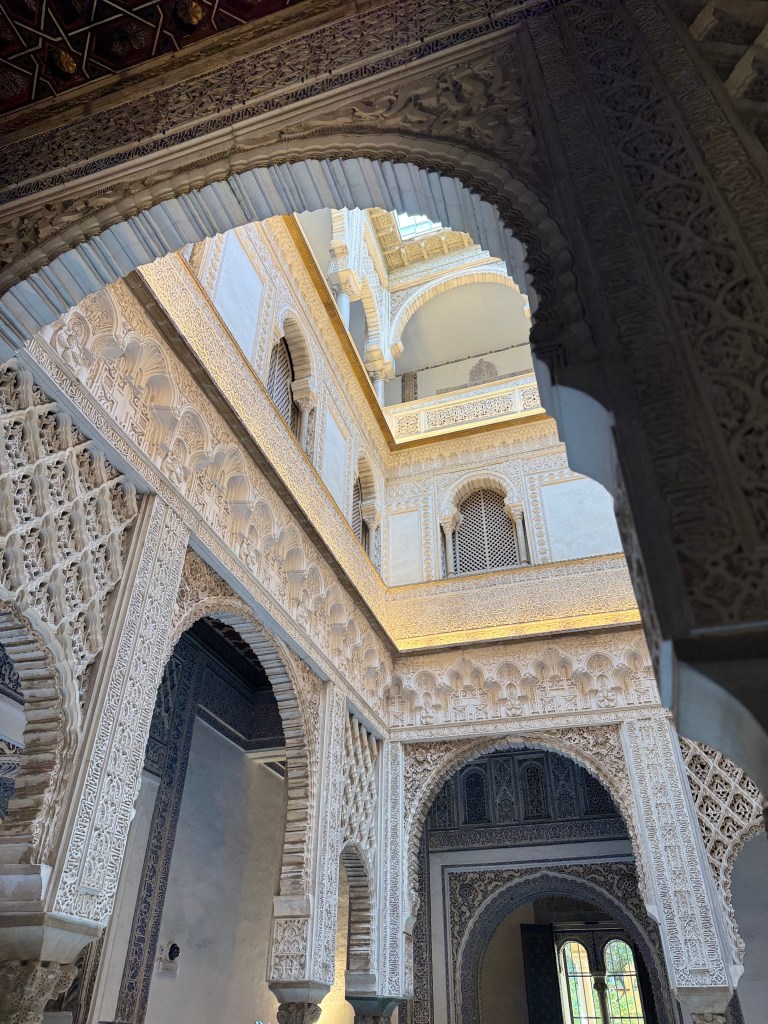
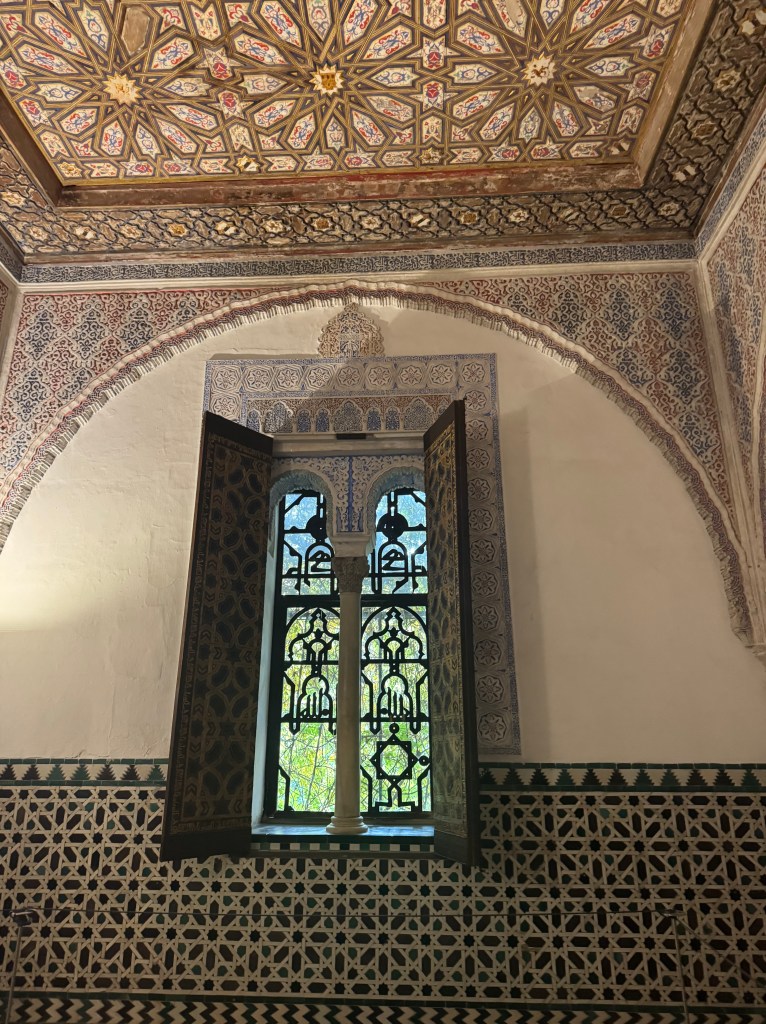
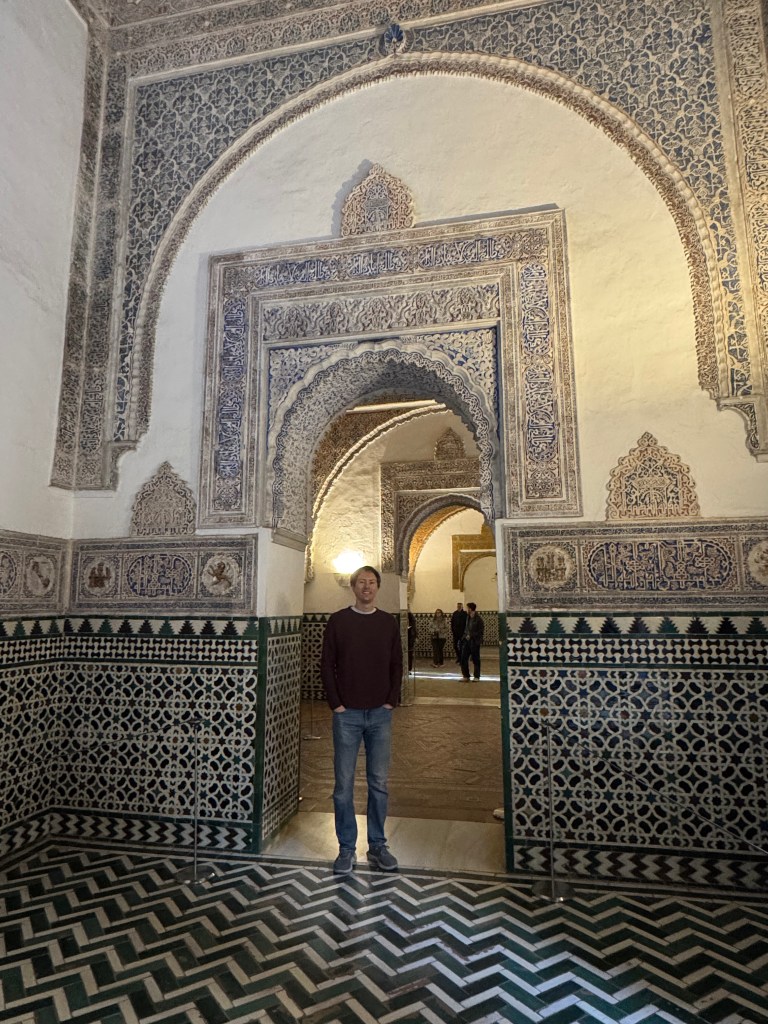
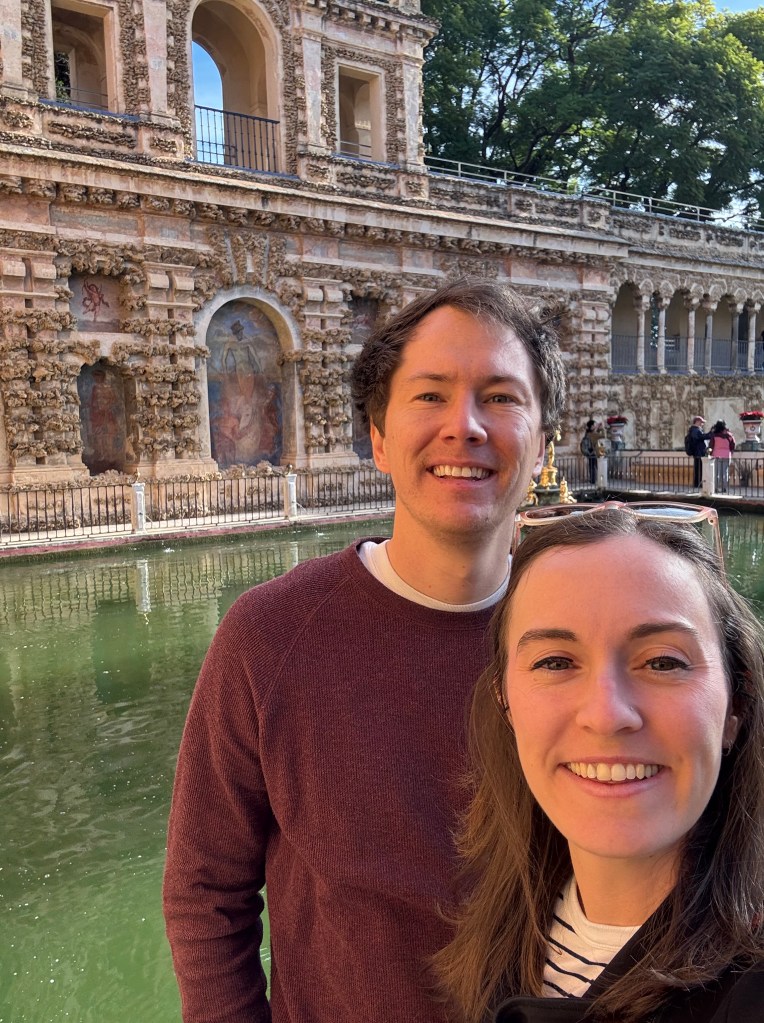
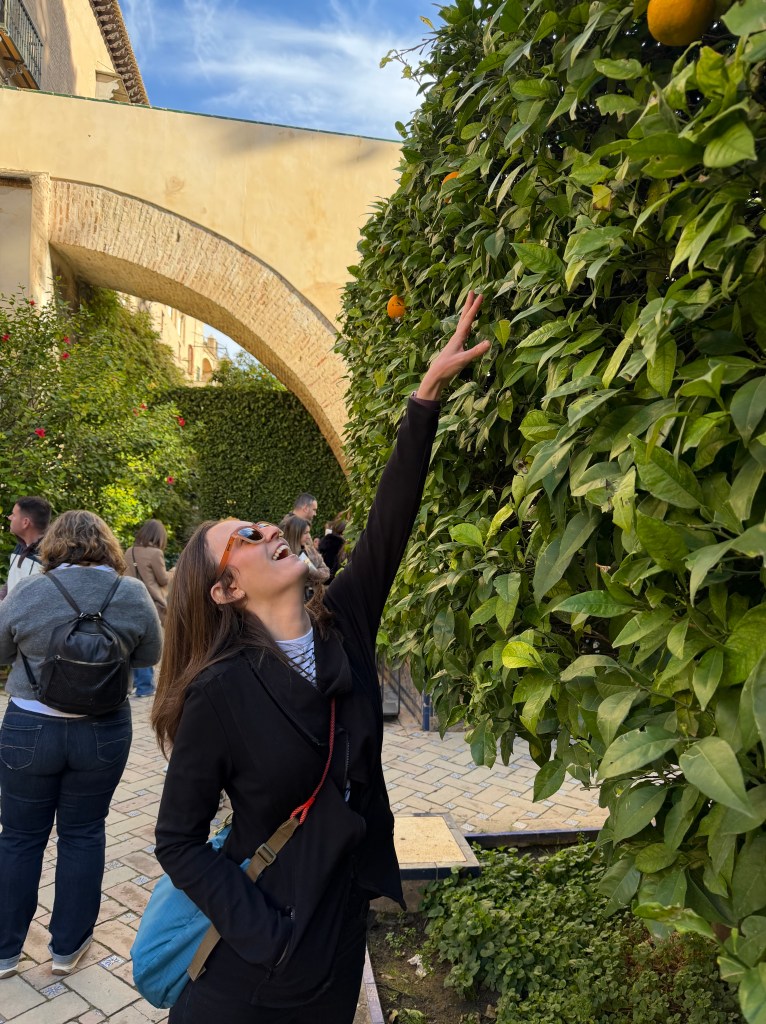
Our first tour in Seville was for the Real Alcazar, the historic royal palace of Seville, and supposedly one of the official royal residences of the Spanish royal family. I’m glad we booked the first tour of the day, because the line already wrapped around the corner and only got more busy later throughout the day. We did this tour unguided, instead choosing to follow the audio guide on our phone. My jaw continued to hit the floor with each room we entered, thinking that people created something so beautiful in the 10th century – all of the tile work was especially stunning. A few fun facts about the Alcazar:
- It’s the oldest Royal Palace that’s considered active in all of Europe
- Game of Thrones filmed several scenes on site (think the kingdom of Dorne)
- The palace includes both Christian and Islamic architecture (the blending of the two is referred to as “Mudéjar”)
- Its history goes back over 1,000 years, when it was originally built atop a Roman fortress (there are also historical elements of the Roman, Visigothic, Moorish, Gothic, and Renaissance periods)
- Some of the rooms within the palace hold historical significance; for example, the Hall of Ambassadors was where Christopher Columbus petitioned King Ferdinand and Queen Isabella to sail for the New World
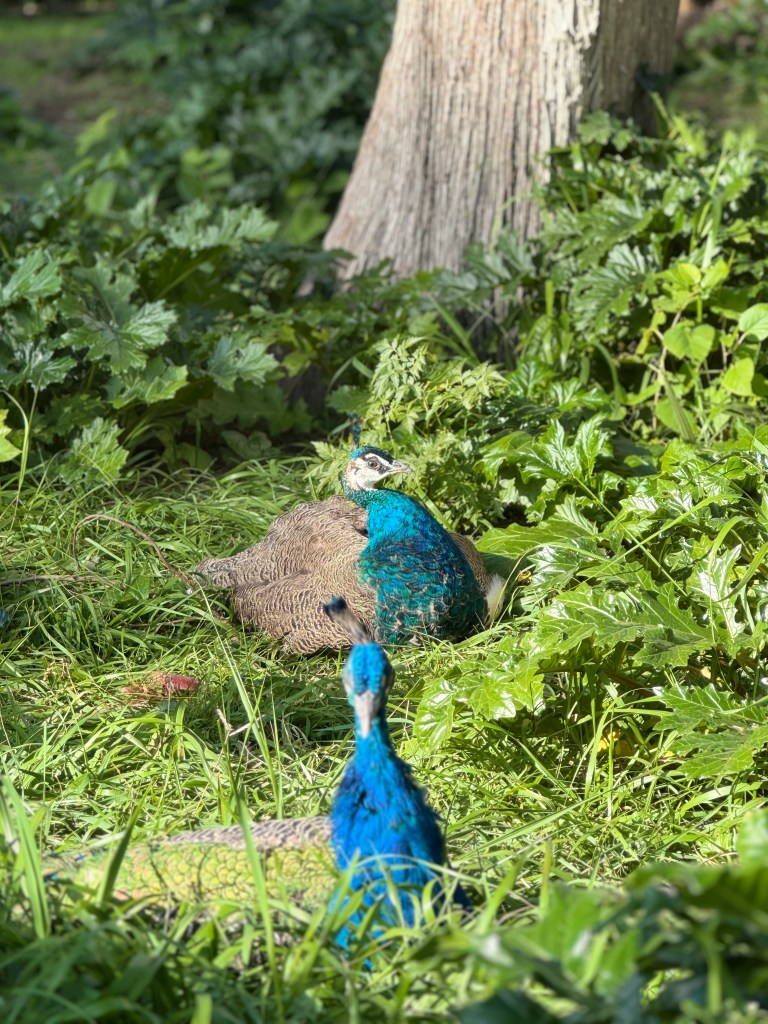
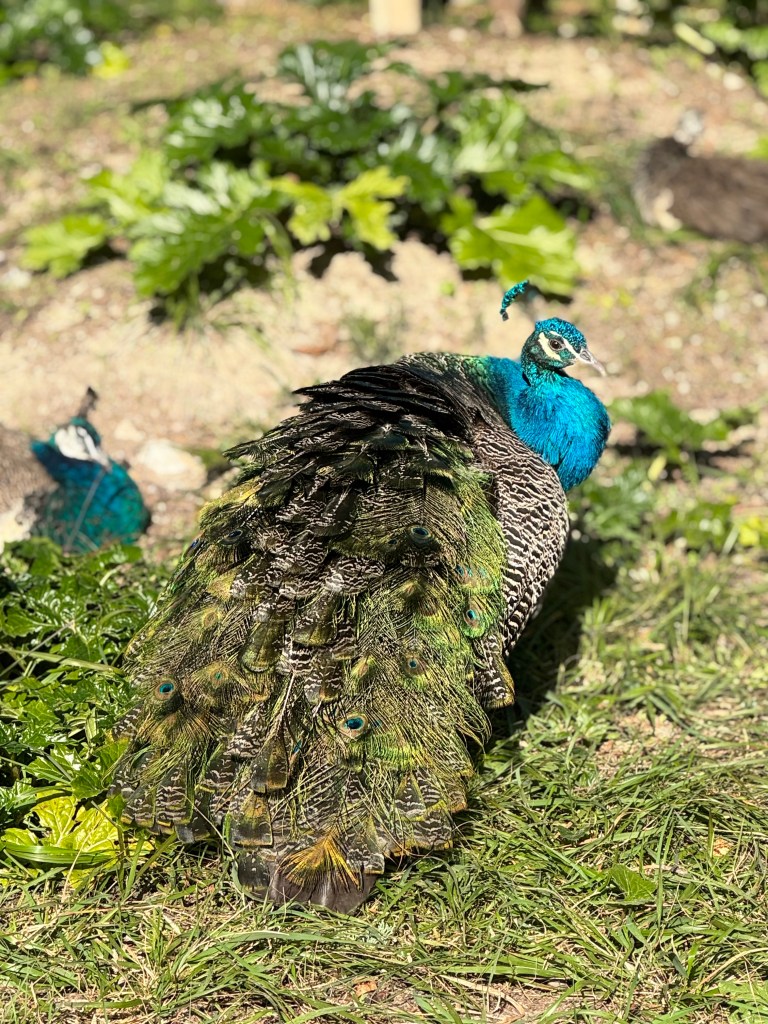
After walking through the interior of the palace, we spent some time in the quieter sections of the gardens walking around, and even saw a gathering of peacocks, or an ostentation – many babies and adults all gathered together! After about two hours or so, we exited and went to find a lunch spot.







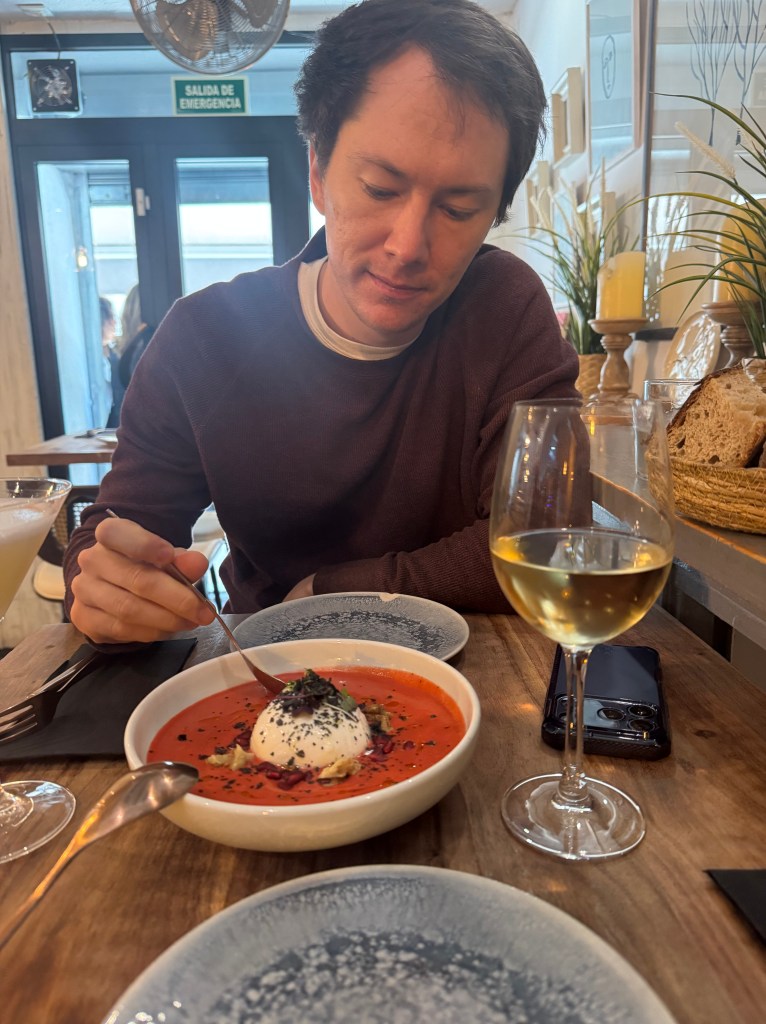
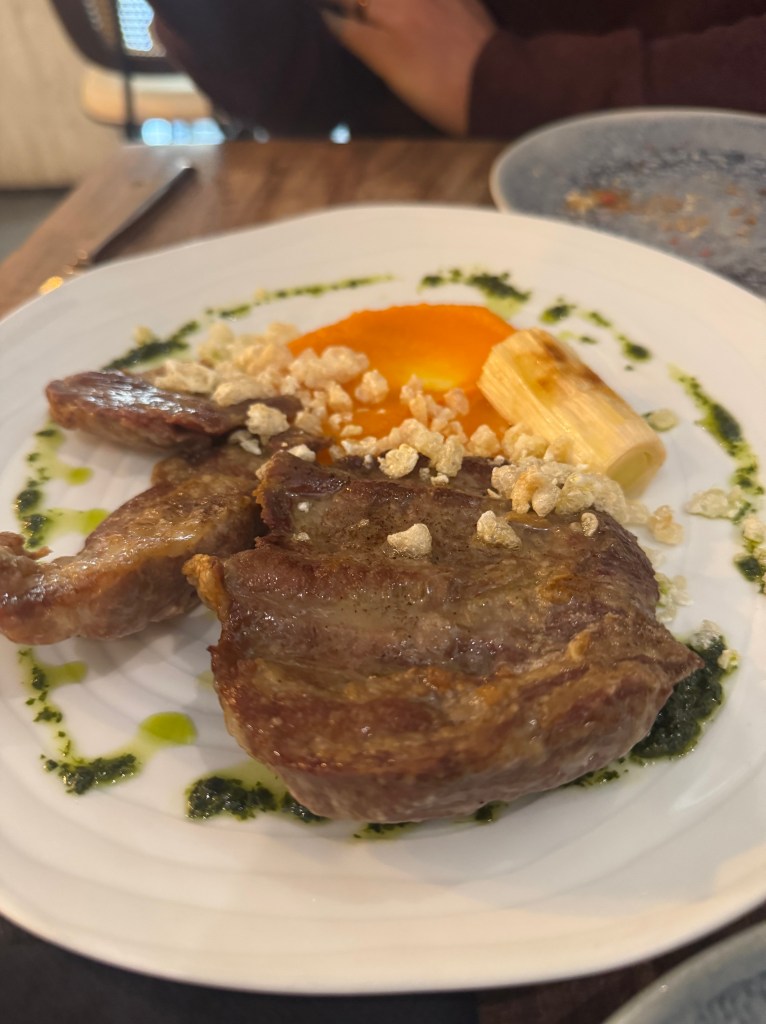
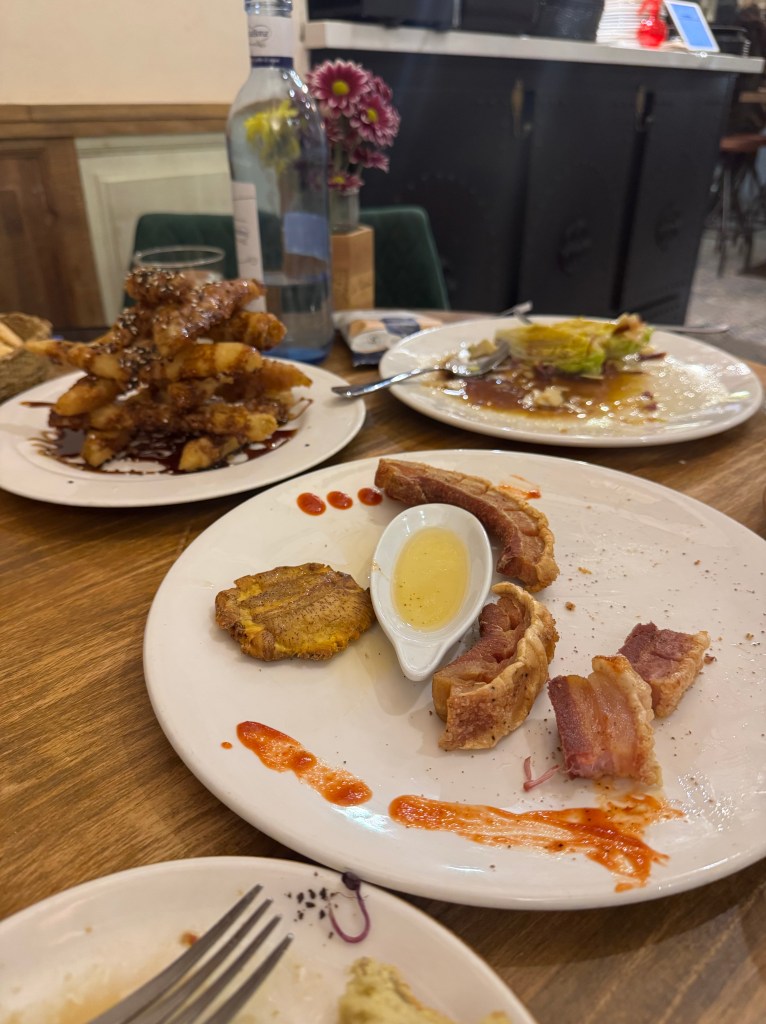
It just happened that one of the tapas restaurants (Vuela) I’d saved had a spot for two and we were promptly set! And thus began our long journey of delicious Spanish food (yes, Portuguese food was tasty but Spain opened its doors and our mouths to otherworldly meals). The tapas here were fairly modern – we got a delicious burrata bowl (tomatoes blended with pomegranates, beets and passionfruit), some Iberian pork, and other delicious shareable plates.
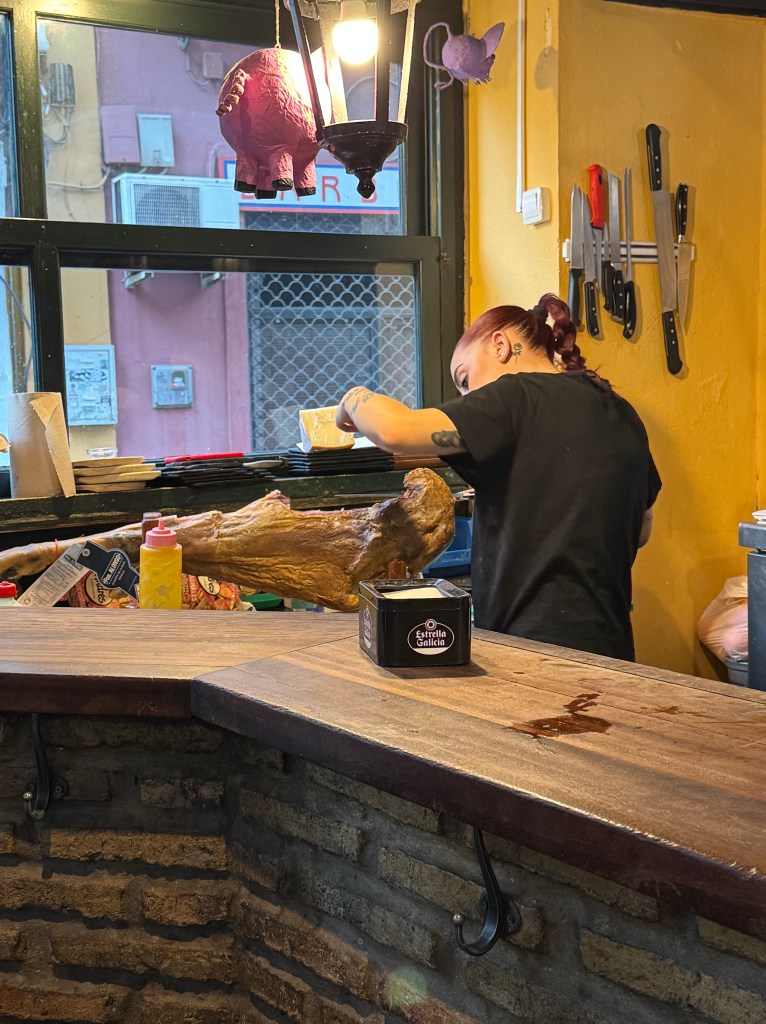
We then did something uncharacteristic – went back to the hotel for a little ~siesta~ because we were so tired. Our schedule was free until the evening, where we had a tapas and drinks food tour booked with a small group. After a little R&R, we walked aimlessly around the historic city center, found a cute Syra coffee shop and got a Christmas latte, and eventually stumbled into Bar Alfalfa. When we walked in, my eyes were immediately drawn to the Iberian ham hanging from the ceiling and I knew this was my kind of place. Knowing we were going to eat a lot during the tour, we settled on some small tapas (ham, cheese, bread, and olives) and got some sangria and a beer. We then left to walk to Las Setas, our meeting place for the food tour.

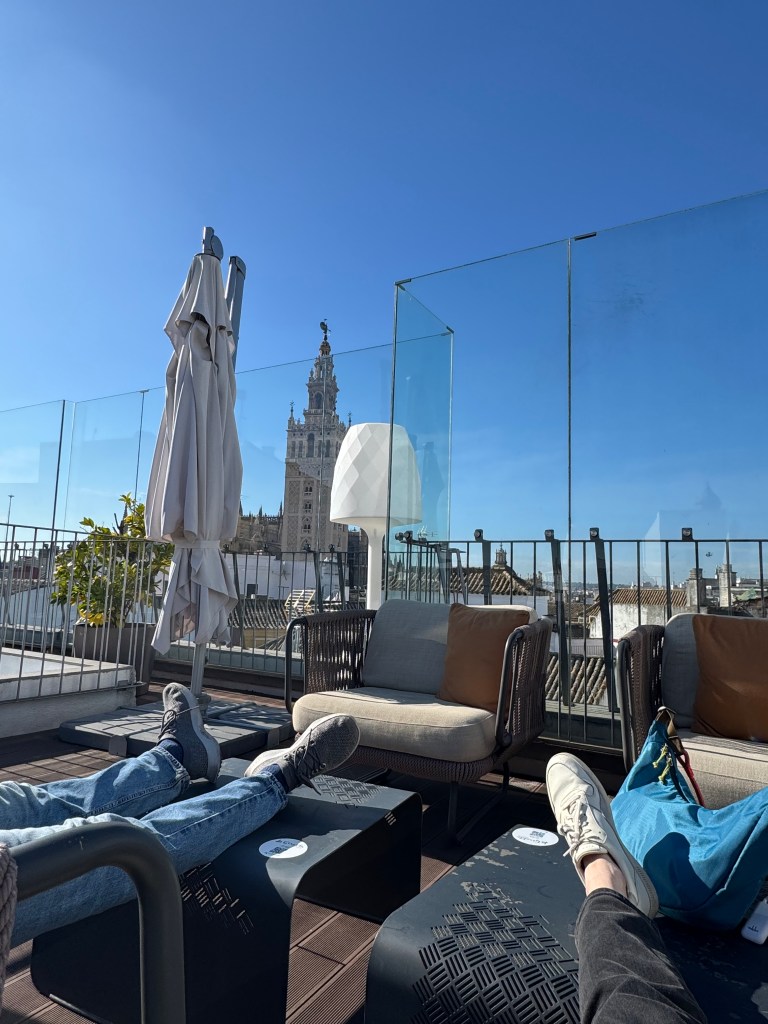


Las Setas (or “the mushrooms”) is a fairly new architectural wonder of the city, completed in 2011, and costing a whooping 100 million euros. During December, all around the base of the structure are Christmas market stalls – it was super lively and fun to walk around since we had some free time before meeting our guide!
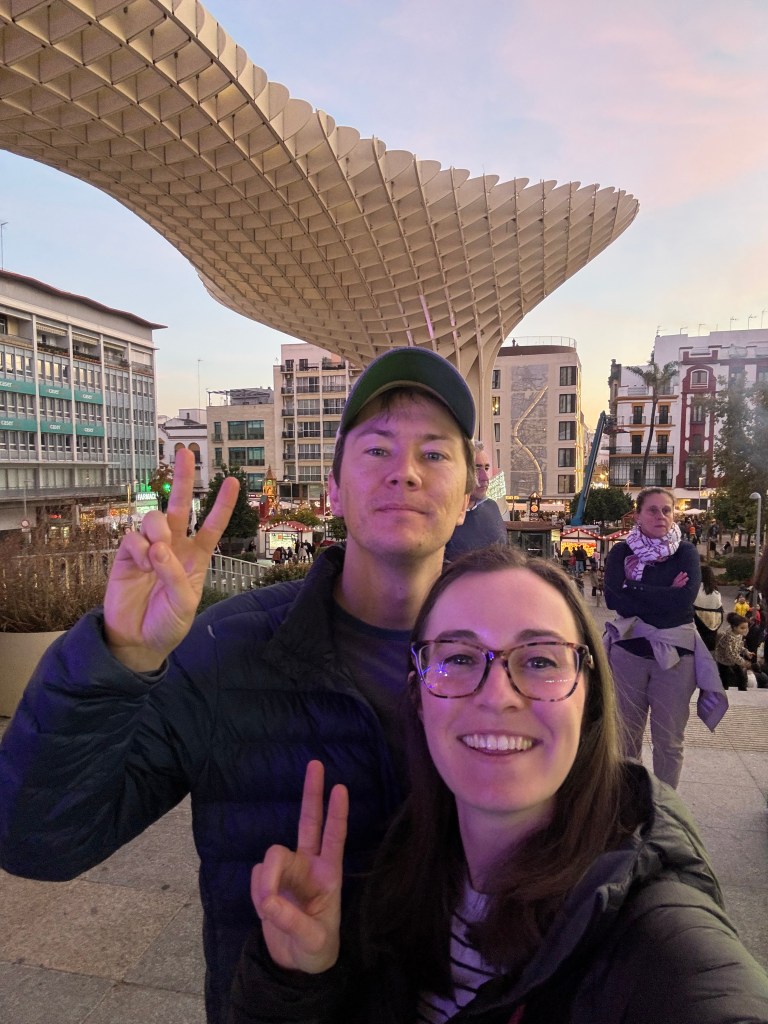

At 6:30PM, we met our guide, Manuel, at the central fountain. We got super lucky – our tour ended up being Jared and myself, and another American from the D.C. area. We all hit it off super well as a group, and it was definitely one of the most enjoyable tours we’ve done!
Our first stop was at La Espuela, and we got to try olives (with garlic and paprika – if they’re cracked, that is an excellent sign because it means each olive was likely smashed individually to absorb the flavor of the brine), chicharonnes (holy pork fat), and a pork sandwich. Manuel explained how sangria was actually first made in Manhattan, and it’s a myth that it’s a Spanish drink. The drink we tried at this bar was tinto de verano, a mix of red wine and lemon Fanta. Manuel also debunked paella – this is typically made with duck, green beans, rabbit and snail (versus the stereotypical seafood paella), and has to be cooked in a huge pan to get authentic, crispy rice.
Our next step took us to Escalona, where we got to learn more about Spanish wine – there are 72 protected wine regions in Spain! For food, we tried a potato and egg tortilla, fried dogfish (shark), and aged tuna with almonds and olive oil. (Random fun fact we learned at this bar – Seville has the second largest old town in the world).
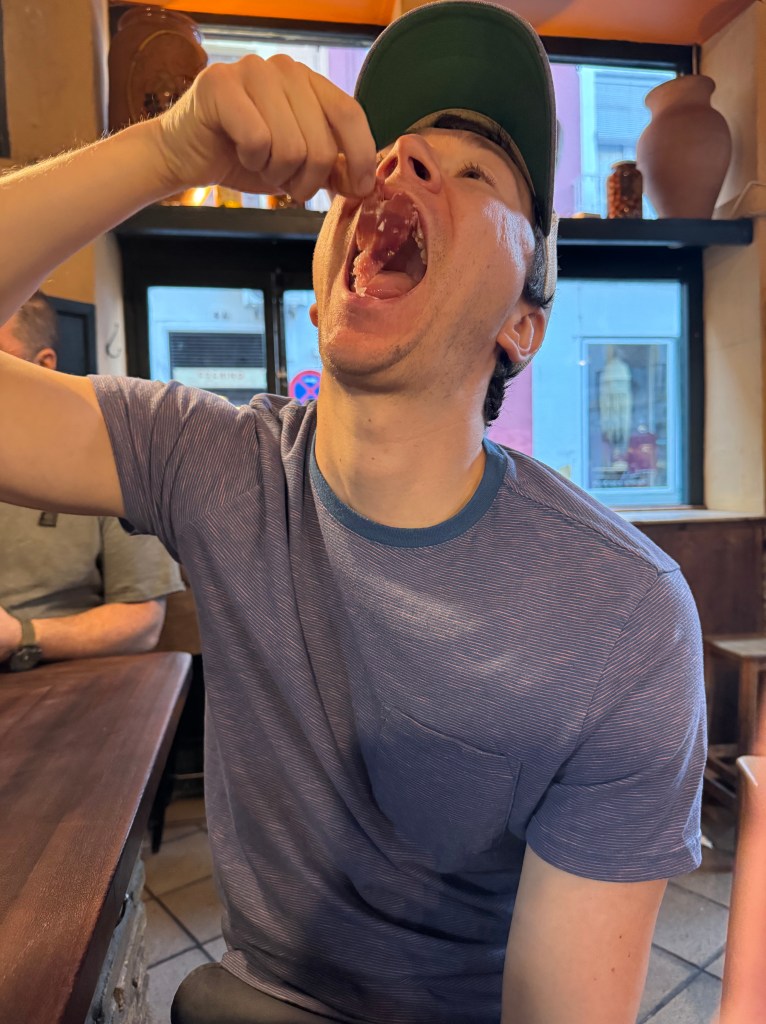
By this point, we were all bonding and sharing stories (we were talking about Christmas traditions and Manuel went through the menu for his family’s Christmas Day), and we still had two more stops to go! Our third stop was Maestro Marcelino, a swanky gourmet shop with cheese and ham tapas. Here, we got to try the best cuts of Iberian ham along with our choice or red or white wine. Yes, yes, I’m Italian but hands down Iberian ham >>> prosciutto. What makes Iberian ham unique you ask? Well, it comes from a specific type of pig that is typically acorn-fed, and the meat is safe enough even for pregnant women to consume. It was so good I got a pack to go for a future Scenic Sammie. When asking Manuel how much a leg of ham would be, he told us if we had 1800 euro we could walk out with our own beautiful leg. If I could take it through US customs, it would have been a strong consideration!
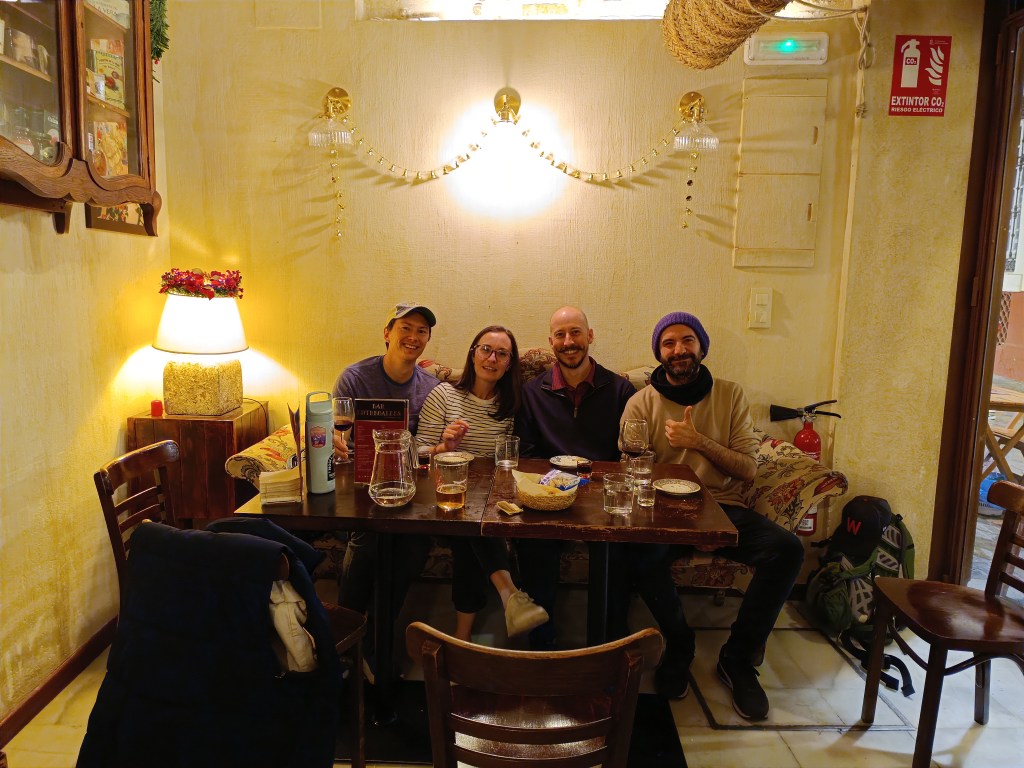
We had one more stop after this, where we got to taste delicious albondigos and orange wine at Entrecalles. By this point, the three of us Americans were talking about craft beer back in the states, and David made a hilarious joke about this one beer (to remain unnamed) tasting like the taste of poverty, and Manuel laughed so hard and told us we were his favorite group ever. 😀 Wish we could’ve followed him around the rest of the night!


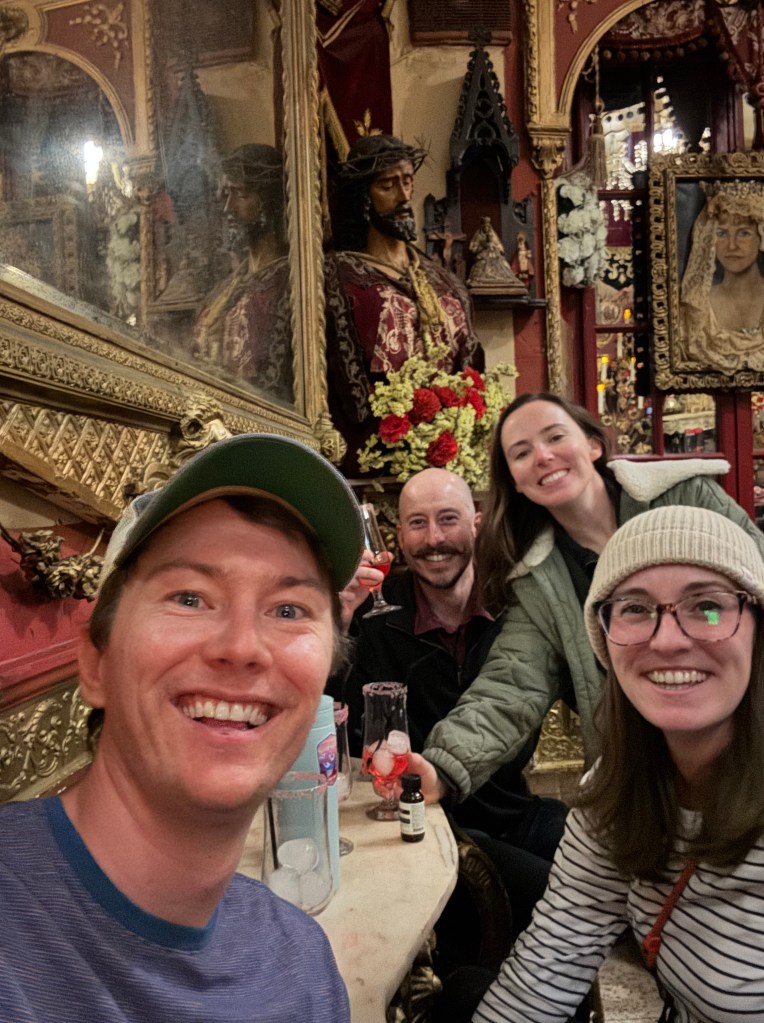

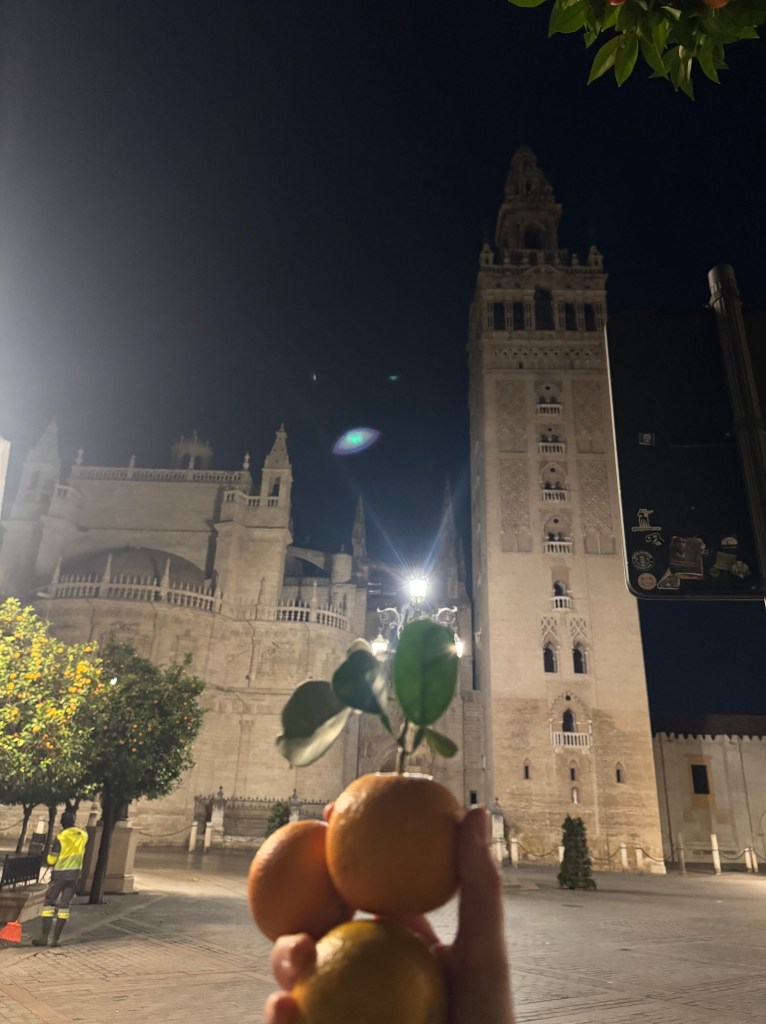

The three of us asked him for bar recommendations and he told us Garlochi, a quirky bar decked out with Roman Catholic oddities and where the signature drink is “The Blood of Christ”. At the same time, our good college friend Taylor arrived in Seville (yes, this was planned) and met us here for a few more drinks to cap out the night! While Seville was super crowded during the day, we had the streets to ourselves as we walked past the cathedral at 1AM.
Day 5 – December 9th
After sleeping in a bit, we met Taylor at Plaza de Espana for a stroll before our noon tour at the Catedral de Seville. This was about a fifteen minute walk from the old town, and by this point we’d walked a fair chunk of Seville. Plaza de Espana is yes, a famous plaza, built in 1928 for the Ibero-American exposition. There are tiled alcoves around the entire semi-circle of the building that represent the various provinces of Spain.


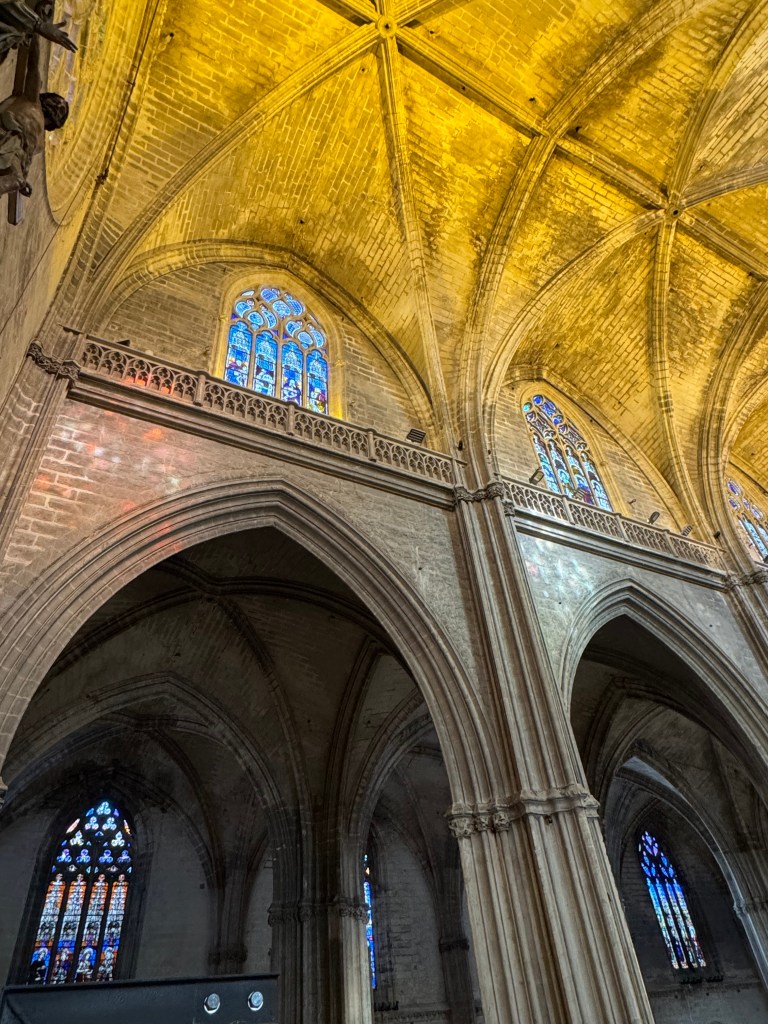
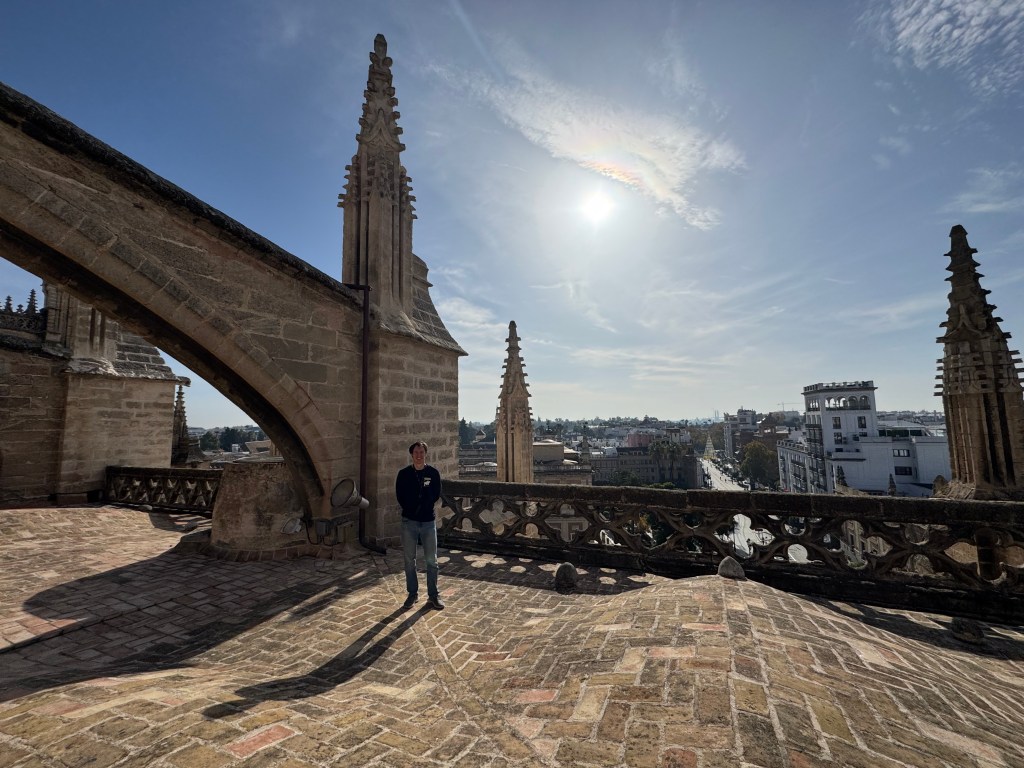
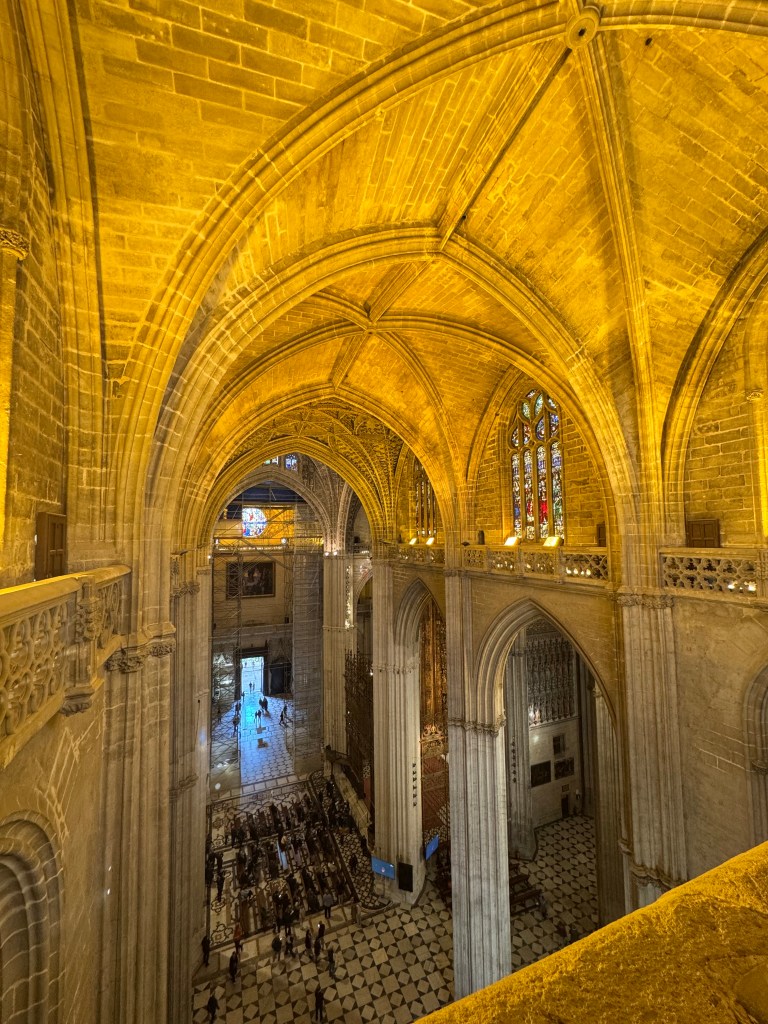
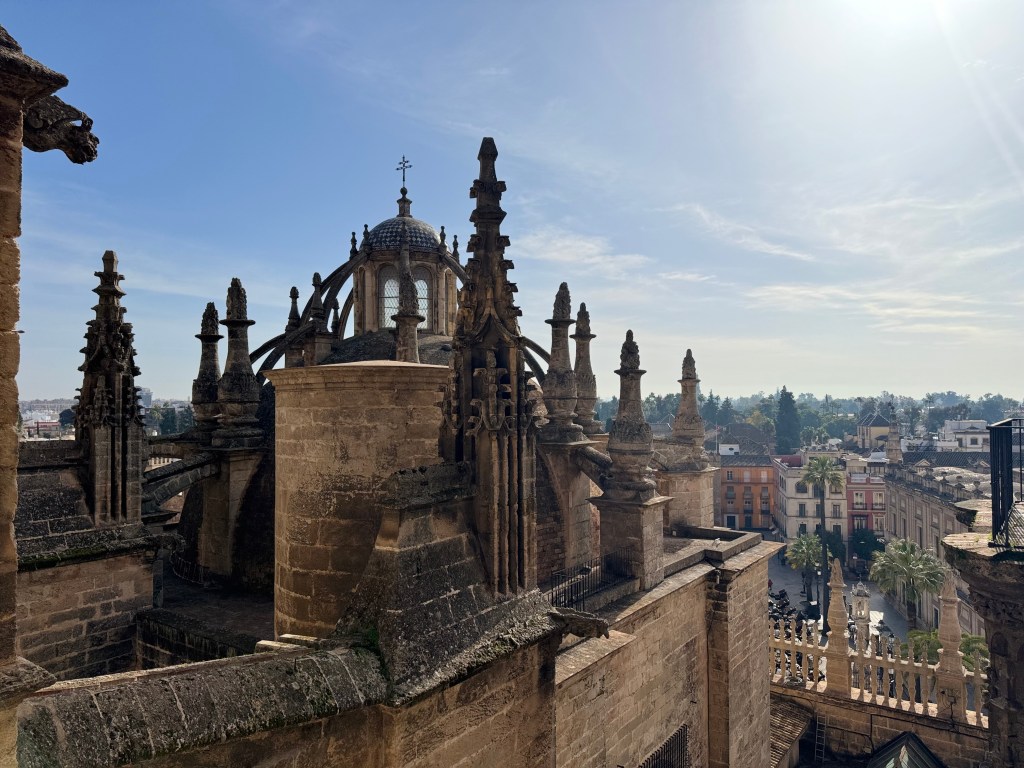
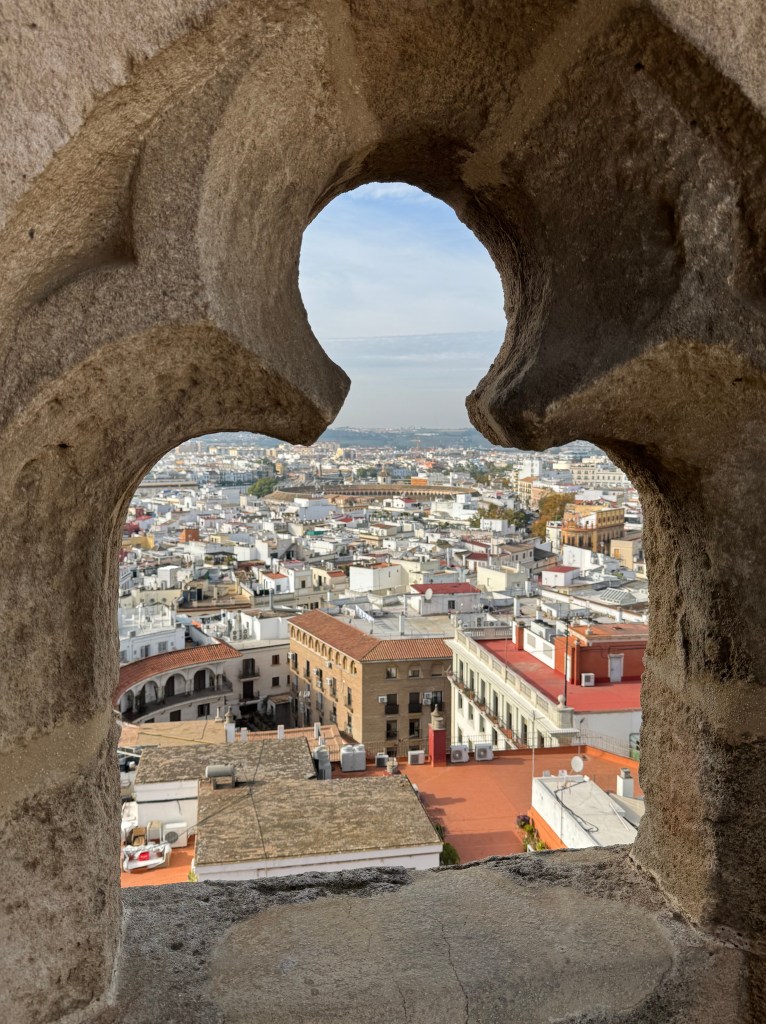
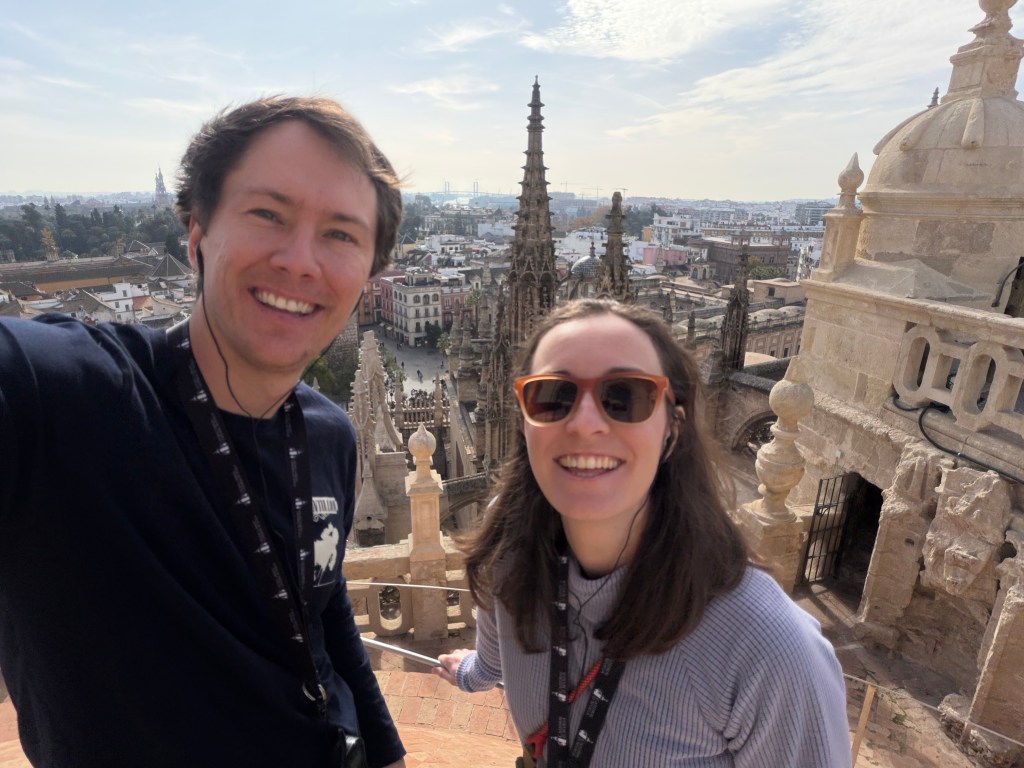
After strolling a bit, we headed back for our rooftop tour. This was a unique tour, in that we got to ascend to the highest points of the gothic cathedral – fun fact, this is actually the biggest gothic cathedral in the world. Some other facts we learned about the church:
- The stone quarry that supplied the raw materials for construction came from Cádiz (150 kilometers away) – there were two boats built to ship the material along the river. How inventive for hundreds of years ago to be able to ship material from that far away!
- The material used to construct the church was primarily sandstone, which isn’t all that resistant to pressure – restoration work now uses limestone as a more sturdy replacement material.
- Once the cathedral was completed, at its peak it held approximately 400 masses per day in the 16th century.
- While we were on the roof, our tour guide pointed out small holes in the roof, now covered, which during construction were used to lower tools to the floor below, as well as help with ventilation.
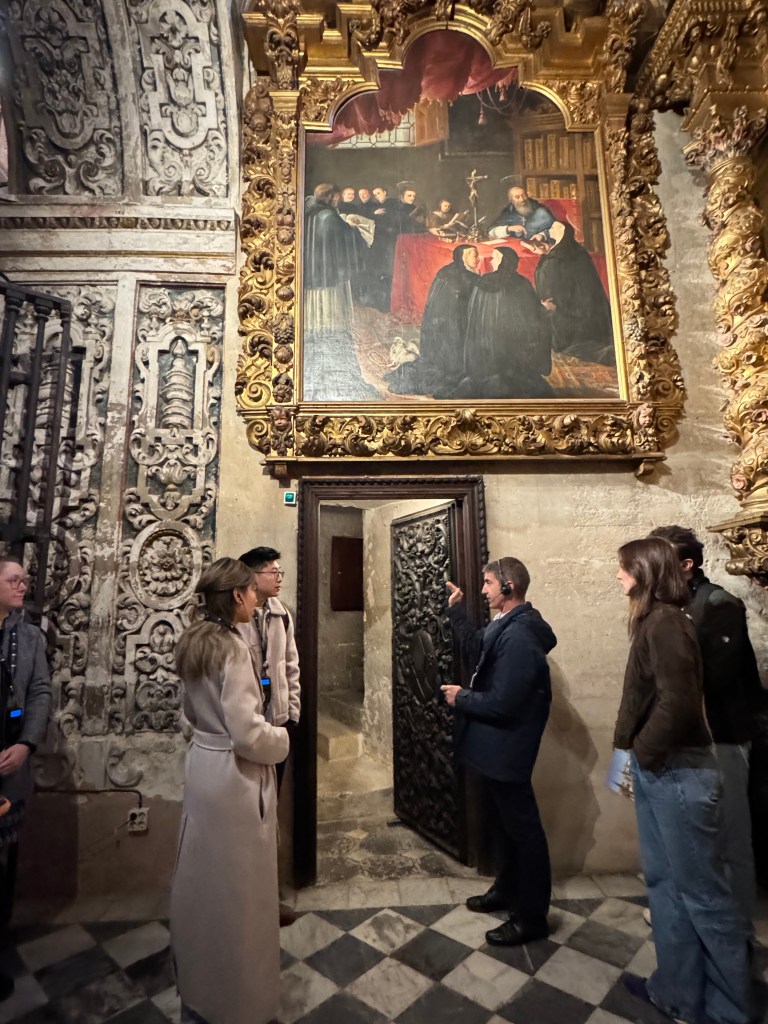
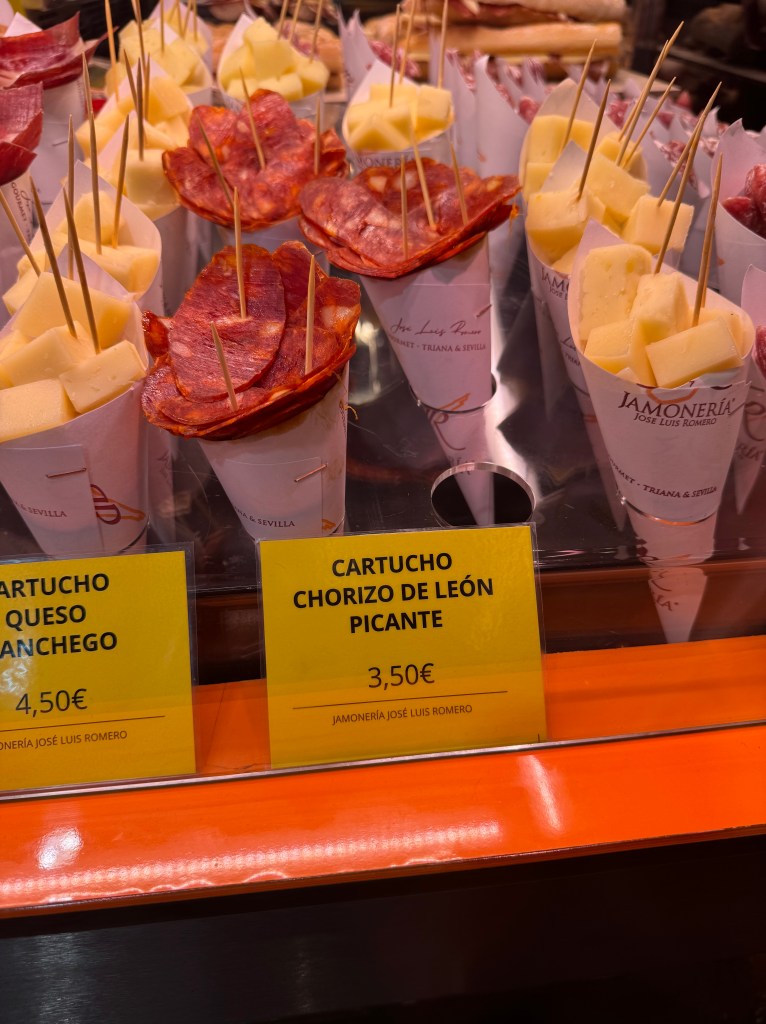
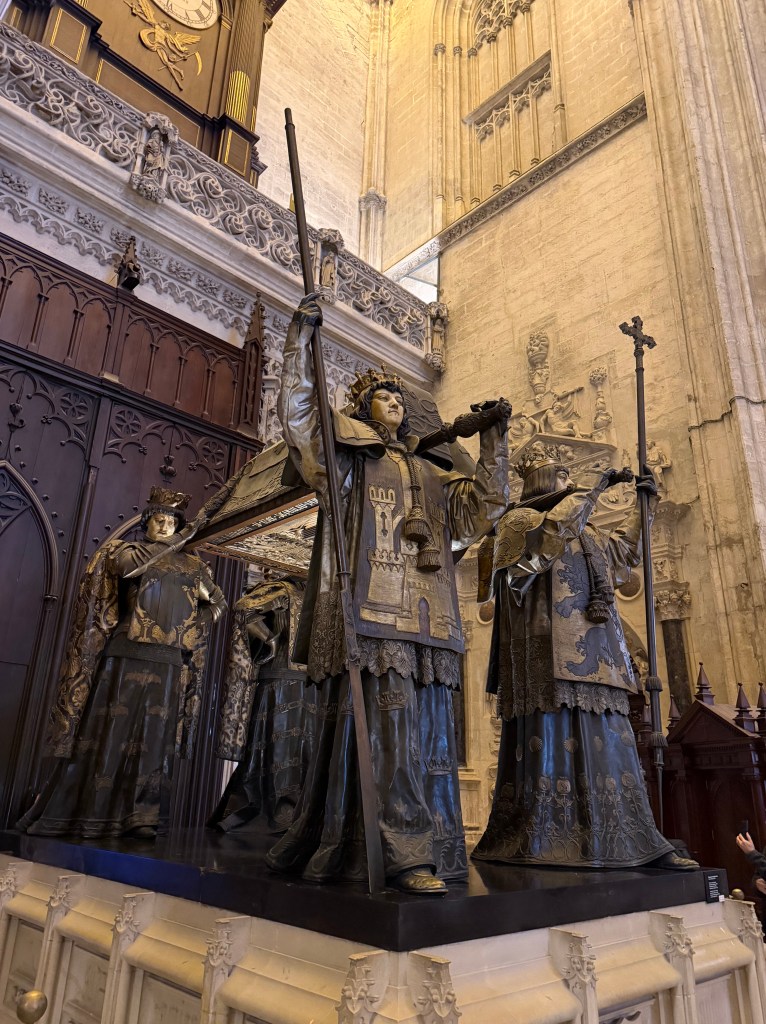
After summiting the highest points of the cathedral, we ended the tour in the main level, and walked around for a bit, even getting to see the final resting place of Christopher Columbus (or at least parts of him). Pressed for time and quite hungry, we walked to Triana Market for lunch where we got a delicious ham and cheese sandwich, and some cones of meat and cheese (my dream). Fueled up with food and one last delicious Christmas Latte from Syra Coffee, we went to the hotel, got our bags, and walked ~20 minutes to the Seville train station (not our best decision with all our luggage), to get our rental car and drive to Ronda.






Two hours later, we were in the charming town of Ronda, where we’d stay for the night as our basecamp before heading to a world-famous hike. We stayed right downtown near the bullfighting ring at Hotel Catalonia with dinner reservations at Tragata one block away (could not have planned these logistics better). Up to this point, this was our favorite meal so far of the trip – we had this fried sea bass fish taco dish that was incredible. We then walked around for a bit, taking in all the beautiful Christmas lights before calling it a night.
Málaga
Day 6 – December 10th
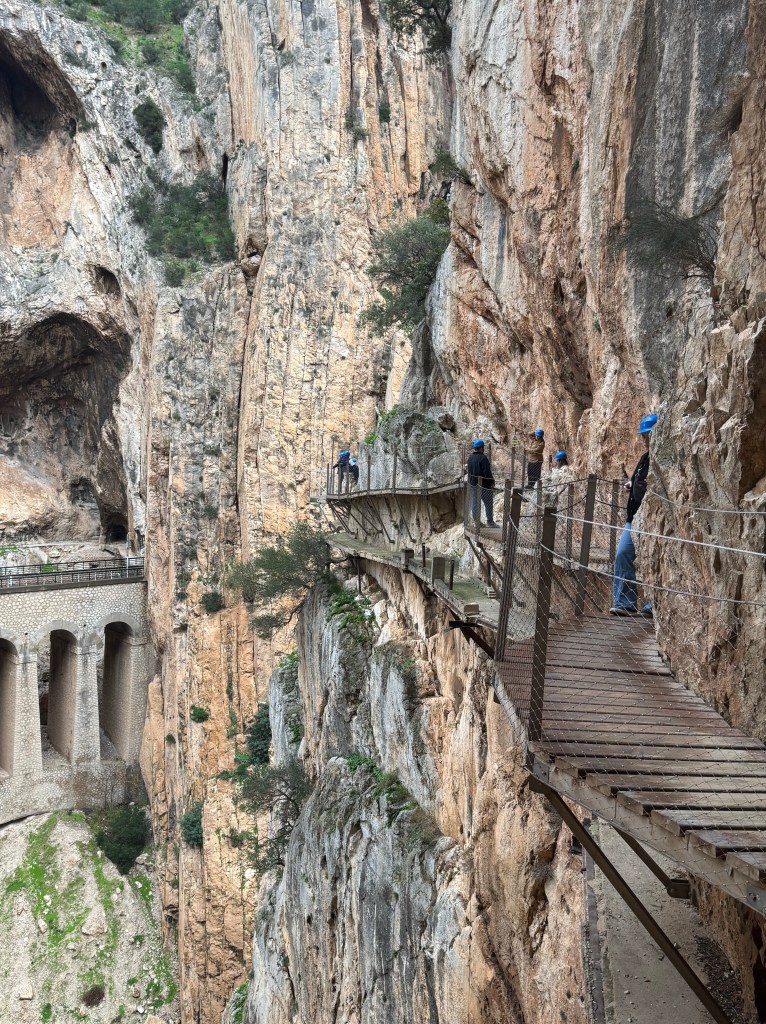
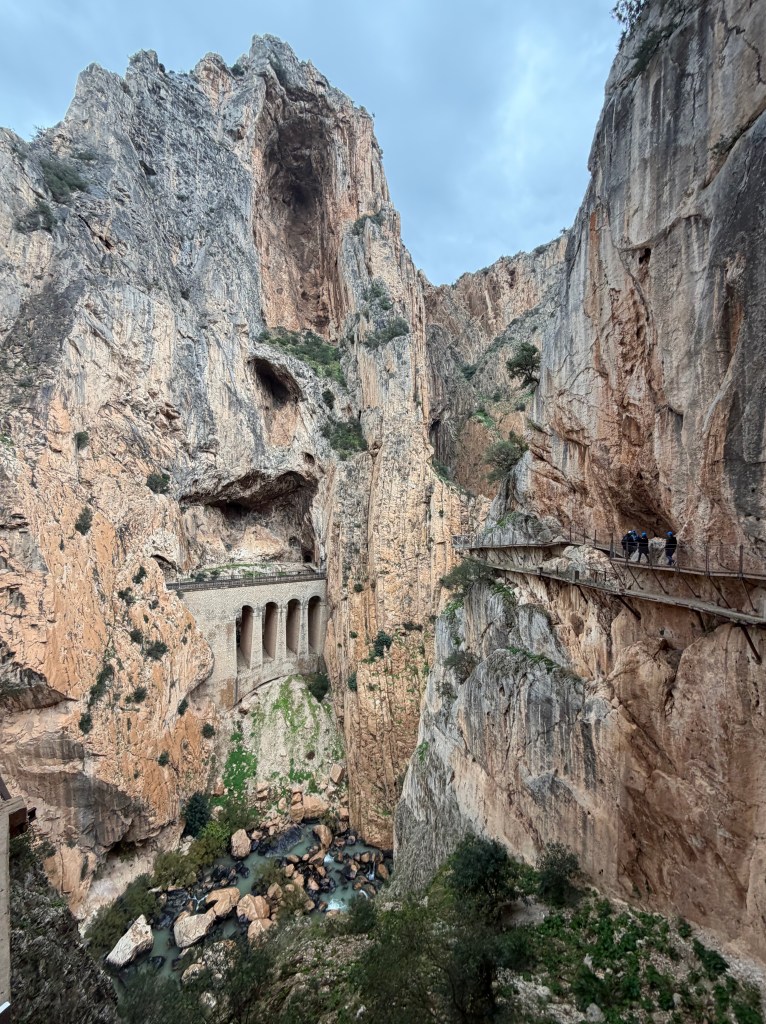
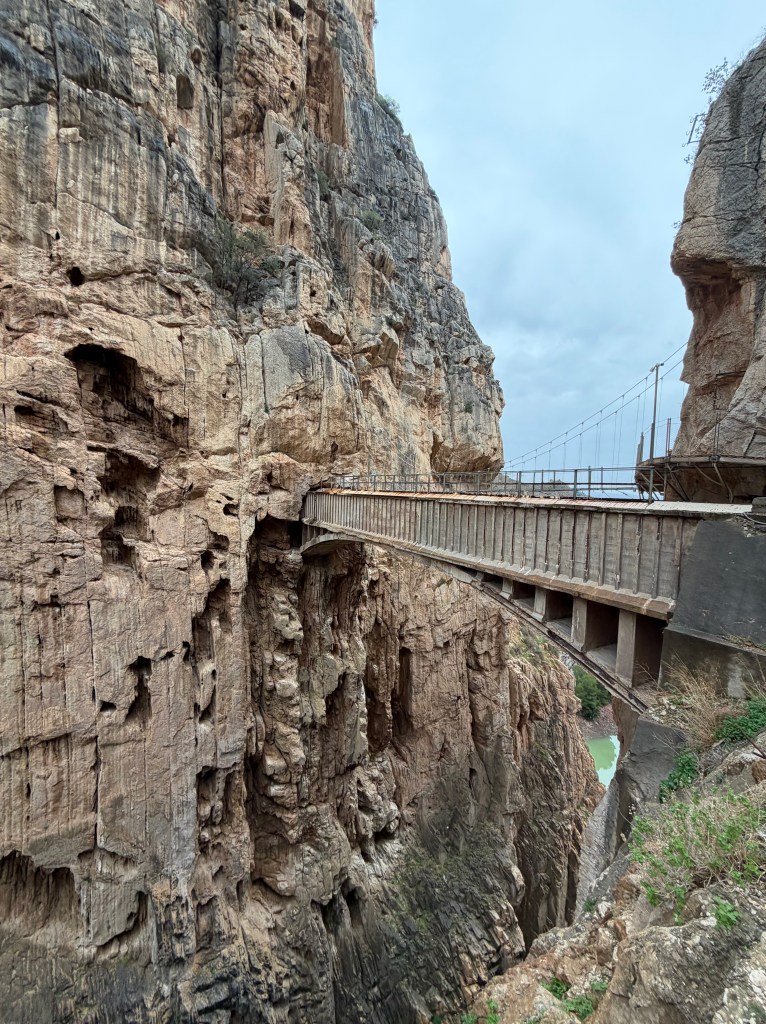
Today is the day we hike the most dangerous hike in the world, Caminito del Rey! Just kidding, mostly. At one point in time, this hike near Málaga was actually known as the world’s most dangerous due to its crumbling walkways along the Gaitanes Gorge, with sheer drops of over 300 feet. There were several fatalities, leading to its closer in the early 2000s, but after a major reconstruction, the hike reopened in 2015.
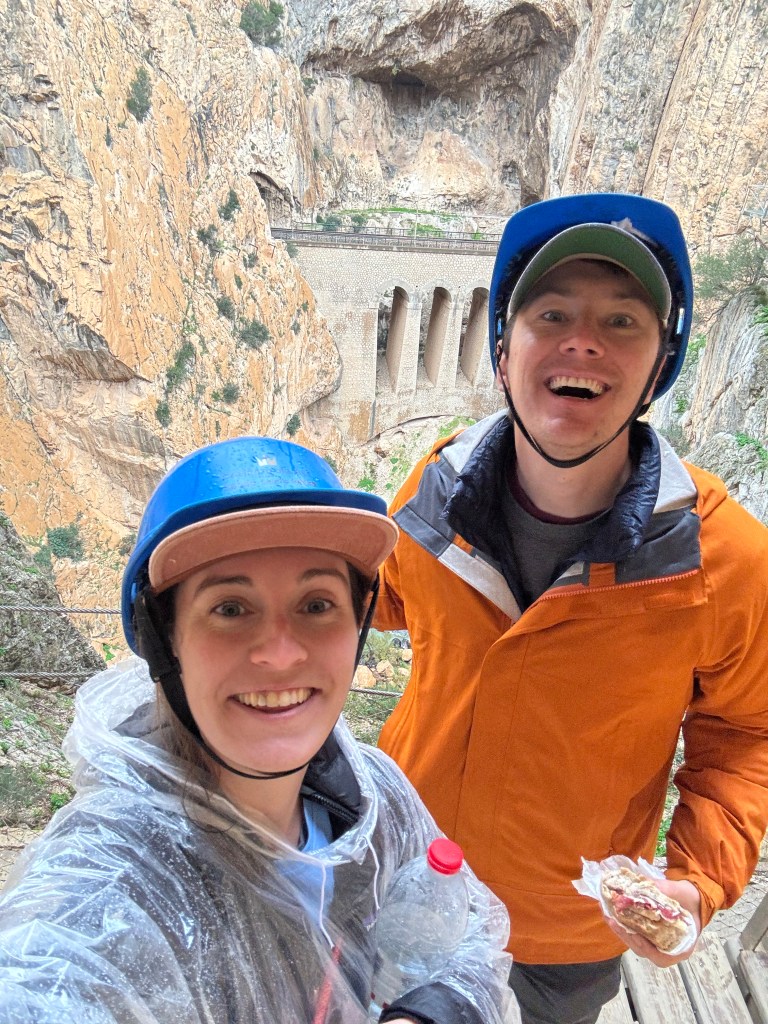
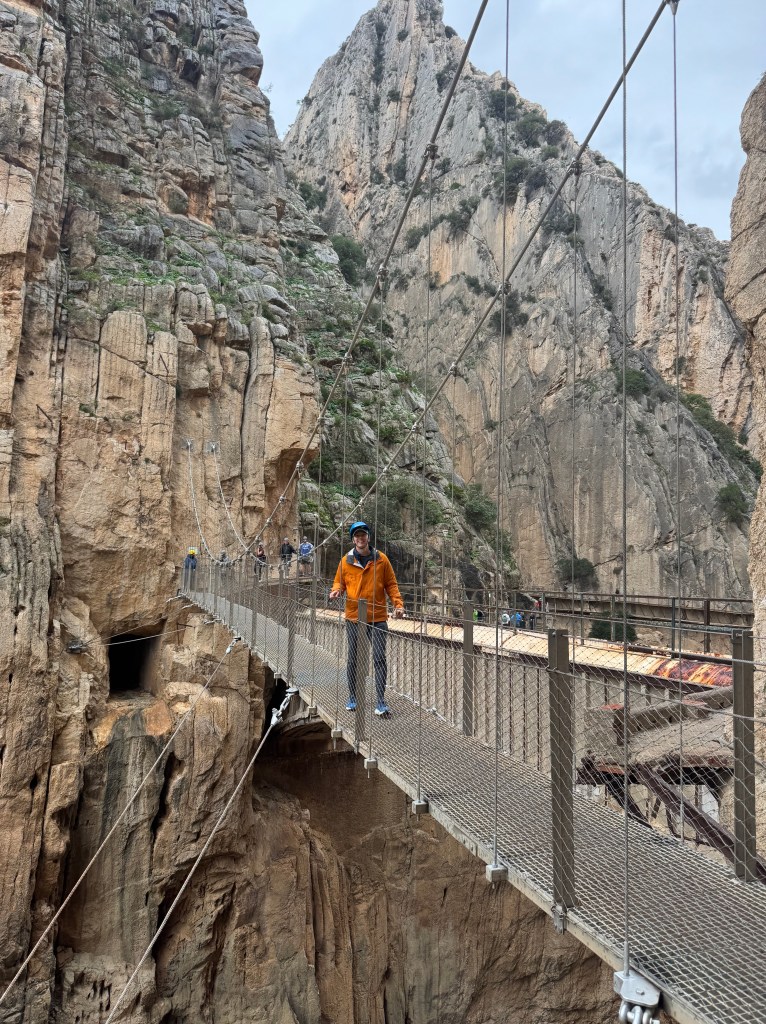
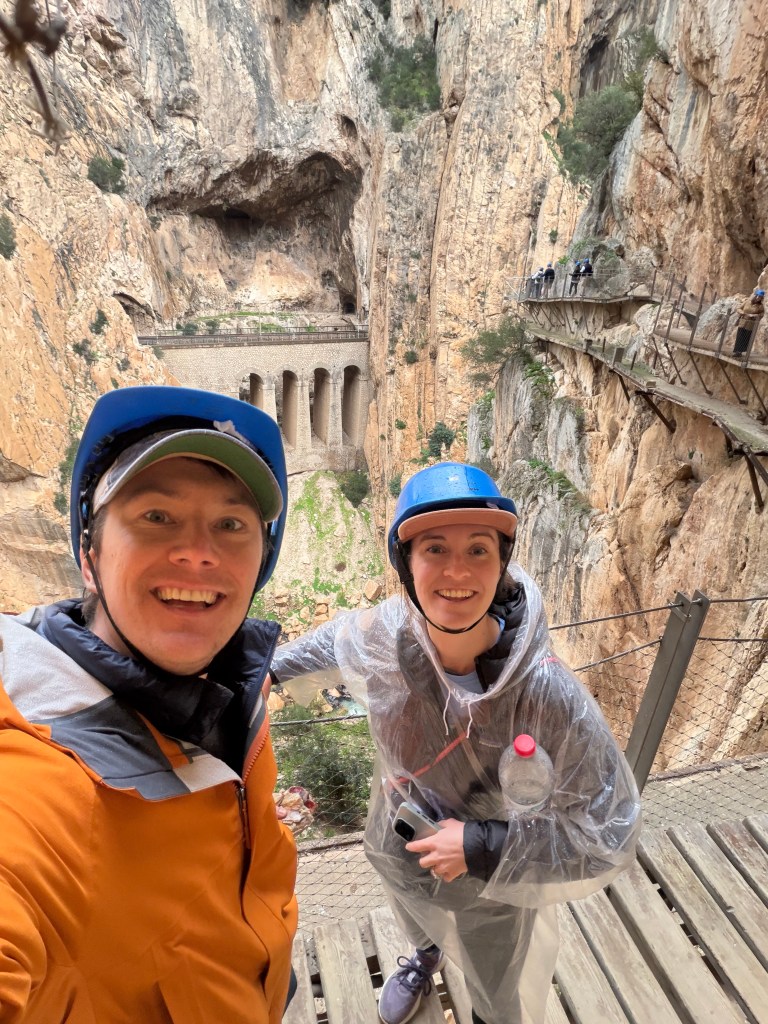
We got unlucky with the weather today – it was the first rain of the trip, but honestly gave the hike very mystic and ethereal vibes.The hike itself was super easy – minimal elevation gain and point-to-point took about 2-3 hours with a guide (not required but included in price of admission and nice to hear the history of the hike, and flora/fauna of the area). The name in English means “The King’s Little Pathway”, and was given when the Spanish King Alfonso XIII came to inaugurate the path in 1921, and appeared visibly scared as he crossed the pathway straddling the gorge, hundreds of feet above the river below.
About halfway through our hike, we pulled out some homemade #scenicsammies we made for the hike – we got a baguette from a bakery in Ronda, some Iberian ham from a deli shop, and some nice hard cheese from another gourmet deli – it hit the spot! Back to the hike – our guide, Lucia, was super enthusiastic and kept us thoroughly entertained on our hike, which culminated by crossing the infamous suspension bridge before a short walk to the town of El Chorro, where we caught the shuttle bus back to the visitor center parking lot.






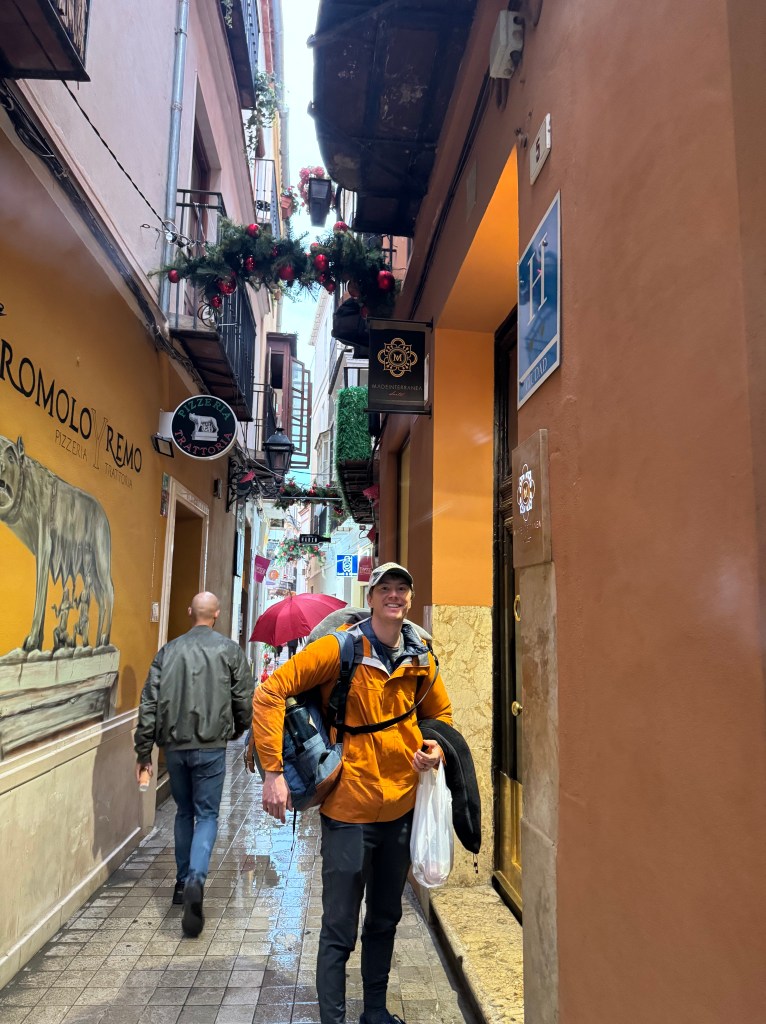
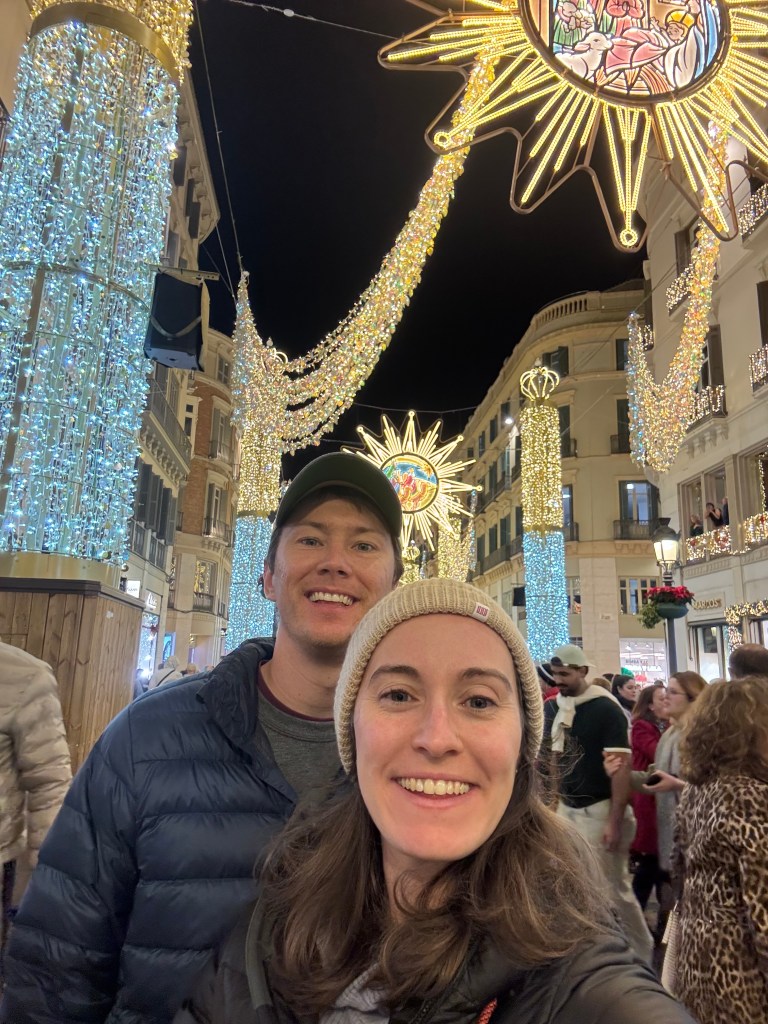
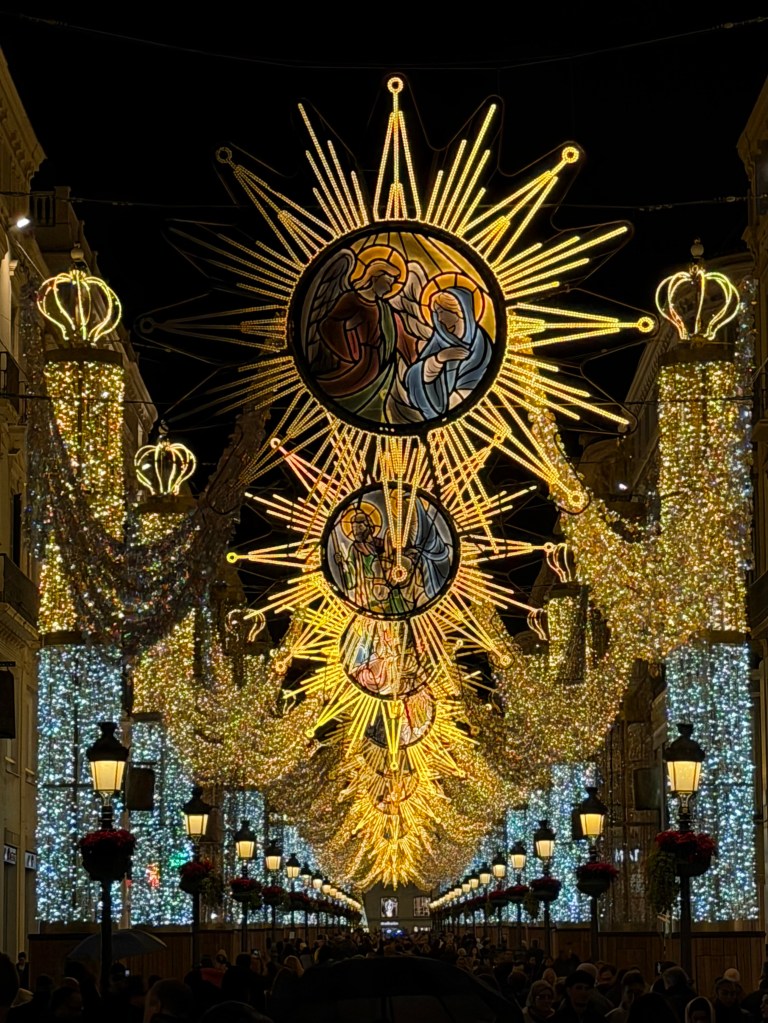
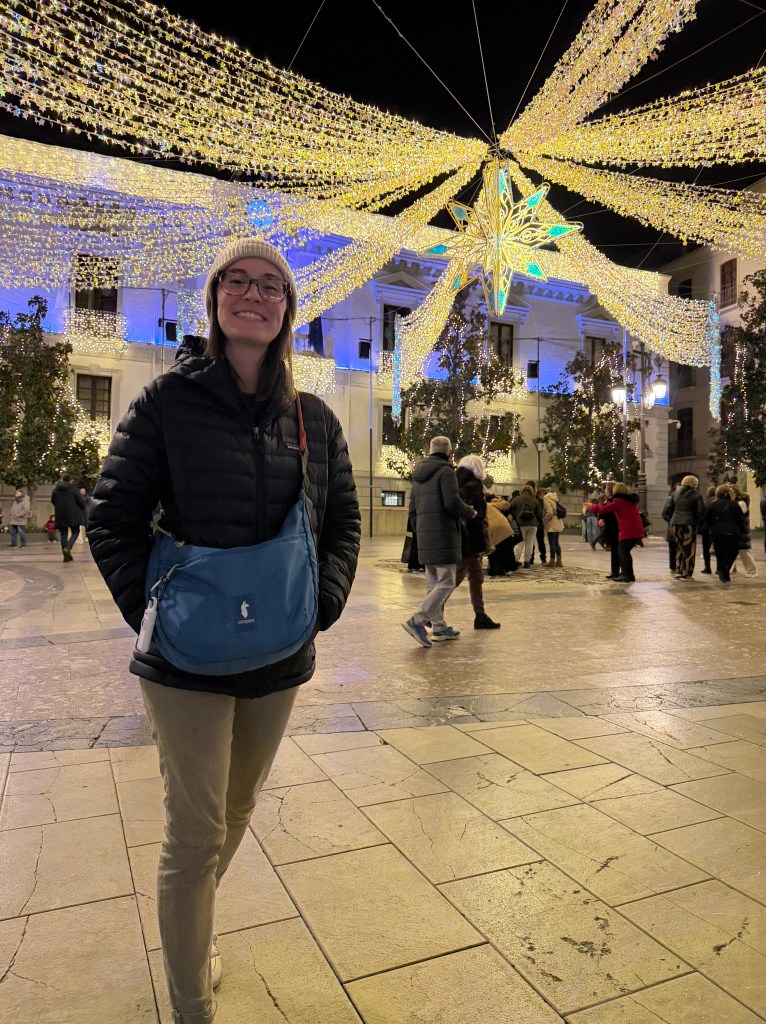
At this point, it was early afternoon and we hit the road again to make it to Málaga before nightfall. Málaga is referred as the sixth biggest city in Spain so it was definitely bigger than I was expecting – driving through the tiny one-way streets to our hotel tucked in city center was definitely an experience! After we dropped the car off at the garage and made it back to the hotel, it was close to dinnertime. We got some helpful recommendations from the hotel staff on an Italian restaurant for dinner and some details on the light show on Calle Larios. When one thinks Christmas markets and lights, one does not typically think Spain but BOY were we wrong! Málaga’s lights are actually a huge attraction in Europe, featuring musical synchronized light displays with thousands of LED lights – we made it for the first show of the night and enjoyed the performance with thousands of others before walking to Gusto for dinner.
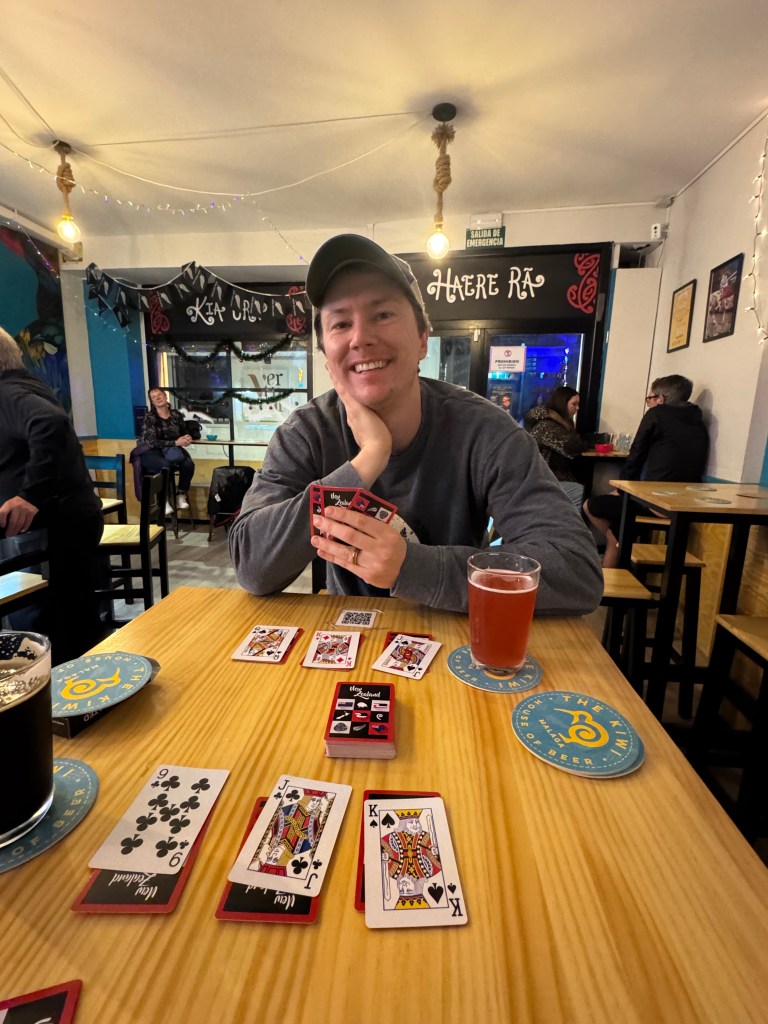
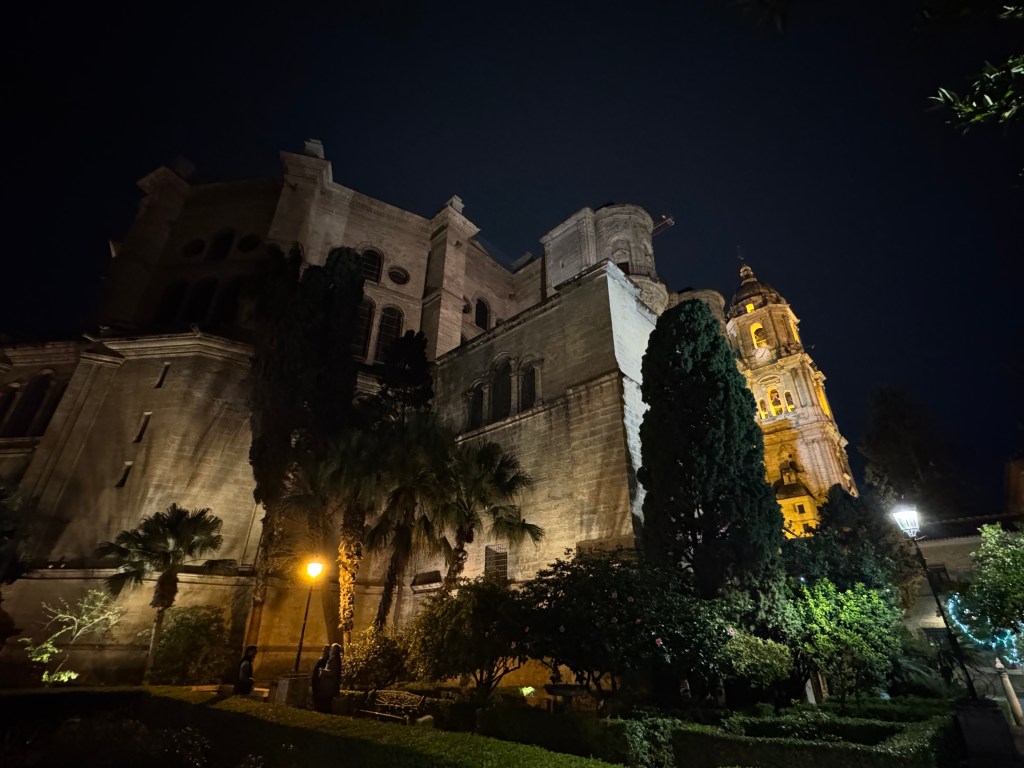
Full of carbs and dairy, we continued to walk around Málaga despite being very tired – we only had one night here! We walked through the historic center, seeing the cathedral, Islamic Fortress, and ancient Roman theater, before stopping in at The Kiwi – House of Beer (beers and New Zealand – we had to) for a nightcap.
Day 7 – December 11th
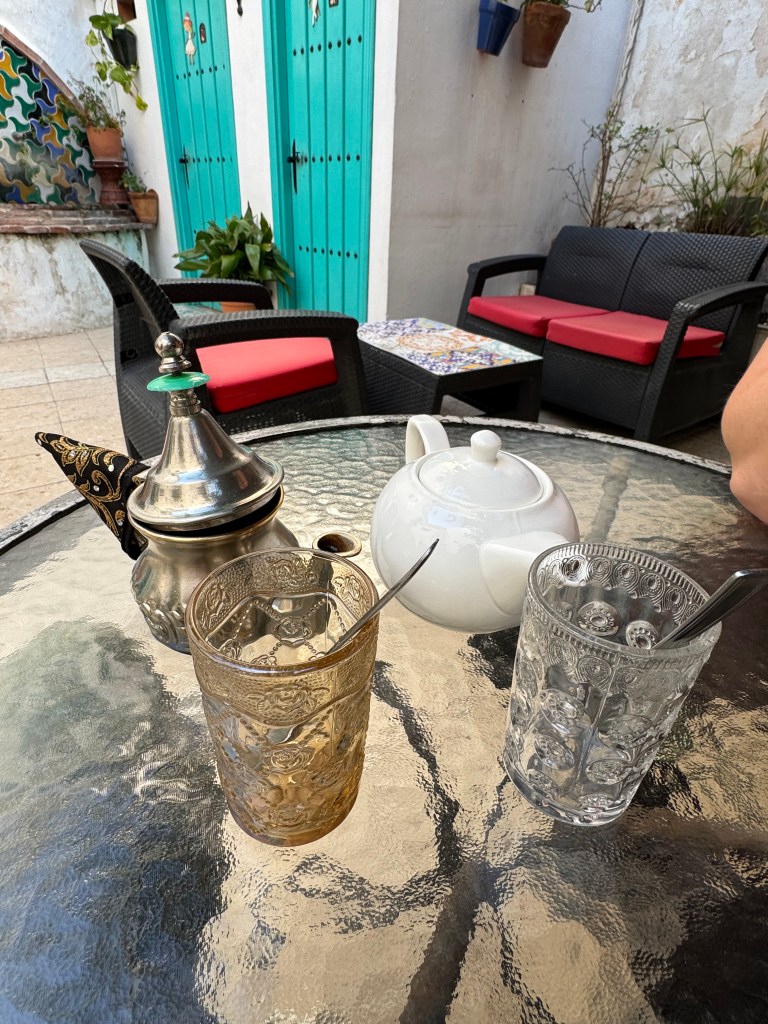
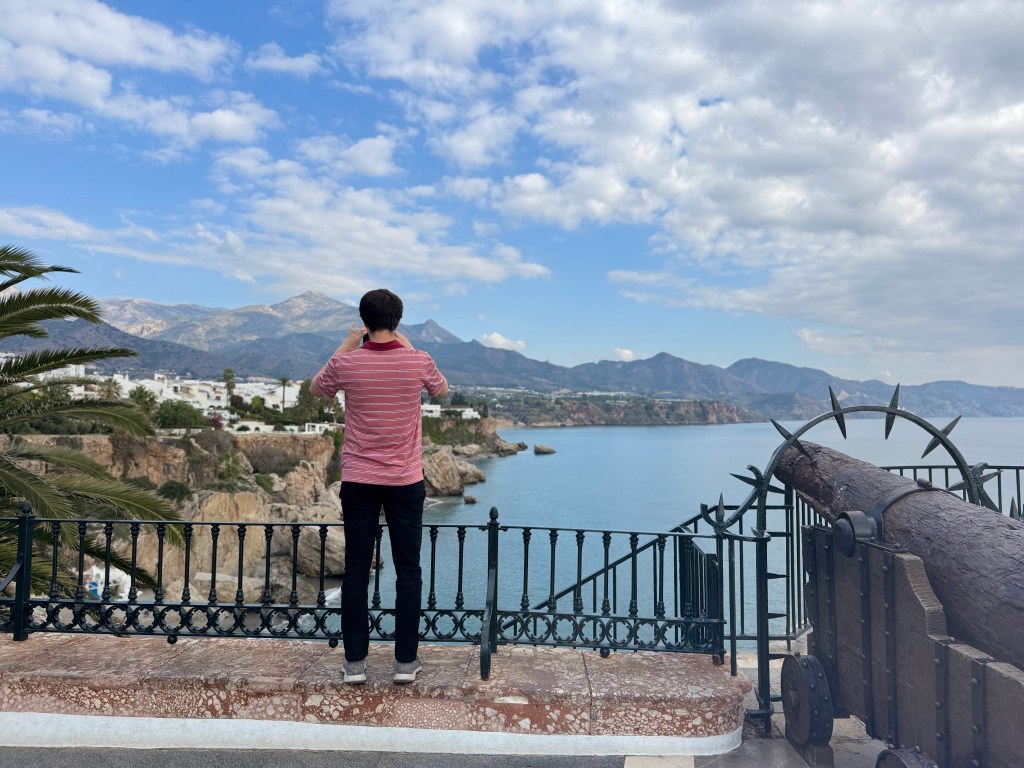
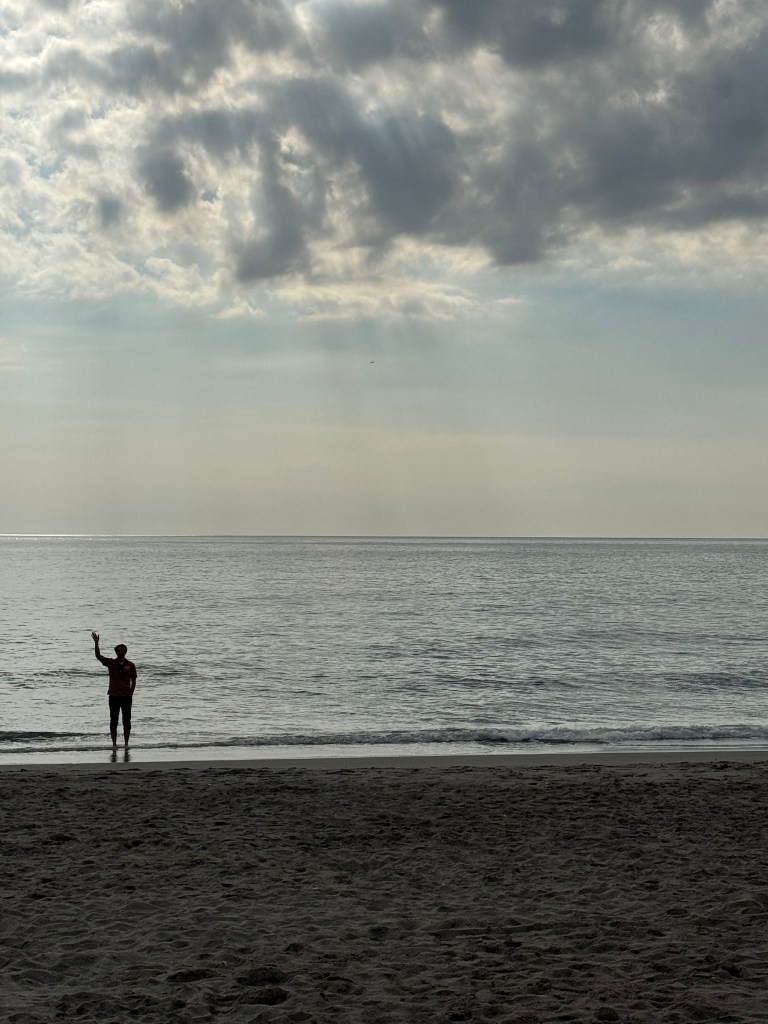
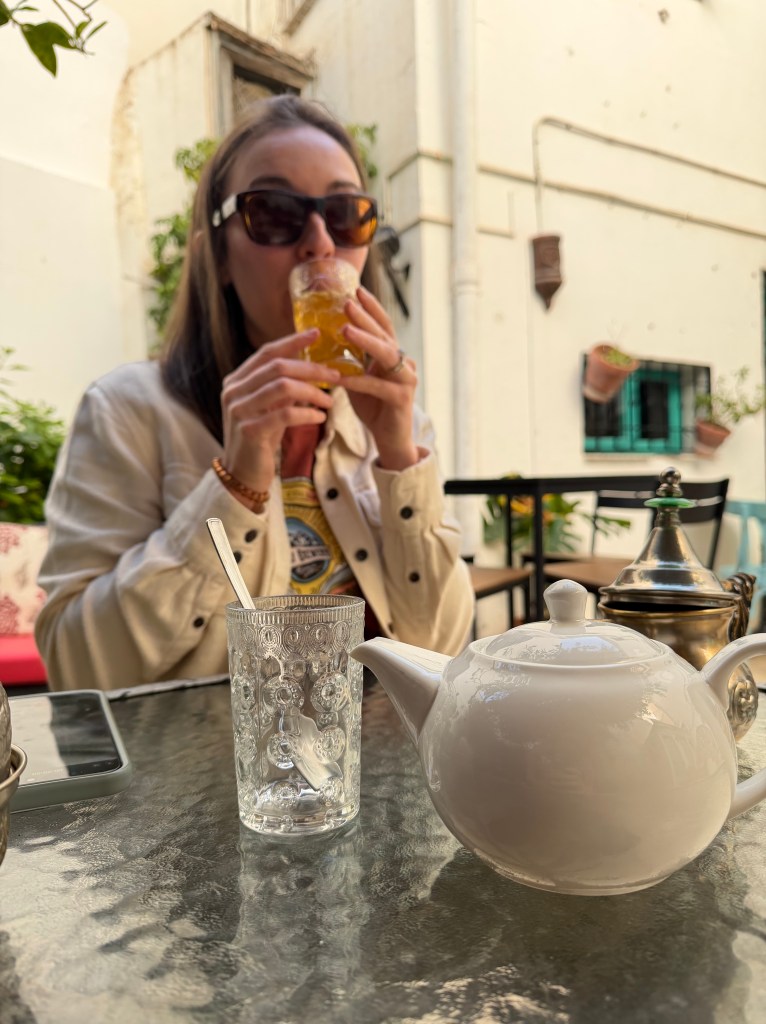
Today was a little slower paced, as we had most of the day to mosey up to Granada where we’d sync up with Taylor again. We started the day on the Mediterranean Coast – from Málaga, we drove a short distance to the town of Nerja, primarily to visit the Balcony of Europe, a gorgeous viewpoint overlooking the Mediterranean Sea. But first, breakfast. We went to Tetaría Zaidín, a lovely Moroccan teahouse where we had delicious looseleaf tea, a crepe and avocado toast. At this point in the trip, I was feeling fairly confident in my practiced Spanish and enjoyed ordering and talking to our waiter. After a delicious meal, we walked to the Balcón de Europa, where we got beautiful views of the water. One of Jared’s goals of this trip was to touch the Mediterranean, so we walked down to the beach and he got to stick his feet in (I settled for a finger) – there were even some locals swimming in the water! I wish we’d had more time to explore Nerja with its white-washed streets and beach vibes.


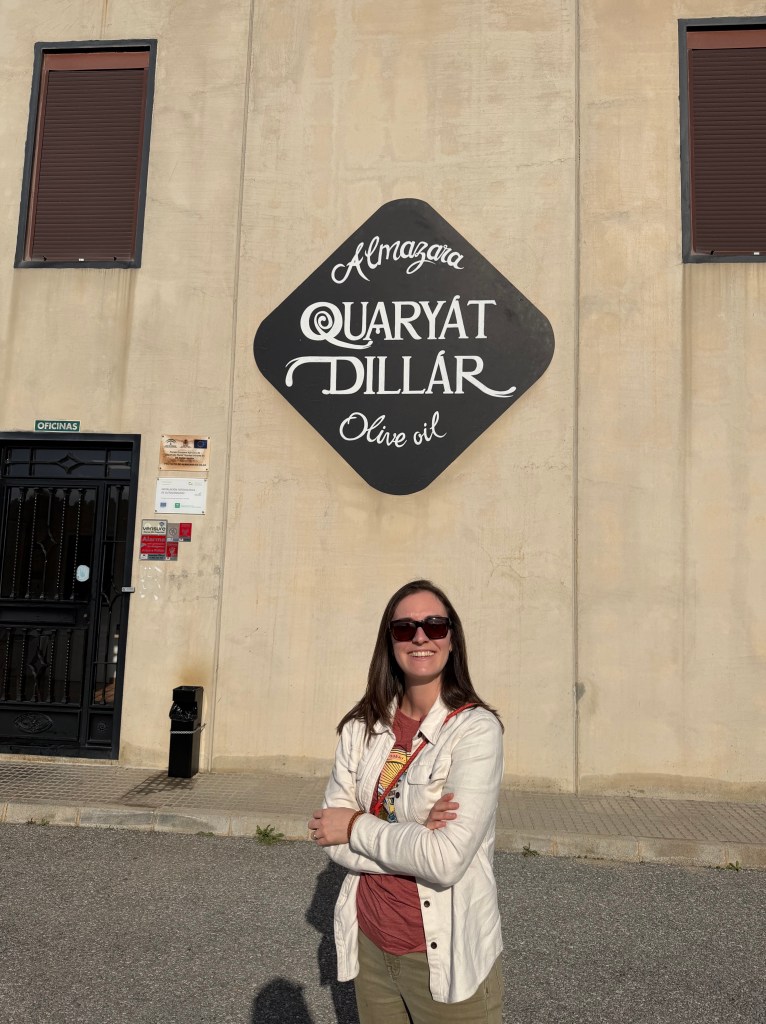
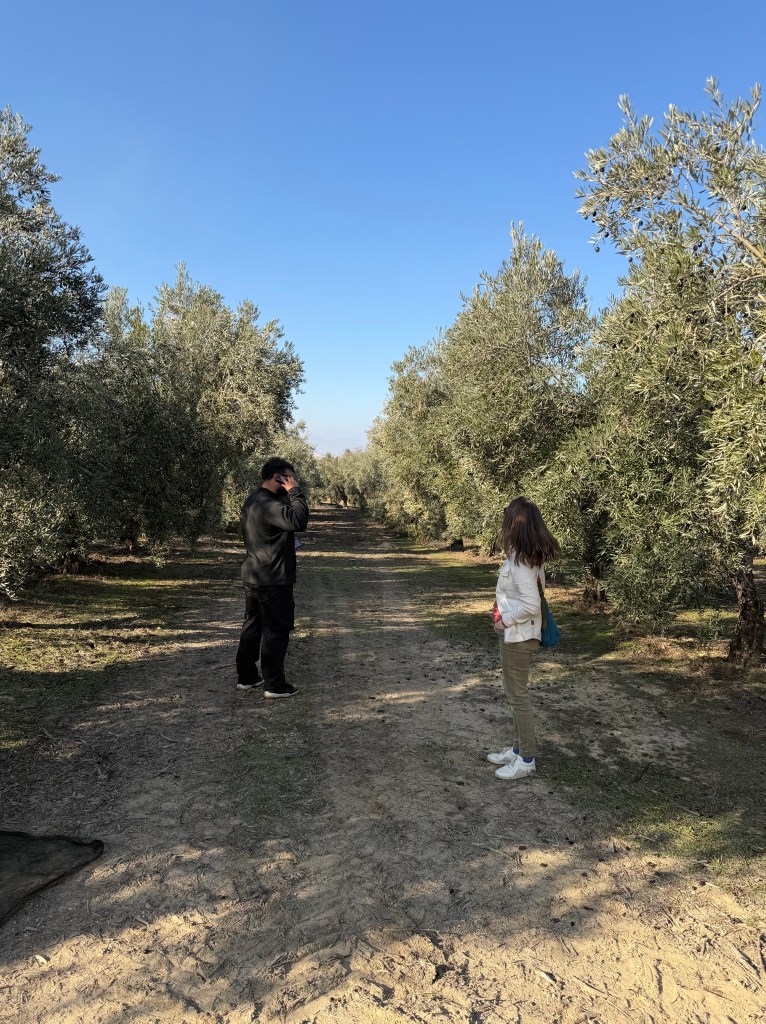
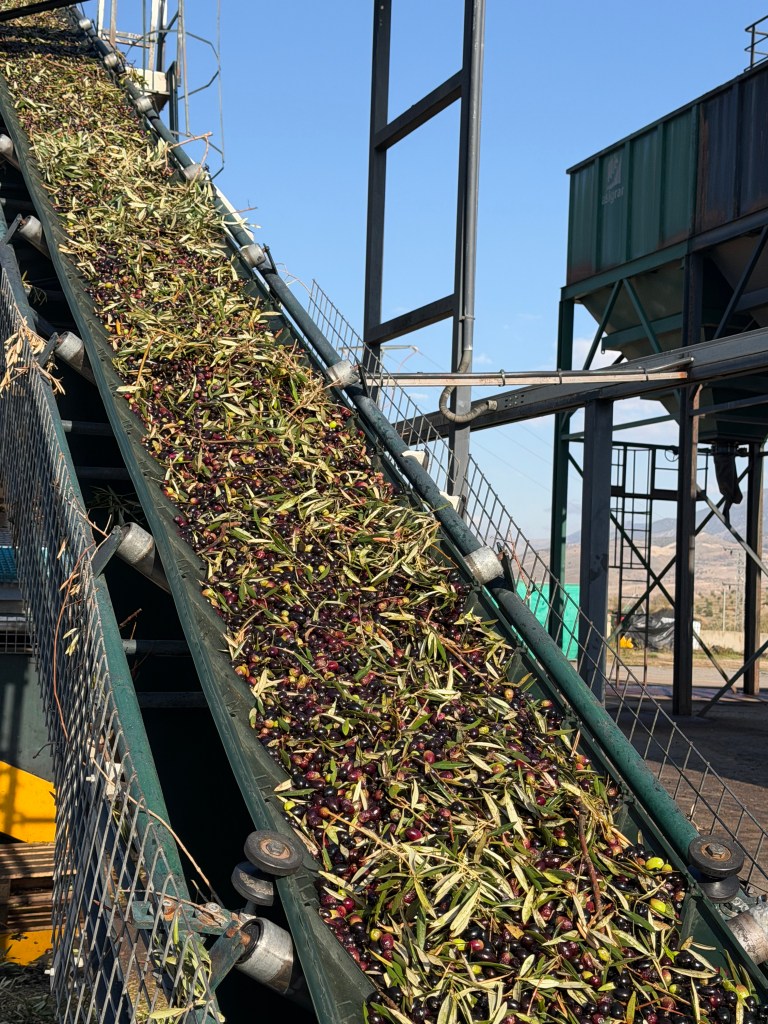
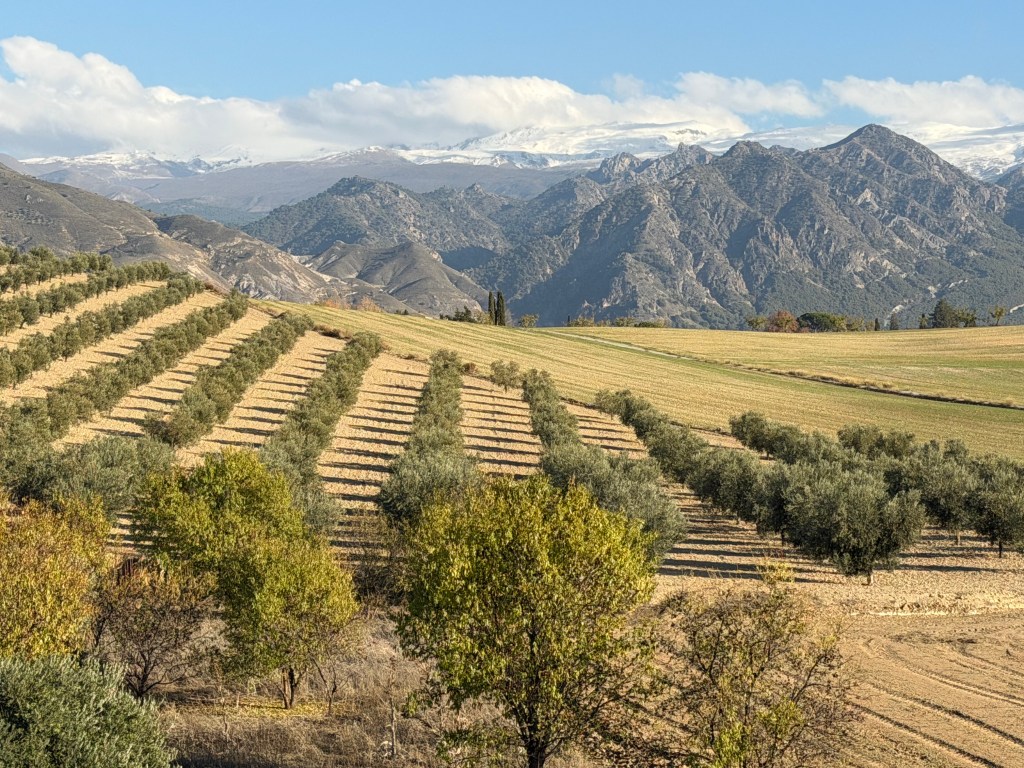
We decided to make one more stop before Granada – I was hoping we’d be able to visit an olive tree farm, and Jared ended up finding one of the most enjoyable tours of the trip at Quaryat Dillar, an oil mill in the Sierra Nevadas. We had sent a message via Instagram ahead of time to see if we could do a same day tour – they messaged back and said while no group tours were on the schedule, we could stop by for a private 1-hour walkthrough of the facilities for free (what!!). We ended up being there during the best possible time, because it was the second day into the harvest of all their trees. We got to see the entire process, first starting in the orchard where the workers were agitating the trees to shake off the olives, then where the olives were unloaded from the truck and went up the conveyor belts of the mill, to the inside of the mill where the olives were pressed and ultimately stored. A few fun facts we learned:
- The area surrounding the Sierra Nevadas provides a unique micro-climate that allows for the perfect growth of these olives (although the olive oil production is highly susceptible to climate change). I asked, mostly jokingly, if they have an issue with people coming onto their property and stealing olives. Our guide explained a few years’ back, there was a severe drought in the area, which really affected olive oil prices, and trucks transporting olive oil were looted so yes, climate change is definitely impacting this industry.
- Some of the trees on the property were as old as 300 years, which obviously are too old to be mechanically agitated, so those are still hand-picked.
- Extra virgin olive oil, contrary to what I thought, does NOT just mean the first squeeze of the olives – it simply denotes the highest quality of oil, and needs to be qualified as “EVOO” by a specialist.
- 100 kilos of olives will produce approximately 20 liters of oil. This oil mill produced approx. 250,000 liters annually.
- Spain produces approximately 55% of the world’s supply of olive oil.
- Because this place is an oil mill, many farmers of the surrounding area will come and drop off their olives to have pressed. The mill independently tests the quality of their olives before integrating into the mill’s production and then the farmers can come and pick up their olive oil!
- This mill is super sustainable and truly uses all parts of the olive in their production; for example, the leaves from the trees are sent to nearby shepherds for their animals, and the ground-up olive pits are used for biomass fuel.
At the end of the tour, we got to do a tasting of two oils – Picual (spicy and sharp), and Arbequina (lighter and fruiter). Our guide explained how to taste the olive oil – first, swish the oil in the cup and hold the bottom to let it warm up a bit. Then, let it sit at the front of your mouth before let it pass through your cheeks and swallowing. Doing this, you should be able to identify three characteristics of the oil: spiciness, fruitiness and bitterness. The Picual was DEFINITELY spicy and I was coughing for a bit after I tasted that one! We ended up buying a variety tasting pack and thanked the people profusely, as this was such a cool and intimate experience that we got to experience.
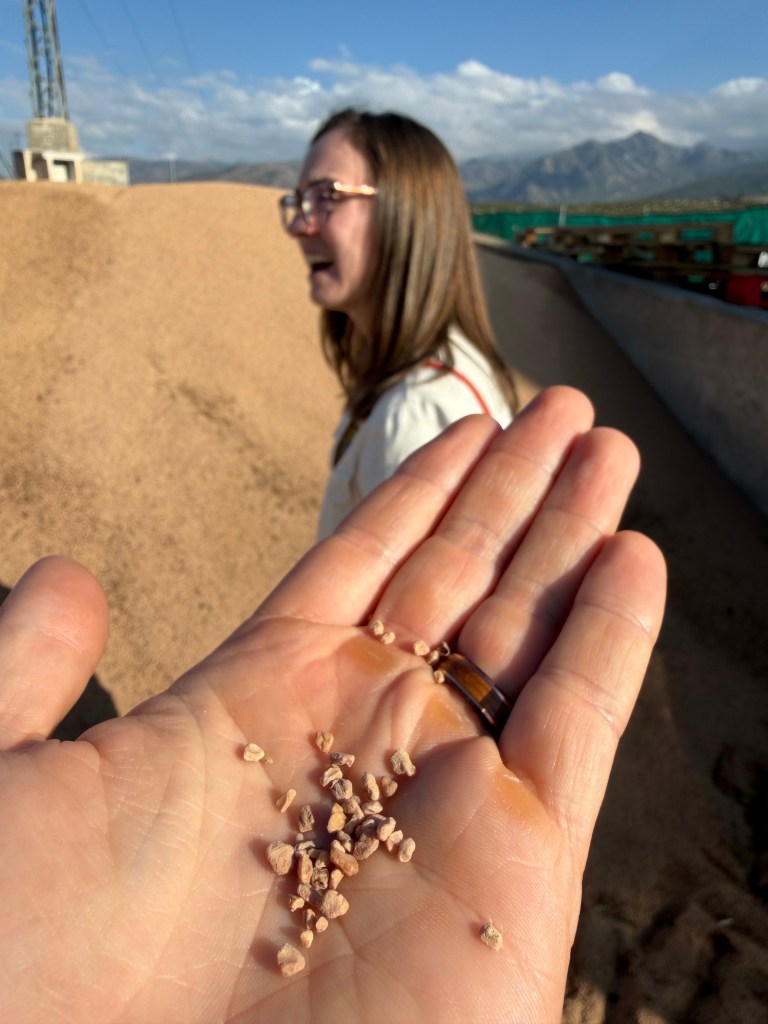

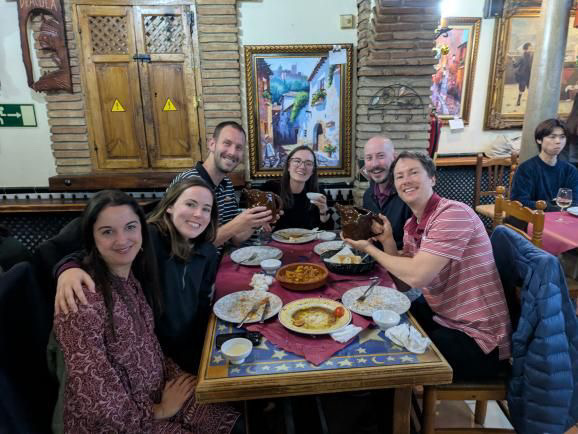
Now, onto Granada! We made it there within the hour, where we left our rental car near the train station and synced up perfectly with Taylor, who trained in from Seville. The three of us caught an Uber to our TOC Hostel | Granada and chilled out for a bit before syncing up with Taylor’s friend Jesse, another Virginia Tech alum! We were in for a treat that night, getting to experience Granada with a local. Another fun addition to the night – our friend David that we met on our Seville food tour was also coming to Granada, and he ended up joining in the festivities as well!
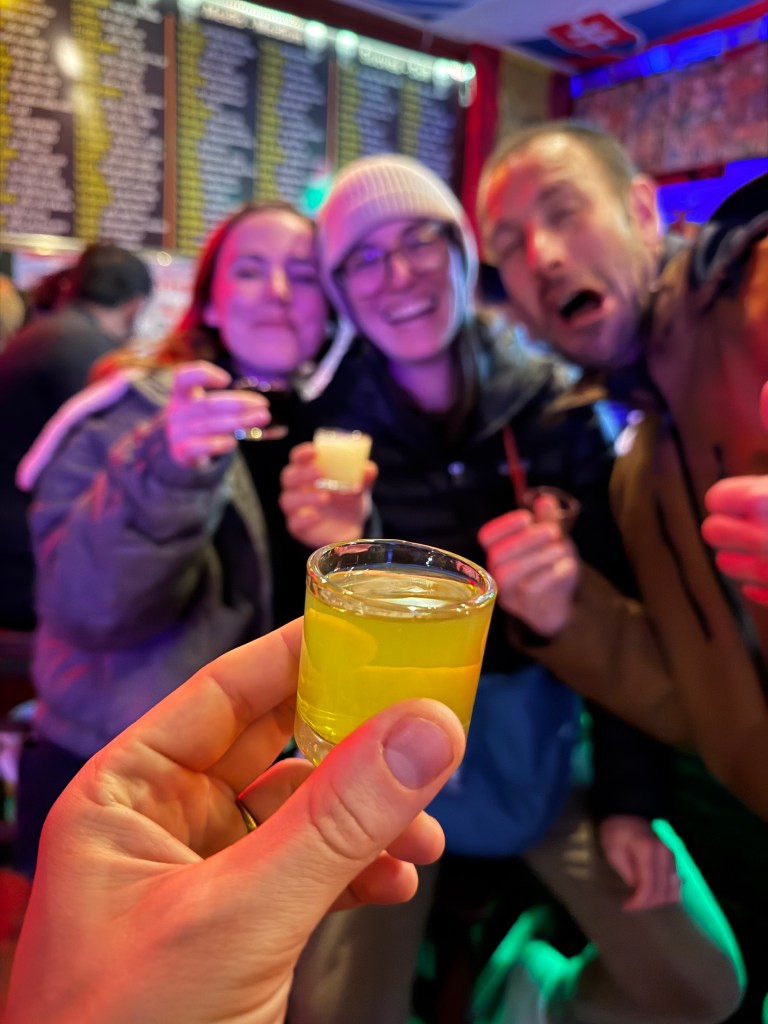
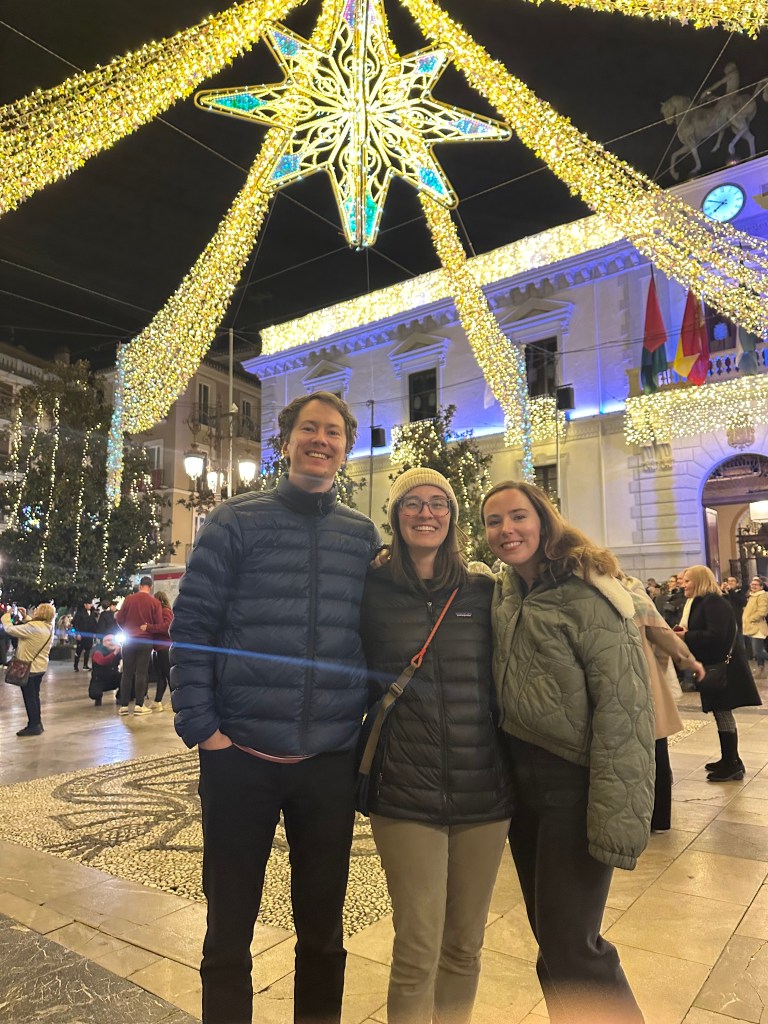
We ended up going to four or five bars (Granada is very fun in that in many bars, each time you order a drink, you get to choose a very generously portioned tapas to accompany your drink), before wandering the streets back to our hostel at 3AM – definitely felt like a European tonight! One of the most fun bars was La Bodega de Antonio, where David met us straight from the train station, and we all ended up splitting several jugs of pig wine along with delicious tomatoes, pork stew, and croquettes (mandatory to try and say “Pamplona” with a huge croquette in your mouth).

Granada
Day 8 – December 12th
Another day, another 10AM tour with little sleep the night before. The three of us stirred in our hostel room around 8:30, thinking we’d have more than enough time to make it to the Alhambra in time. After re-packing, dropping off our bags at reception, a very to-go breakfast, a speedy Uber and running through the Alhambra grounds to the palace, we were in line!
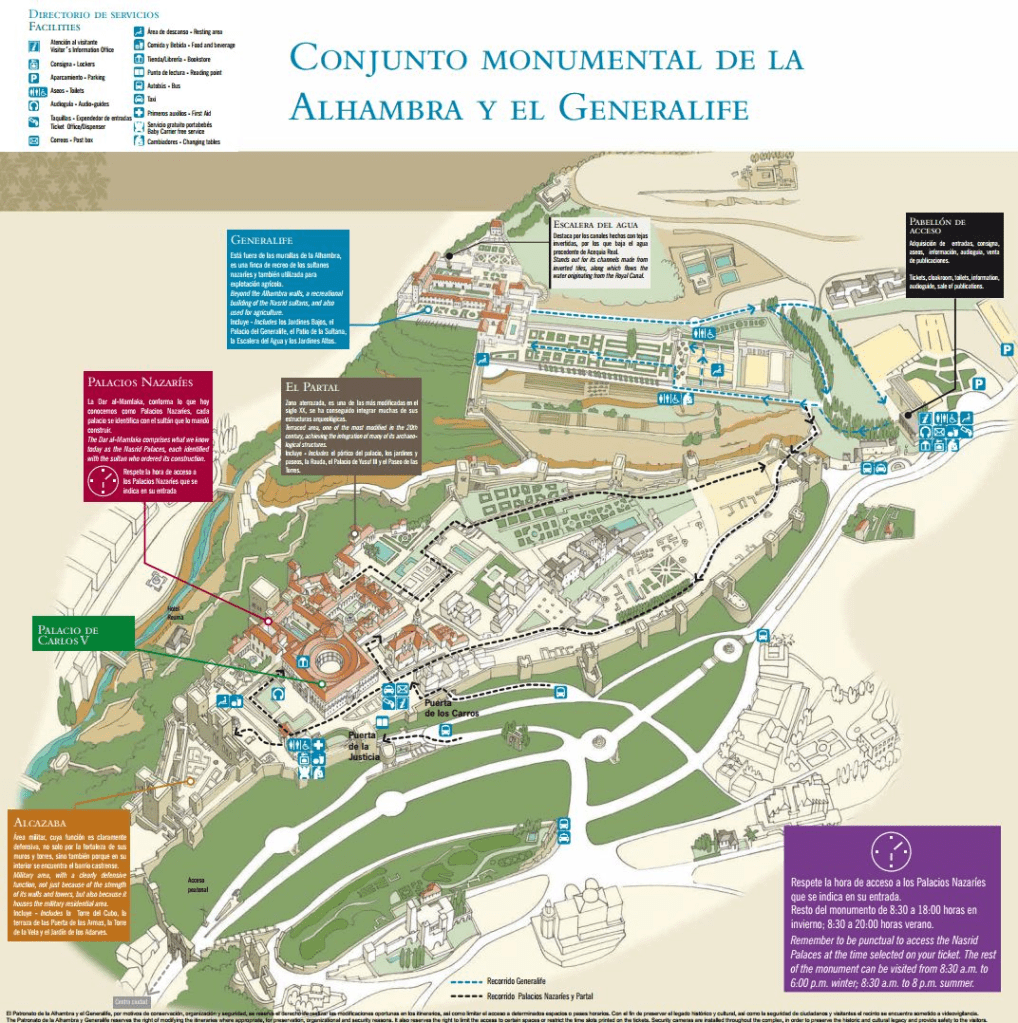
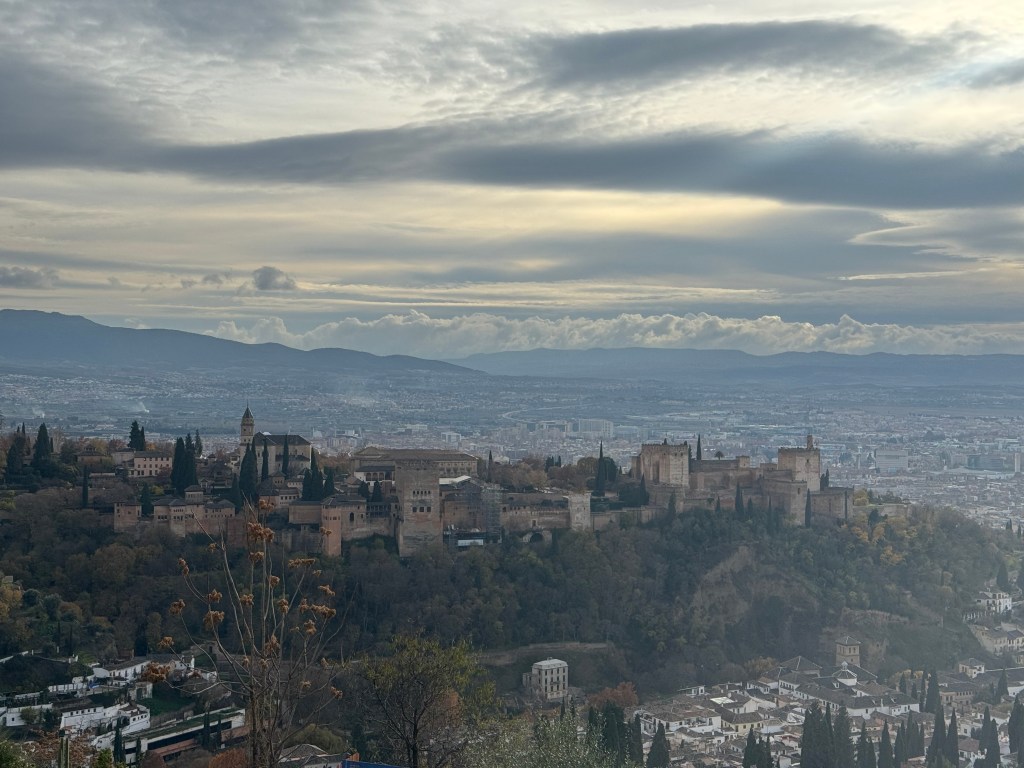
I was really looking forward to seeing the Alhambra – it’s a palace and fortress complex perching atop the steep hils of Granada, with construction first starting in the 1200s. It’s one of the most famous architectural wonders of Islamic architecture and is one of the best preserved places in the world of islamic origin (mixed with Spanish Renaissance architecture).
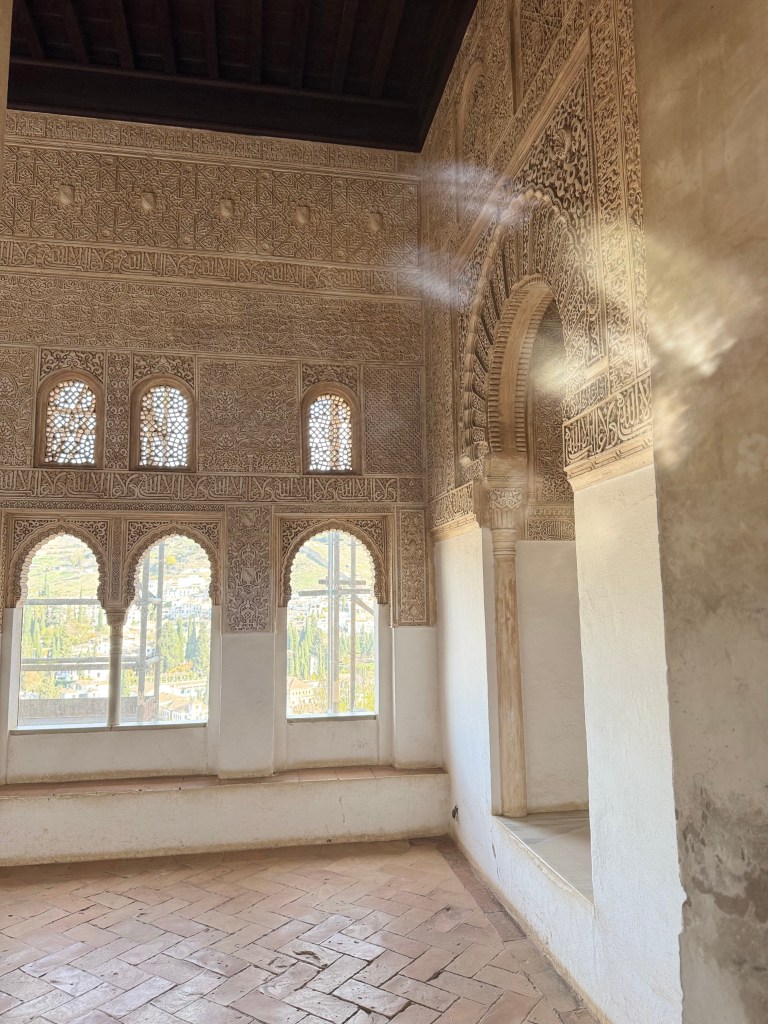
Our ticket included access to all visitable places of the complex (a lot free to the public), Nasrid palace (timed entrance), the gardens and the Generalife (former country estate). We did an unguided tour, so I felt like we missed out on the history a bit as we walked through the palace – it reminded us of the Real Alcazar from Seville, but bigger and more grand in scale. I’m glad our ticket was for 10AM because the grounds only got busier throughout the morning. We ended up staying for about 2 hours and exploring before our hunger took the better of us.
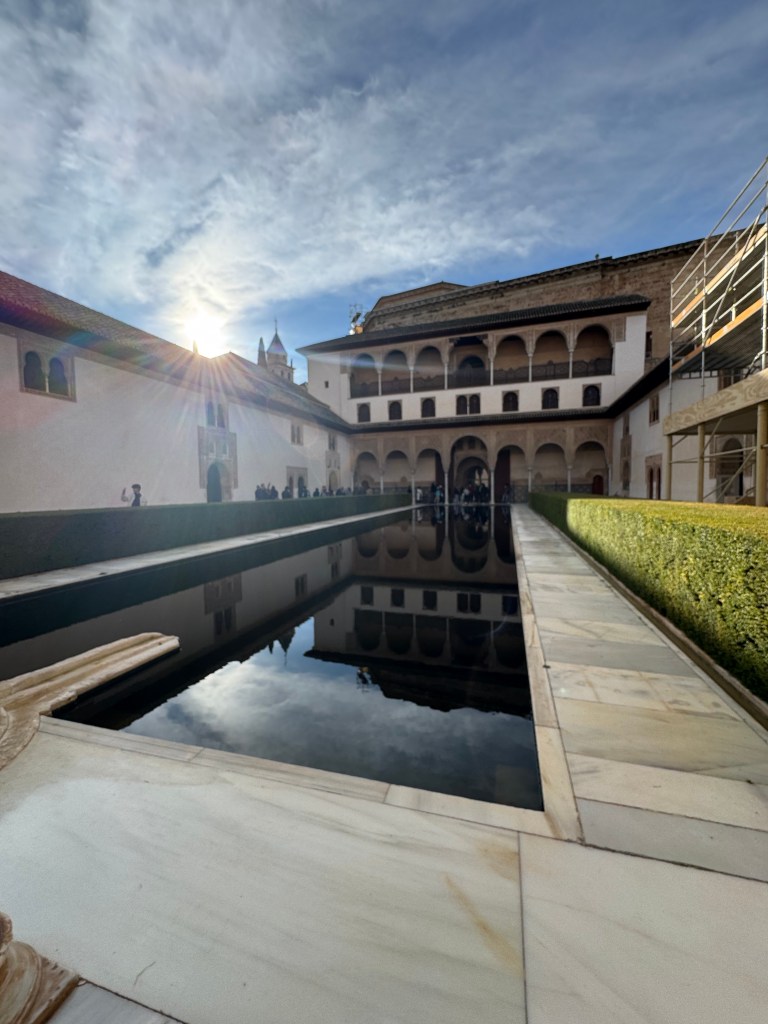


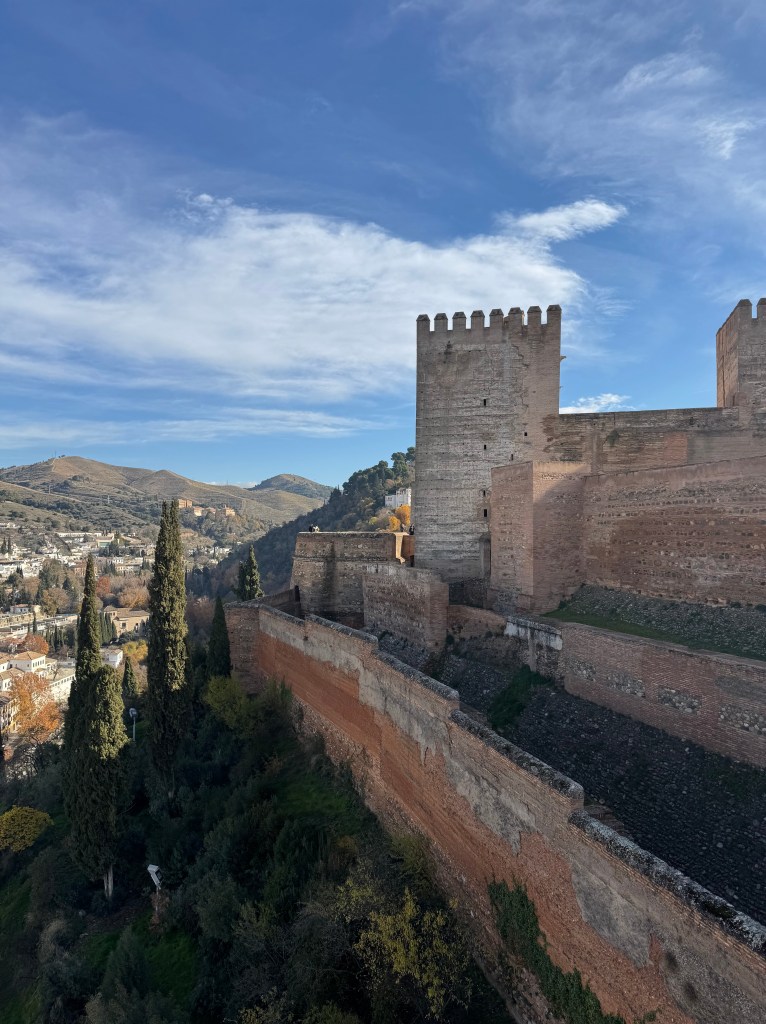

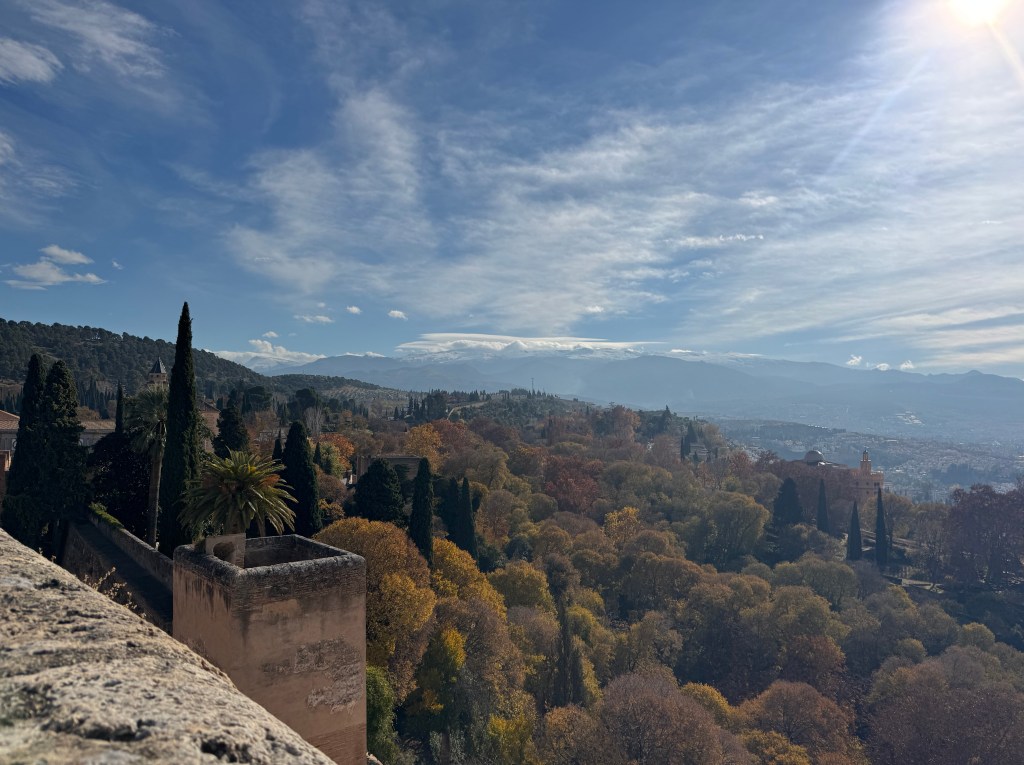

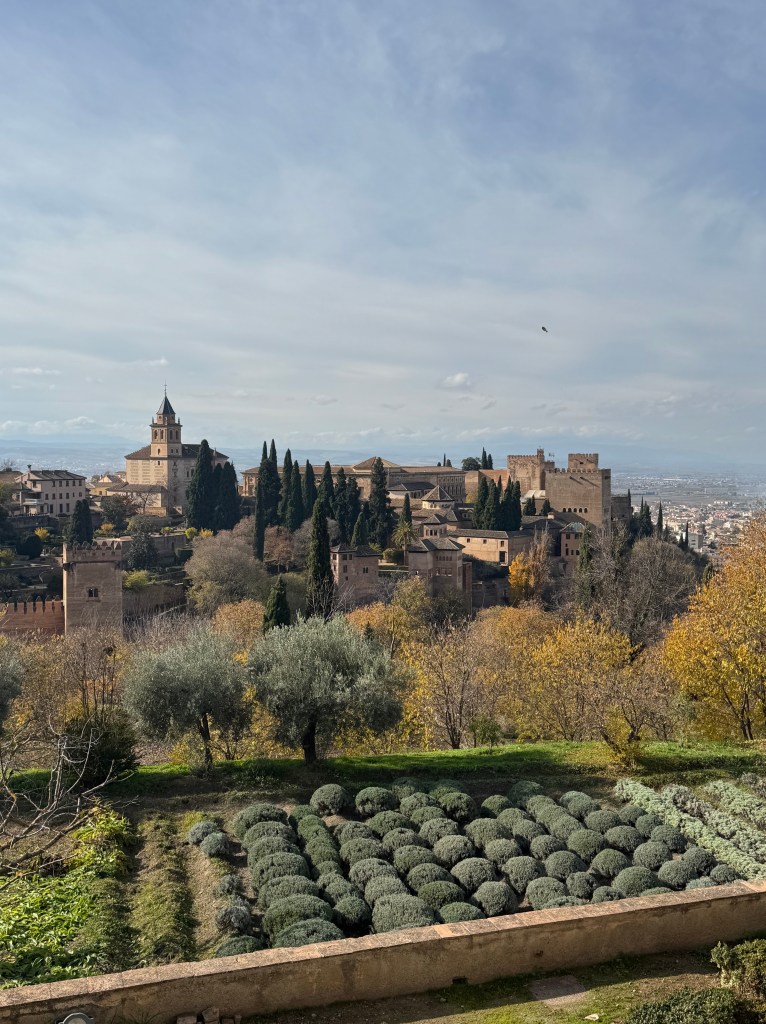
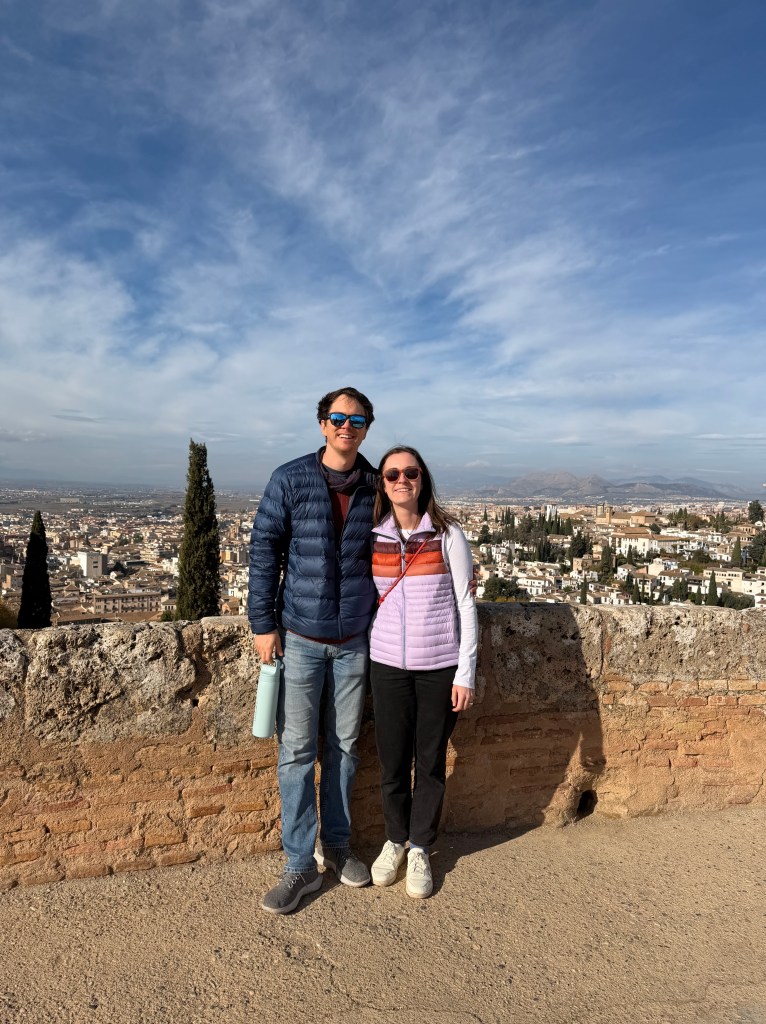
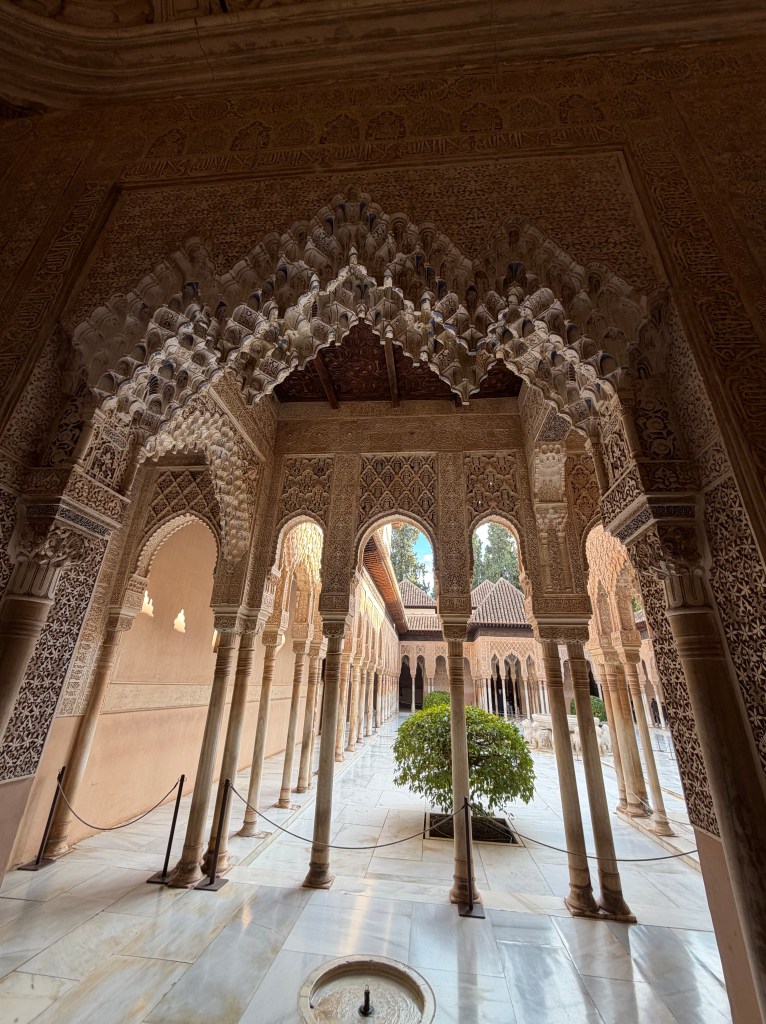


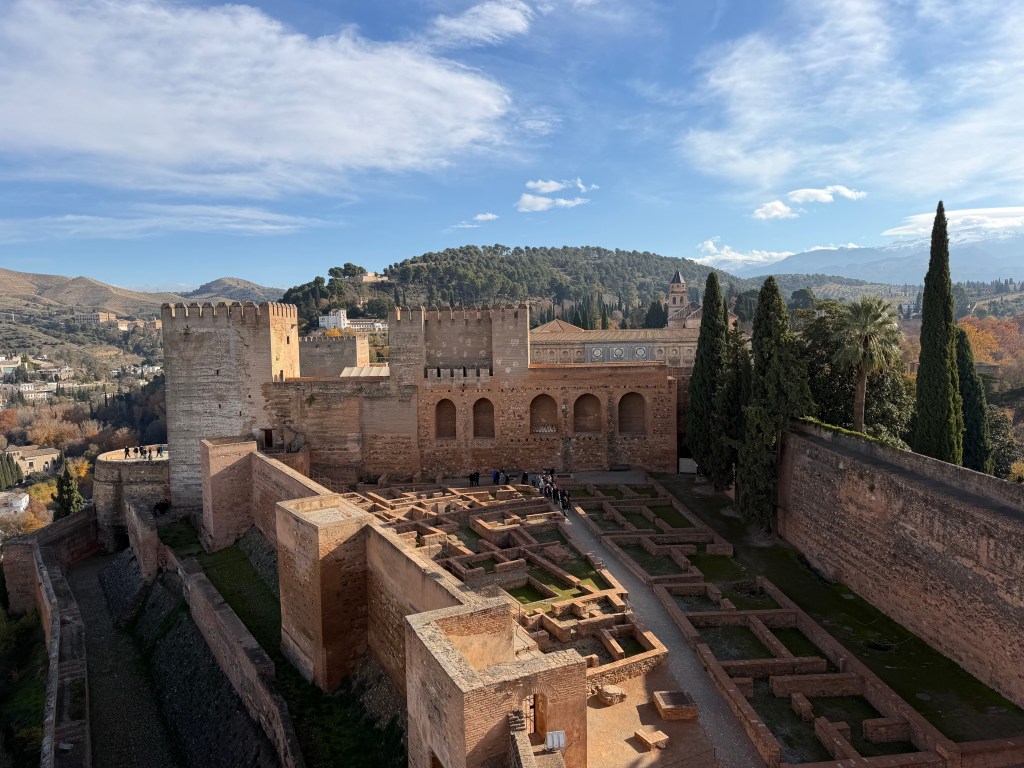
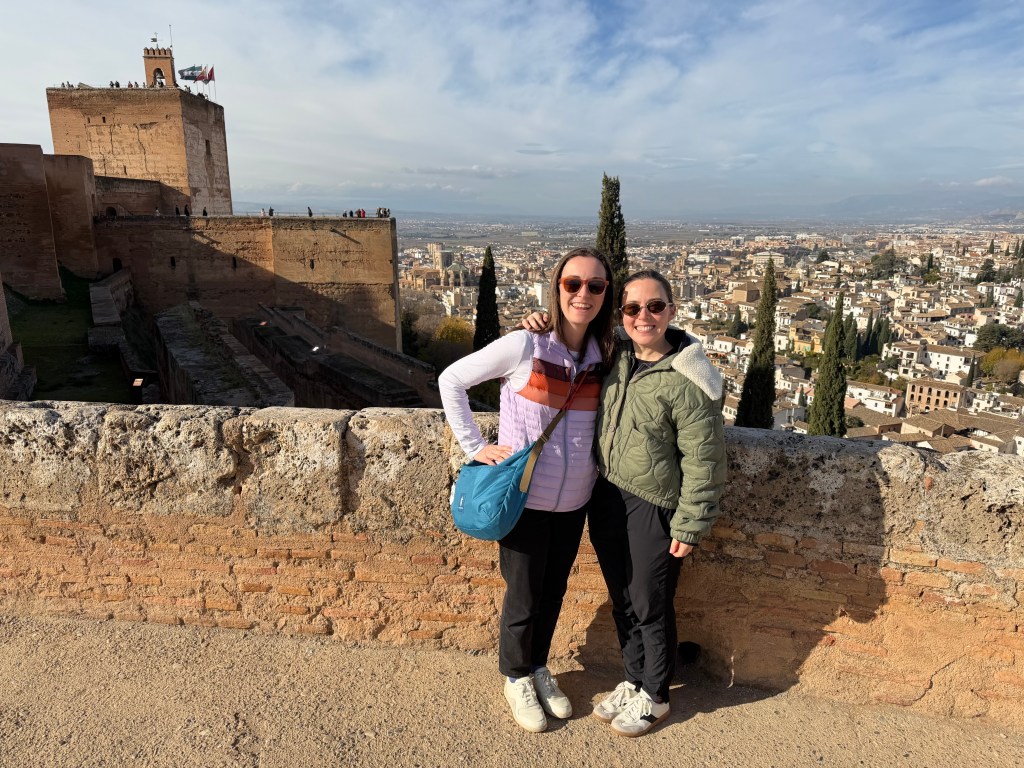
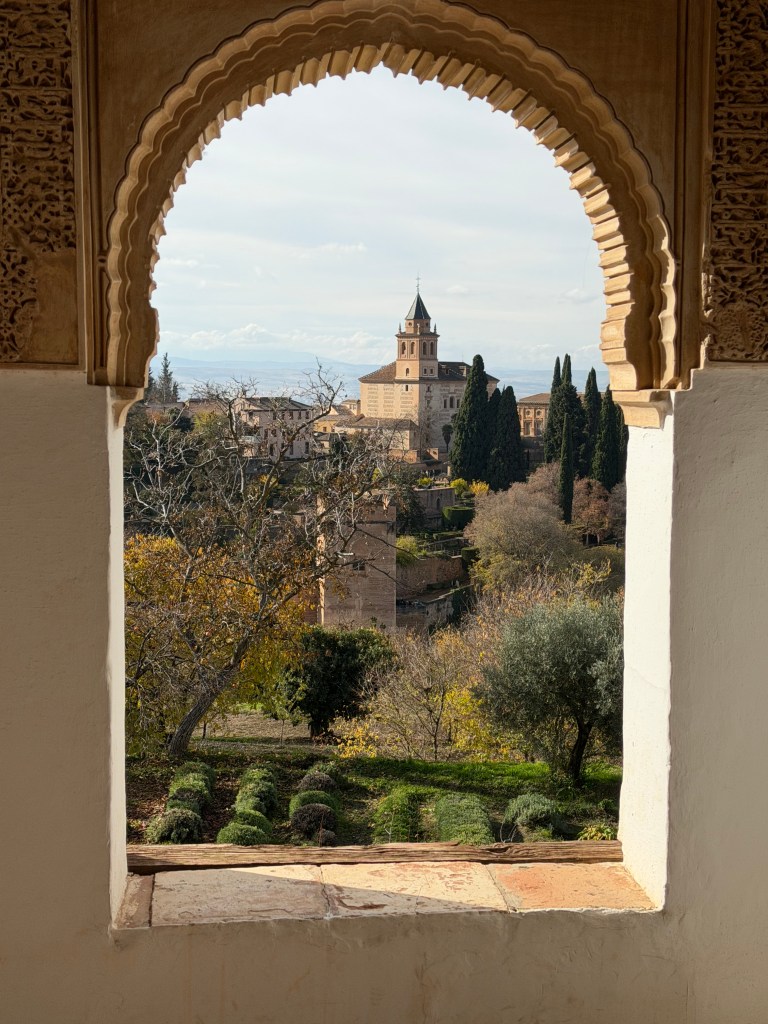
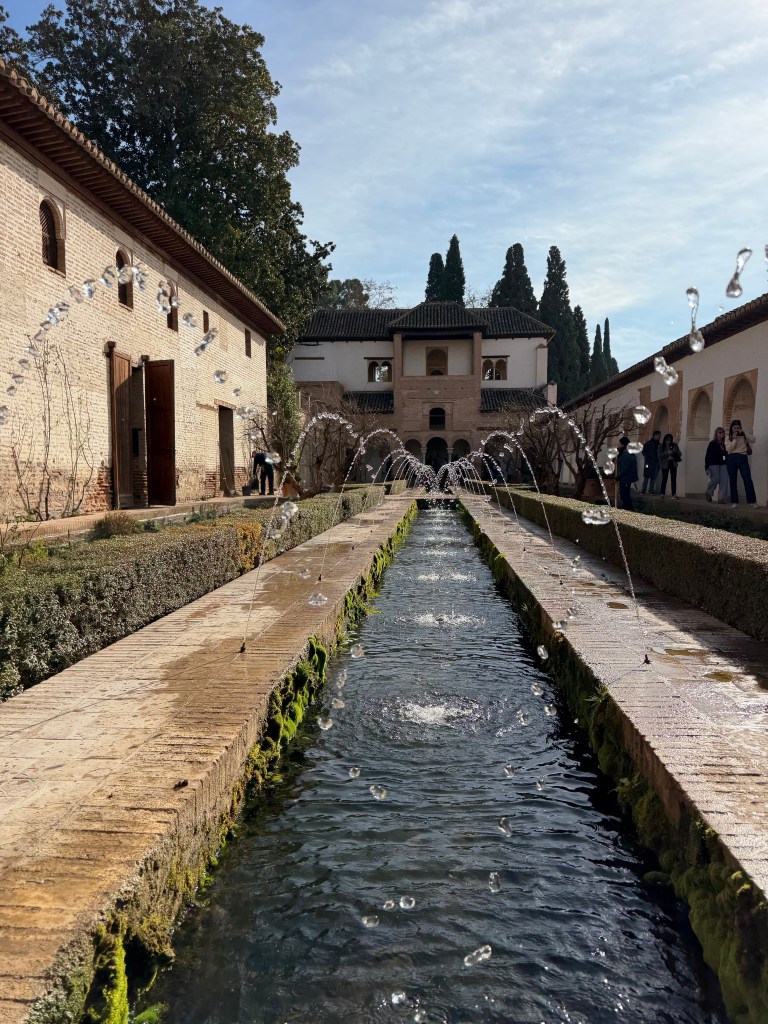
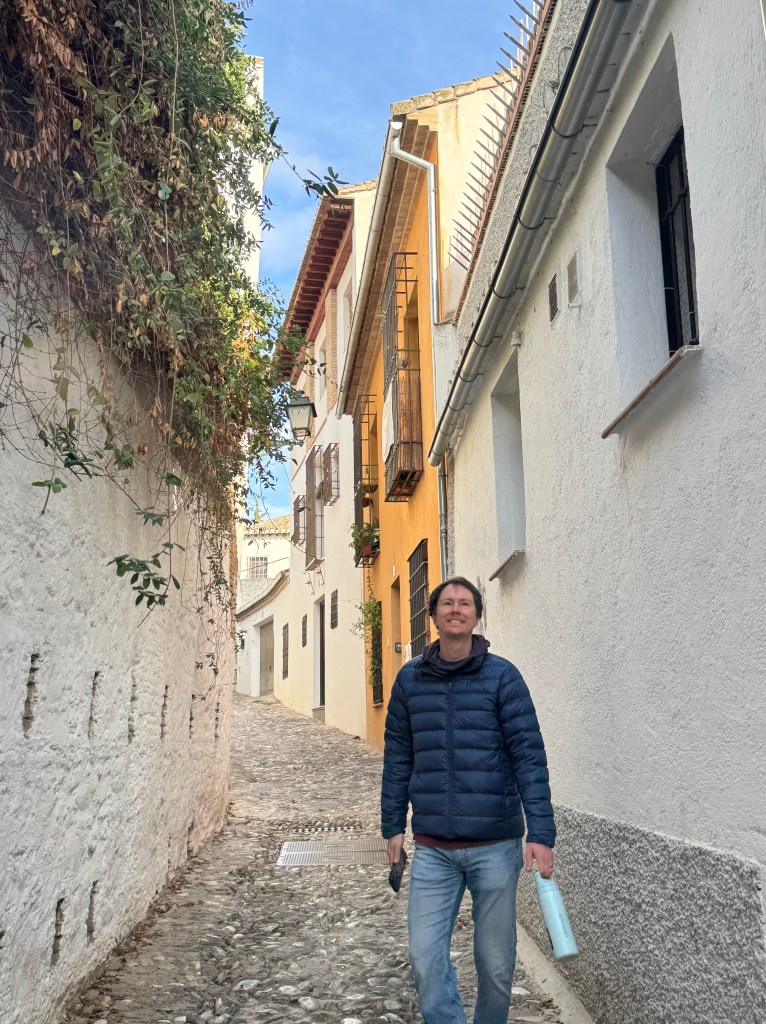
Taylor’s friend, Jesse, recommended we explore the Albaicín neighborhood, also known as the Arab quarter, situated across the Alhambra. This neighborhood has a rich history, and has been called home for Iberians, Greeks, Romans, and Visigoths, leading this barrio to develop a rich cultural and architectural footprint, with its winding cobblestone streets and tucked away shops. Its medieval street plan dates back to the Nasrid period, somewhere between the 13th and 15th centuries; in 1994, Albaicín was declared a UNESCO World Heritage site.
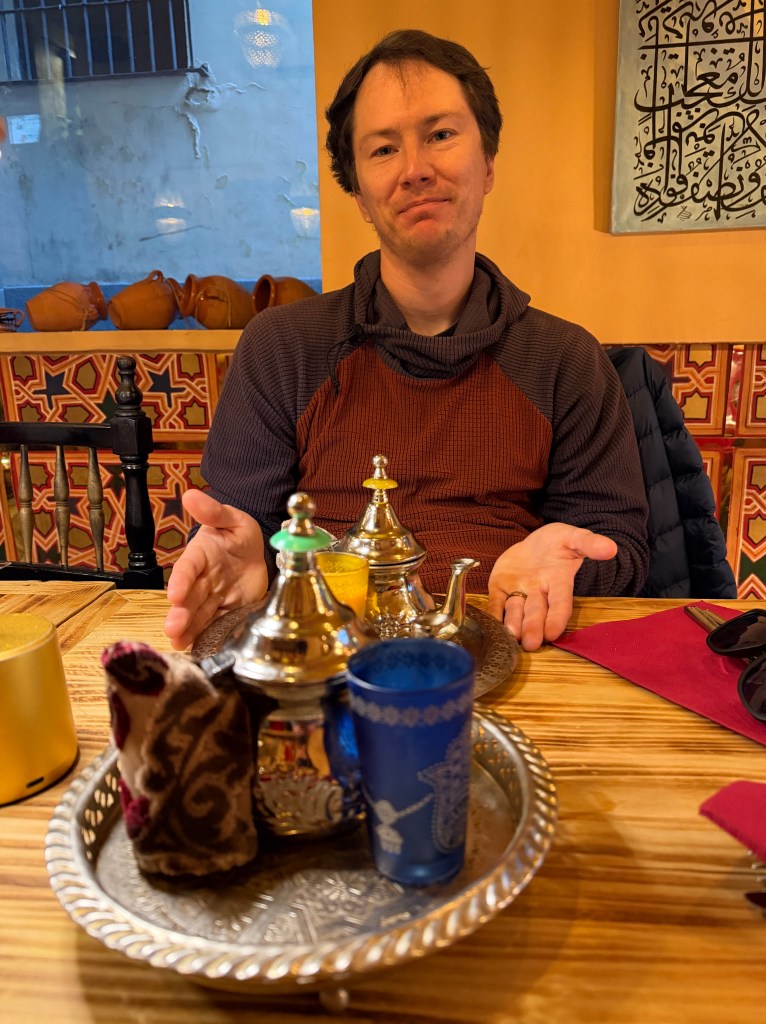
After a delicious Moroccan lunch, Jared and I walked up to the San Miguel Alto Viewpoint, one of the many miradors of the city. We wound our way through the white-washed streets of Albaicín, until we got to the highest viewpoint of the city – took us about 30 minutes and a fairly steep ascent towards the end.

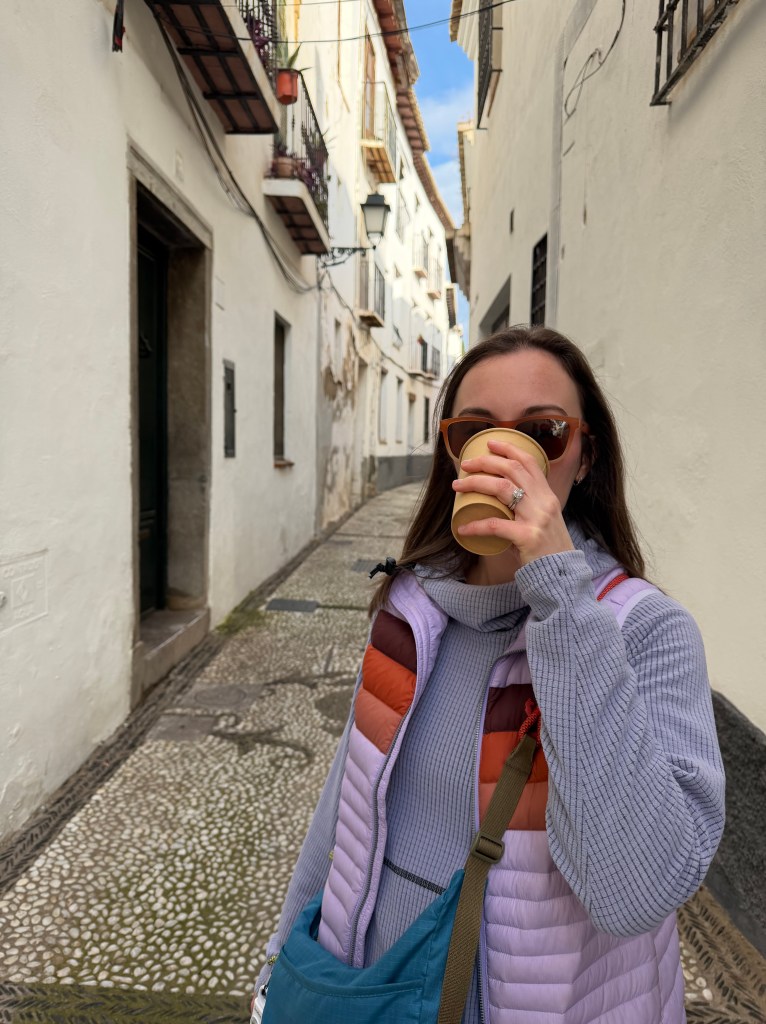

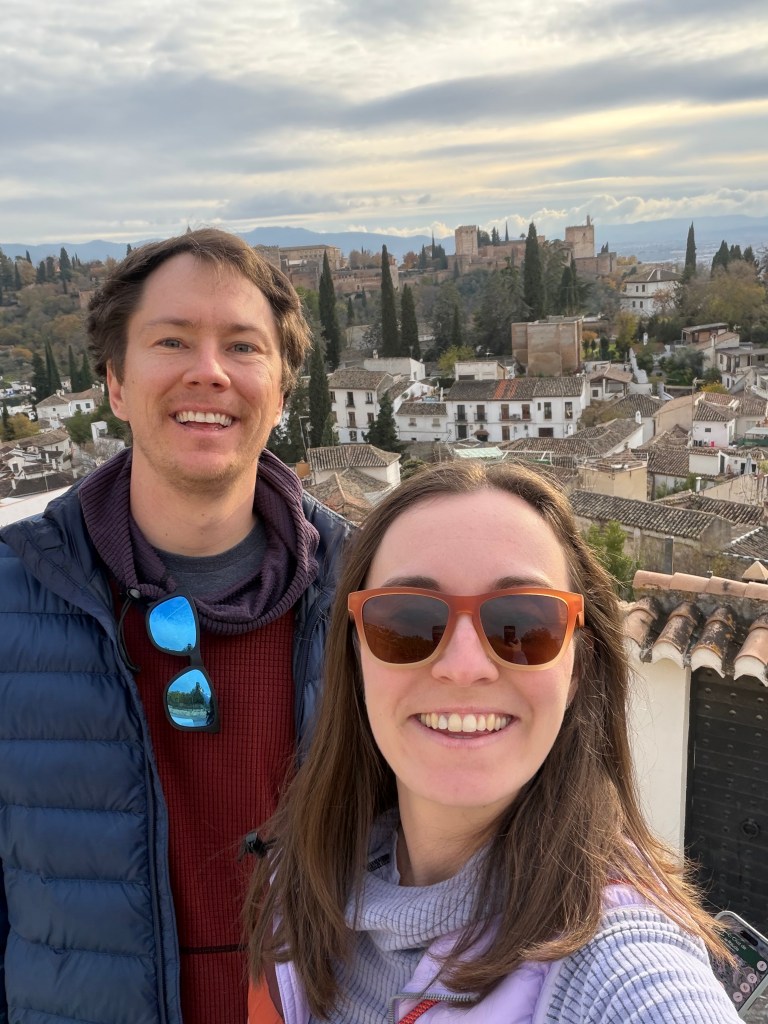
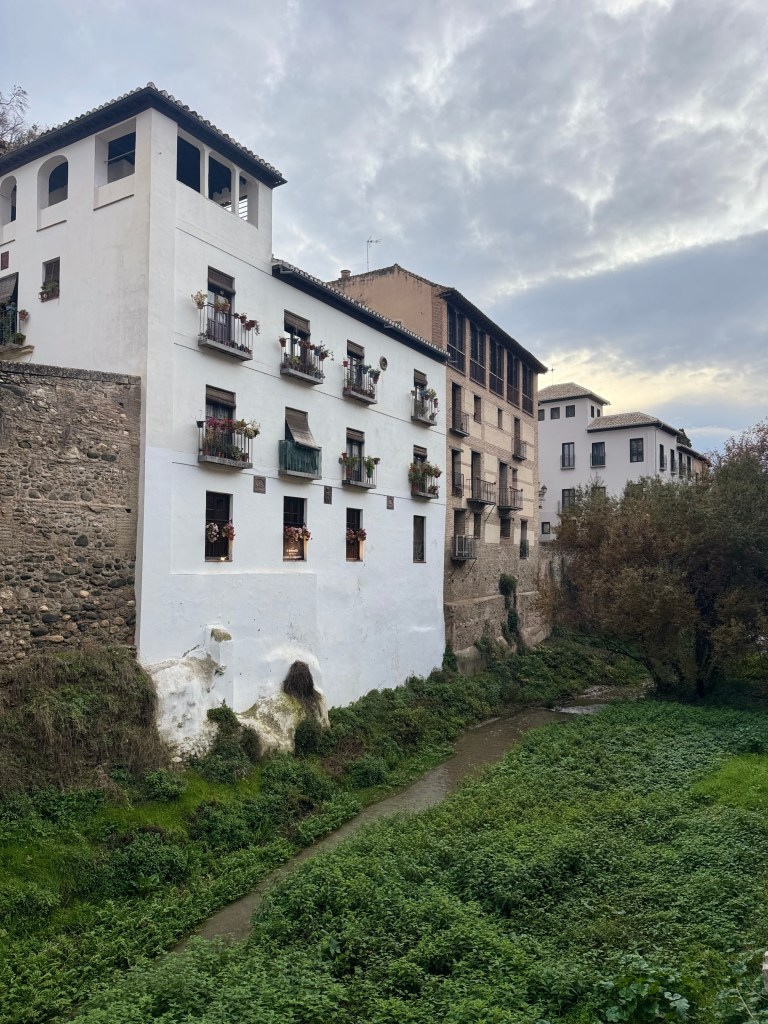
After we soaked in some views above, we descended down the hill to a different spot in town – Paseo de los Tristes (Walk of the Sad Ones). The charming riverside promenade provided excellent views of the Alhambra, and led us back to the Albaicín quarters where we met Taylor at a teahouse for an afternoon caffeine pick me up. From here, we went to another yes, tapas restaurant for dinner called La Telefónica – we agreed it was one of the best meals we’ve had on the trip so far! After dinner, all that was left to do was pick up our bags at the hostel and hang out for a bit before heading to, yes, the airport one more time for our last two days in Barcelona!

 Tiff & Jared's adventures
Leave a comment