Official Motto of Lisbon: “Very Noble and Always Loyal”
Day 1 – December 5th
After a two-leg flight from Denver to Dulles to Lisbon, we arrived in the capital of Portugal around 10AM. Severely jet-lagged but equally ready to seize the day, we took an Uber from the airport and walked into Pousada Alfama Hotel in the late morning to be greeted with an early check-in and welcome shot of Ginjinja.
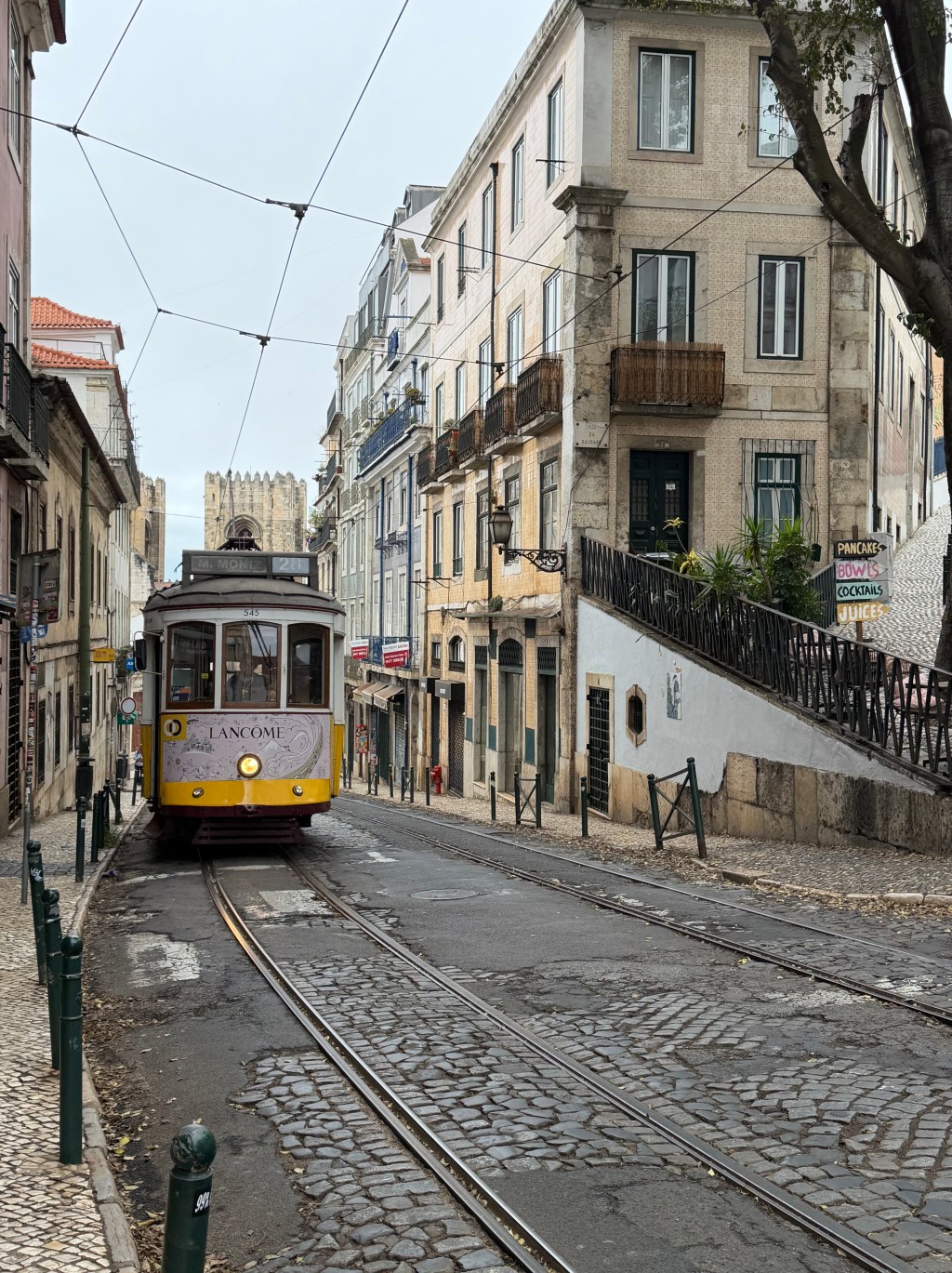
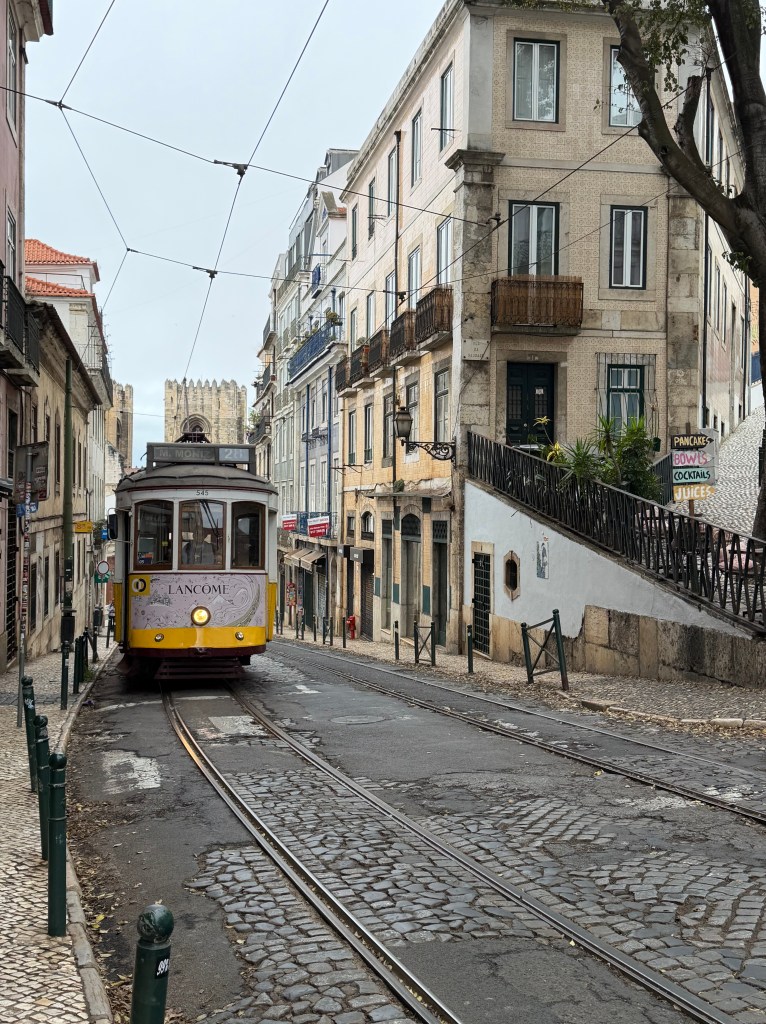
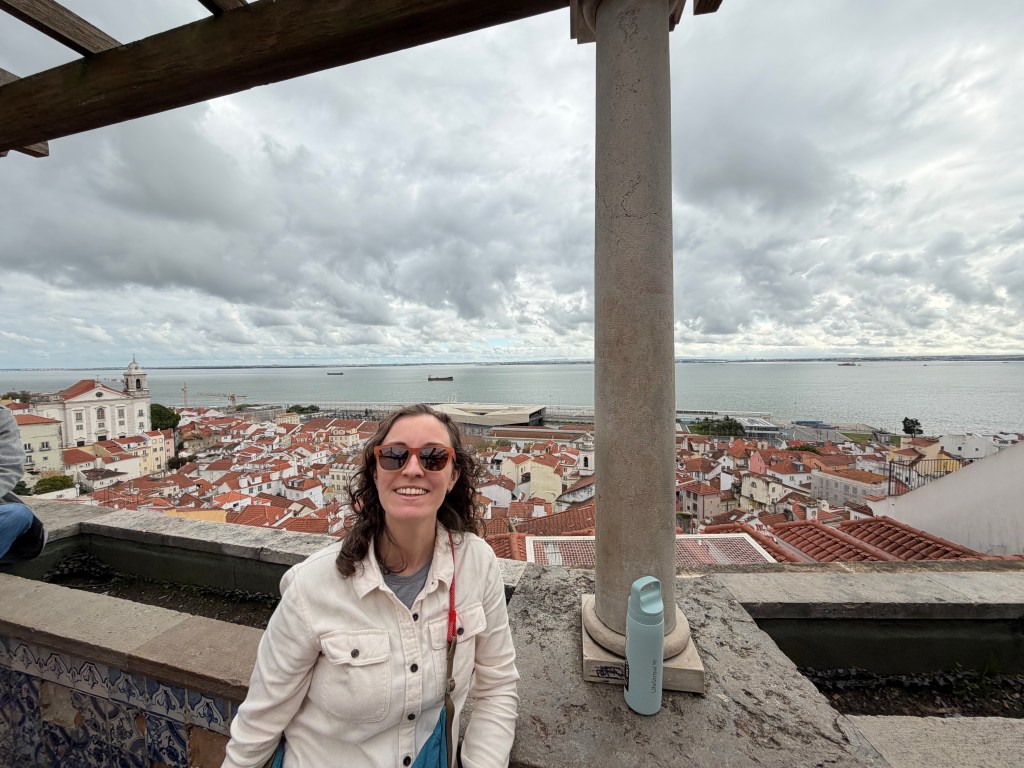
After a brief rest, we were ready to hit the town, or more accurately, climb the hills. One of Lisboa’s nicknames is the City of Seven Hills, but I believe it’s more like City of Hundreds of Hills. We picked our neighborhood after some research that the Alfama neighborhood was a good location for first-comers to the city. Alfama is Lisbon’s oldest district (surviving the infamous 1755 earthquake) and named after the Arabic for “hot springs” (fun fact – most words in Portuguese that starts with “Al” has Islamic derivation). It’s known for its hilly-ness, maze-like streets, Fado music houses, colorful tiles and shops, and the iconic Tram 28 (which we got to ride on our last day!).
With nowhere to be until our food tour at 3:30PM, we did something we have little time to do when we travel – aimlessly walk around. How lovely it was! Very first stop – Ludo’s coffee shop for a little pick me up after walking around the Castle District for a bit. Slightly more fueled, we continued to explore the narrow streets lined with shops, descend the steep steps into parts unknown, and bask in the temperate December weather.


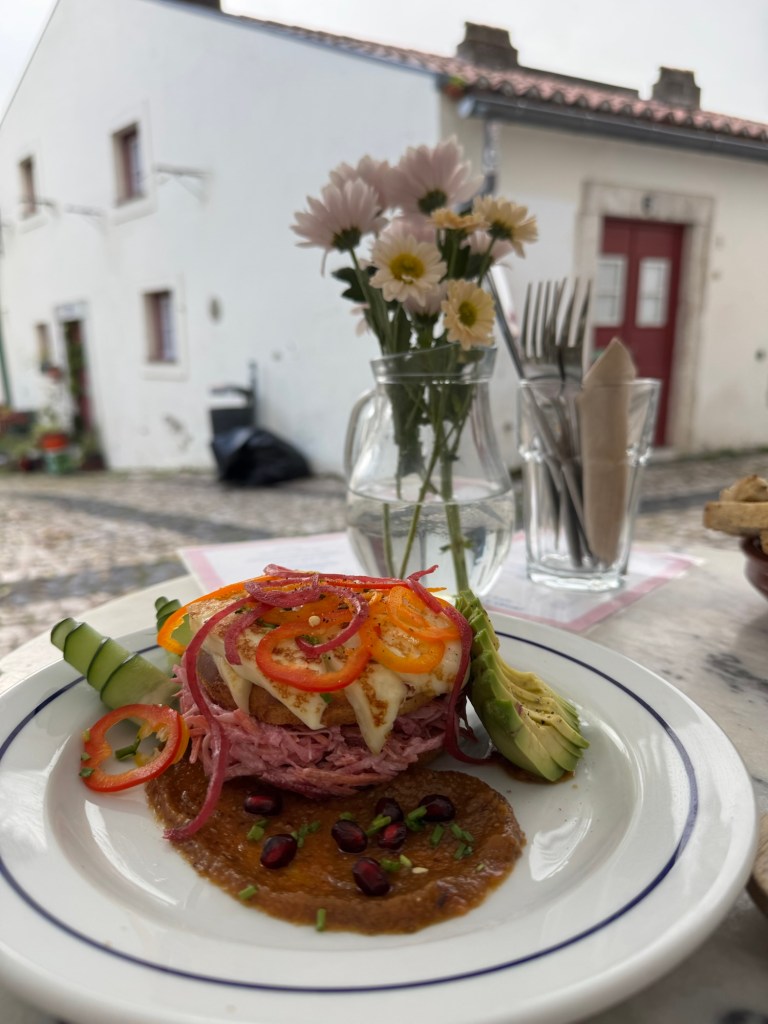
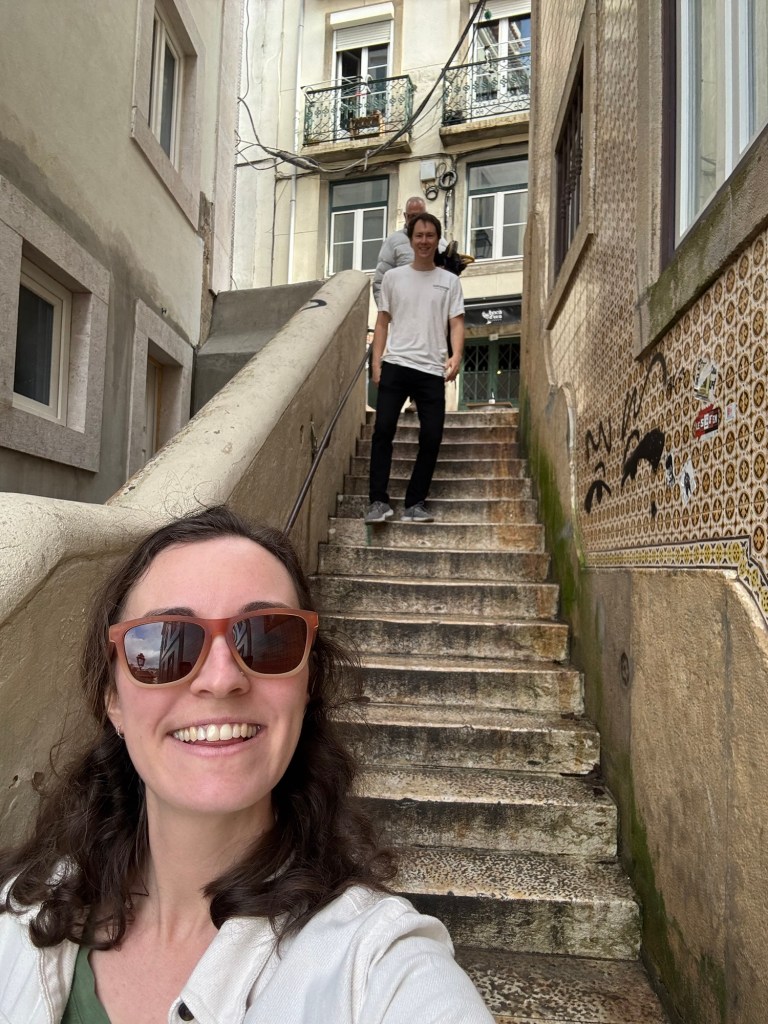
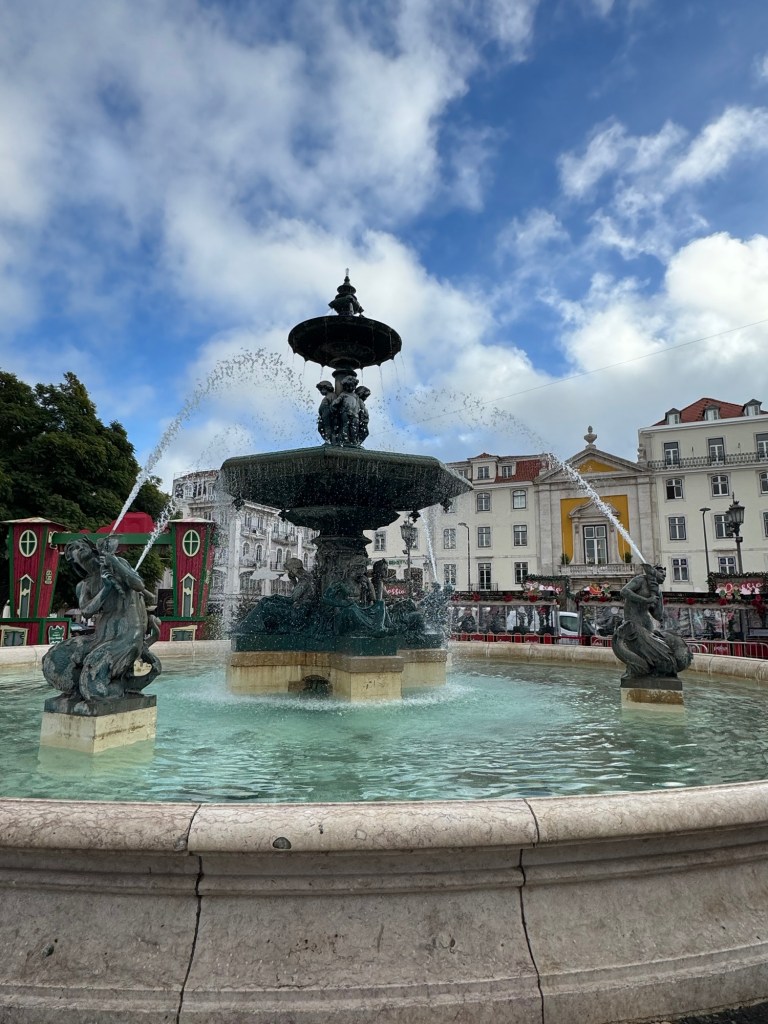
Alas, we made it to Rossi Square just in time to walk around the Christmas market for a few minutes before meeting our tour guide, Filipa, for a 3-hour food and wine tour! The group made initial introductions, with a couple from Hamburg, Germany, a mom and daughter duo from Cologne, Germany and a lone Dutchman.
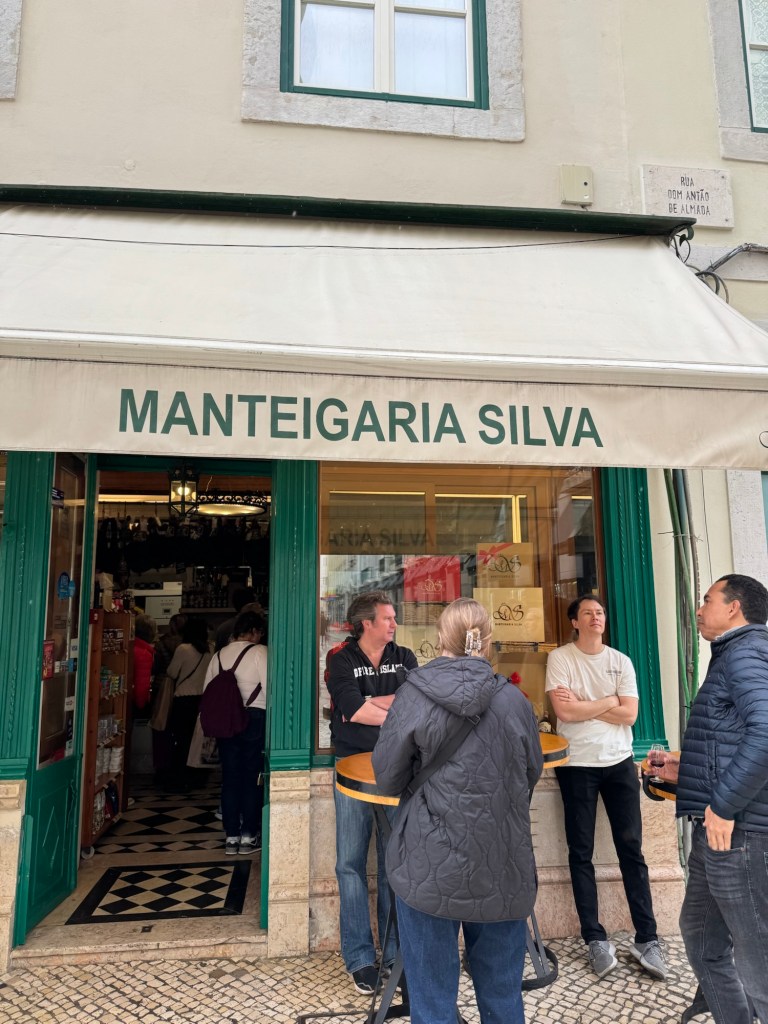
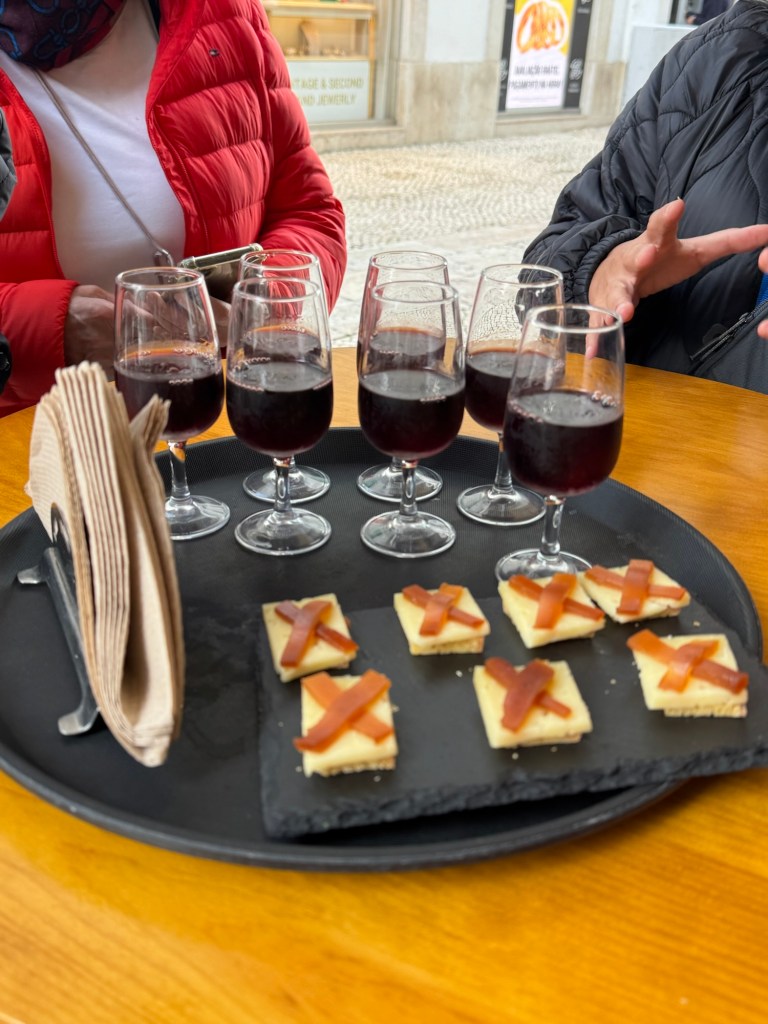
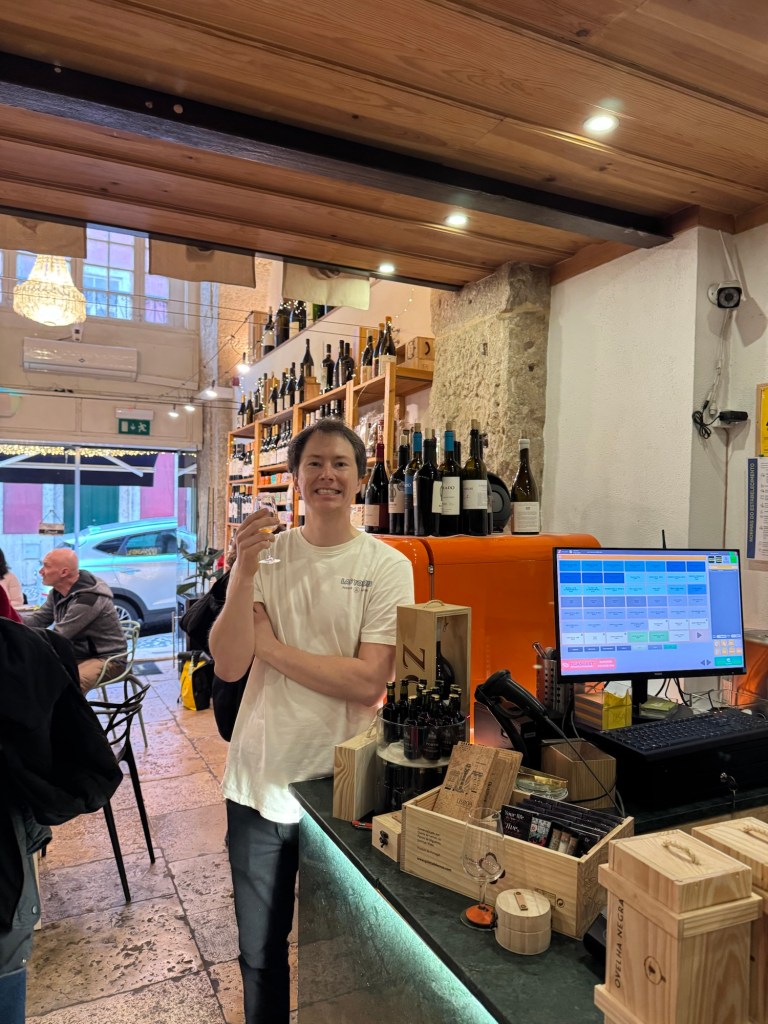
The first stop on the tour brought us to Manteigaria Silva, or Silva’s butter shop. This was a gourmet food and wine shop that frequently caters to Michelin restaurants in the city. It also sells bacalhau, or cured salt cod. This is a staple of Portuguese cooking, and it’s especially enjoyed around the Christmas holidays. One thing I thought was interesting that we learned during our time in Lisbon – while Portugal is well-known for its seafood, a lot of it is now imported into the country. For example, bacalhau is now sourced from Scandinavian countries like Norway. After all this talk about salted cod, we didn’t even try that on this food stop – we tried a cheese and cracker tapa with a port wine (more to come on port at a later stop). This was our first foray into this fortified wine, and what a fun flavor bomb! Definitely on the sweeter side and higher ABV, but a nice digestif to enjoy after a meal.
Off to a solid start, our next stop on the tour was Bifanas do Afonso, a famous local eatery known for its pork sandwiches. One perk of traveling during off-peak months is the lack of tourists; apparently, this is a tourist hotspot made famous by social media. We were lucky that we didn’t have to wait – Filipa took us right to the counter where we got our huge, porky, saucy sandwich and a glass of beer – the only choice we had to make was whether to add piri piri sauce or mustard. We collected our sandwiches and ate in the park benches while talking to our group about futbol (both our guide and the daughter-mother duo were going to the derby game after our tour).
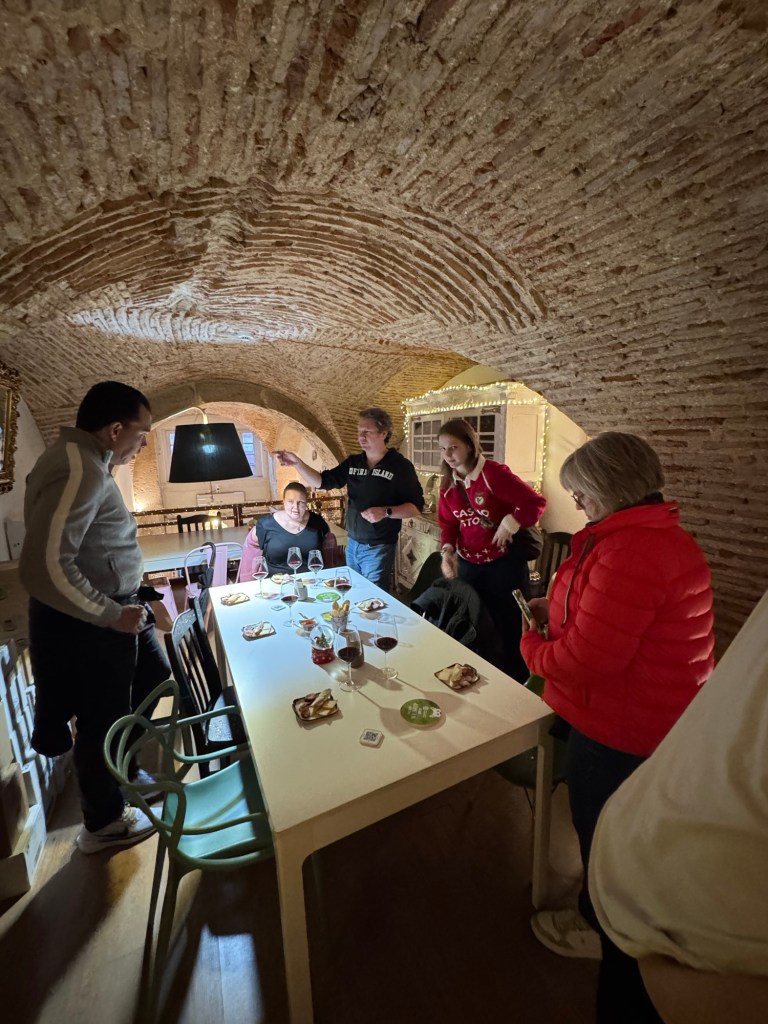
Two stops down and filling up quickly, we walked a short distance down the street to our third stop, Marie Patito, a swanky wine bar also offering a variety of port. Our tour group was seated on the second floor in a cozy setting befitting of a European wine bar – on the table, we had a variety of charcuterie to sample, as well as a red blend. We listened as one of the employees talked about the various wine regions of Portugal, and learned the following facts:
- Port has to be made with at least five varieties of grapes
- To be called “Port”, the grapes have to grow in the Duro Valley
- White port has to be made with, you guessed it, white grapes
- Tawny and Ruby are the two main types of port wine
- Winemaking dates back millennia here – we’re talking Phoenicians and Greeks
- Portugal has over 250 native varieties of grapes
- The Douro Valley is the world’s oldest demarcated wine region, and also a UNESCO heritage site
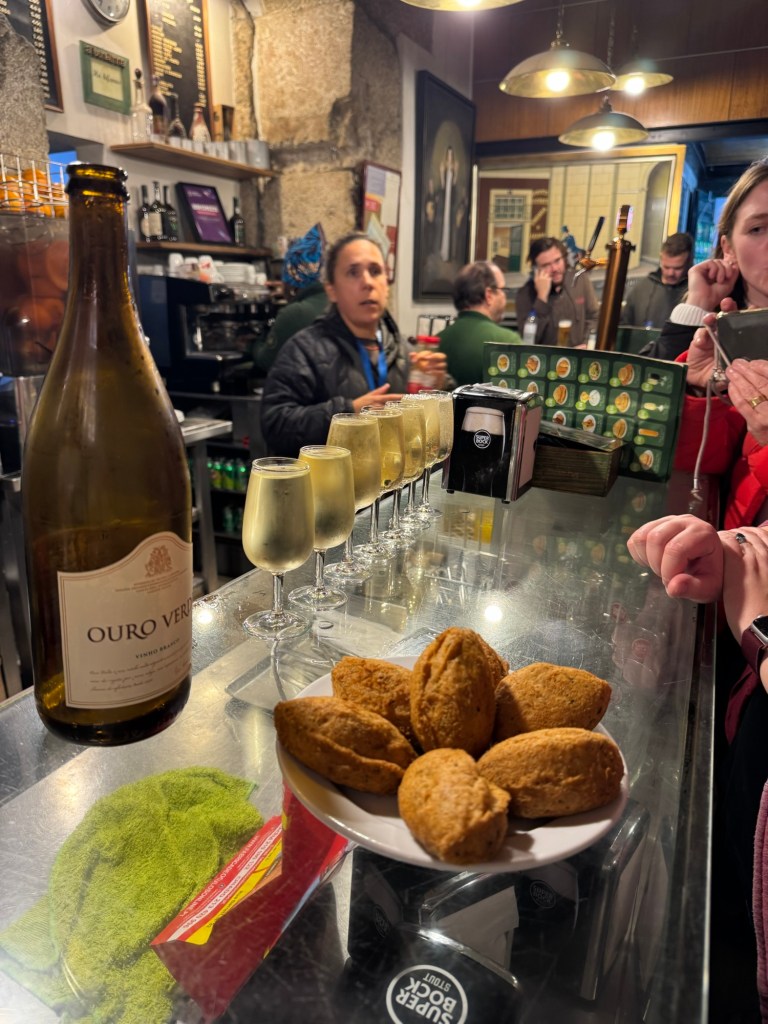
Sufficiently boozed and fed up, we hopped on one of the many public elevadors to a lower street level, and continued our tour to Tendinha, a bar on Rossio square. Here, we got to sample a very generous pour of vinho verde (“green wine” – typically slightly carbonated, and a younger wine), along with a fried codfish cake (not my favorite). Talking with Filipa here, we learned some fun linguistic etiquette. The word for thank you is “ObrigadO” (masculine) or “ObrigadA”, (feminine), dependent on who is saying it (rather than if the object is masculine or feminine). So, when I told Jared thank you for finishing my drink, I said “Obrigada“.
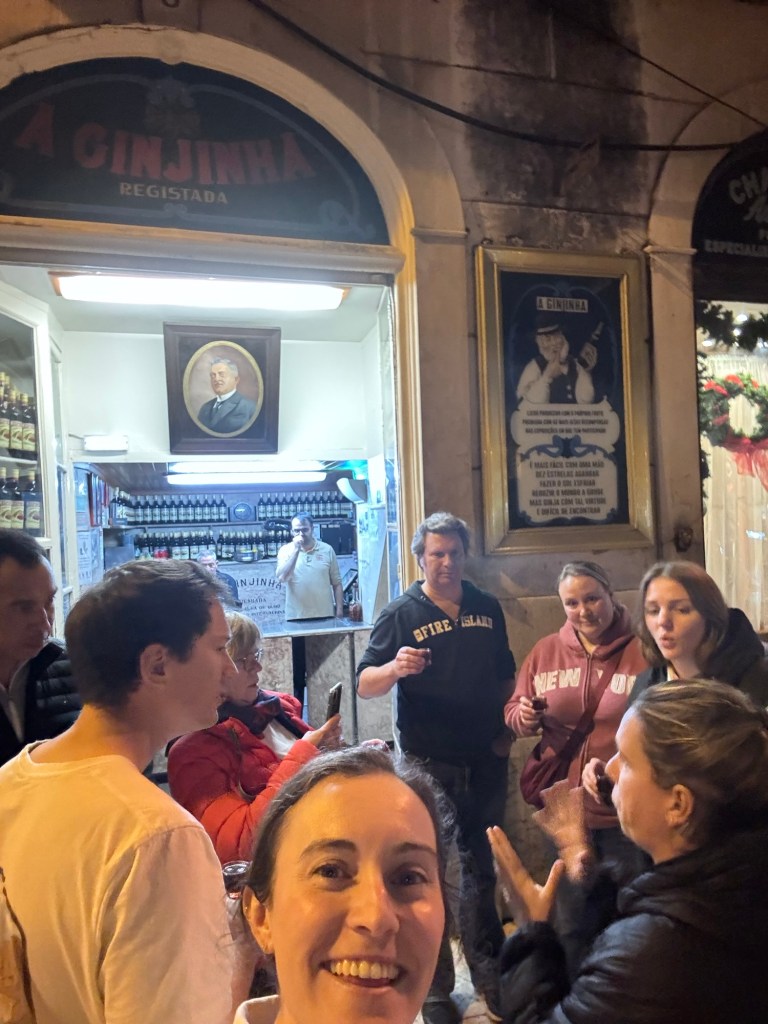
Alas, all good things must come to an end, a boozy end. We walked to A Ginjinha, a historic open-fronted bar specializing in serving the cherry liqueur since 1840. The jolly old man behind the counter poured us all shots with several cherries, and we cheered to a food tour well done.
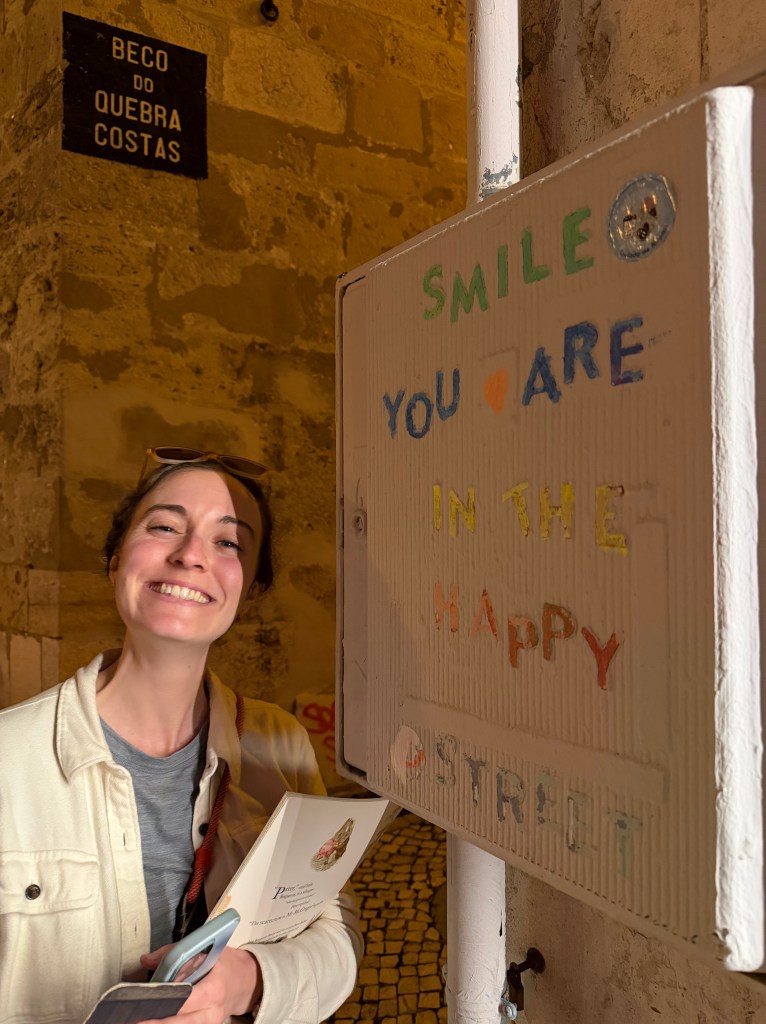
Like all trips on the first day where we wrestle with going back to the hotel at a reasonable time or YOLO-ing it, we decided to stay out a bit longer and explore the city some more. We went back to one of the Christmas markets to grab a pint of beer and people watch for a bit – the stand we got our beer from, Cerveca Canil, had a brick and mortar brewery location so obviously we went there for one more pint. We got a raspberry sour and pumpkin ale, both of which were pretty solid. Lastly, on the way home, we were within a few minutes’ walk of a cocktail bar I’d noticed earlier in the day, Quattro Testa. We stopped in for one last drink before making our way back up the hill to our Alfama hotel.


Day 2 (Sintra) – December 6th
Our second day in Lisbon was, well, not in Lisbon. It’s quite common to take a day trip to the town of Sintra, approximately 30 kilometers from Lisbon, and that’s what we opted to do. A day trip requires some coordination as the activities in Sintra book up quickly, so we bought our tickets in advance for the attractions we wanted to visit. A little hungover from the previous night and still jet-lagged, we opted for an Uber ride to Sintra, which ended up being quite affordable (~20 euro).
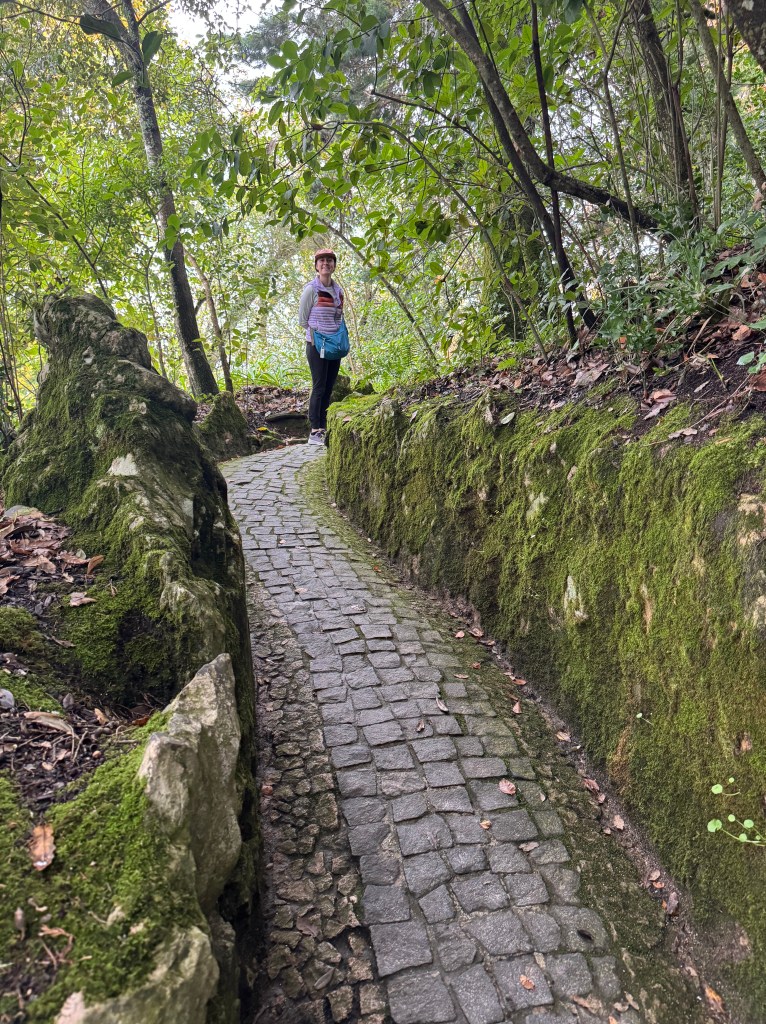
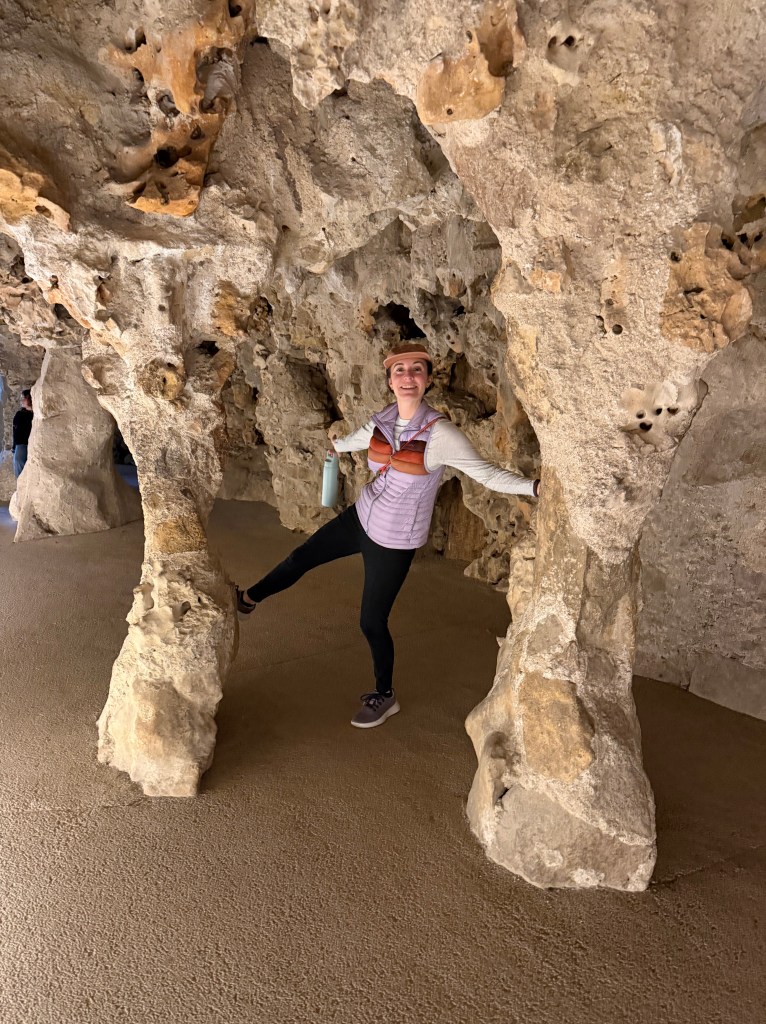
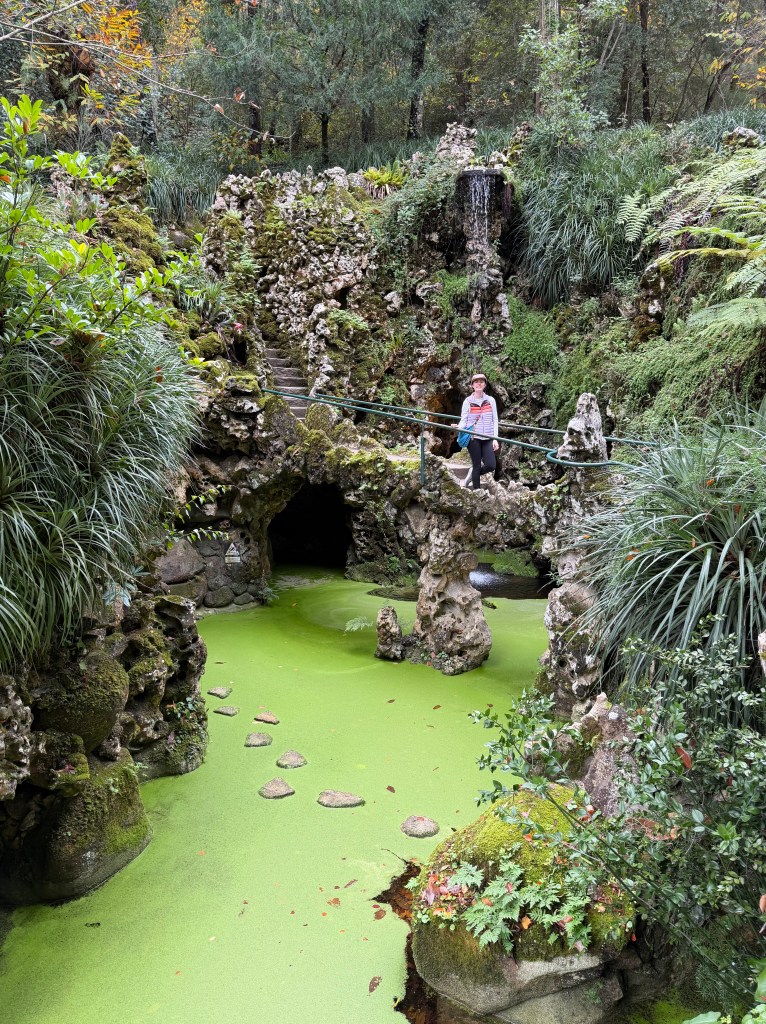
Our first stop of the day was a 10AM entry to Quinta de Regaleira, an enchanting and somewhat otherworldly property with mystical grounds, initiation wells and hidden paths. This quinta, or manor house, is considered a UNESCO World Heritage site due to its cultural homage to freemasonry, the Knights Templar, and Gothic/Roman/Renaissance architecture. We weren’t entirely sure what to expect, but I felt like this could be the setting for a new Dan Brown novel.
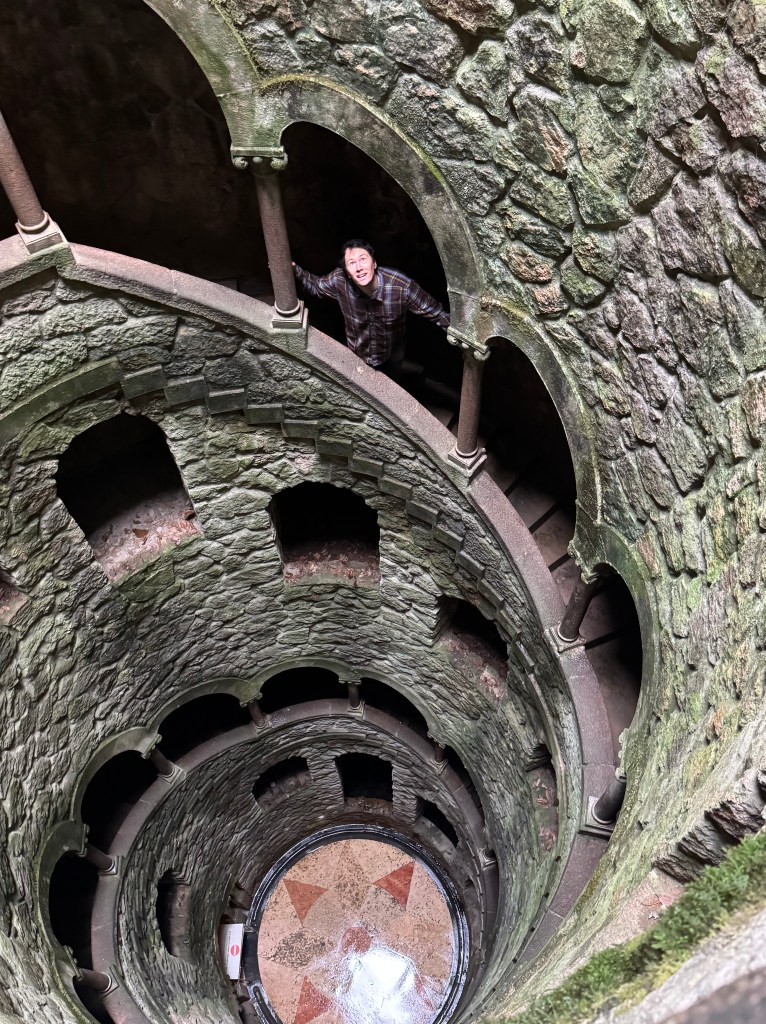
The four-hectare grounds included the palace, a chapel, a 9-story initiation well (apparently used by free masons for ritualistic purposes, and also meant to represent Dante’s 9 levels of hell?), and other mystical oddities. We spent the next two hours exploring the ins and outs of the forest, walking down the well and doing our own sort of initiation, exploring underground tunnels and grottos, and walking through the manor house. It was a unique experience and would definitely recommend as one of the attractions to do on a Sintra day trip.


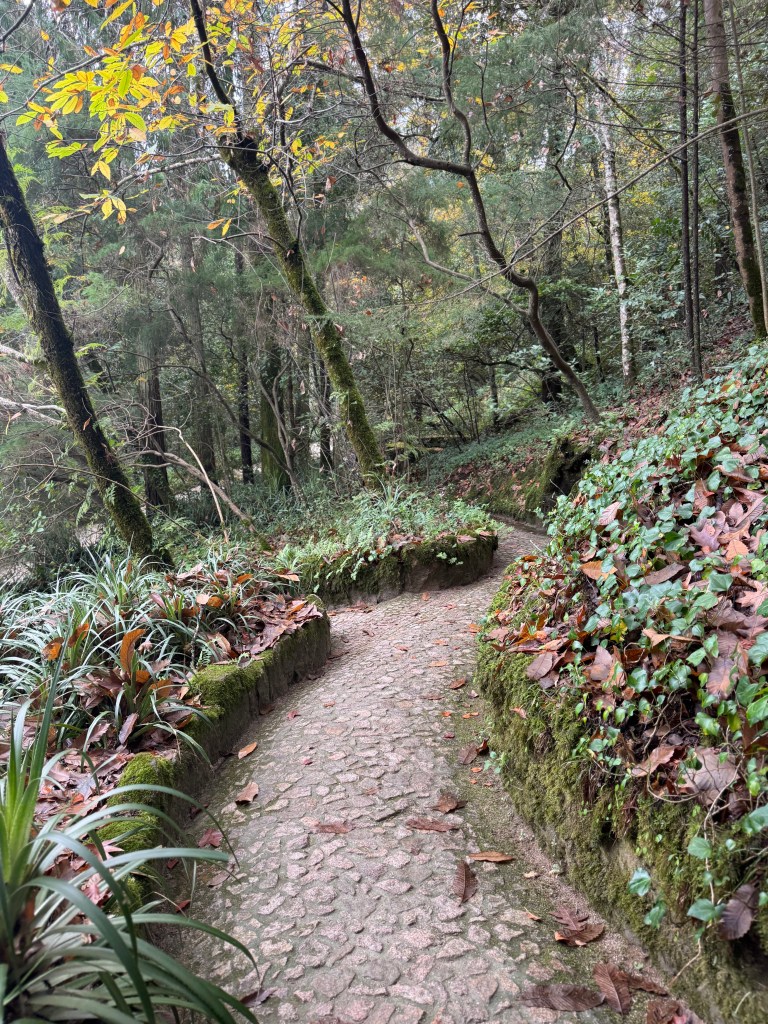
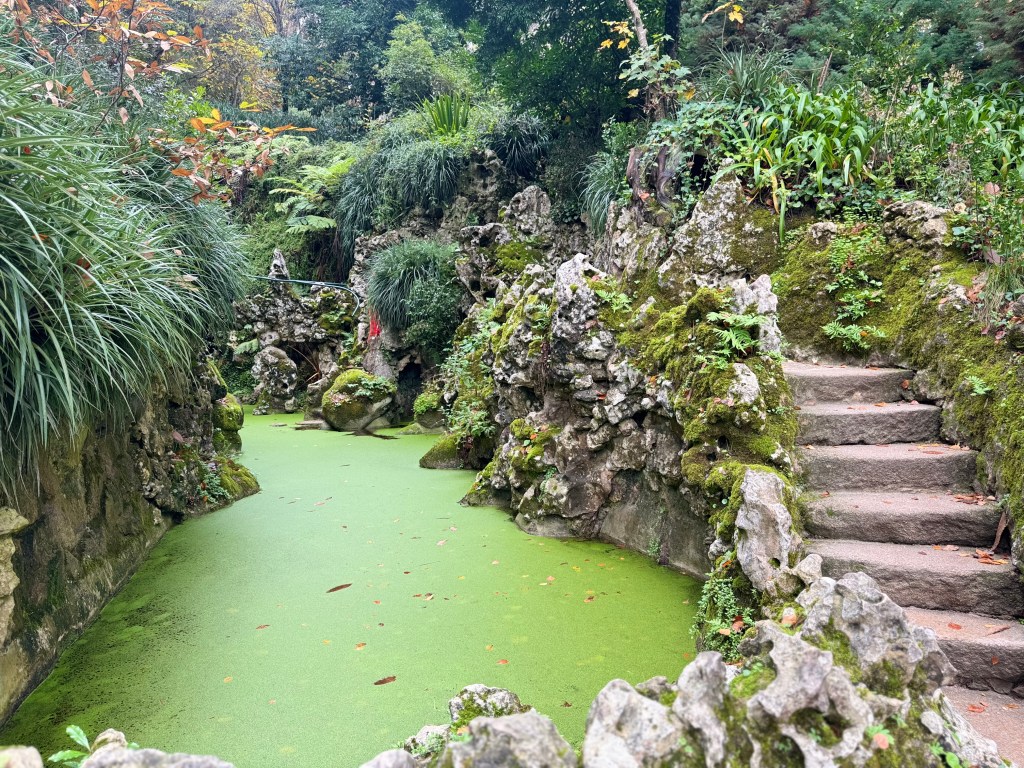

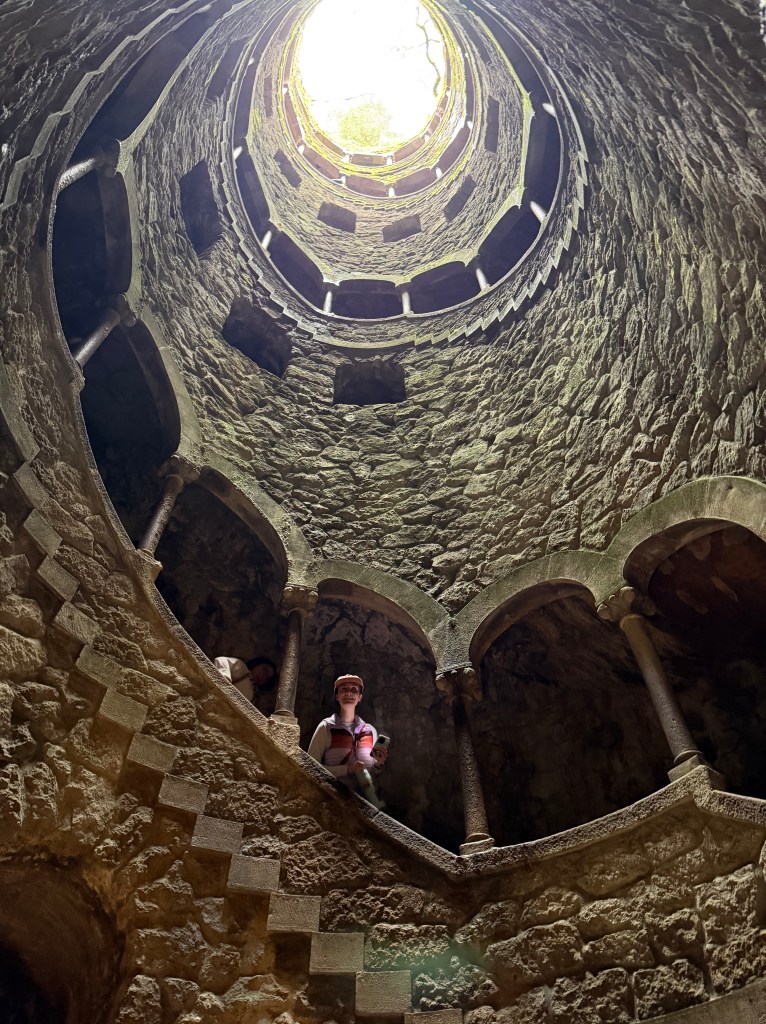
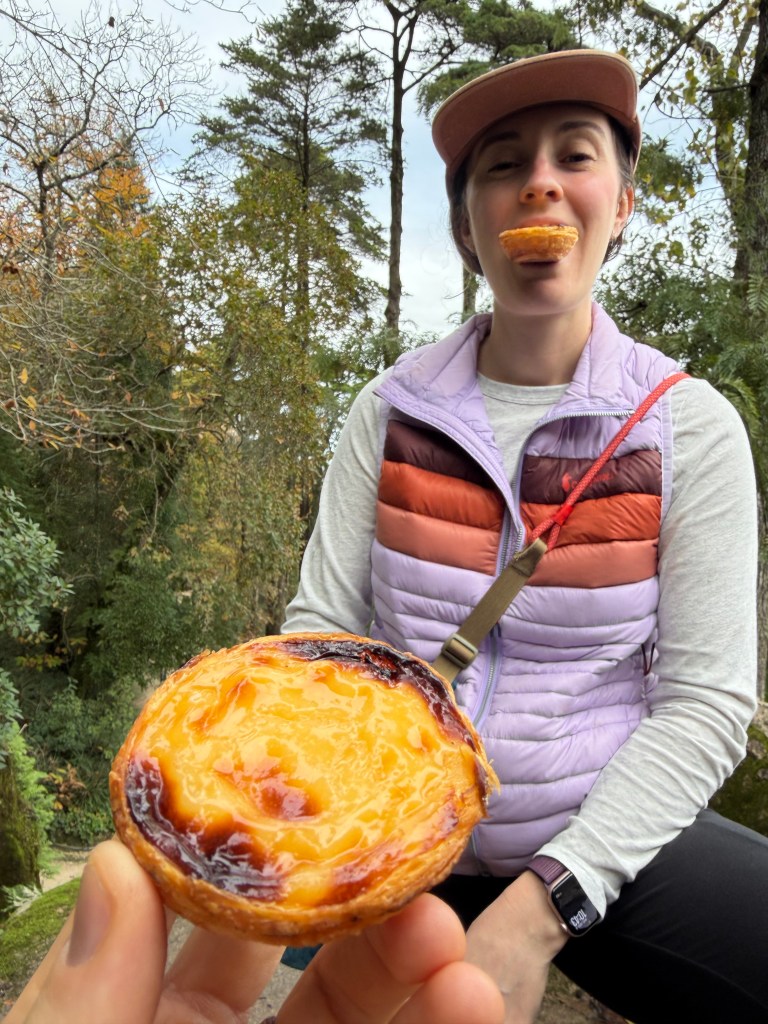



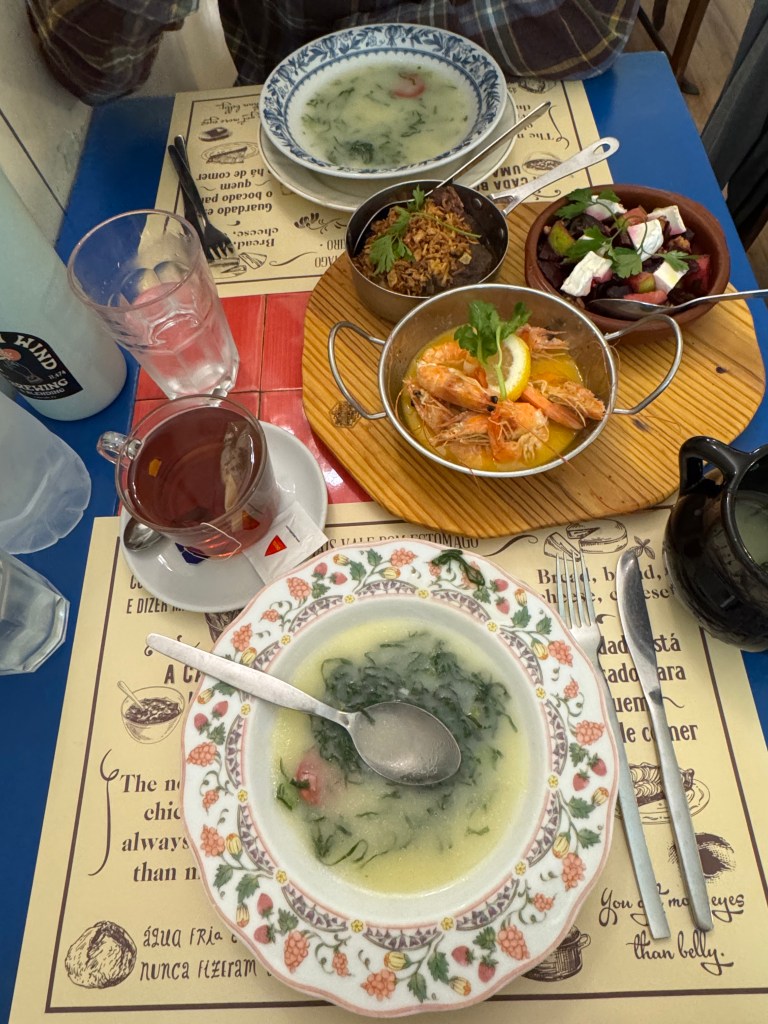
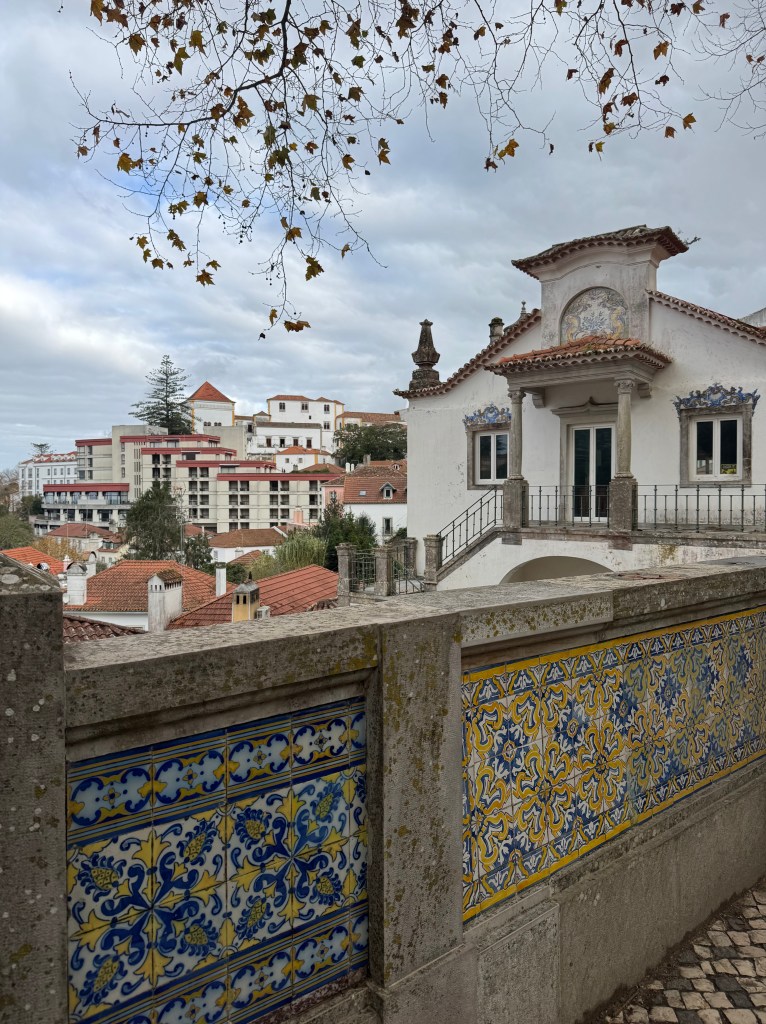
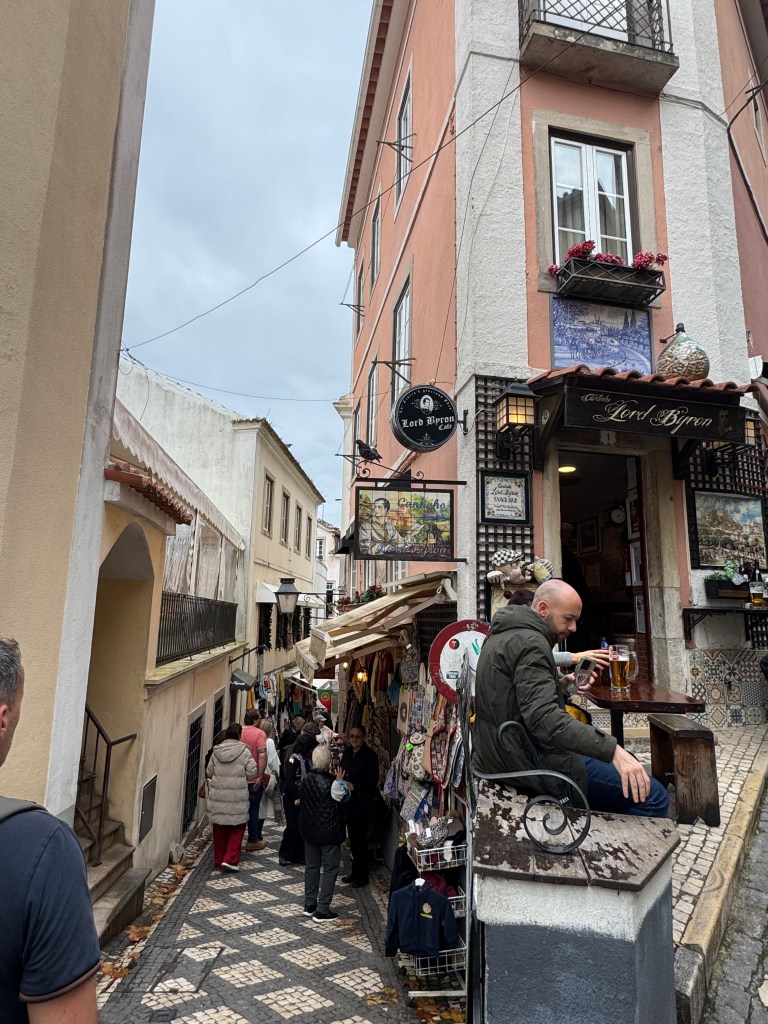
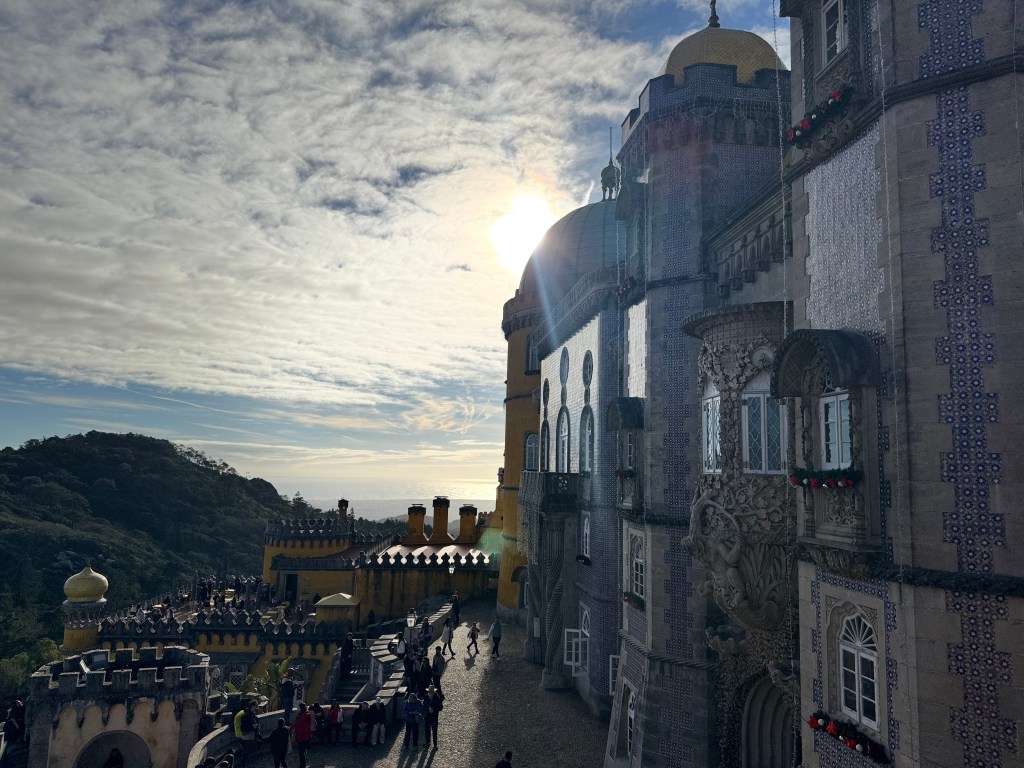
After exploring the grounds for about two hours, we sauntered into the quaint Old Town of Sintra looking for lunch. We ended up finding some fun souvenir shops before ending up at Tascantiga, a homey yet eclectic tapas bar. Jared and I split several plates – prawns, pork cheeks with a mustard sauce, beef cubes with fried shallots, a beet and apple salad, and a cabbage soup. Everything was delicious and we were fueled up for our second part of the day at Pena Palace. There were “tuk tuks” everywhere along the streets to drive up to the palace, but on brand, we decided to hike up instead. From Old Town to the entrance of Pena Palace, the steep ~2.6km hike weaved through thick forests, past an old farm-keeper’s house, and past the Moorish Castle. Upon ascending, we were met with the imposing views of the palace.
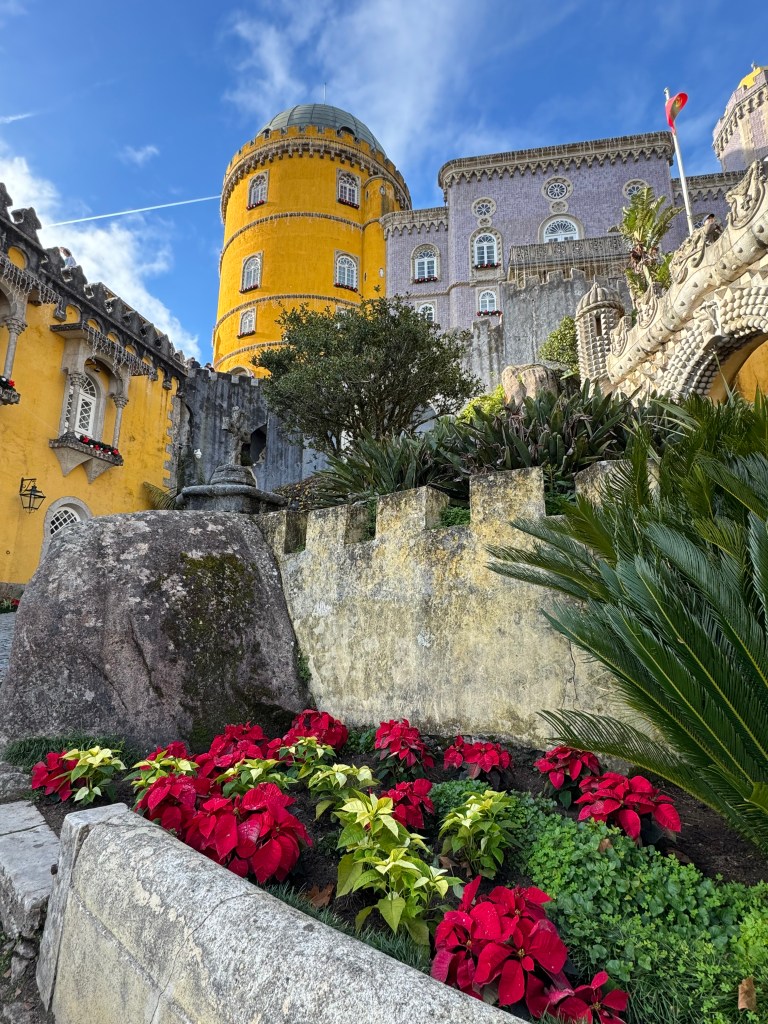
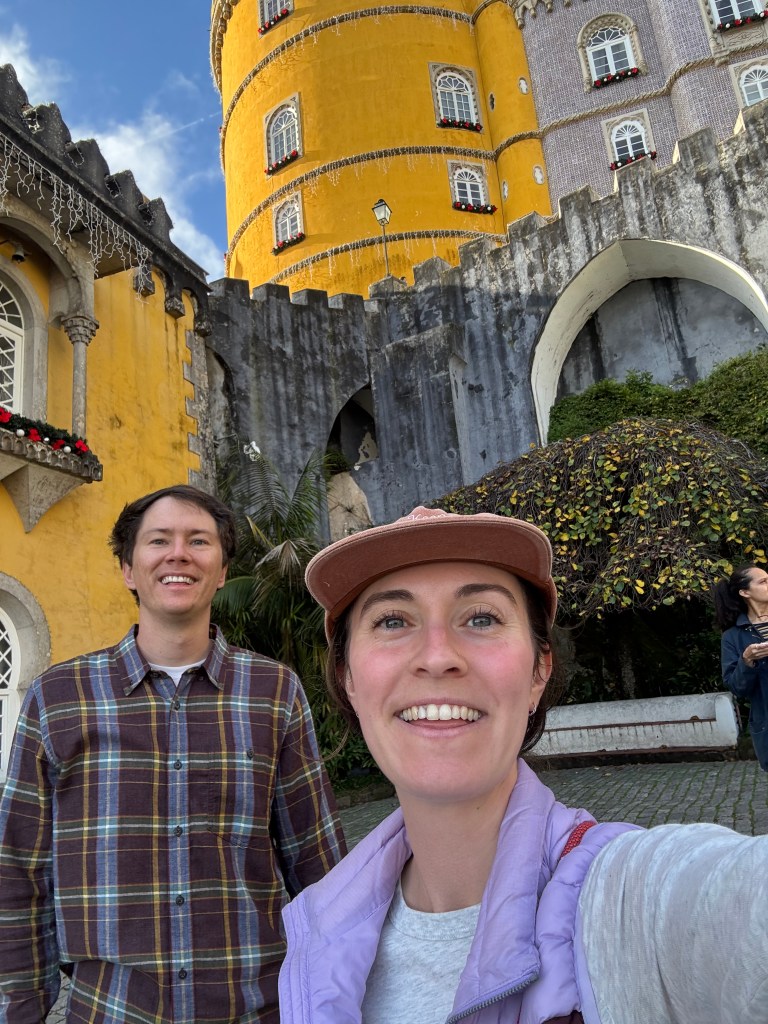
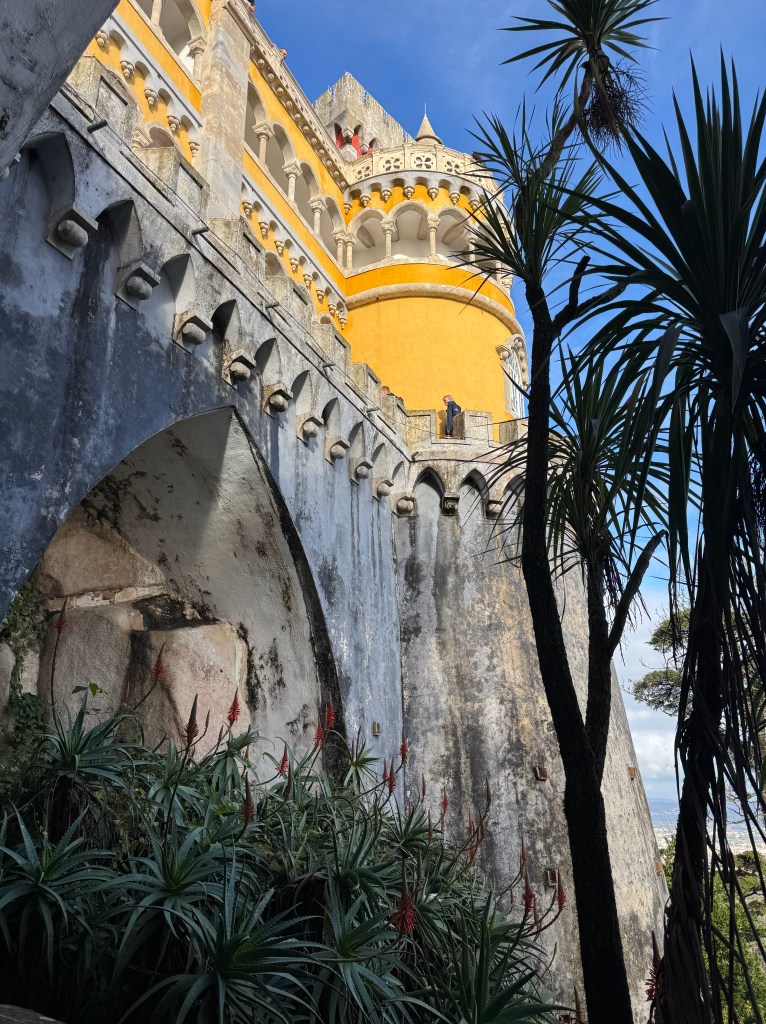
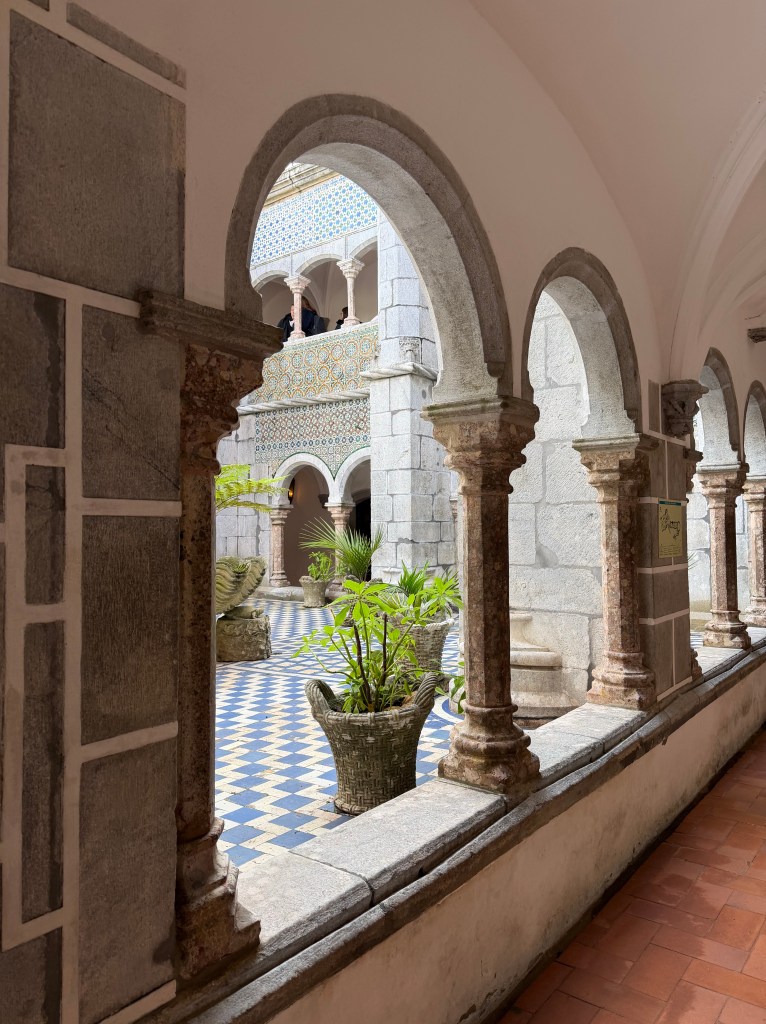
Pena Palace is is a colorful fairytale palace that sits atop the hill of Sintra. We had tickets to visit the interior of the palace, but honestly I think the more impressive views were from the exterior terraces. The whole place was Christmas-fied and the speakers were blasting American holiday songs – it almost felt like we were walking through Busch Gardens? We loved the colorful walls and views of the surrounding area. After we walked around the majority of the outdoor patios, we decided to hike down again (can also take a public bus or tuk tuk but we’re cheap), and made it back to Old Town within a half hour.



While we Ubered in the AM, we decided to take the train back to downtown Lisbon. A little less than one hour later (after a little public transportation snafu), we ended up at Rossio Station within walking distance of some Christmas markets. I’d made dinner reservations at Alfama Cellar a few weeks prior, and we were feeling awake enough to make it in time. This restaurant was cozy and intimate, and our waiter was very helpful in giving us recommendations. We got some Octopus pico, oxtail “cellar” (cooked with red wine and onion), fish stew and olives/bread. Everything was delicious but we weren’t able to finish it all – glad we ended up going here for dinner! Sufficiently tired and full, we walked the last few minutes up the hill to our hotel for our penultimate night in the city.
Day 3 – December 7th
Our last full-ish day in Lisbon! We basically had the whole day to explore until our flight to Seville at 9:45PM. First order of business – another walking tour of the city. The tour started at 9:30AM and we explored three neighborhoods: Chiado (pronounced Shee-ad-doh), Bairro Alto and Baixa.
Chiado is an upscale part of the city, where many shops and restaurants can be found. We learned about one of the famous literary figures of the area – Fernando Pessoa; apparently, his voice used to be so high-pitched, that they called him the “squeaker”, which is where the name Chiado came from. Our guide, Ricardo, explained how Lisbon exploded in tourism in the last twenty or so years, taught us about the divine “Cosmic Sphere”, and took us past the famous Bertrand Livraria – the oldest bookstore in the world per Guinness Records (since 1732)!
We then learned about the famous earthquake of 1755, which honestly sounded like an apocalypse or something from Dante’s Inferno. The day was November 1st (All Saints’ Day), and many of the city’s inhabitants were in churches around the city celebrating the holiday. Out of nowhere, a ~9 Mw magnitude earthquake hit the city, destroying many of the buildings in Lisbon. If that wasn’t enough, the earthquake then triggered a tsunami, which drowned many of the remaining citizens. Finally, many of the churches were lit with candles, which subsequently caught on fire and burned down the remaining buildings. All in all, the earthquake, tsunami and fires devastated the city, killing tens of thousands of people – definitely a dark day in Lisbon’s history.
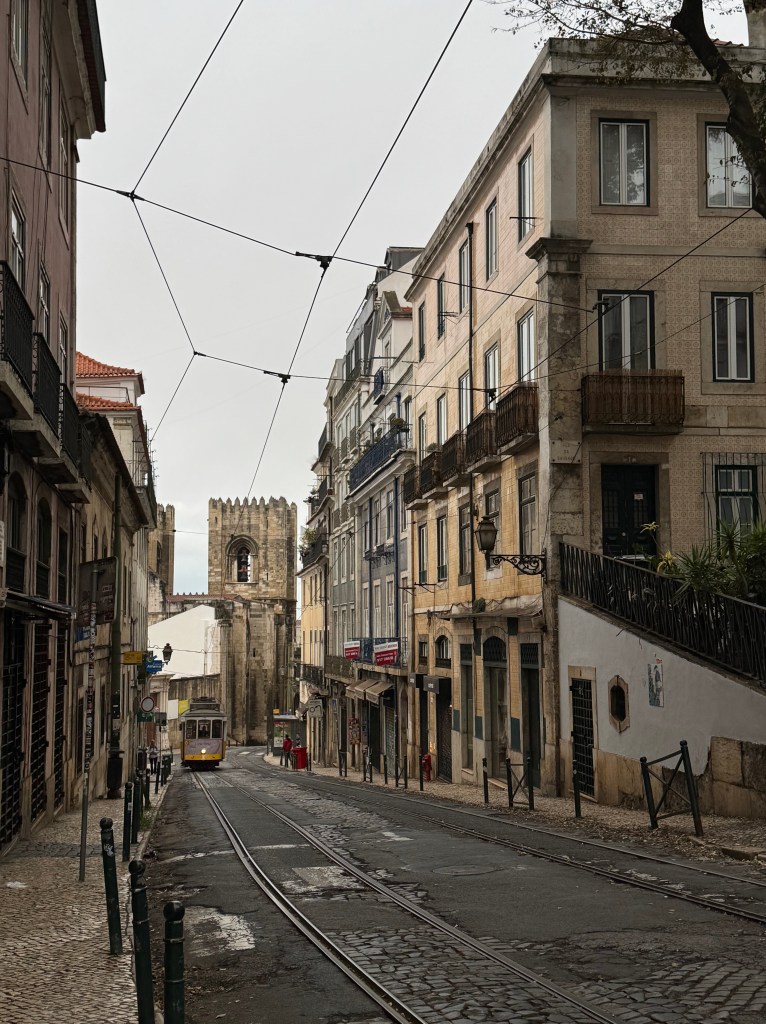
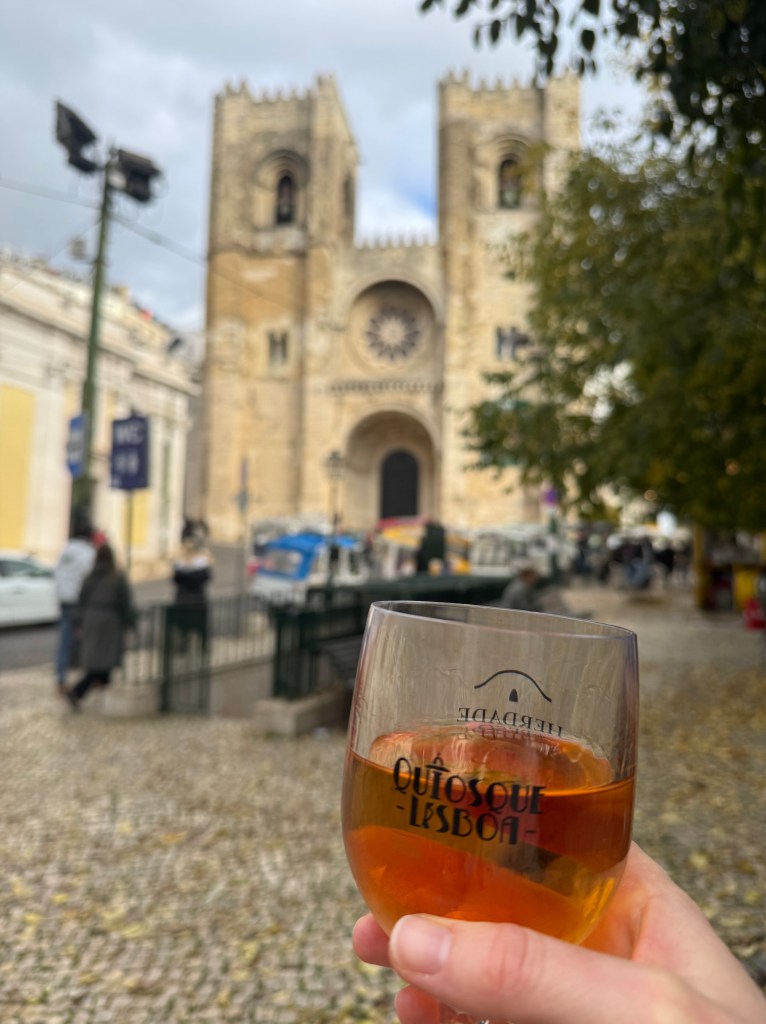
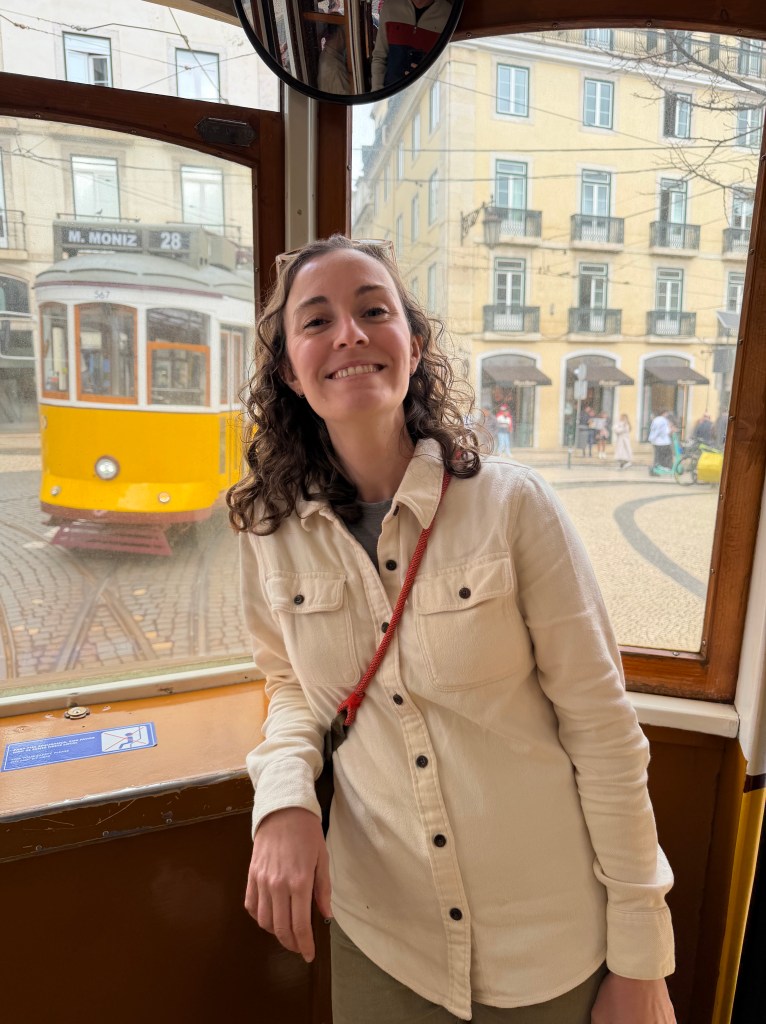
After this, we visited the Carmo Convent and learned the history of Portugal’s fascism – crazy that the Carnation Revolution to end the dictatorship occurred in just 1974. We then visited Santa Justa elevator, which provided a lovely viewpoint of the city. Next, we stopped for a nice pastel de nata and espresso pick me up before venturing to the Bairro Alto neighborhood and learning about the area’s fado culture. Finally, we got to ride the iconic Tram 28 ride that dropped us back near our lodgings in Alfama, ending the tour at Lisbon Cathedral, built in 1150AD. We learned so much on our tour – so much history in the city of Lisboa!



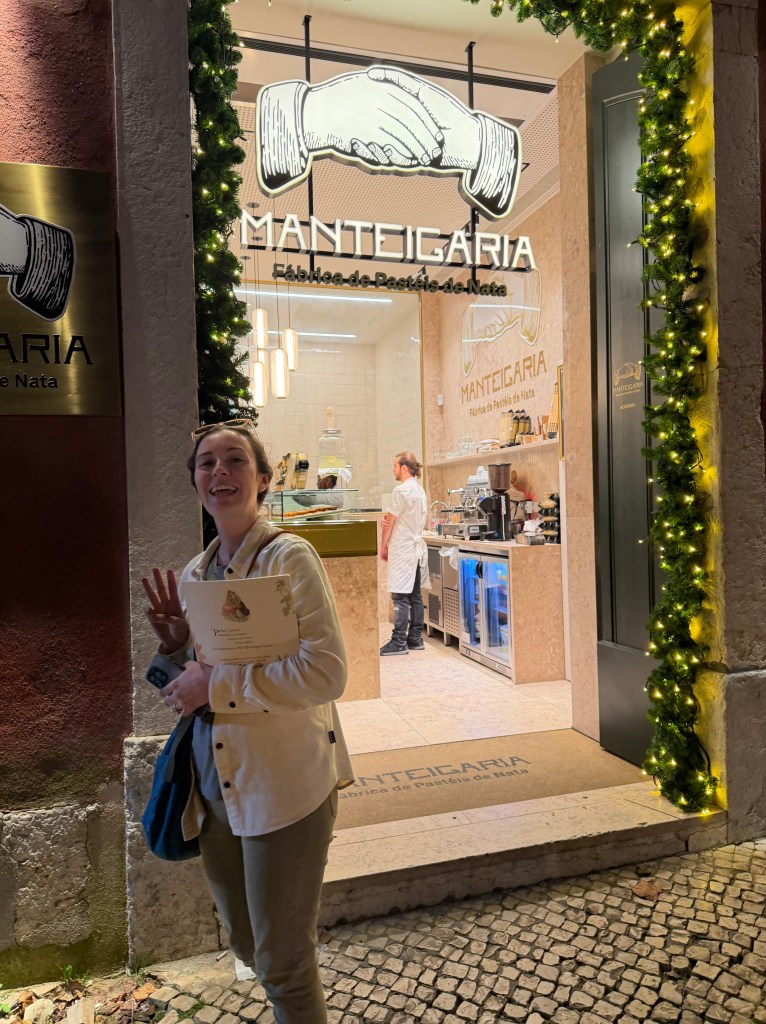
After the tour, we’d worked up quite the appetite, so we found a seafood restaurant in Alfama and shared some lovely grilled sardines and a seafood pasta. Re-fueled and ready to keep exploring, we made our way back to the Chiado neighborhood so I could go back and visit Livraria Bertrand, stop at the wine and port shop we visited during our food tour on the first day to ship home some bottles for us and friends, watch the Christmas light show, and make one last stop at Manteigaria. After a long and fun last day in Lisbon, we were ready to hit Spain next!
 Tiff & Jared's adventures
Leave a comment