“And into the forest I go, to lose my mind and find my soul”
― John Muir
February 20th
Today was mostly a travel day – we left El Chaltén around 11AM, went through the Argentinian / Chile border crossings (had some fruit confiscated), and made it to the town of Cerro Castillo by early evening. Because we only had two days to spend in Torres del Paine National Park, we wanted to stay a little closer to the park and cut down our drive time (most visitors travel from Puerto Natales, but Cerro Castillo is a little closer to one of the park’s entrances). We stayed at Riverline Lodge (booked through Airbnb) and had dinner there before going to bed (luckily they had dinner service, as there were only 2 other options in the small town). After a meal of local salmon and lomo saltado, we went to bed early in order to prepare for another early morning hike in Torres del Paine, or the Crown Jewel of Patagonia.
Established in 1959 and part of the 11 protected areas of the Magallanes Region and Chilean Antarctica, the park is located 112 km north of Puerto Natales.
More history found here
Despite the random and unpredictable weather in the region, when visibility is clear the landscapes reaffirm its non-official nickname as “The Most Beautiful Park in Chile”.
February 21st
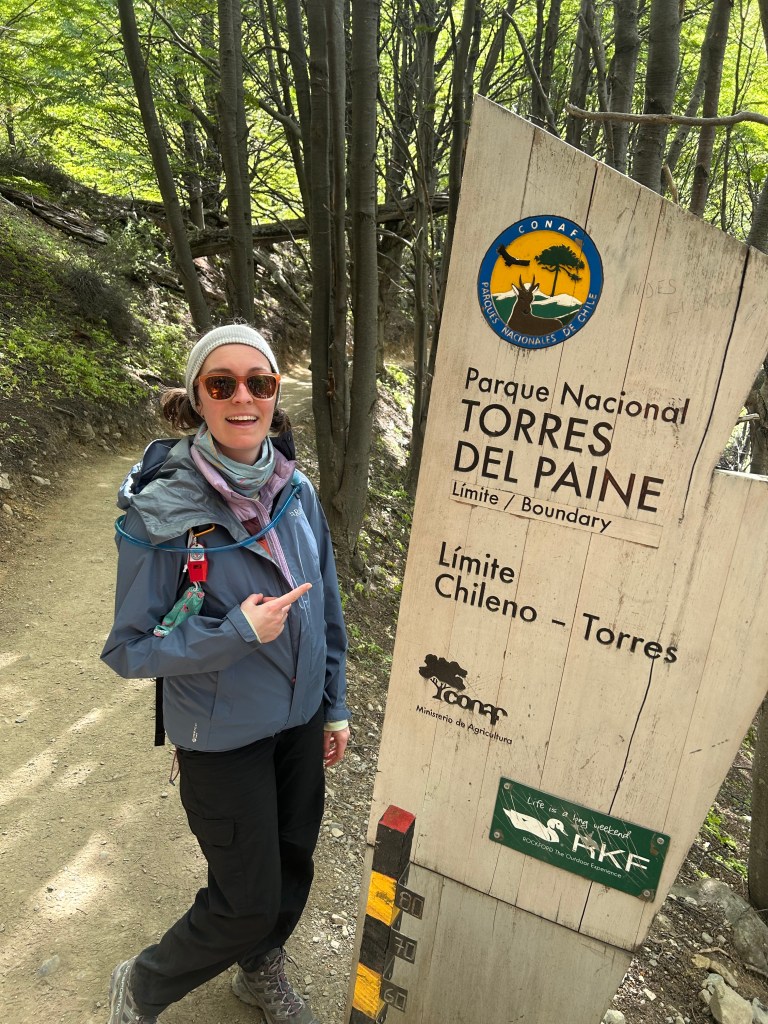
Another 5:30AM wake up call for another hike! The lodge was kind enough to pack us a to-go breakfast since we were leaving before breakfast service. After a little over an hour of driving (still mostly in the dark), we reached one of the park entrances as the sun was starting to rise and illuminate the landscape. Arriving around 7:30AM, we went inside and bought a 3-day pass. A short drive into the park later, we were at the parking lot of the Mirador Base Las Torres hike.
- Mirador Base Las Torres: Total distance (12.5 miles), total ascent (~3300 feet), difficulty (moderate/hallenging)
Similar to other hikes, we were not the first people to want to get a head start in the morning. Also similar to other hikes on this trip, we were coming off a night of some stomach issues and not feeling 100% so the initial ascent was definitely a bit of a challenge, especially after coming off of those two huge hikes in El Chaltén! As someone put it in an Alltrails review, “from the start to the mid-point if divided into quarters, the 1st and 2nd quarter were moderate, the 3rd quarter was hard, and the 4th quarter was strenuous”.
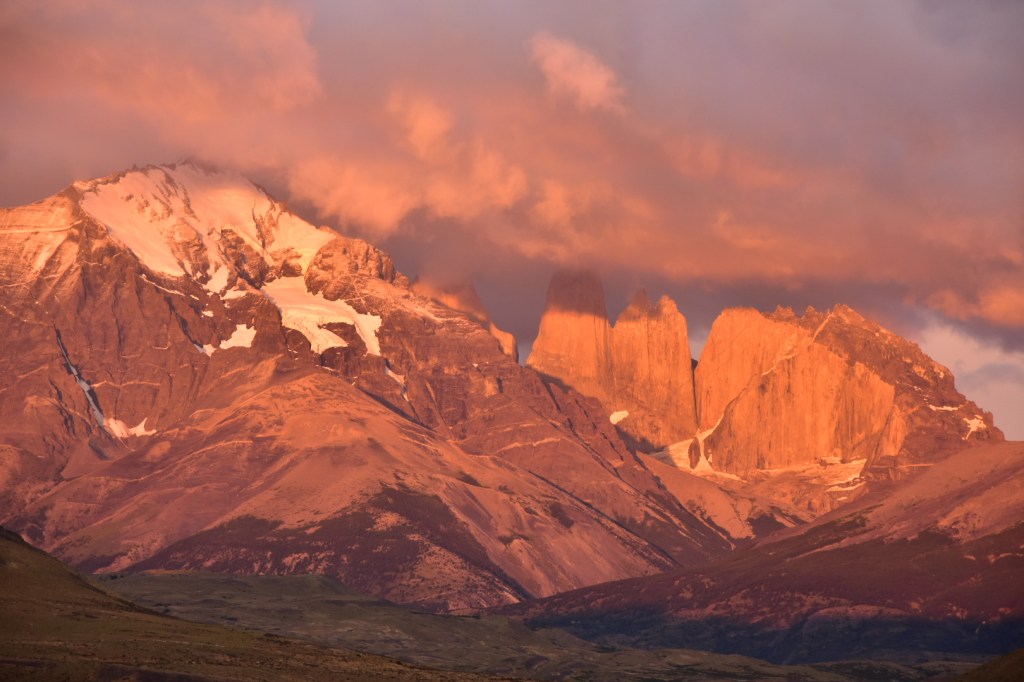
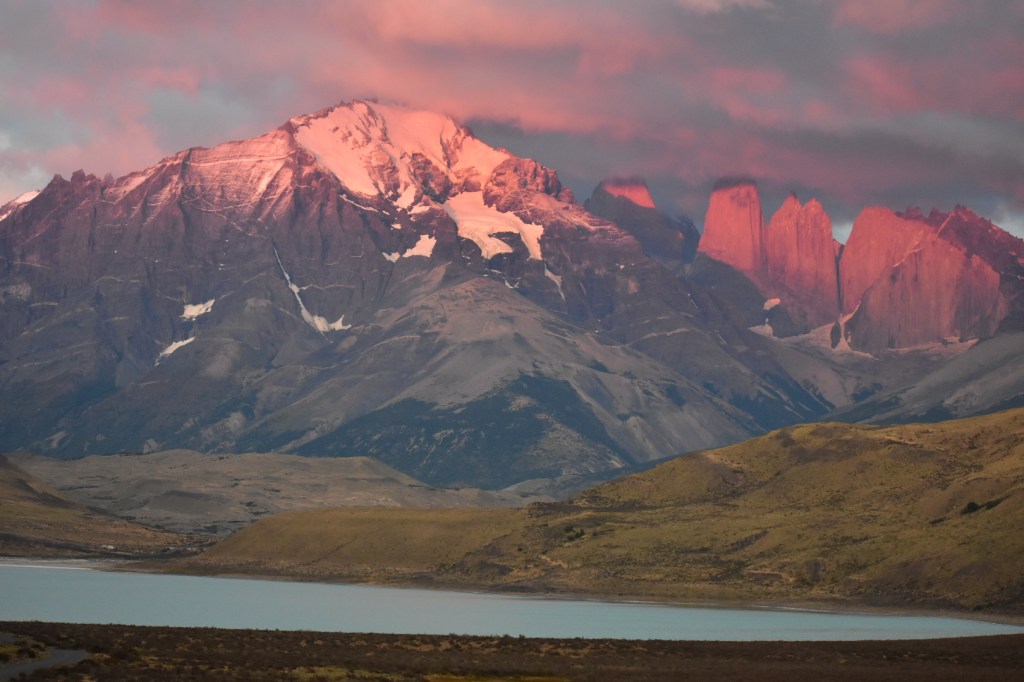
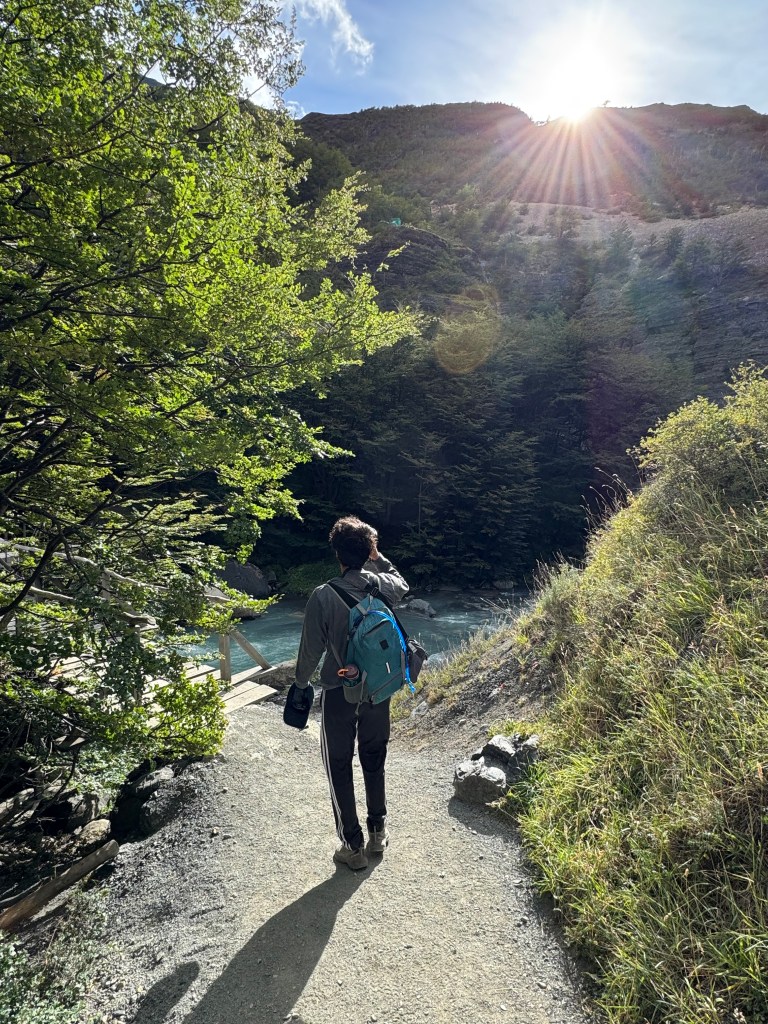

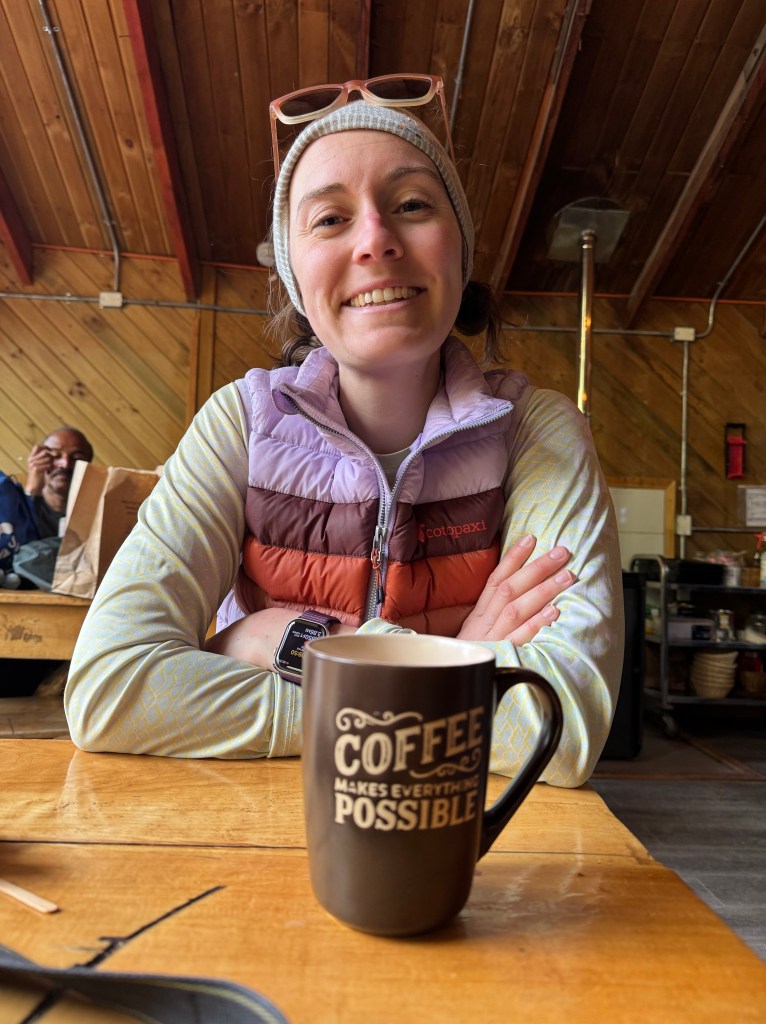
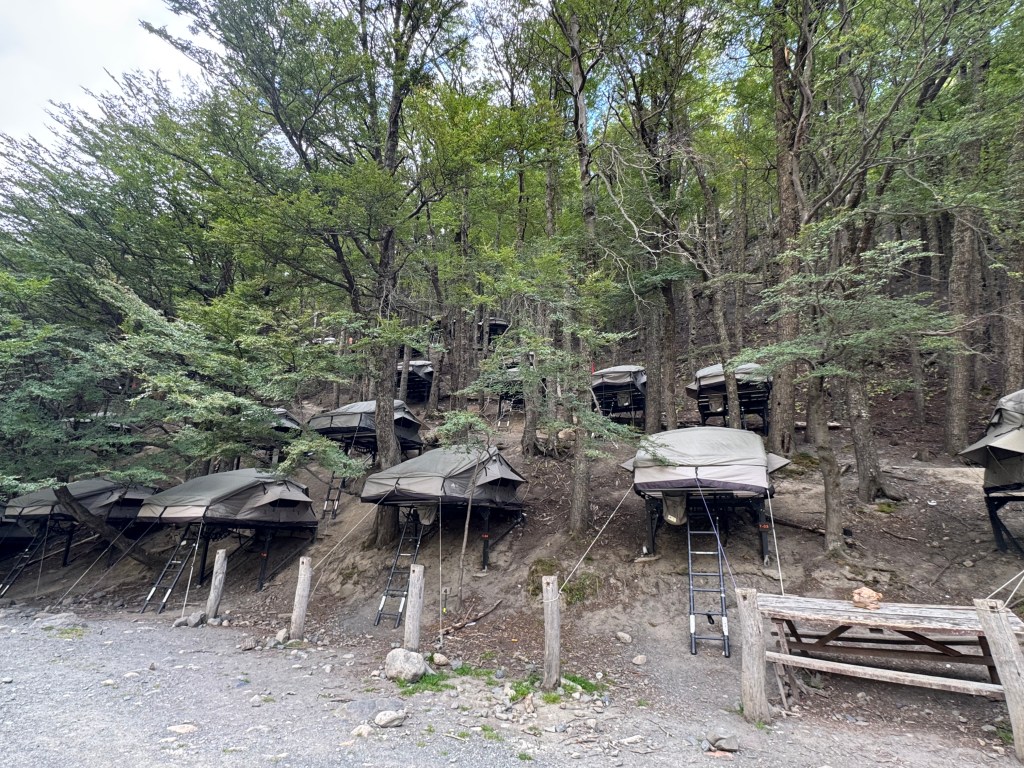
About halfway through the mileage of the hike (not the elevation), we made it to Refugio Chileno, where we could refuel and take a coffee break. They had food too – on the way down the trail to the refugio, we even saw a “train” of four horses trotting down the mountain and past us to deliver supplies and food. After taking our break, both physically and mentally, we began the latter part of the trek up to the towers. At this point, the crowds had thinned out and we had the forest mostly to ourselves. One thing I didn’t love about this hike was all of the bottlenecks – there were a bunch of steep rock scrambles that caused some backup in those tighter spots.

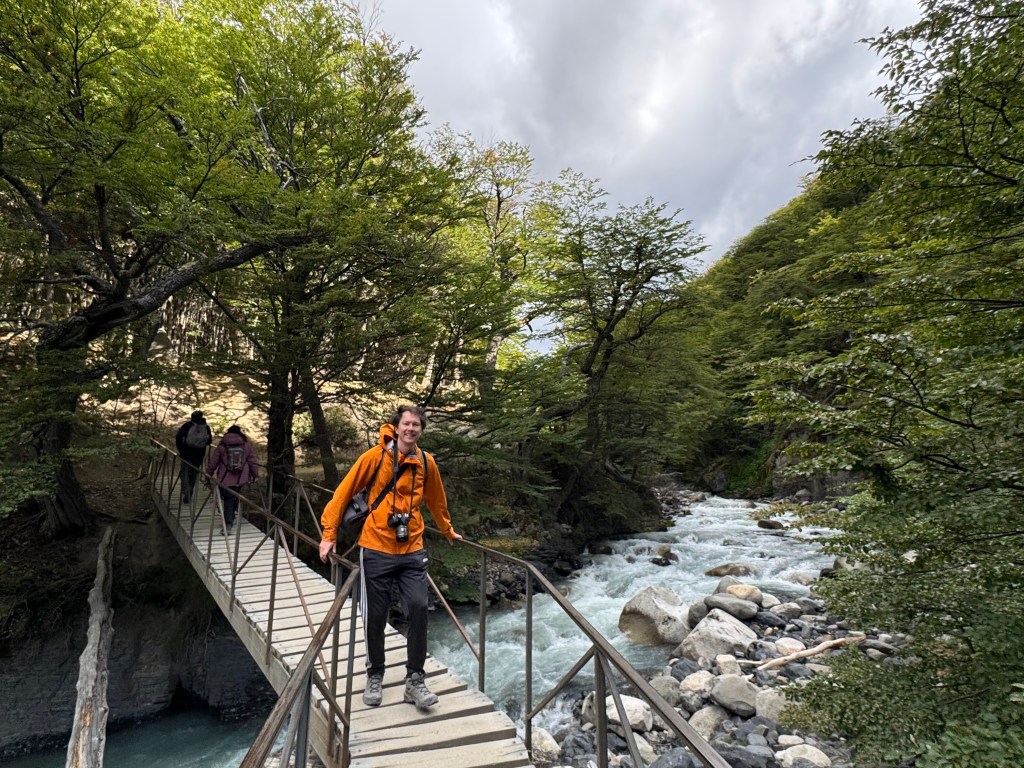

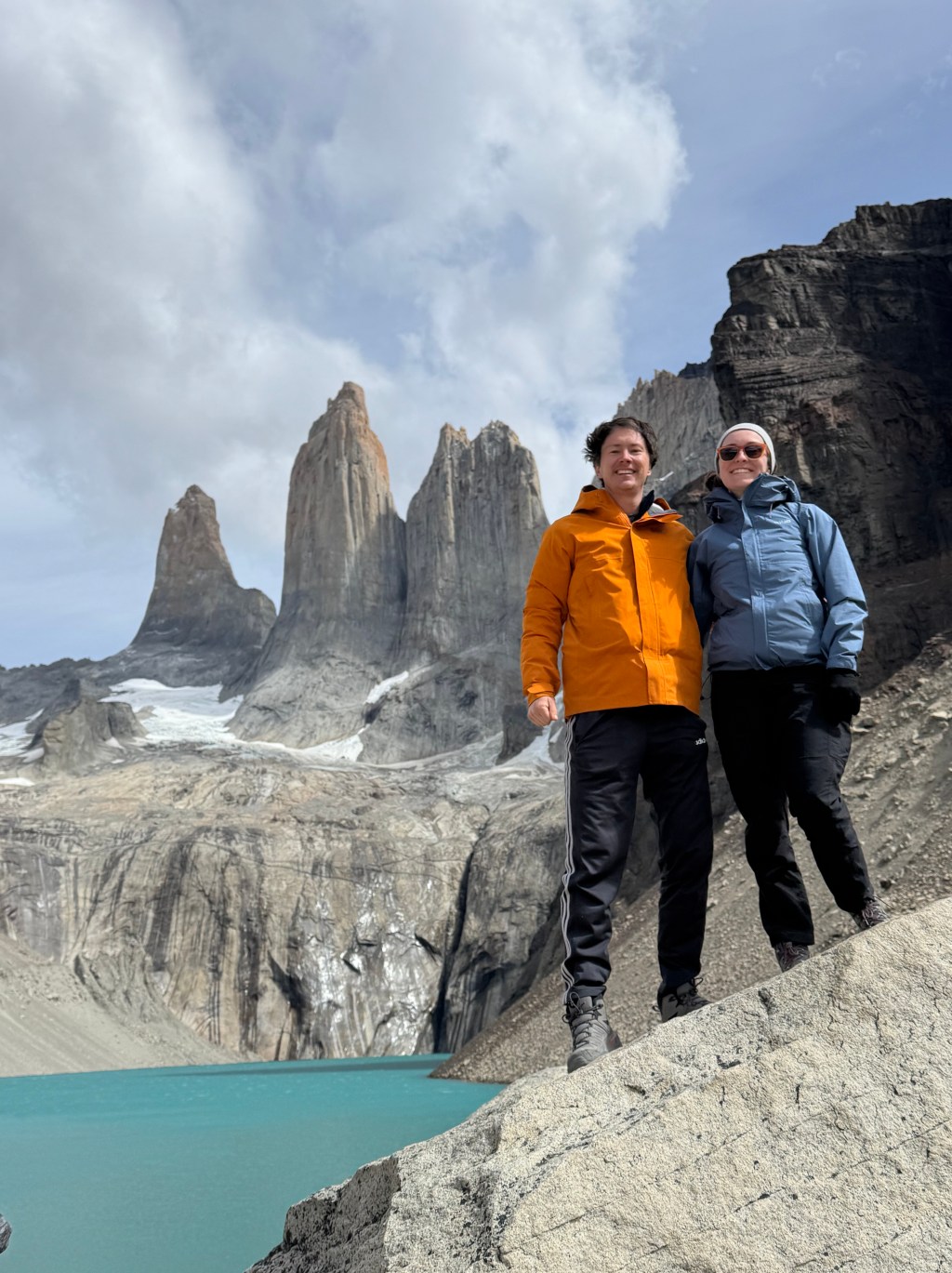
Ultimately around noon, we made it to the summit after the final steep (and busy) ascent. Just like that, we were met with the Torres del Paine, or “towers of blue”. The three towers, all distinct 8,000 foot peaks of glacially-carved granite, stand tall over the supremely turquoise-colored, snow-fed lake at their base. What a view – this is what will live in our minds when we reflect back on our time in Torres del Paine.


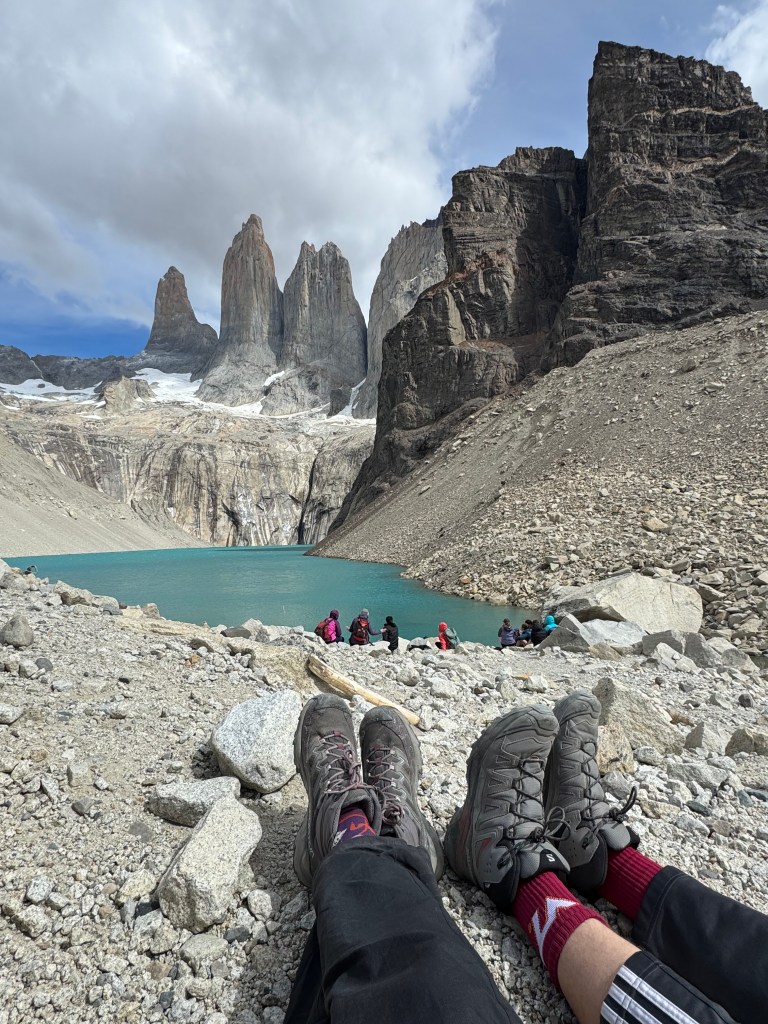
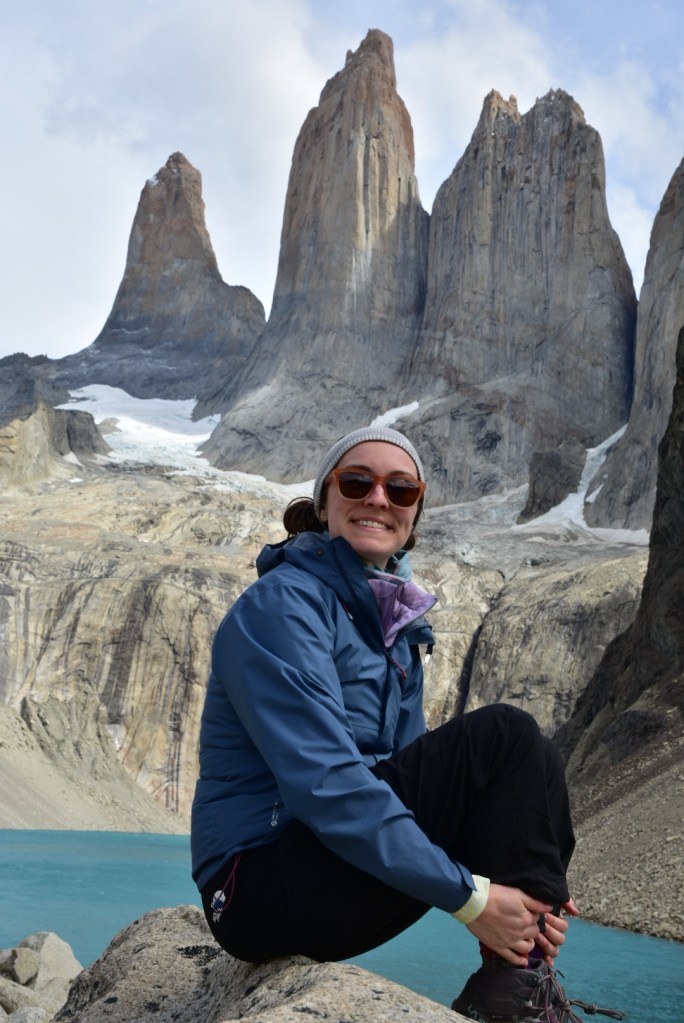
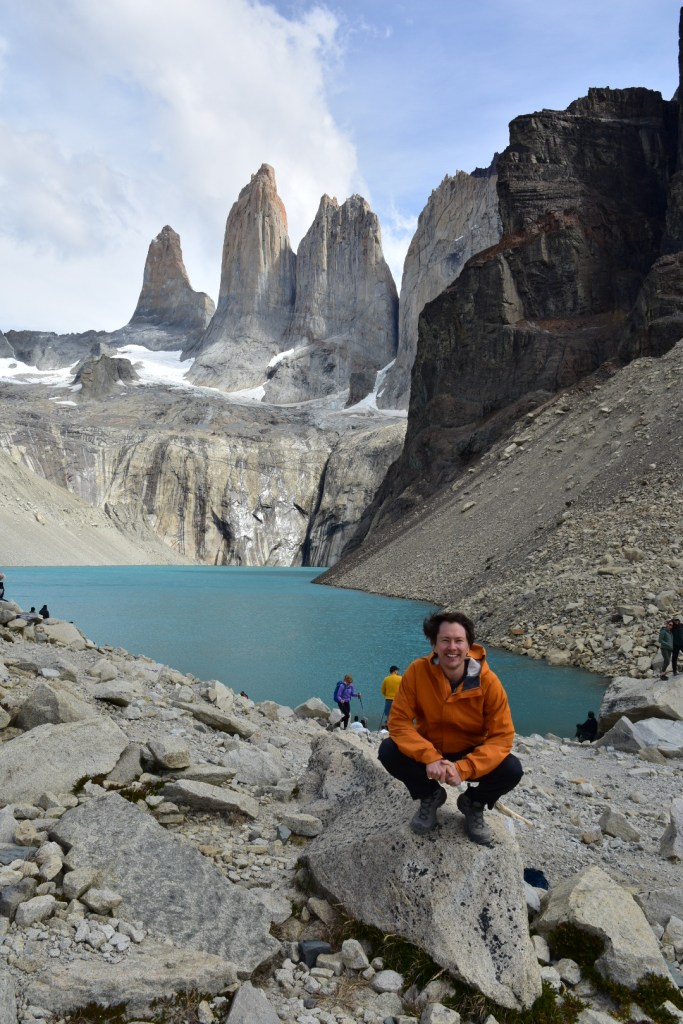

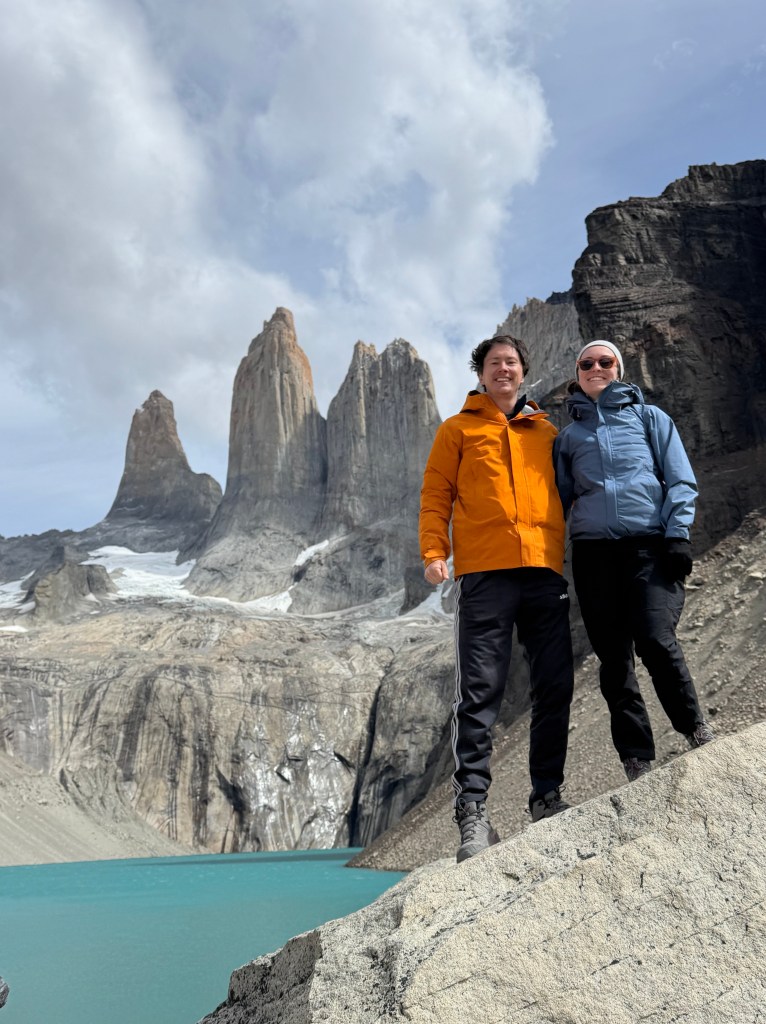
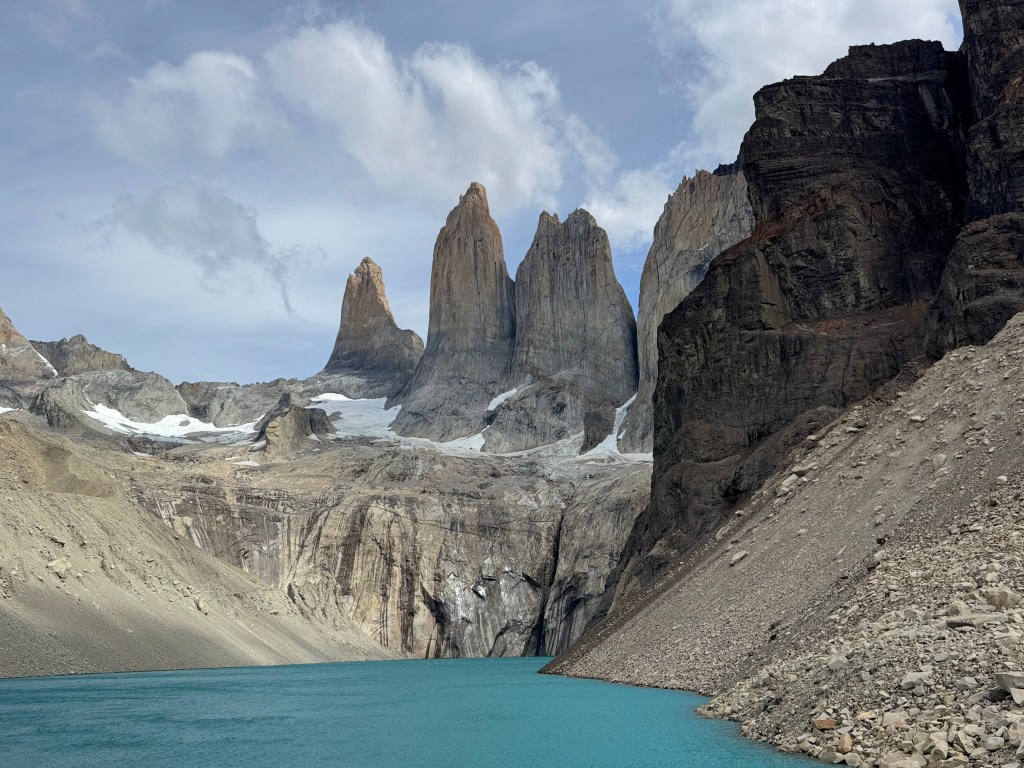
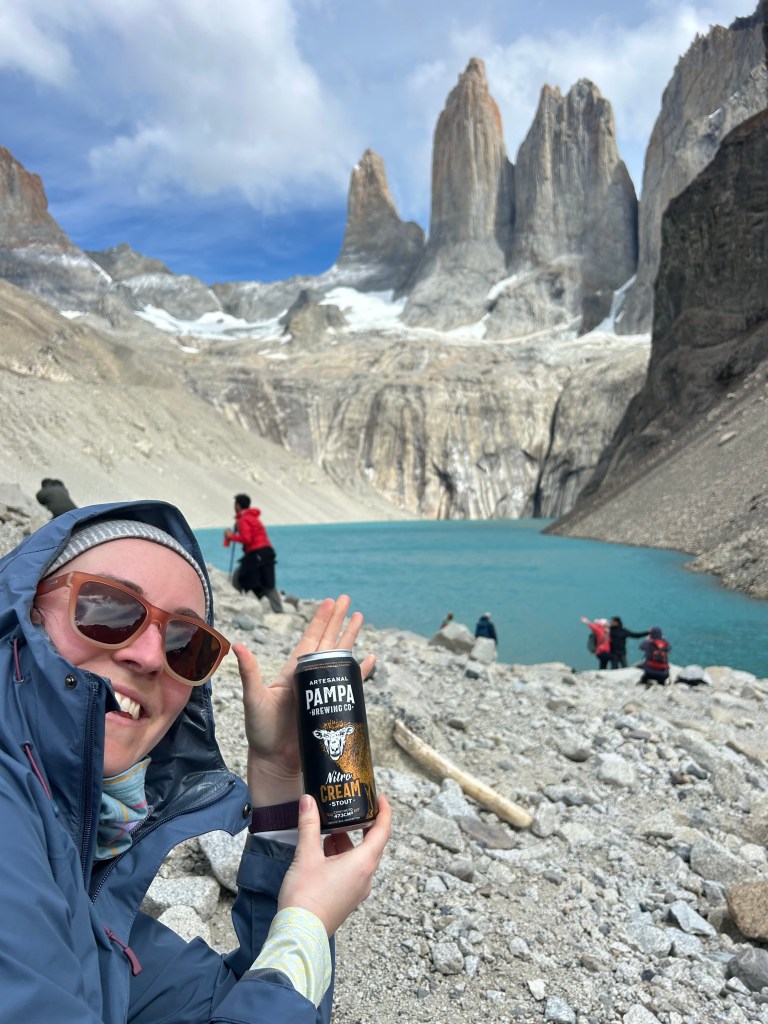
The top unfortunately didn’t have as much space to spread out as the Chaltén hikes, so it was a little more crowded, and a lot more windy. We found a nice and cozy spot nestled between some boulders, and reveled in the fact that we did another 15+ mile hike. Making sandwiches with the last of our PB&J supplies, as well as another tuna sandwich, we sat for a bit, watching others taking their “I’ll Never Forget this Moment” pictures. After taking some of our own, we began the trek down. The descent definitely caused the hike to drop on my list of ‘best hikes we’ve ever done’ – there were SO many people trying to get down, and so many traffic jams on the way down (pet peeve: when people have no self awareness on a trail and don’t realize they’re blocking traffic). After a long wind down, we finally made it down around 4:30PM. At this point, we had hit our limit from all the hiking – we were dragging our bodies just to make it back to the welcome center, with fatigue of the body really setting in.
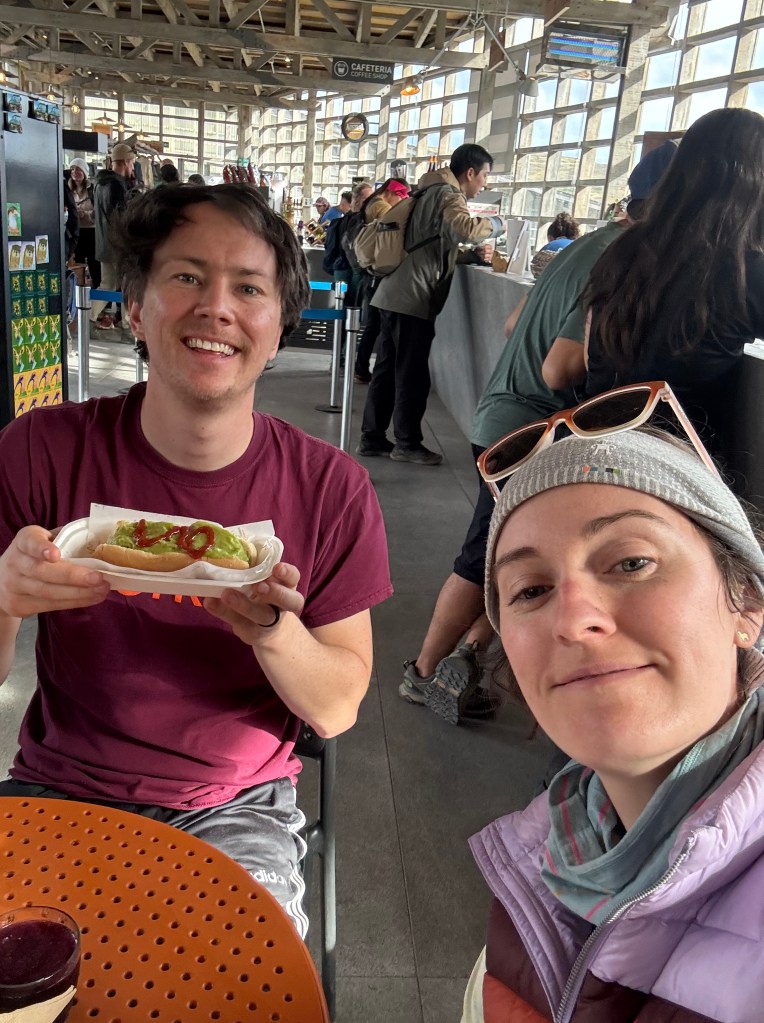
Back at the welcome center, we had a nice surprise because there was a food truck and bar inside, so we ended up getting some Chilean-style (“completo”) hot dogs, which included avocado and chopped tomatoes, as well as a calafate sour. Feeling replenished, we made our way back to the car and ultimately Cerro Castillo to the Airbnb for a goodnight’s sleep.
February 22nd
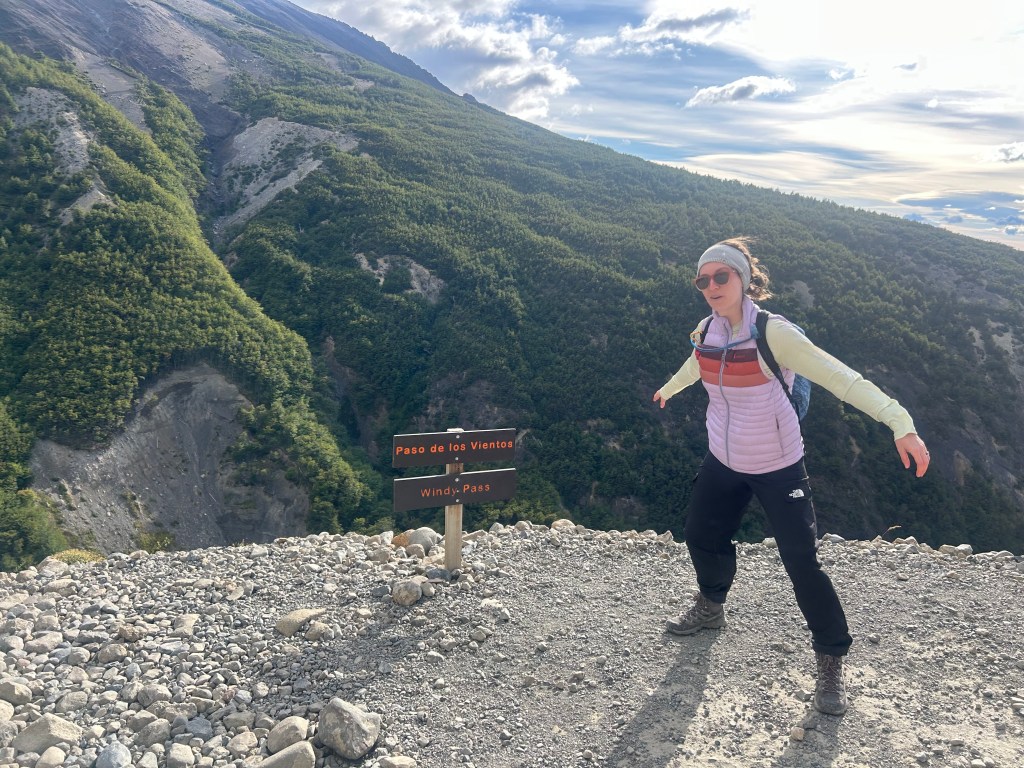
Today was going to be the complete opposite of the previous day; instead of a 15+ hike, we had a 4-hour drive to get to Punta Arenas, with a stop in Puerto Natales. We granted ourselves a little bit of “sleeping in”, and had breakfast at the lodge before heading back to Torres del Paine for a half day in the park. Unfortunately, the hike we wanted to do (Cuernos Lookout) was closed due to high winds – someone showed us a picture from the measurements up top clocking 100 kilometer-per-hour winds! We weren’t surprised – during one of our viewpoint stops, we walked to the top of this small hill for a better viewpoint and were literally bracing our bodies and fighting against the wind so that we wouldn’t be blown over. After all the hiking we’d done over the last few days though, we were content with not doing any other hikes. We spent a few hours driving through the park and stopping off at various viewpoints before closing the books on our journey to the crown jewel.


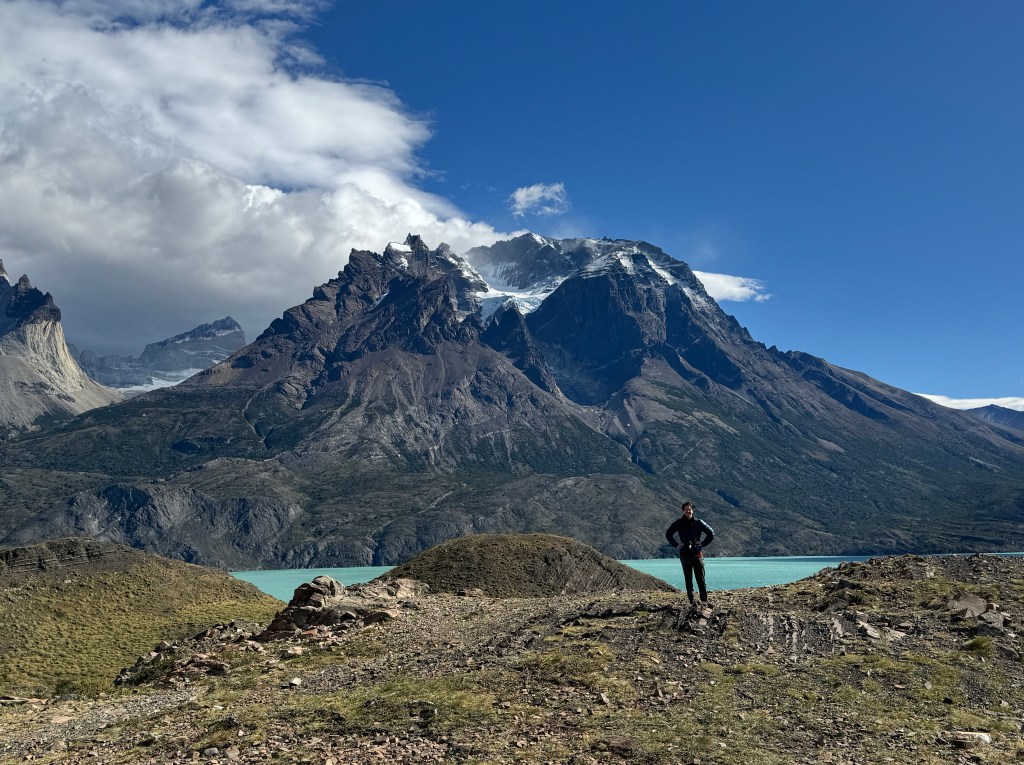


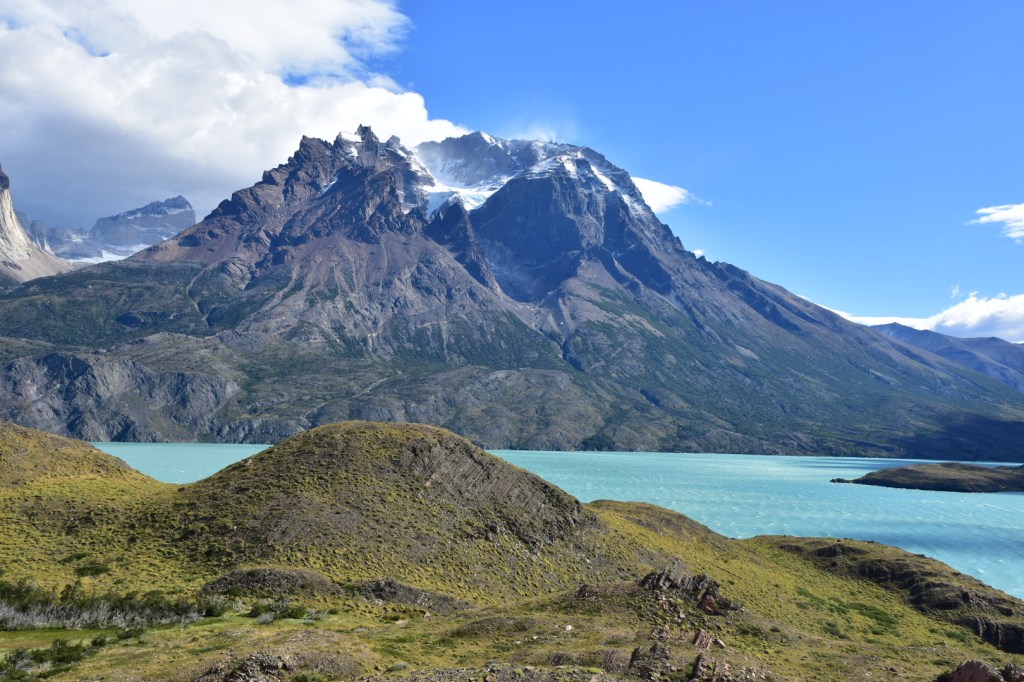


We made it to Puerto Natales around 3PM- this is the town most visitors stay in when visiting Torres del Paine. It was lovely town with a bunch of shops and restaurants – we ended up getting a quick bite at Cisne Negro Bistro Bar, where we tried a delicious bowl of fresh ceviche and of course, another calafate sour. We then walked down the block to get some delicious raspberry and calafate gelato at Artisan gelateria Aluen Patagonia.
After getting a quick “flavor” of the town, we continued our drive with three hours remaining until we got to the town of Punta Arenas. This is ultimately where we’d fly out of the next day to go back to Santiago, but first, we had a tour the next morning. We got into town in early evening, checked in to the Airbnb, then headed to dinner at La Cerveceria HdeM, where we got a delicious meat platter to share and some tasty beers.


Once we got back to the Airbnb, we had the trying task of repacking all of our bags, since we had a 5:30AM wakeup call in the AM for our penguin tour on Magdalena Island.
February 23rd
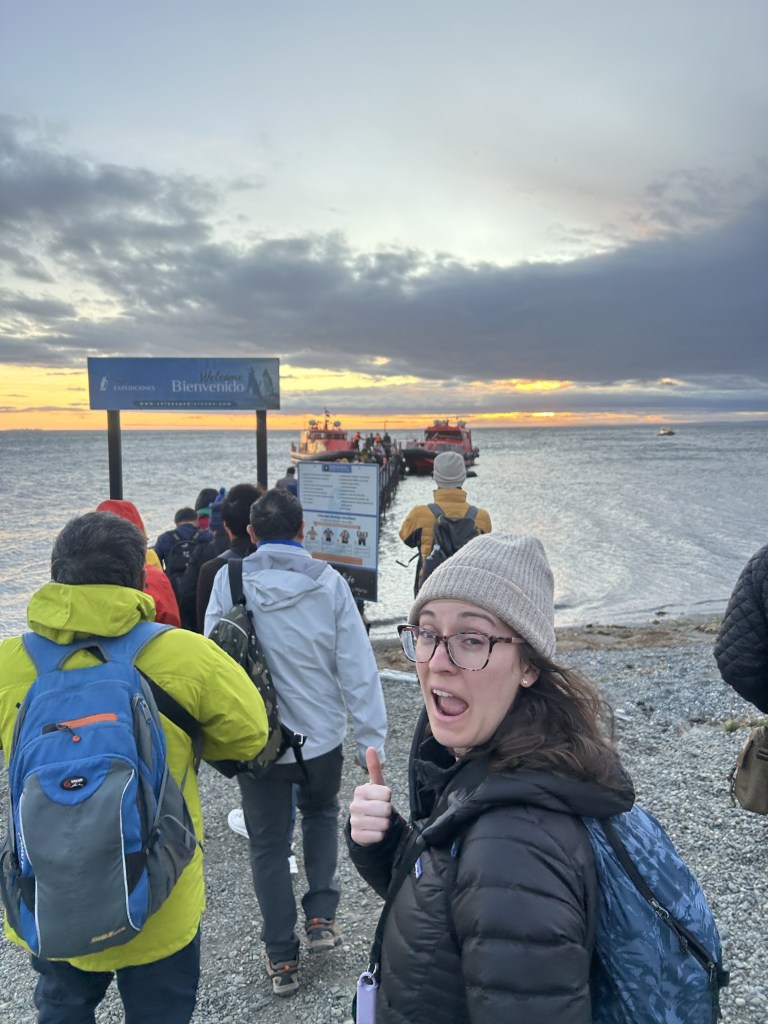
Numb to the pain of early wake up calls, we had our last early morning of the trip. Our Airbnb was luckily only 5 minutes from the meeting point for our tour, so we were able to make the quick drive and check in for our Pingüinos Magdalena Island tour ay 6:30AM.
We started with a 30-minute bus ride to the docks and then boarded a boat which sailed through the Straight of Magellan to Magdalena and Marta Islands. For our first stop, we disembarked at Magdalena Island and had an hour to walk around the walkways.
What an experience that was! There were hundreds of birds on the island – not just penguins either. There were seagulls, cormorants, and a predatory bird called a “skua”. As we were walking the pathways, we saw a bunch of dead birds and learned they were all killed by skuas – these brown and stocky seagull-like seabirds actually hunt and kill other birds on the island by breaking their necks (they can even take down a penguin!). As we started to look closer, we could identify these birds on the island because they were isolated without any other birds resting around them.
- Annually, the island receives approximately 60,000 Magellanic penguins, which represents one of the largest colonies in South America
- Magellanic Penguins can swim at almost 25km per hour
- The penguins live in burrows in the ground, which have been in existence for 3,000 years
- Magellanic Penguins are monogamous, returning to the same mating partner every year
- Magellanic Penguins are named after the explorer Ferdinand Magellan whose crew first spotted them in the year 1520

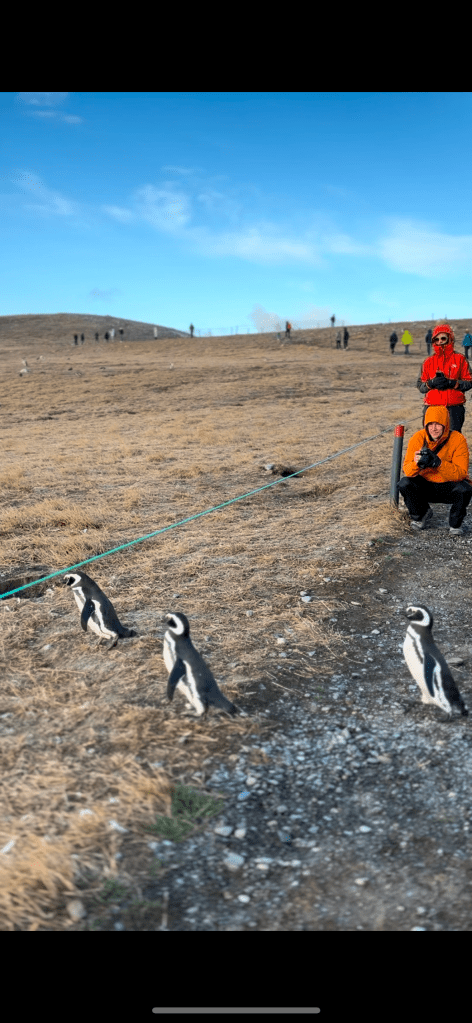
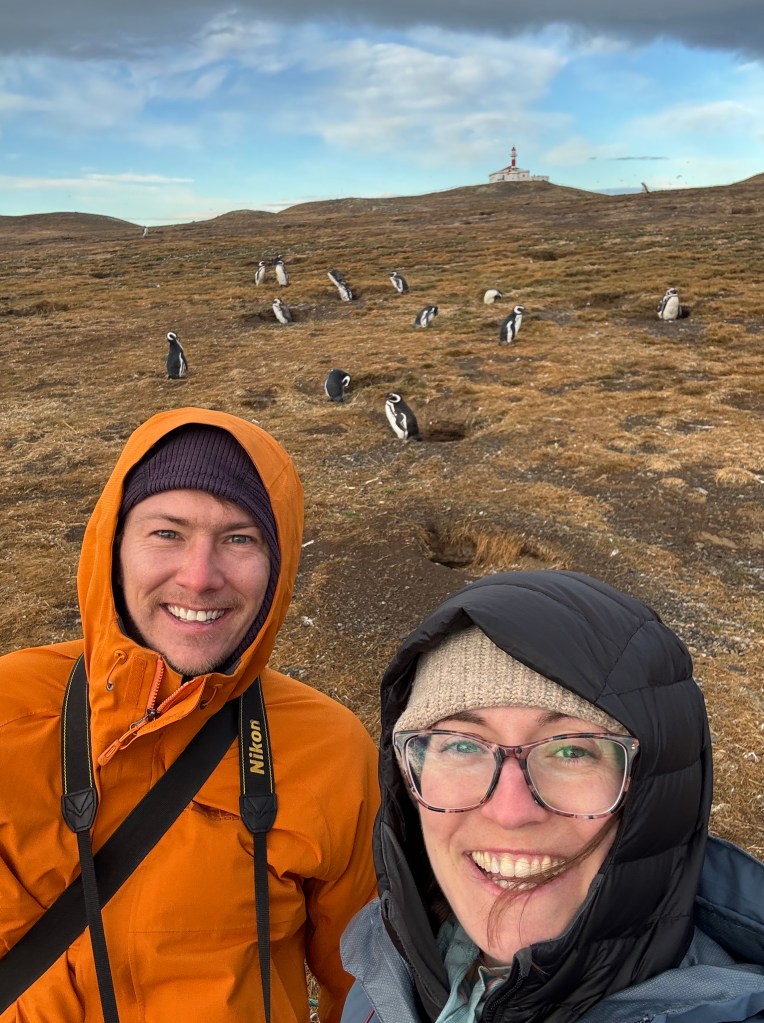
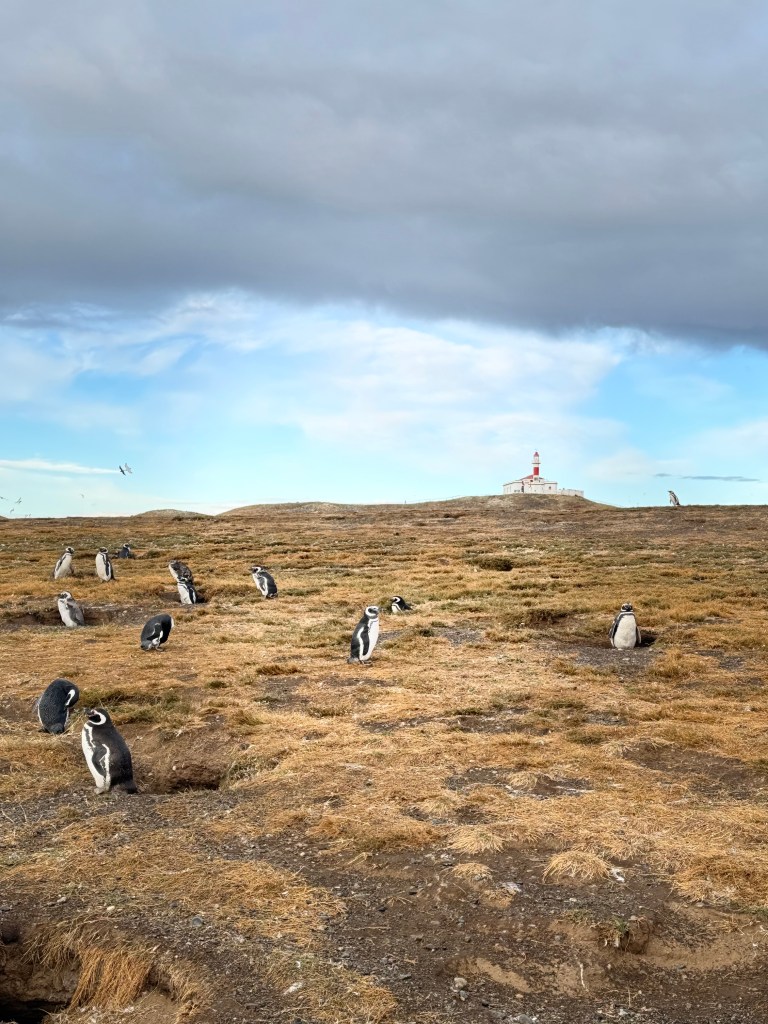


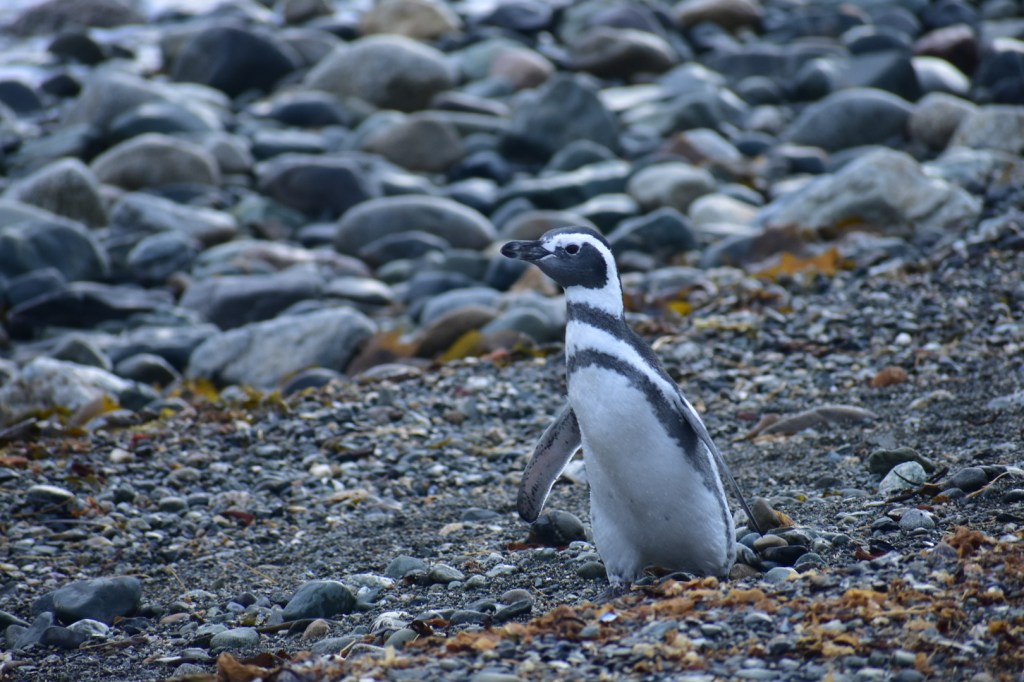
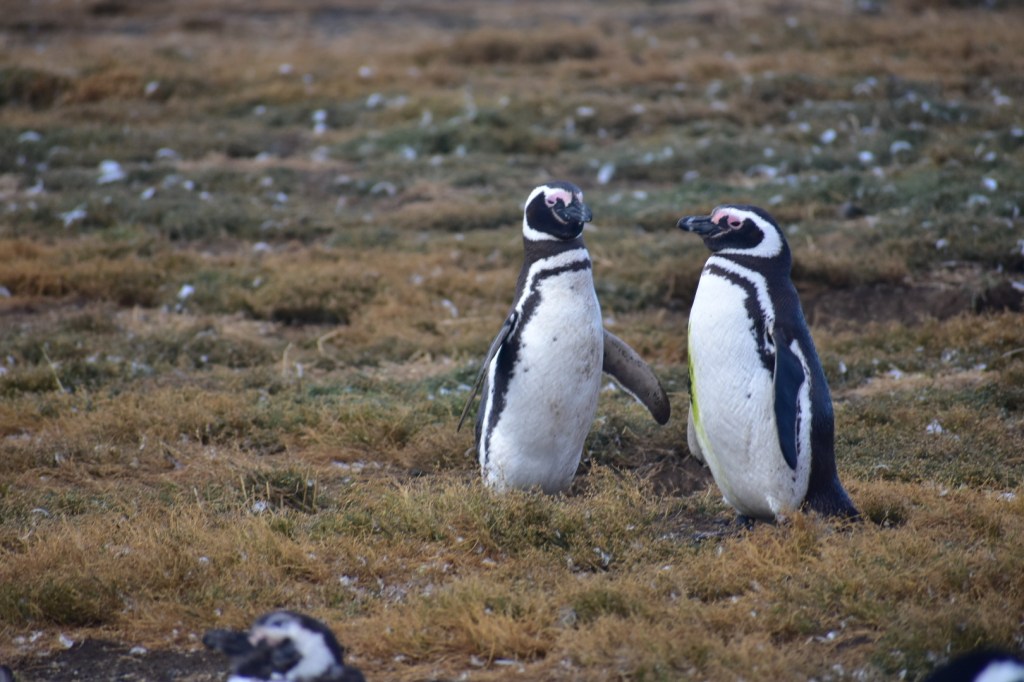

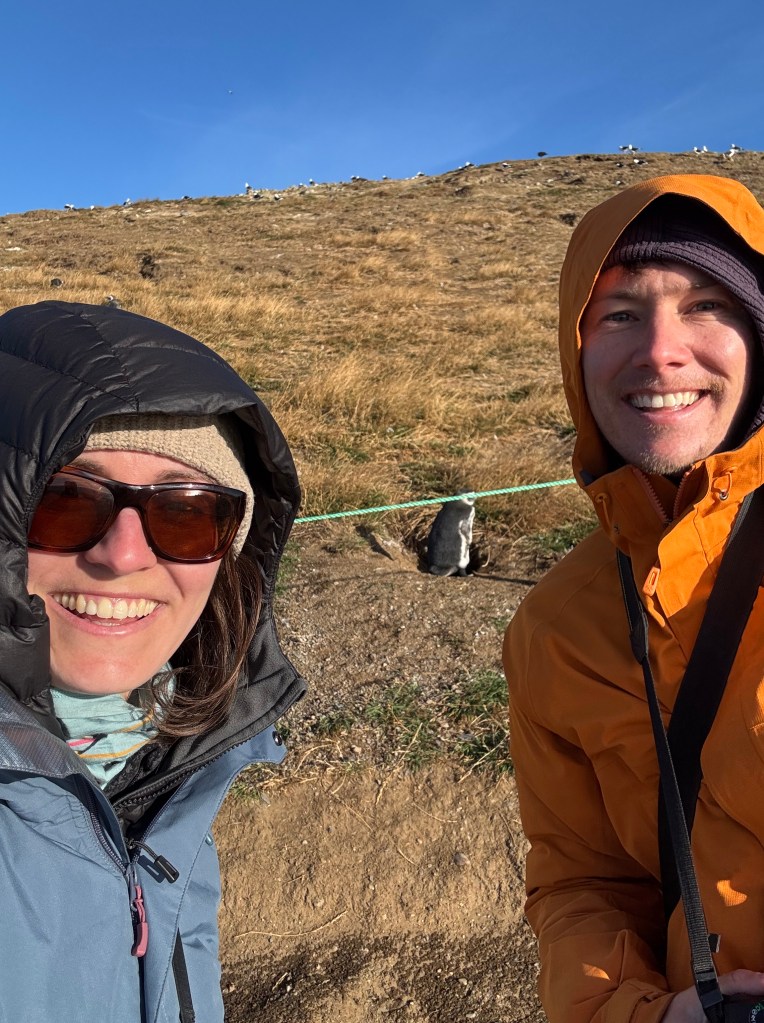
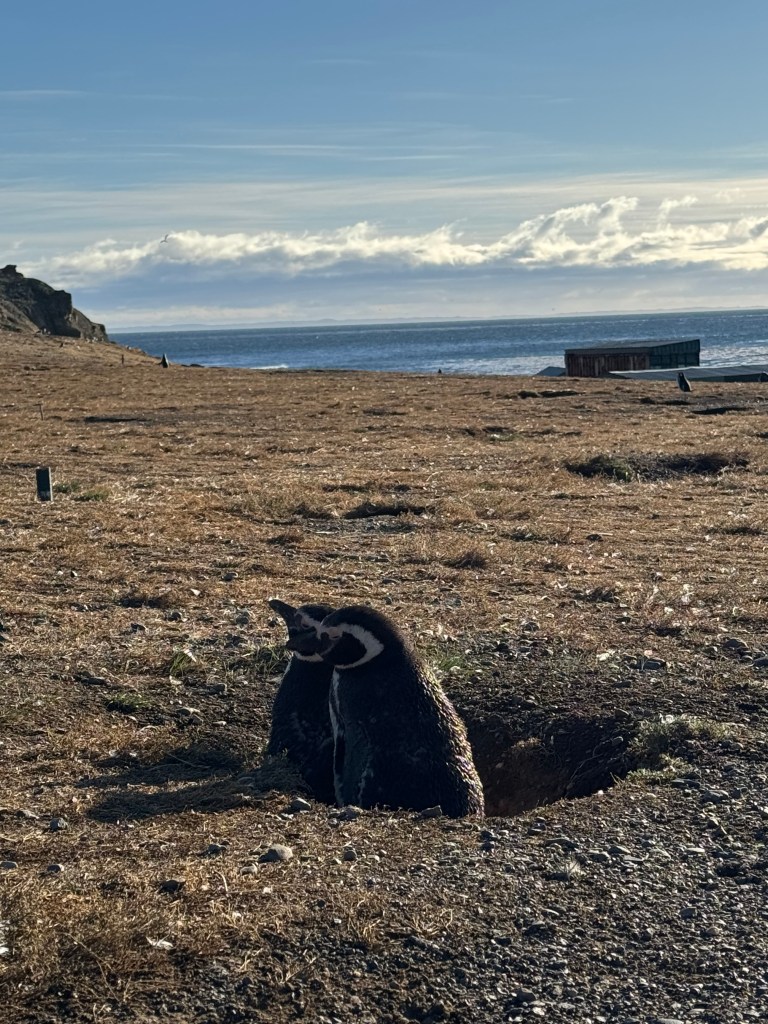
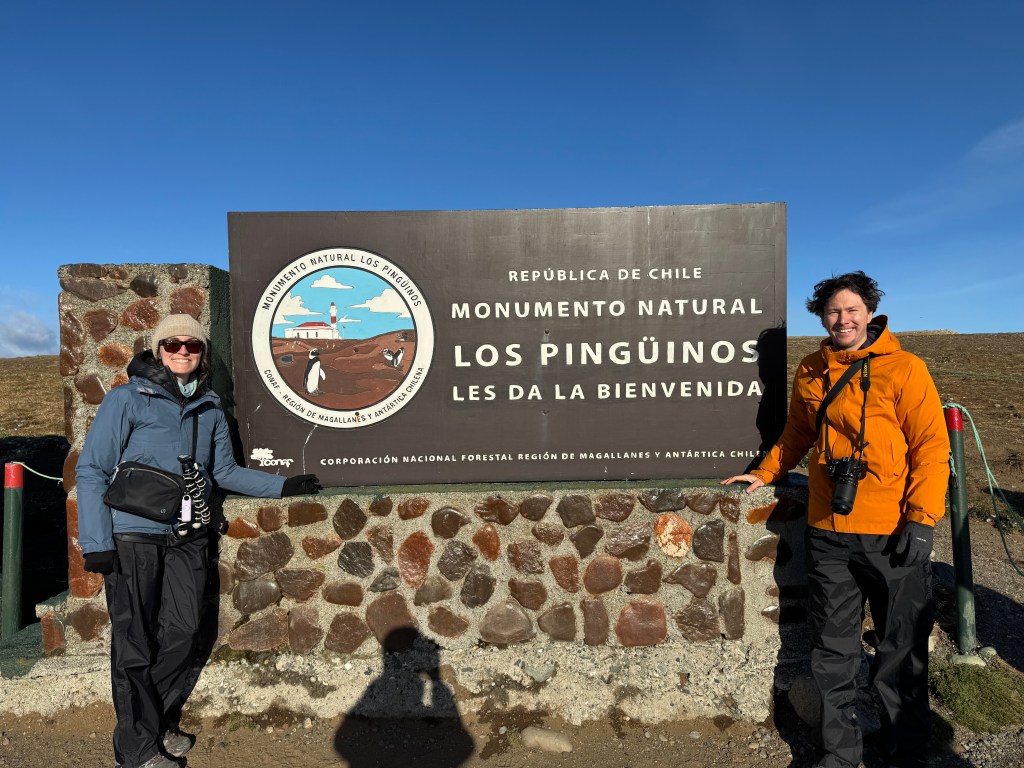

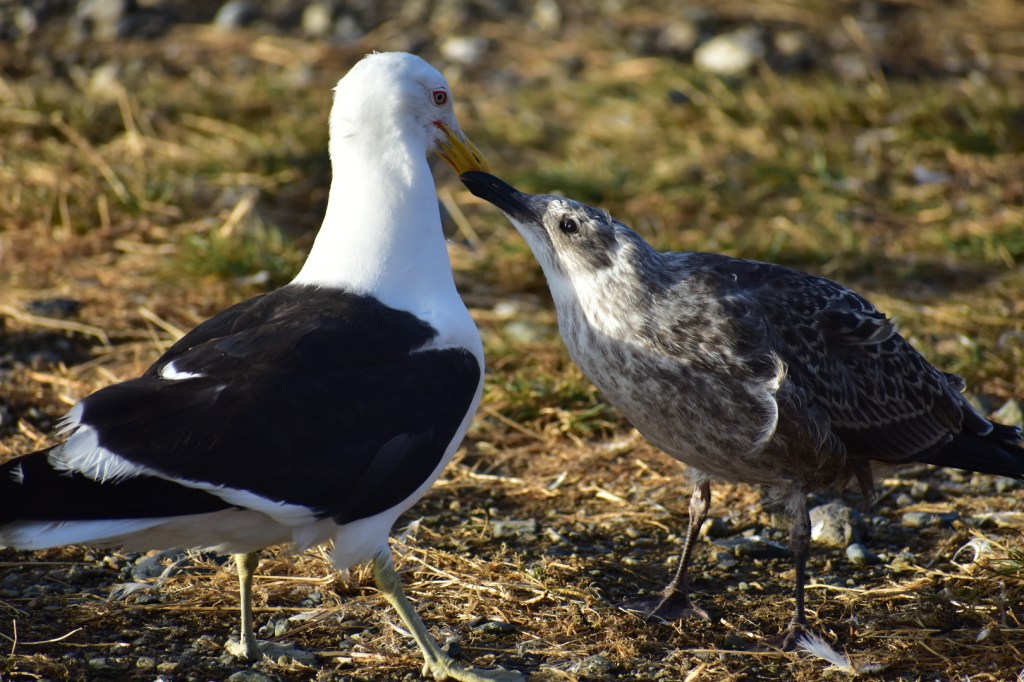
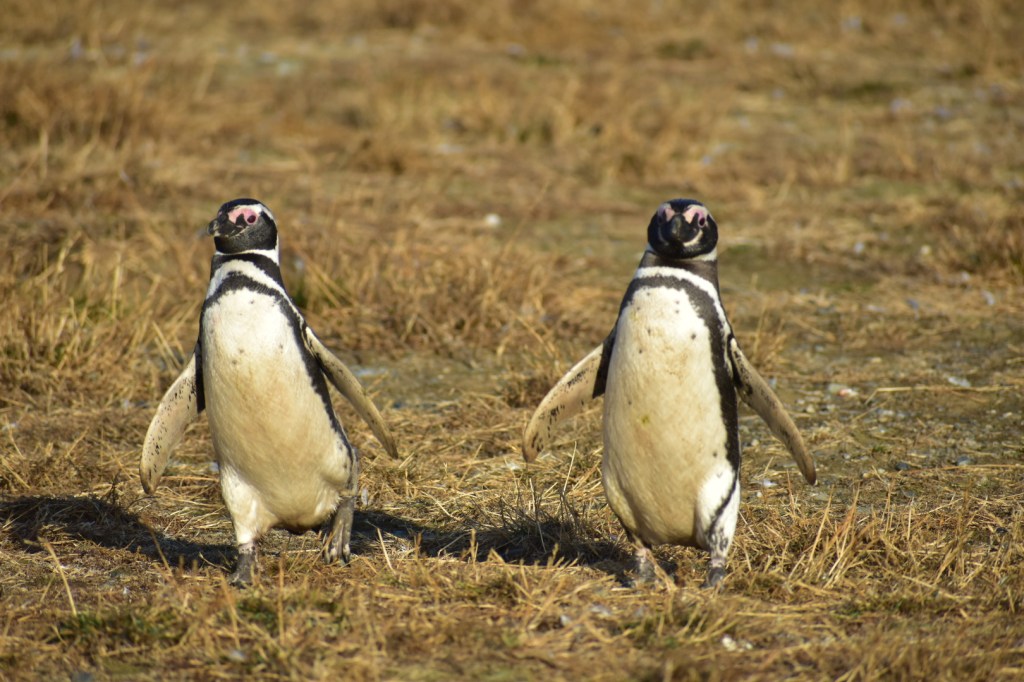

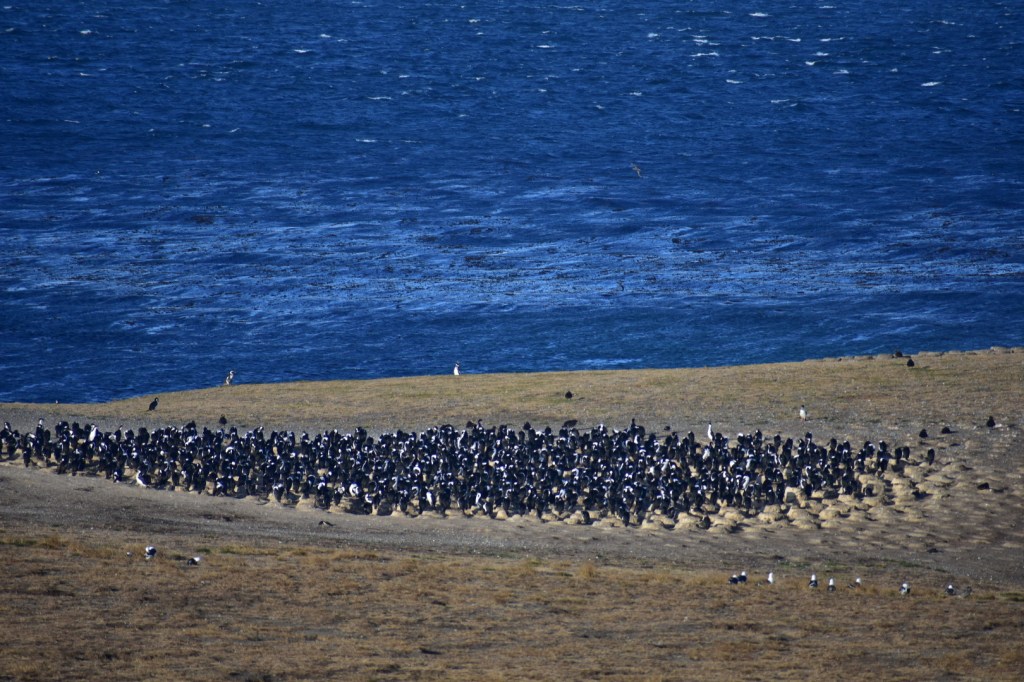
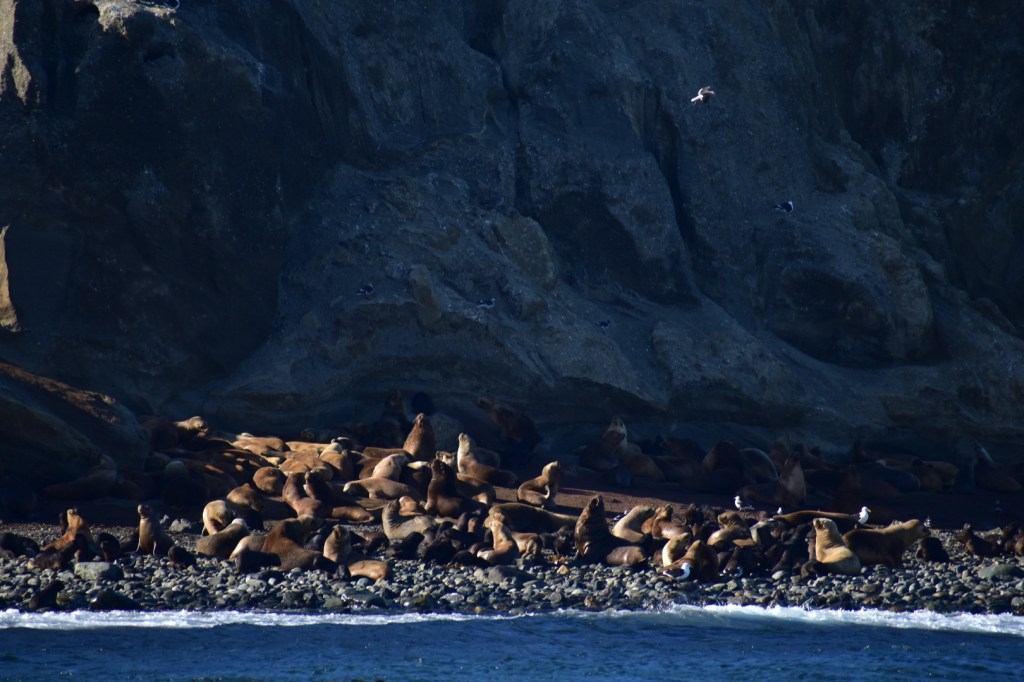
After our hour on Magdalena Island, we got back in the speedboat and went to Marta Island, which is home to more than 1,500 sea lions. We weren’t able to disembark onto the island (because sea lions are aggressive), but got to go on top of the boat and take pictures from afar.
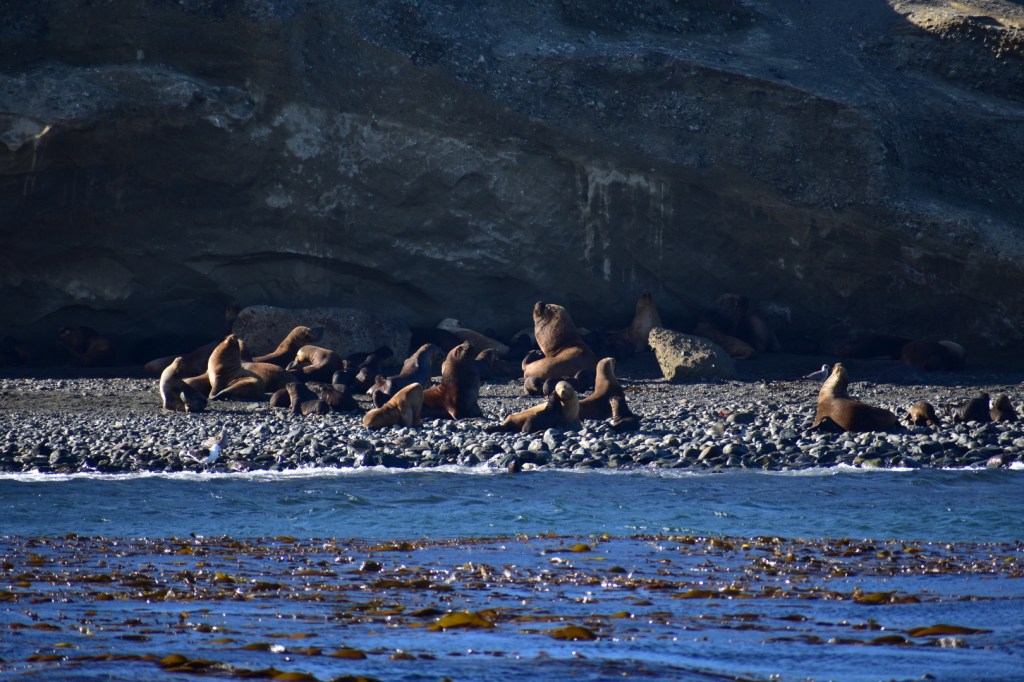

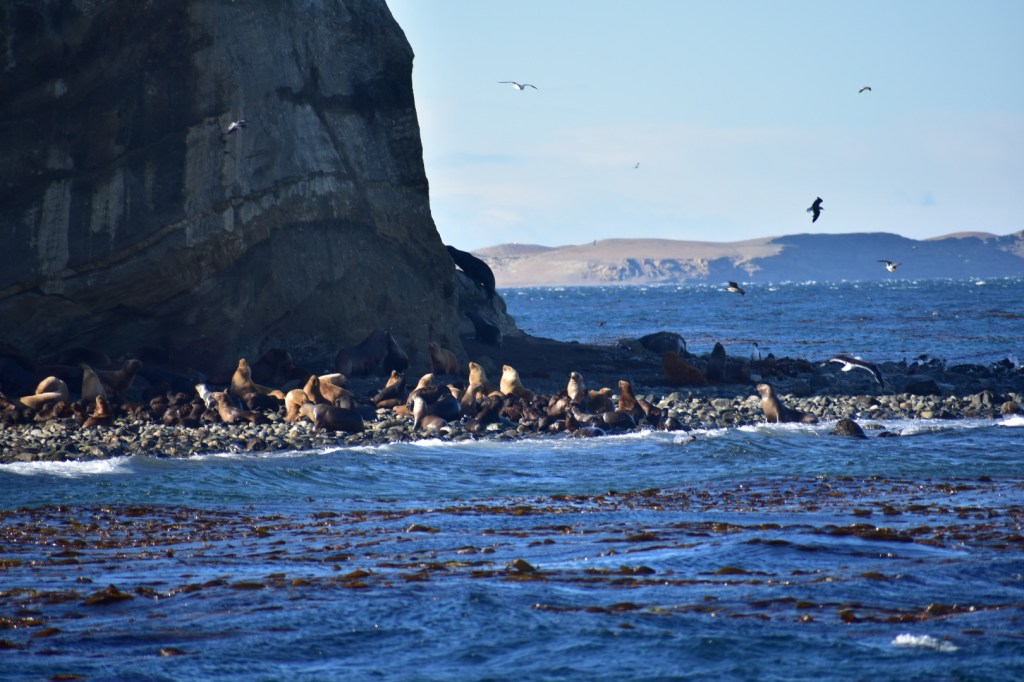
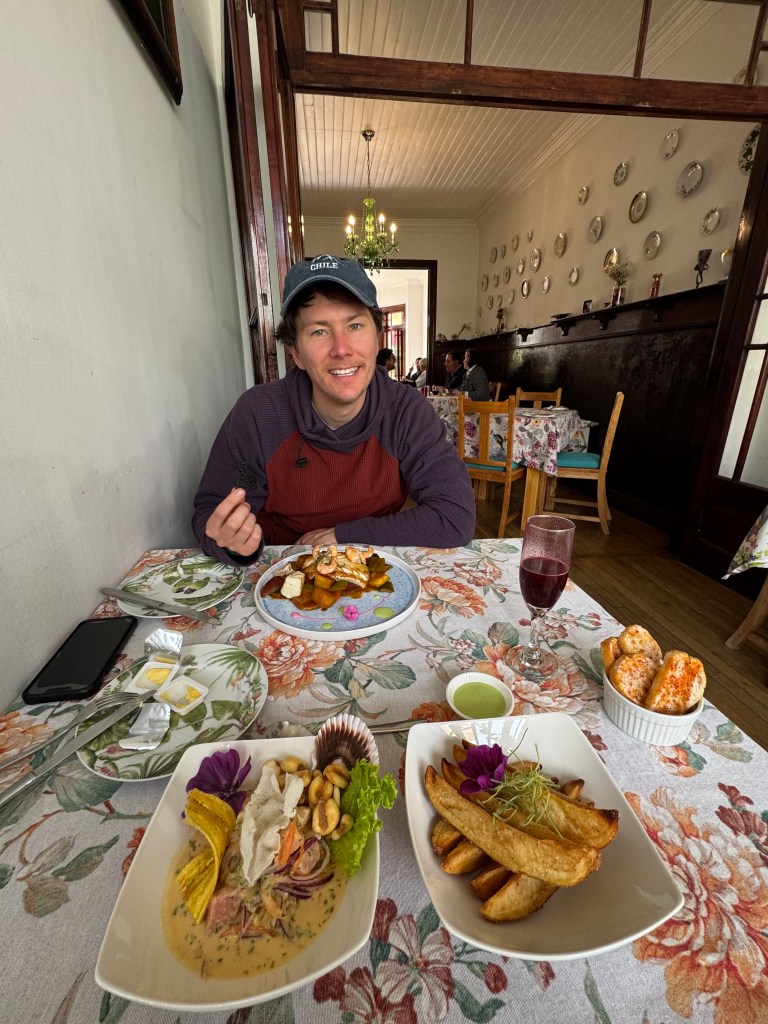
We then made our way back to Punta Arenas, eventually arriving around noon. Not yet tired of Chilean Patagonian cuisine, we sought out another seafood restaurant for lunch. After getting refueled with some coffee and grabbing our bags from the Airbnb, we went to Restaurante Ventisca for lunch, where I got a delicious leche de tigre ceviche and Jared got a succulent white fish plate (with a calafate sour OF COURSE). After walking around the city a bit (quite a big port town), we headed to the airport to drop off our car and then catch our LAST intra-country flight back to Santiago.

 Tiff & Jared's adventures
Leave a comment