February 16th
Another long travel day ahead of us! Starting the morning in Punta Arenas, we picked up our Europcar rental (another Subaru Crosstrek lol) and started our 7-hour journey northward to the Argentinian town of El Calafate, the gateway to Los Glaciares National Park.
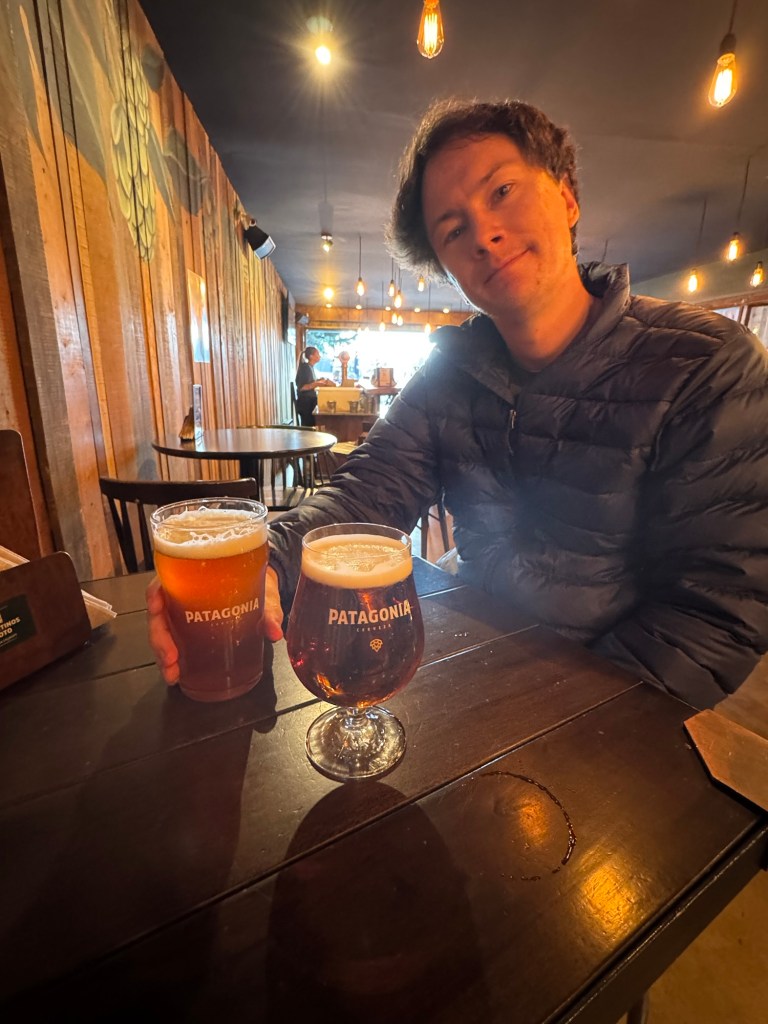
As part of the trip, we worked with Europcar to reserve a border crossing permit between Chile and Argentina, and it was a pretty lengthy event once we got to the station. About three hours into the trip, we stopped at the Chilean border crossing (Pasos Fronterizos) and had our papers stamped. Luckily, this didn’t take too long because we were exiting Chile, but we then drove about a kilometer up the road for the Argentina border crossing and spent probably an hour waiting in line and going through customs. All in all about two hours later, we were on the road again to El Calafate, arriving just in time for a pre-dinner drink. Of course we sought out one of the breweries in town – Patagonia Brewing Co. and had a nice New England IPA and Amber.
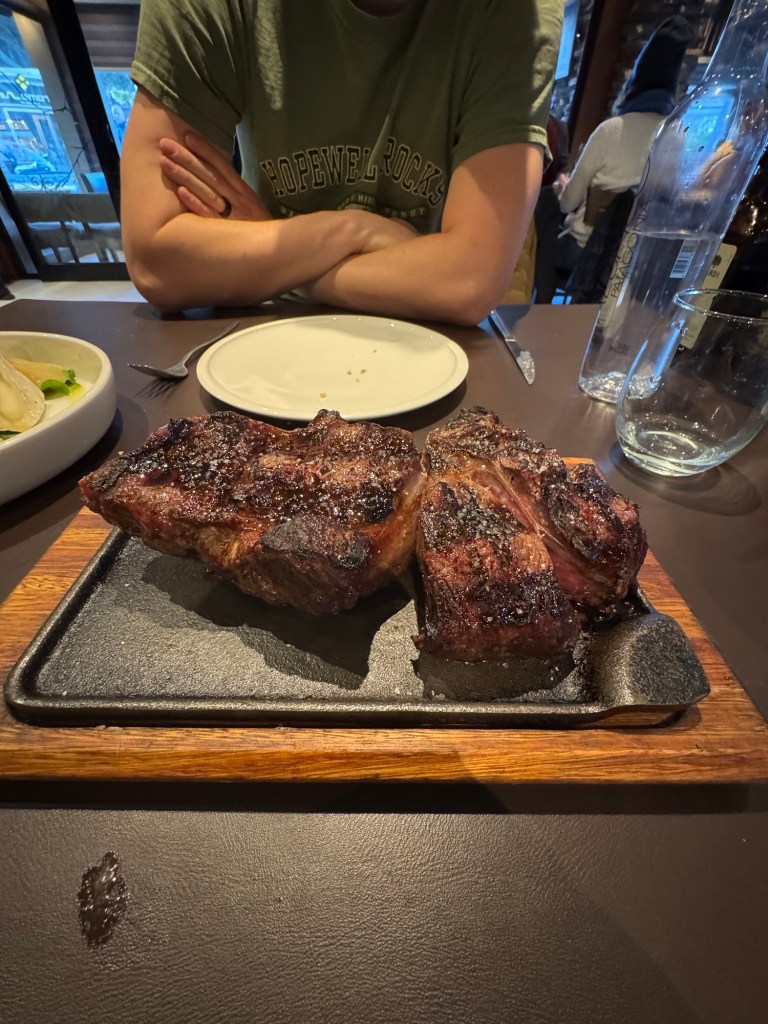
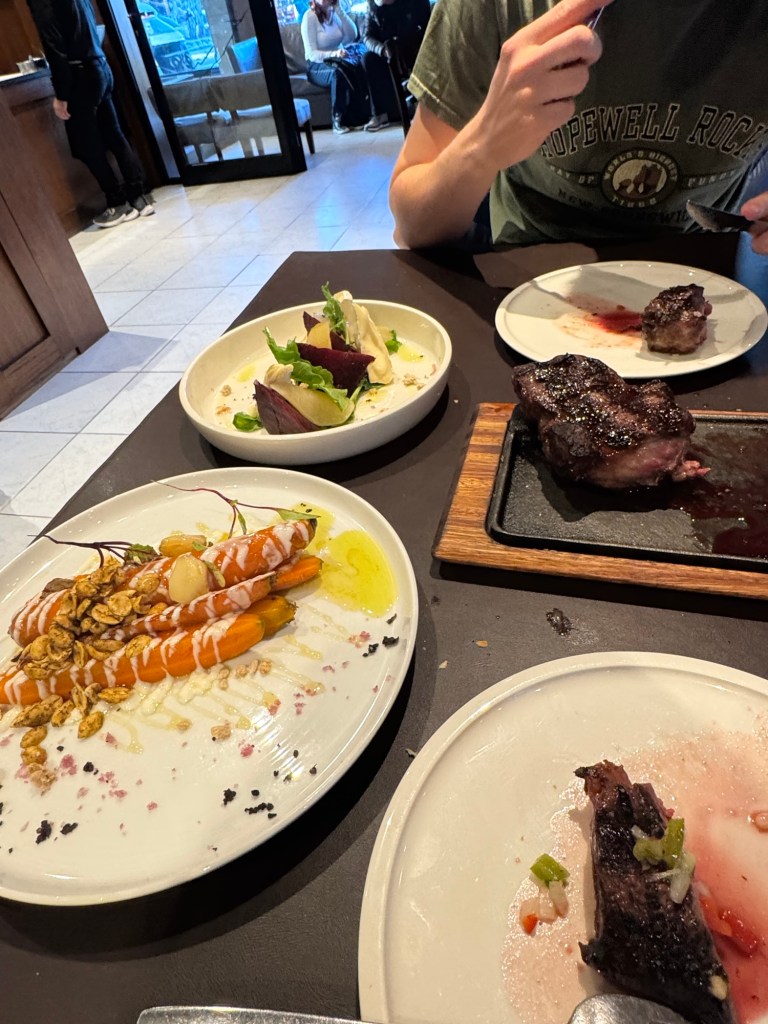
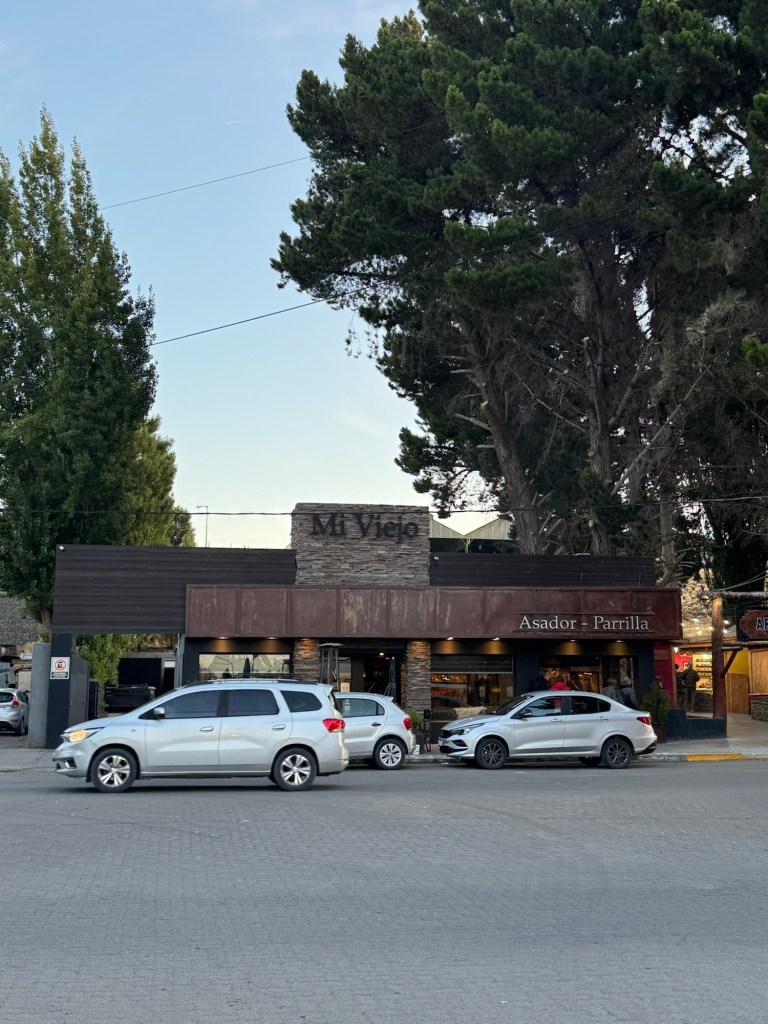
Then we walked down the street to Mi Viejo for our dinner reservation. Their specialty, like many other parrillas in town, is grilled meat (going all in on the meat culture here in Argentina). We got a full ribeye to share, along with some sides, and it was the largest hunk of meat I’ve probably seen in my life. Thoroughly stuffed and getting some of our steak to go, we walked through the town center for a bit to digest. It was definitely a touristy town, with souvenir and artisan shops on every block – Jared bought the most expensive hat ever at one of the stores. With the sun setting around 9PM, we made our way back to the Airbnb for a good night’s sleep before waking up early to head to Los Glaciares National Park.

February 17th
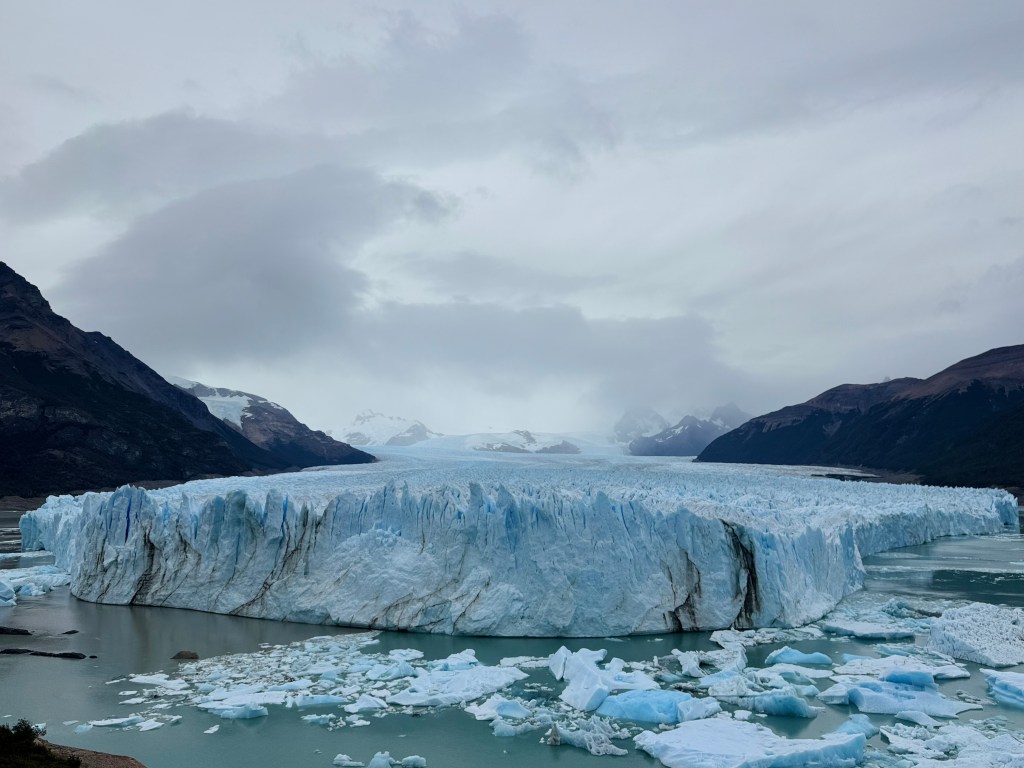
The next morning, we had a of 7AM alarm in order to beat the crowds at Perito Moreno. While planning the trip, we looked into several excursions in the national park, including heli-trekking, kayaking or taking a boat ride up to the glacier wall. All of the prices were ludicrous (we actually bought kayak tickets because we couldn’t tell what the exchange rate/pricing was on the website and were charged $800 and immediately requested a refund), so we decided to hike the boardwalk for our glacier views. We arrived around 9AM, paid our 45,000 pesos per person to enter, and were off!
A few facts about Los Glaciares NP:
- Created in 1937 to preserve an important area of the Southern Patagonia Ice Field, its glaciers, the sub-antartic forest, and the drier steppe to the east
- The national park encompasses an area of 2,806 square miles. It is the largest national park within the country of Argentina and is a sister park with Torres del Paine National Park in Chile
- The name is derived from the ice cap located in the Andes; this ice cap is the largest glacier field in the world apart from Greenland and Antarctica. It serves as the source for 47 large glaciers
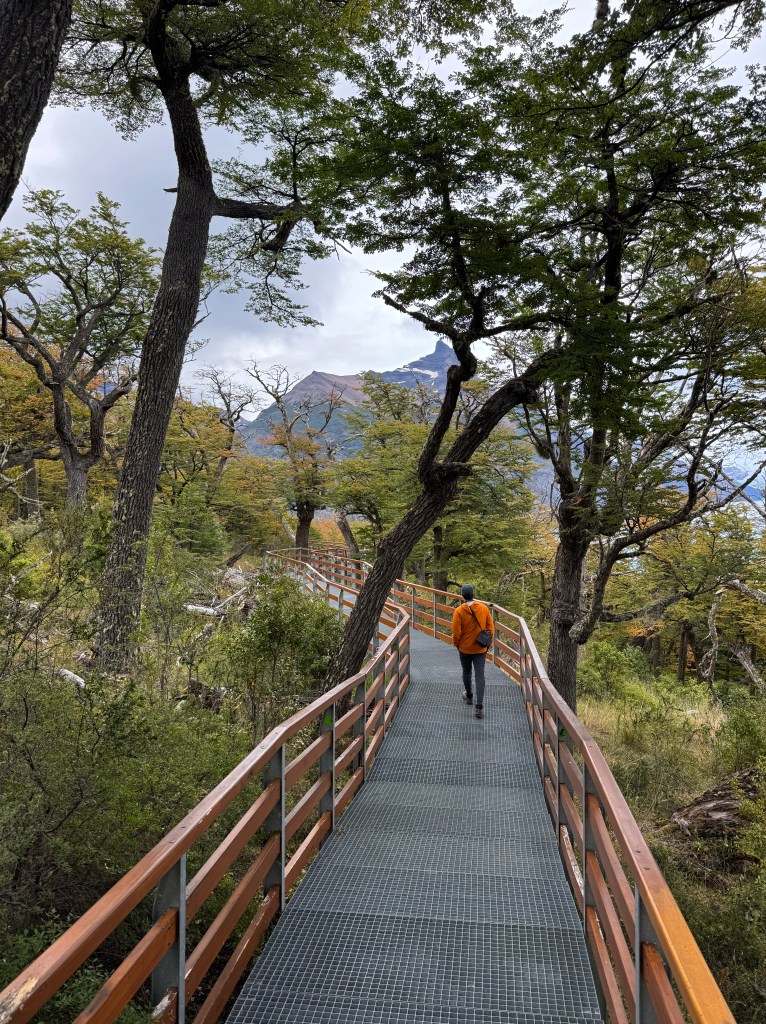
We were impressed by all the different walkway options at the trailhead in order to get different viewpoints of the glacier down below. Unfortunately, the walkways didn’t make it to ground level (there was some statistic that decades ago several people actually died from getting too close to the glacier when ice fall into the lake and ricocheted dozens of meters), but we were able to visit many of the different vantage points, as well as experience a part of the glacier actually breaking off the water into Lago Argentina (called “calving”)!

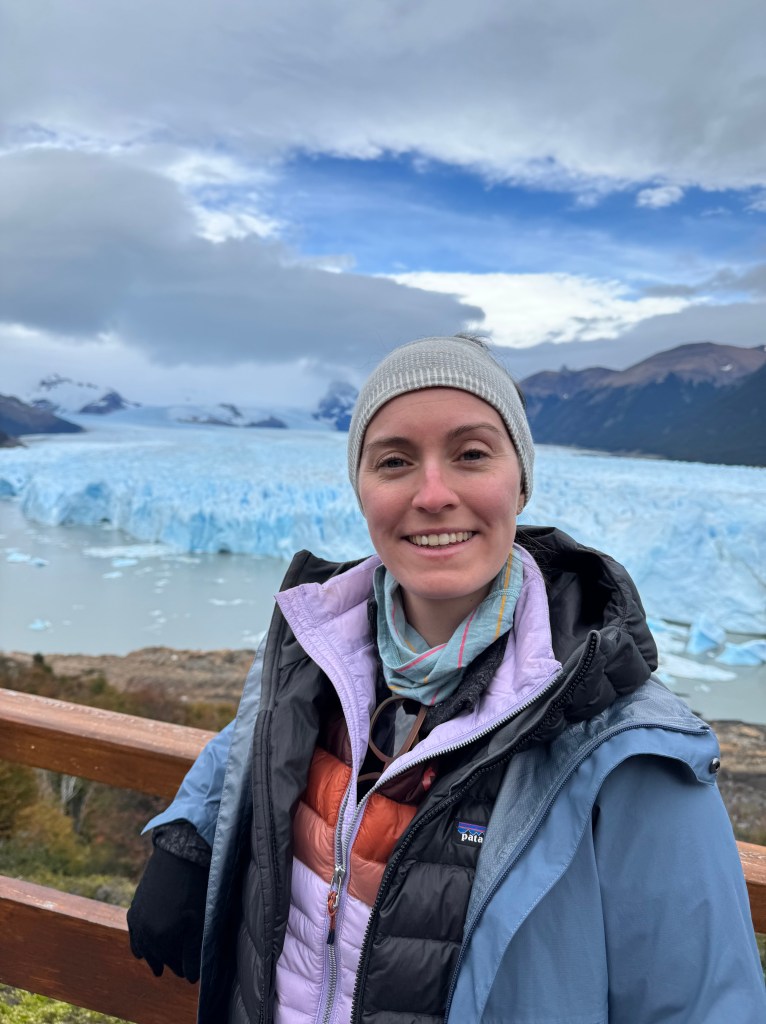

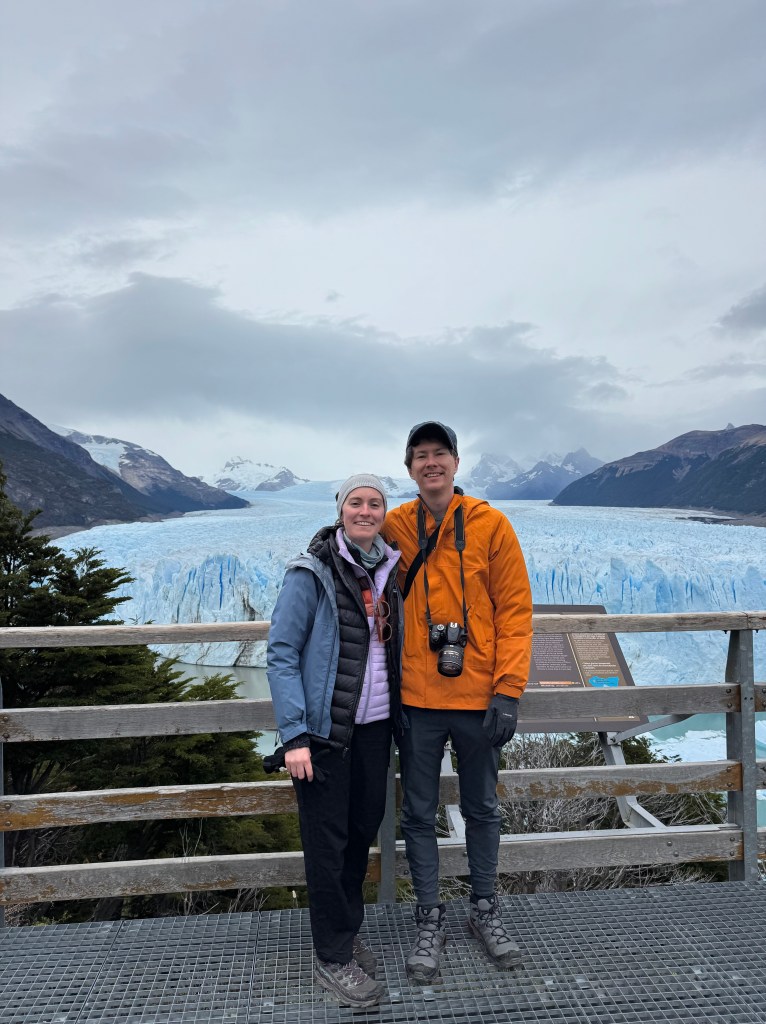

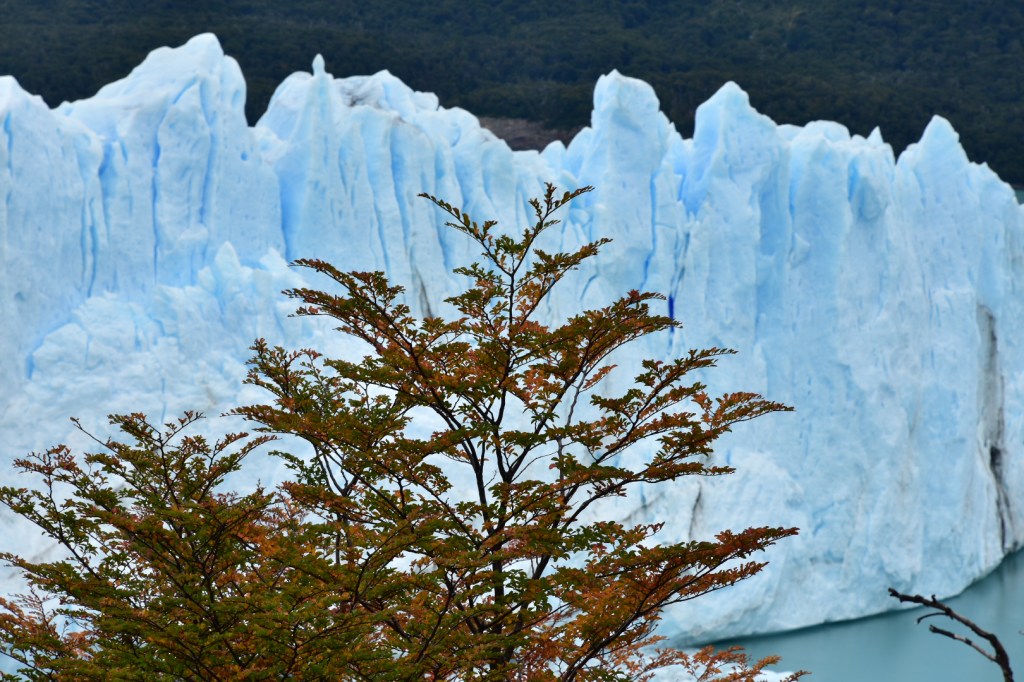
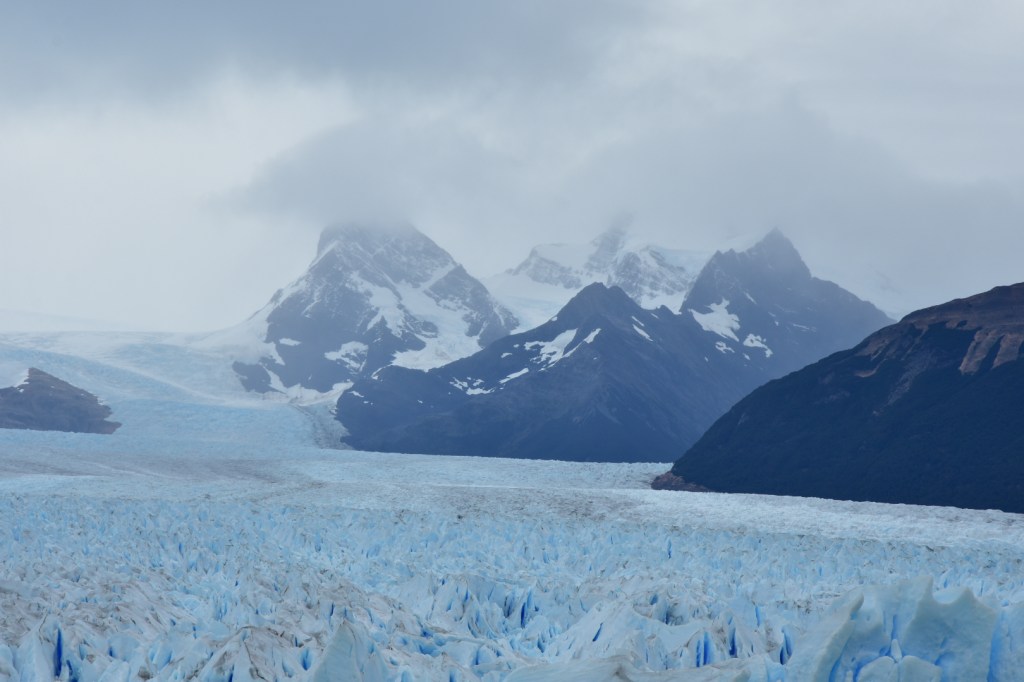


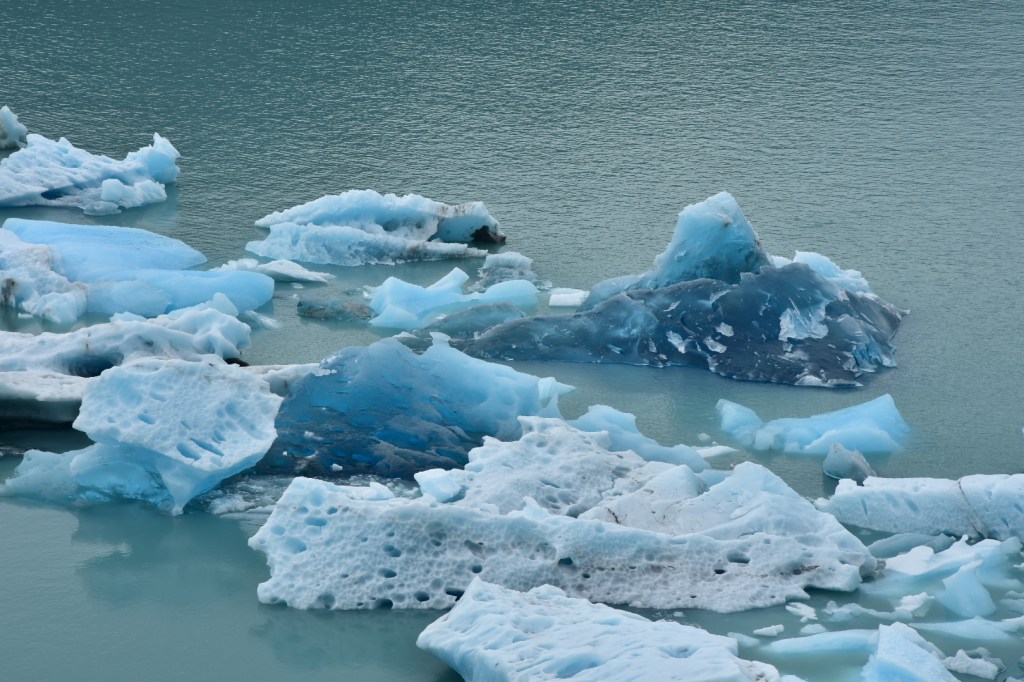

It was mesmerizing to look at pieces of the glacier that has fallen off, especially those with deep, deep shades of blue, almost the hue of indigo. At one point, we got to see a group kayak tour in the water and it helped put into perspective just how big all the floating icebergs were compared to the people.


Some fun facts we learned about Perito Moreno:
- In 1899 the glacier’s snout was 750 meters away from the coast. It then advanced until 1917, when it reached the shore of Península Magallanes. Since then, until 2020 it has been in near-steady-state. Due to climate change and changes in lake bottom topography, the glacier begun retreating in 2020.
- Perito Moreno Glacier is massive, covering an area of 97 square miles. The ice field that feeds the glacier is the world’s third-largest freshwater reserve.
- The glacier was named after the famed explorer and Argentinean defender Francisco Moreno.
After spending a few hours exploring the walkways, we wrapped up with perfect timing, as we just missed the hoards of tour buses coming in as well as the light rain beginning to drizzle. One part of Los Glaciares NP down, now onto a 3-hour drive to el Chaltén!
 Tiff & Jared's adventures
Leave a comment