February 13th
Another early travel morning in the books!
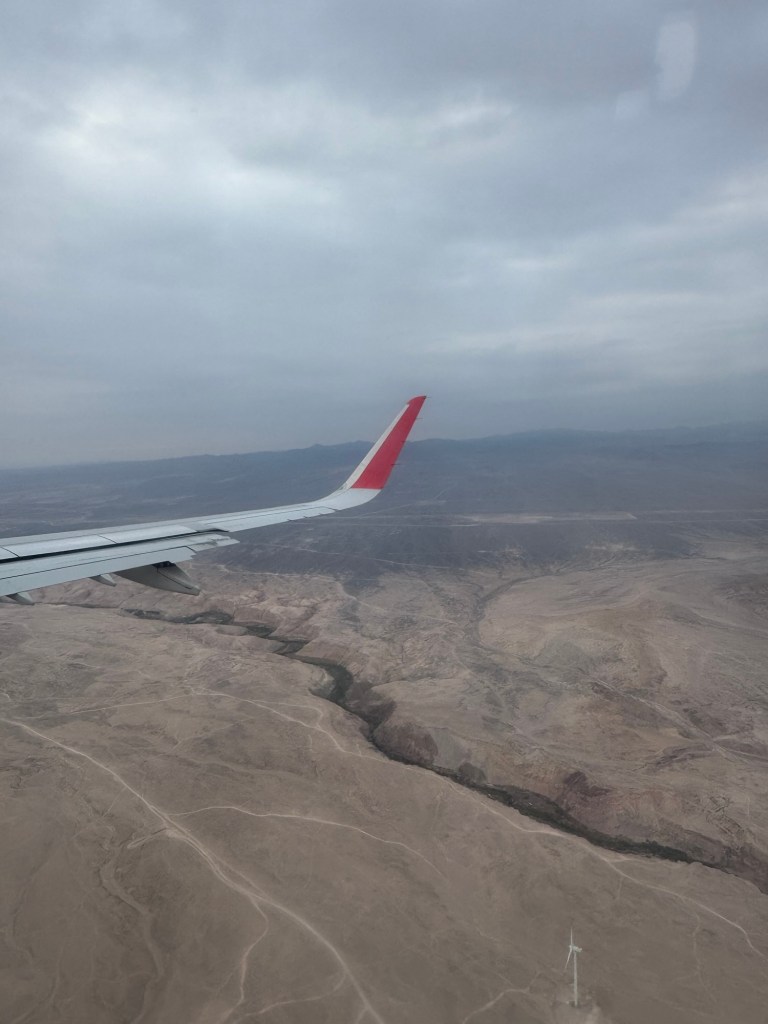
We departed Santiago around 7AM, landing in Calama around 10AM. After seamlessly picking up our car rental through Chilean, we were on our way to San Pedro de Atacama, the homebase for our desert exploration. While we had planned a jam-packed three days in the desert, the extraordinary rain and subsequent flooding that impacted the area a day or so before had different plans for us!
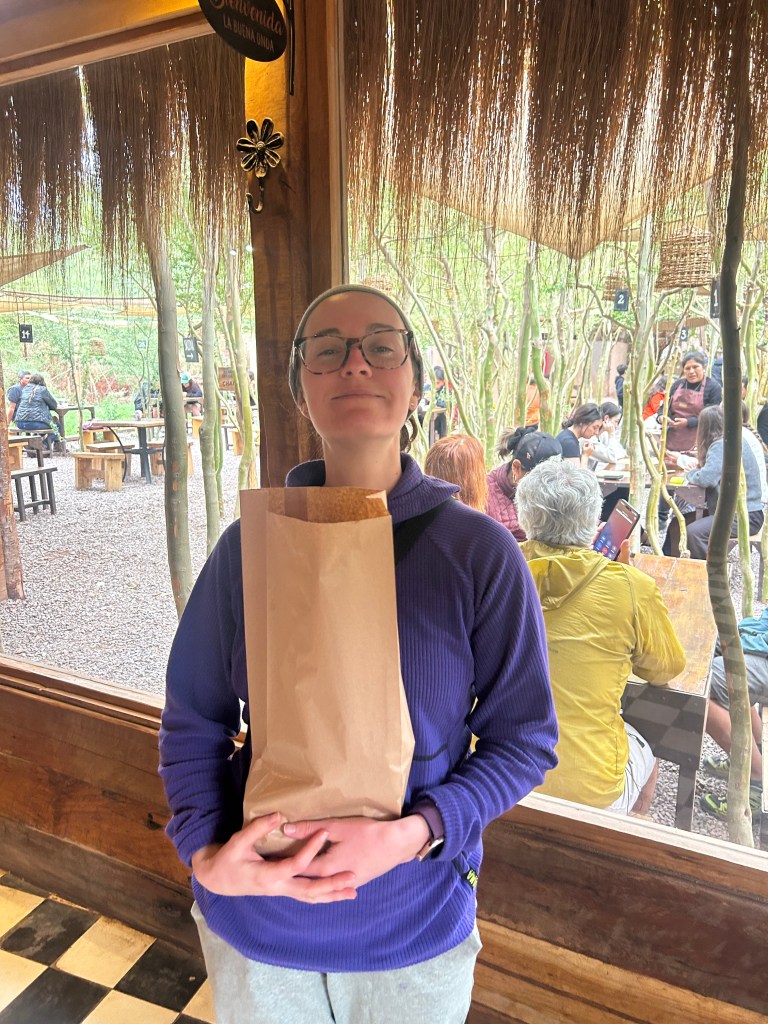
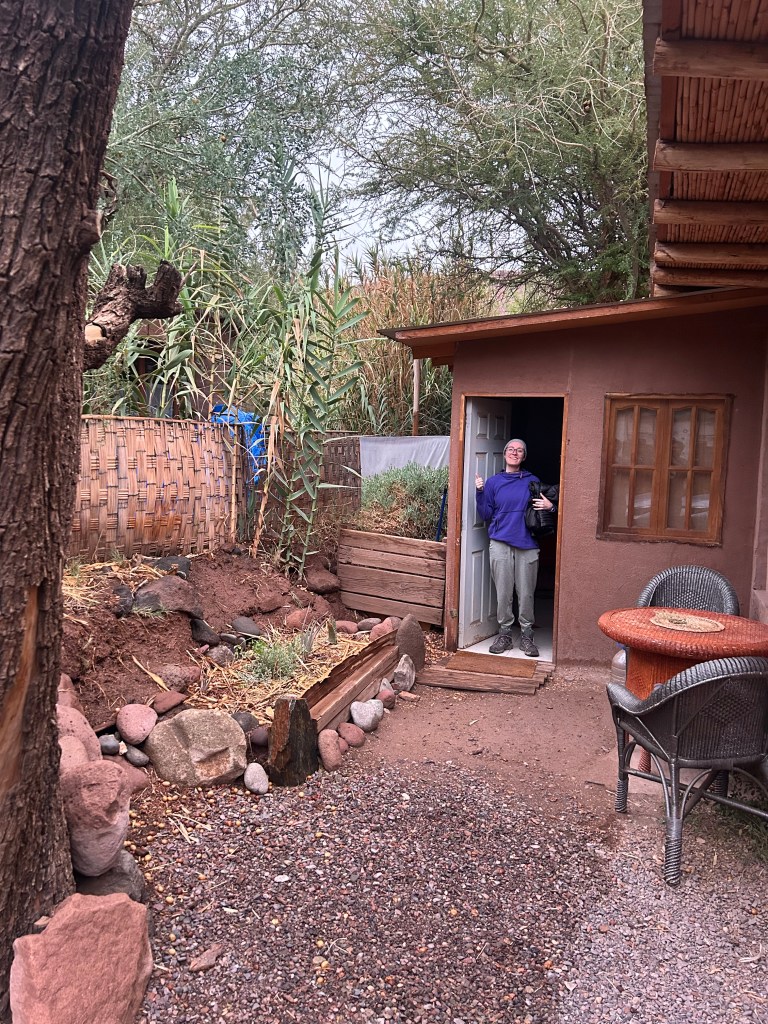
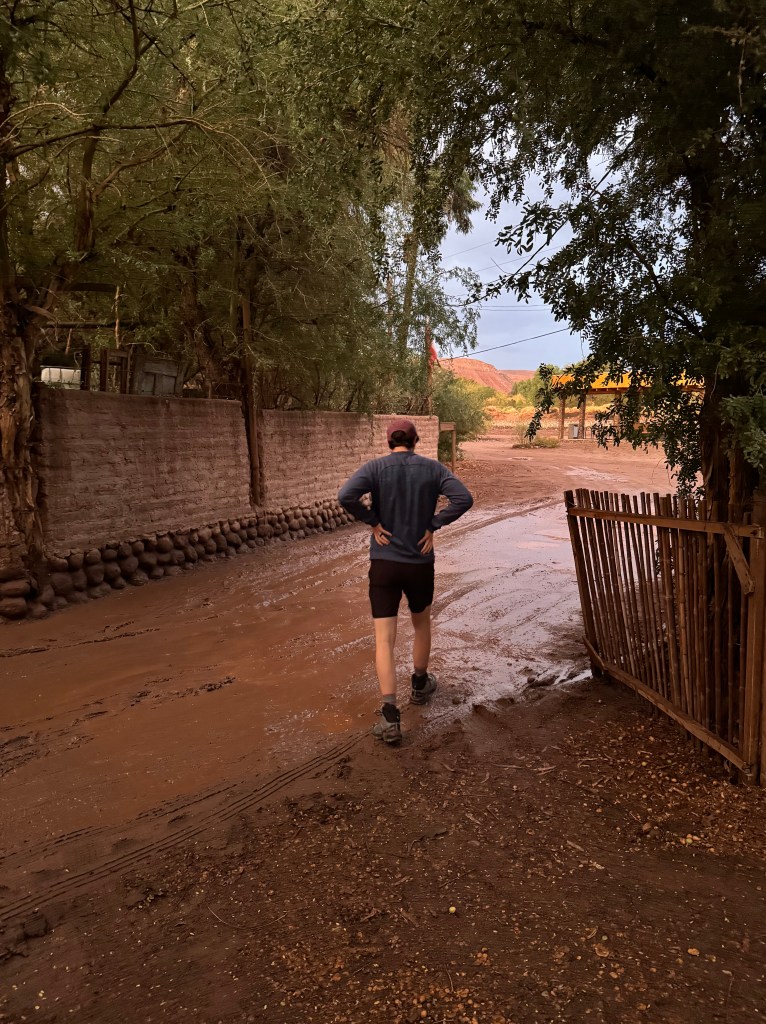
In our typical frugal fashion, the first order of business upon arriving to town was going to the grocery store. As soon as we entered the town of Calama, we were met with unpaved streets full of potholes, wandering dogs, and crowded streets, not to mention various signs that we were unable to decipher. After grabbing some necessities at the store, we headed to a place called Franchuteria, which was on my list as a must-visit bakery/ lunch spot – we ordered a serano and queso sandwich (very light, refreshing and delicious), a salmon and cheese croissant (very airy), a double cortado and freshly-squeezed orange and mango juice. Satisfied and rejuvenated, we headed to the Airbnb to drop off our luggage before driving up to Puritama for our Termas hot springs reservation. Thank goodness our host gave us detailed instructions on how to get to his house – we had to take a detour and go through some suspect backroads to circumvent the washed out road to his house. Upon Airbnb check-in, we chatted with our host and learned that there had been significant rain and flooding in the area in the past few days, causing a variety of outdoor areas and excursions to close. Another pitfall – at our Airbnb, we didn’t have power for the first half day, and we went the whole stay without any running water. It was just like we were camping!


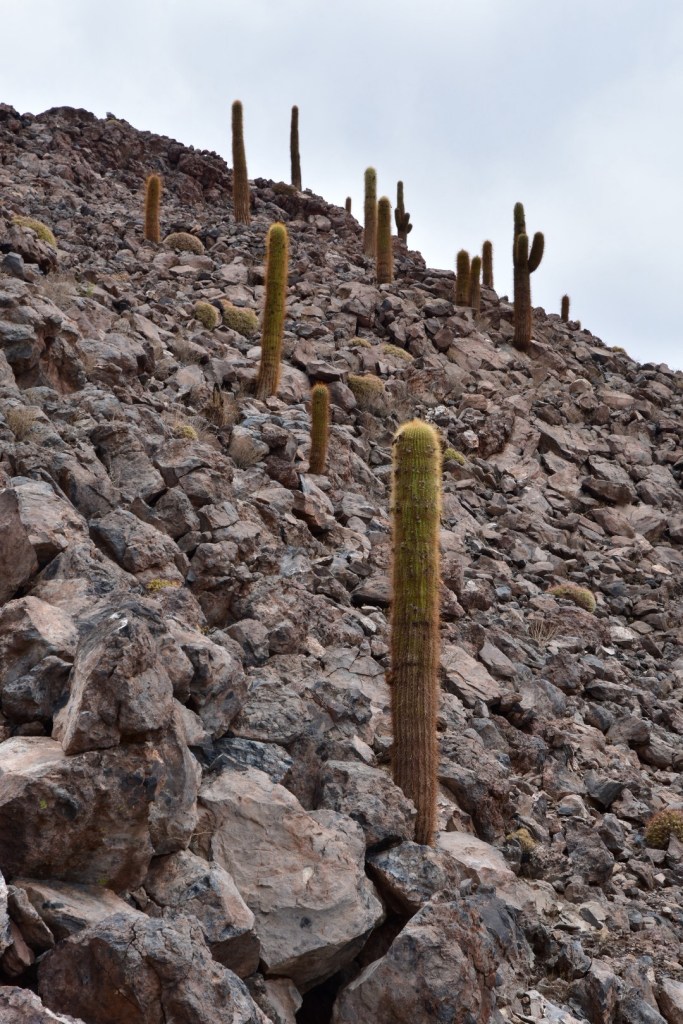
Not fully understanding the impacts of the weather and still optimistically naïve, we drove to Puritama. After an hour of driving in the desert and seeing a total of probably five cars or less, we made it to the Puritama Reserve to be met with a sign in Spanish, explaining that they were closed. Turning around and still feeling adventurous, we tried to find the Valley of the Cacti for a free and alternative option of hot springs. After endlessly searching to no avail, we headed back, feeling defeated. Our plan once we got back to town was to visit the Devil’s Throat area for some hiking. One piece of information that I failed to mention was the added obstacle of the road across the river being washed out, meaning anytime we wanted to get into the city or go back to the Airbnb, we would have to loop around the area.
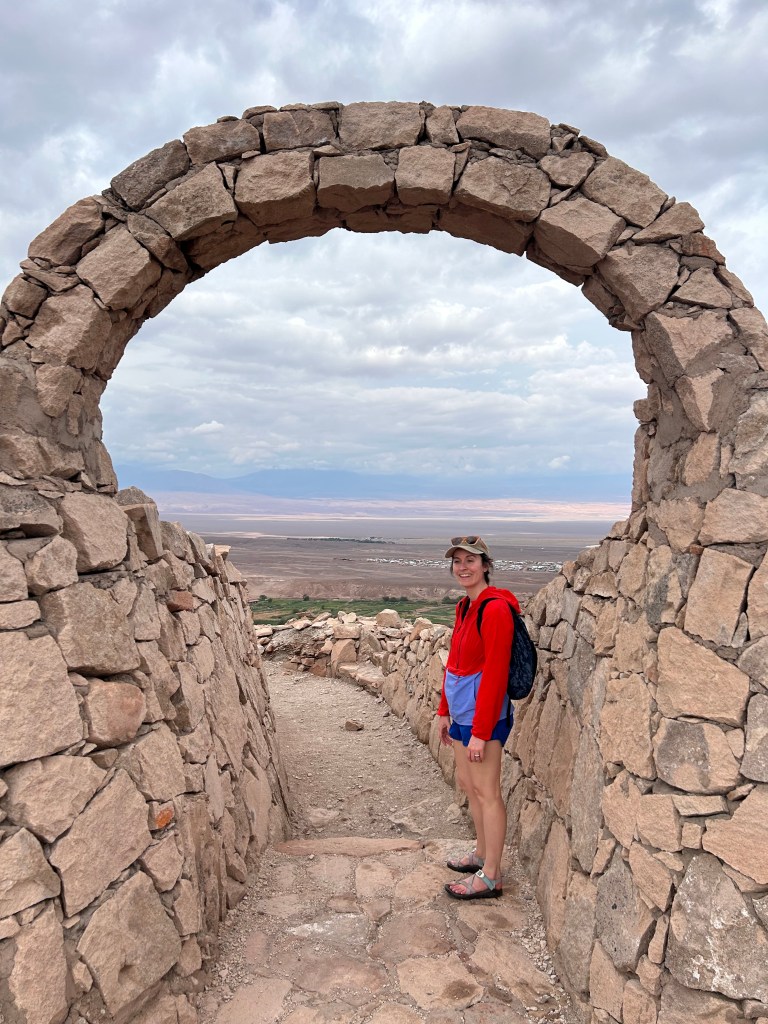
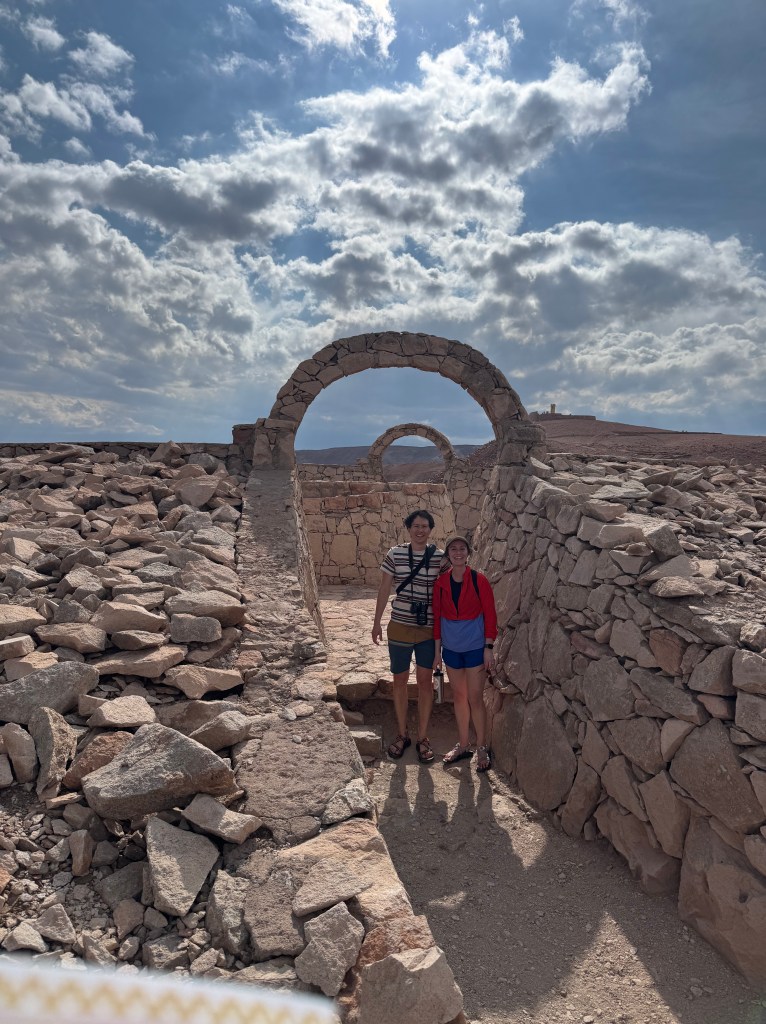
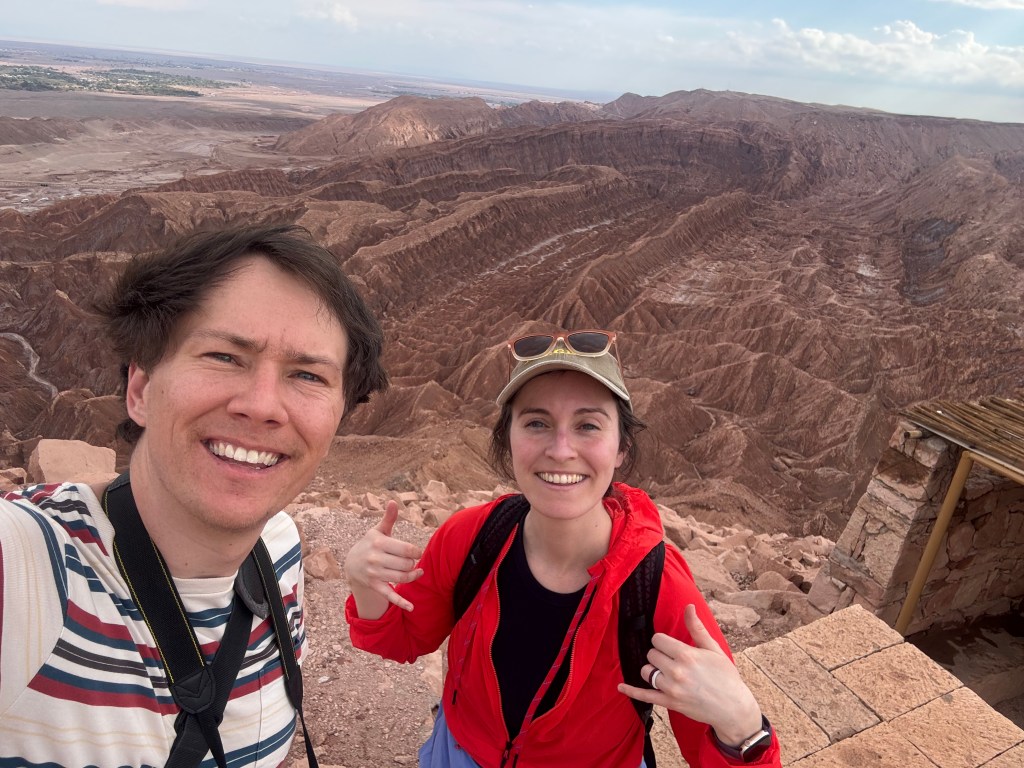
So, after making it to Devil‘s Throat and looking forward to a hike, we were met with yet another closure due to the recent flooding. Feeling defeated yet again, we made one last Plan D (?) to go to Pukara de Quitor for one last hiking option. Huzzah! This was actually open. We paid our five pesos per person for the hike and had a gradual and rocky climb to a viewpoint that overlooked the desert and surrounding San Pedro. We learned about some of the indigenous people of the area before Spanish conquest, and even got to hear a man playing ancestral music on his flute while walking up the path. At this point, it was about 6 o’clock, so we headed to the Airbnb quickly to freshen up and then went back into town for dinner.



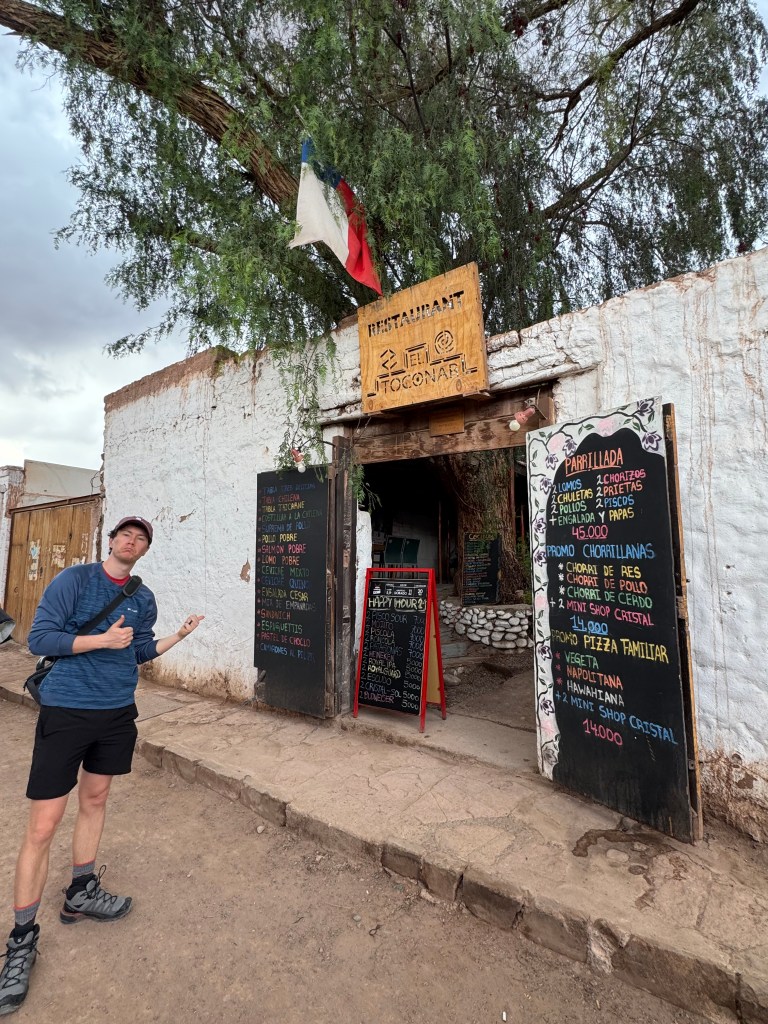
We already had reservations, but our Airbnb host recommended a more local spot called La Picada del Indio, known for Pisco sours with Rico Rico (local herb that looks and smells like rosemary). Looking forward to the new recommendation, we headed into town and walked the streets before making it to the restaurant. Unlike most places we’ve travelled, there was definitely a bigger language barrier than expected. Luckily, growing up in an Italian household and taking years of Spanish, I remembered more than I thought I would, including asking for a table, ordering our meals and asking for the check/to-go boxes! We ended up getting a mushroom spaghetti dish as well as lomo a lo pobre, or steak with French fries, onions and an egg. Both portions were big enough to provide leftovers for the next day! After our meal, we headed back to the Airbnb to get a good night of sleep.
February 14th
The next morning, we were still feeling optimistic and woke up around 6:30 to be at Laguna Chaxa in order to see the flamingos feeding. This adventure led us on another drive through barren, sandy plains with minimal vegetation. We arrived right around 8AM at opening time to be greeted with another CERRADO sign. After waiting a few, a ranger drove up and notified us, and a few other groups waiting, that they were waiting on permission to open the Laguna due to the recent rain. We decided to make a Plan B instead of waiting around. Plan B consisted of driving out to Piedras Rojas, or red stones, as this lagoon was close-ish to our other 1PM reservations at Miscanti.
A little background – when we were planning this trip, it was hard to find much information online about booking reservations in advance. We booked our Miscanti lagoon tickets in advance, but had to book online separately for the Piedra Rojas and stop in a small town called Socaire to check-in before driving onward. All I can say is thank God for Google Translate and my minimal knowledge of Spanish, or it would’ve been quite an overwhelming experience (check-in took about 30 minutes, including time to show them our QR code and reservation, go inside to check-in and speak to someone in Spanish and provide our car license plate, and talk to someone about the maps of the lagoons and where we needed to drive).
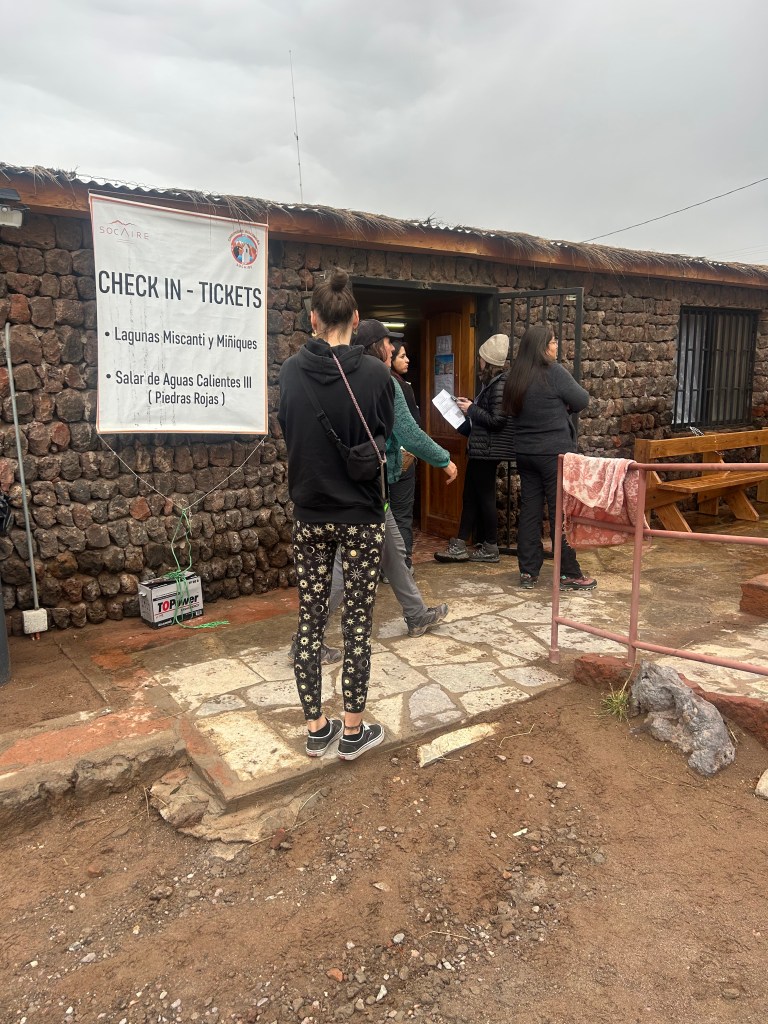

With reservations in hand, we finally headed towards Piedras Rojas just as we started getting a light sprinkling of rain (seriously how much will it rain in the desert while we’re here). The drive took about an hour – upon arrival, we noticed we were one of the few travelers traveling independently (most people were traveling with a tour guide).
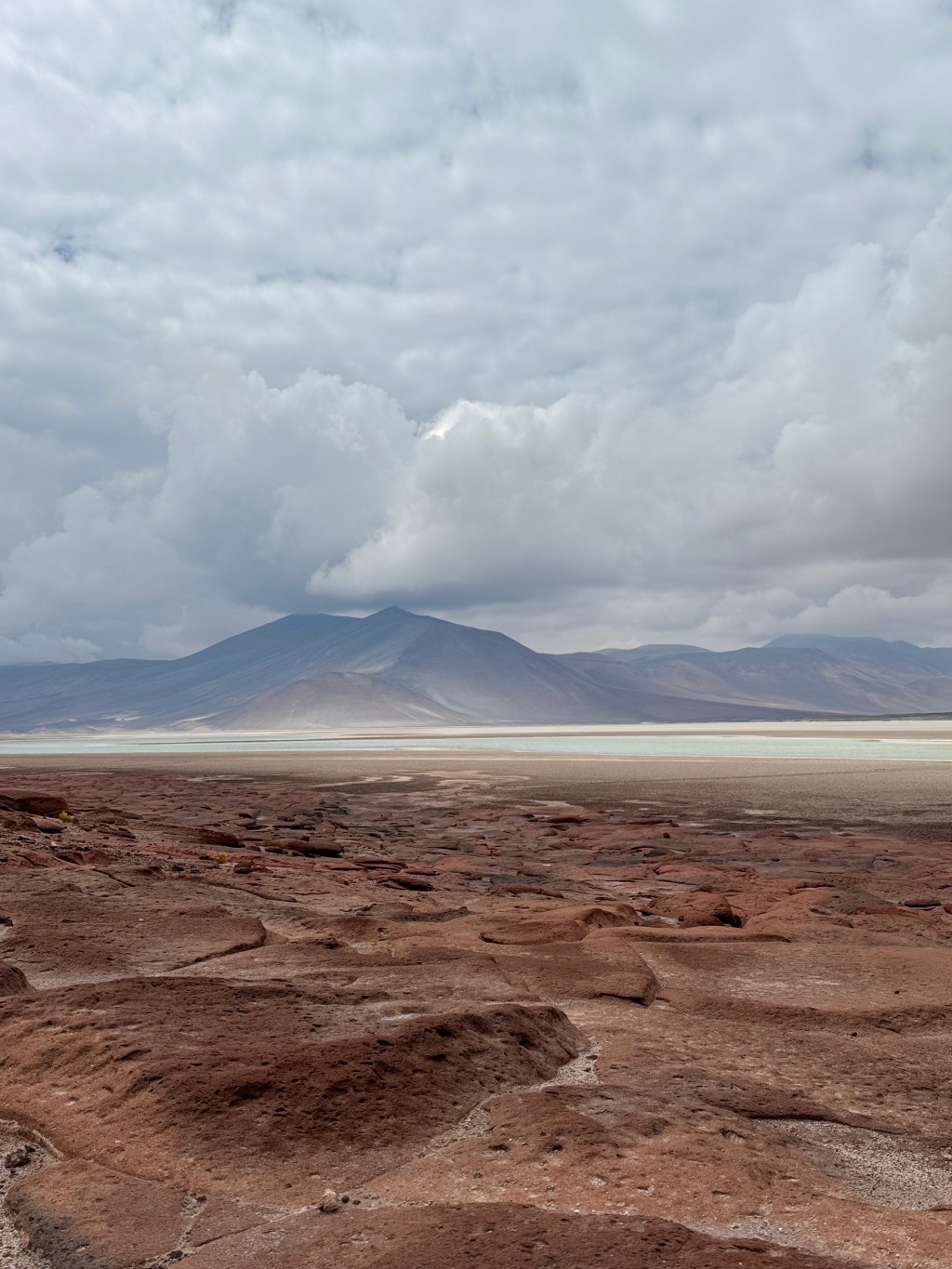
After submitting our tickets, we started the ~1 hour walk down to the base of the milky blue lagoons.
At this point, our elevation was about 13,000 feet and while we weren’t experiencing any severe symptoms of altitude sickness, we were definitely a little winded and experiencing some shortness of breath – thank goodness for the fact that we live in the mile high city back home!

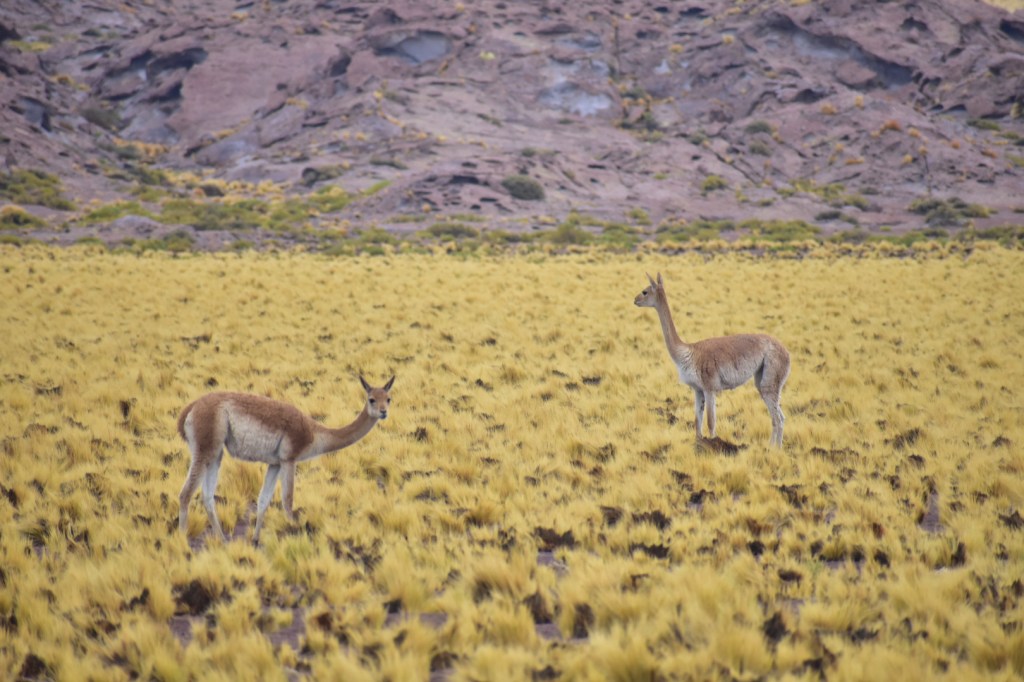
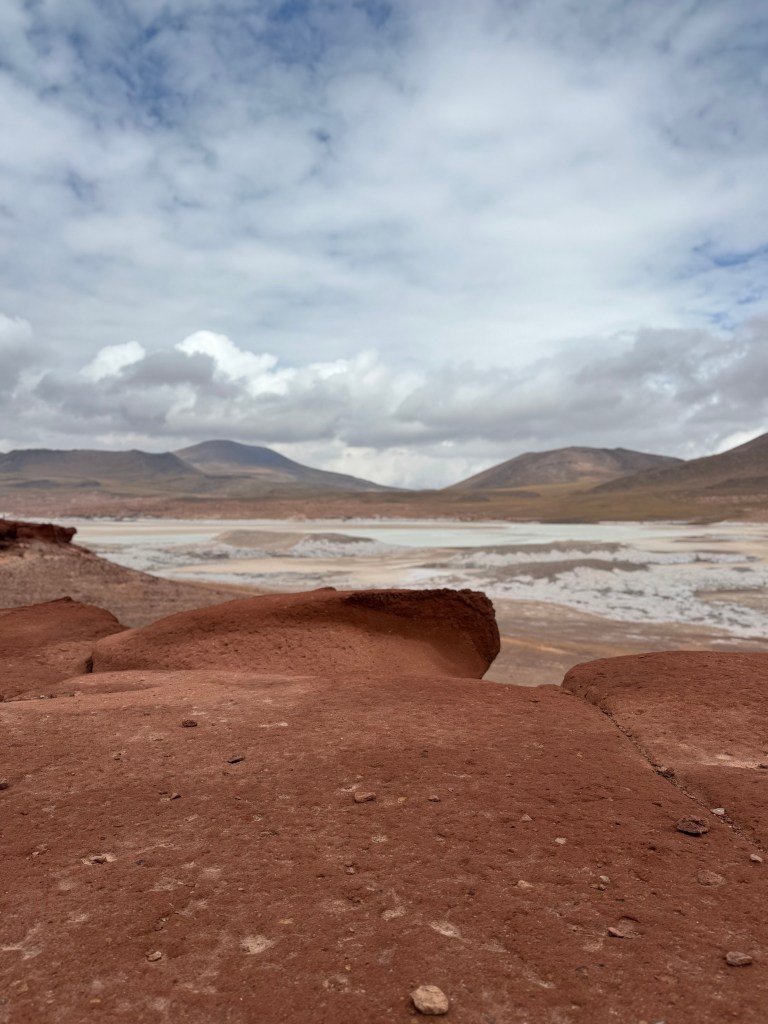


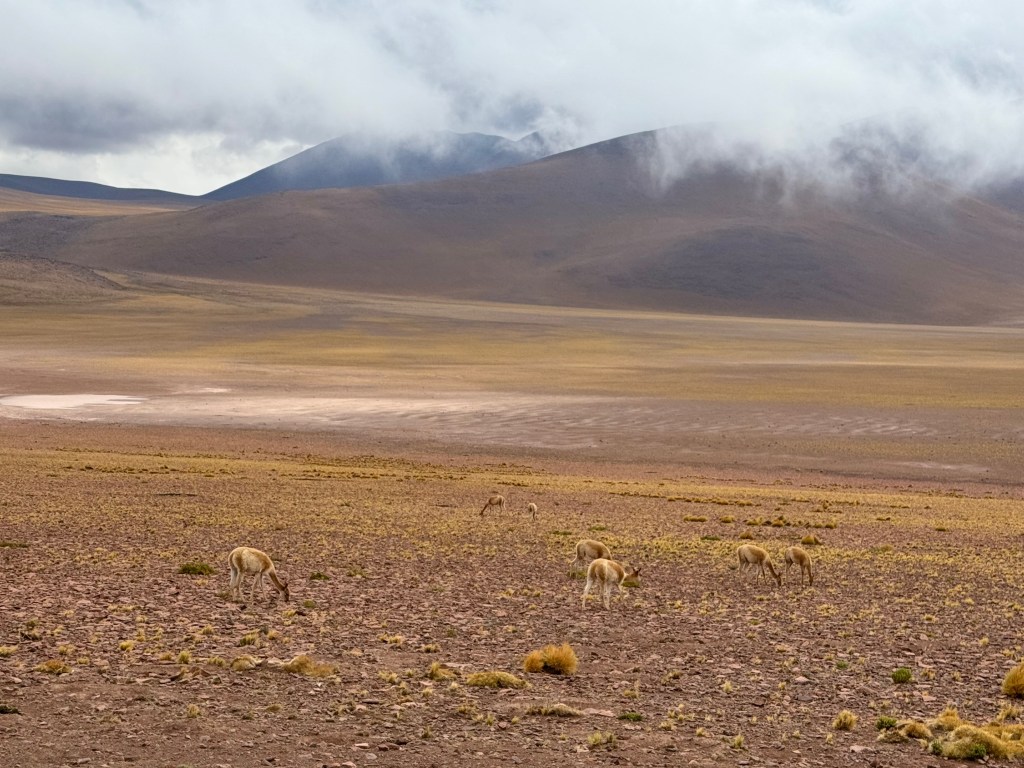


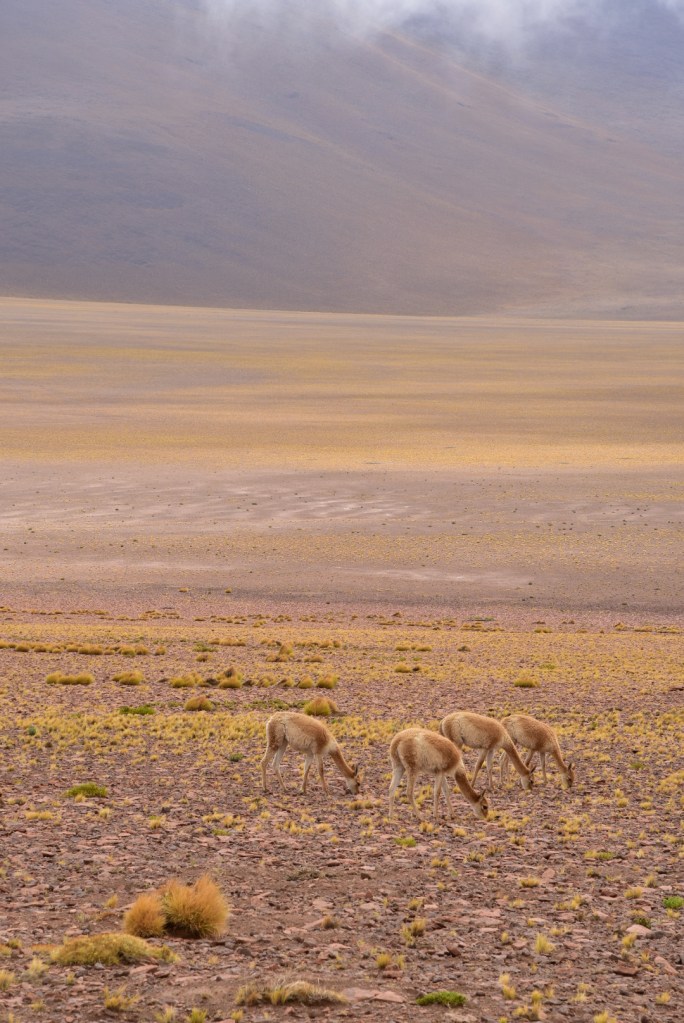
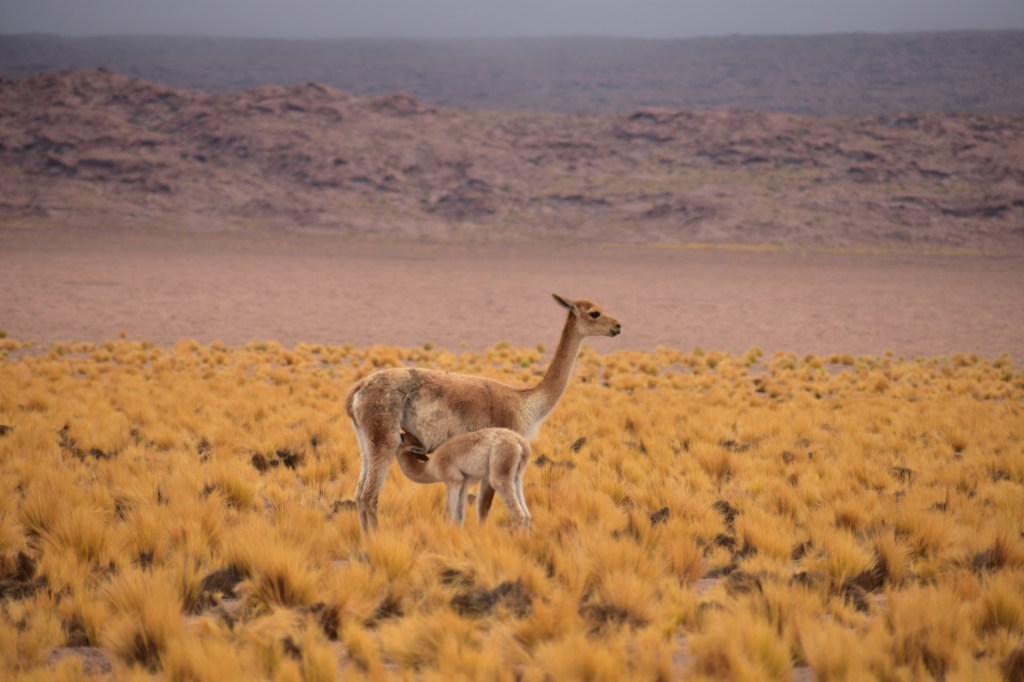
After spending about an hour walking around and taking in the surrounding scenery, including the sharp contrast between the dark red rocks against the opaque waters, we made it back to the car and started driving in the direction we came to make it to our Miscanti reservation. The drive itself was beautiful, and the surrounding mountains were covered in varying shades of oranges and greens, which were reminiscent of our time in Scotland. Also along the drive, we were blessed to see a bunch of wildlife, including guanacos and native birds.
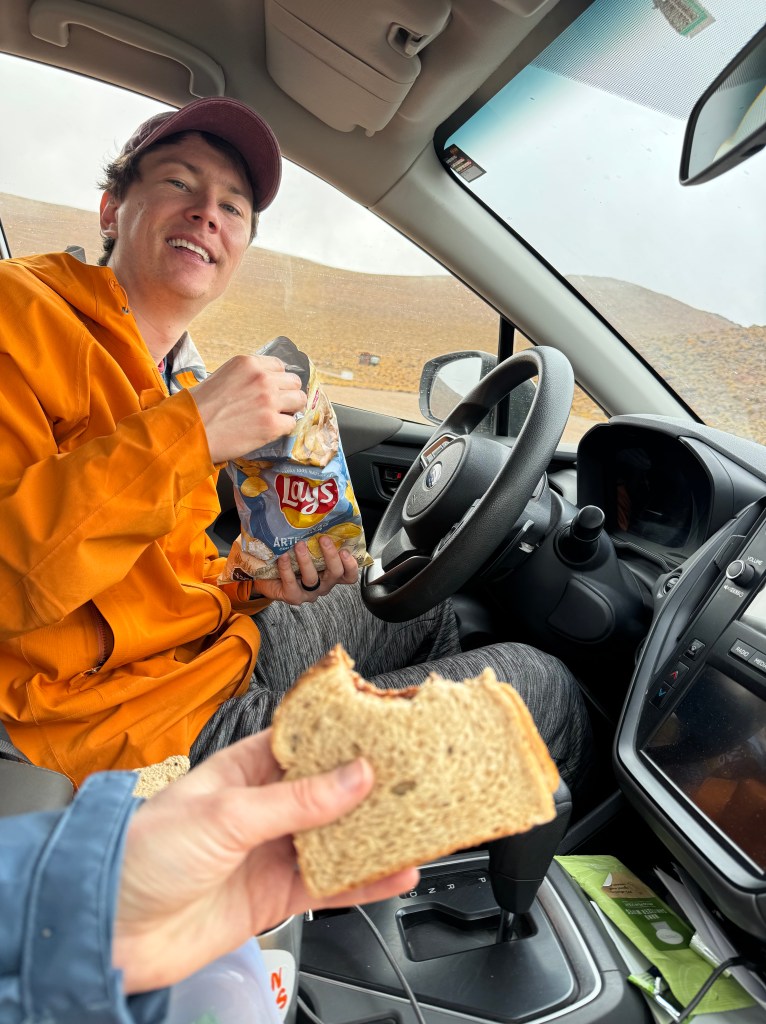
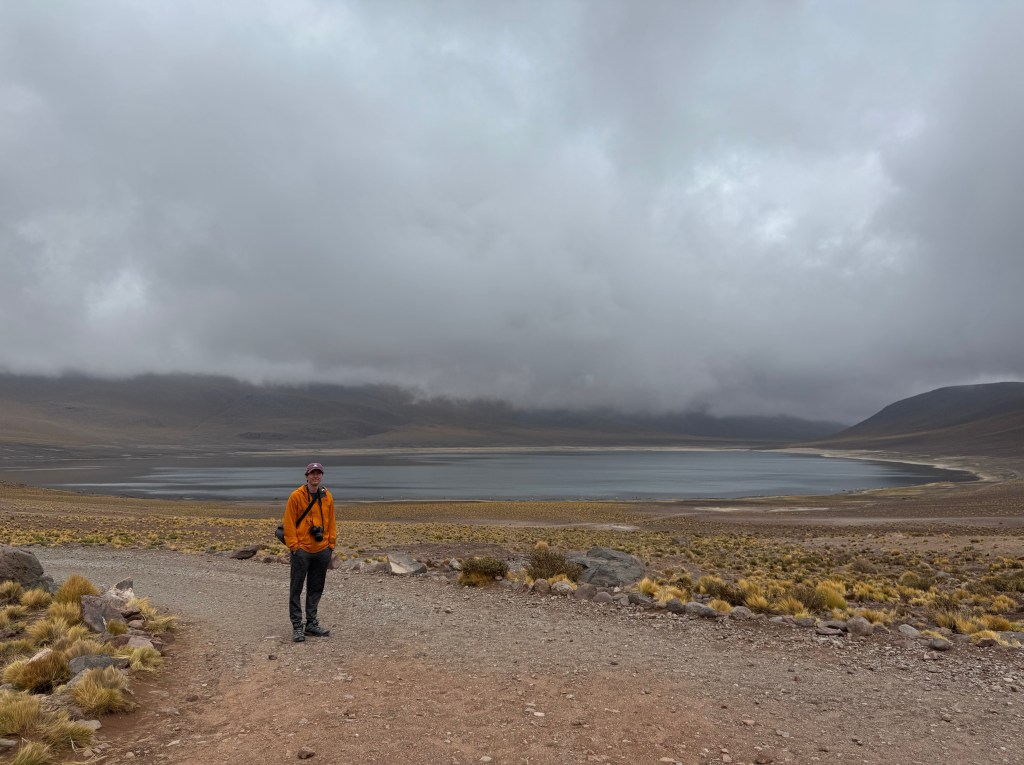
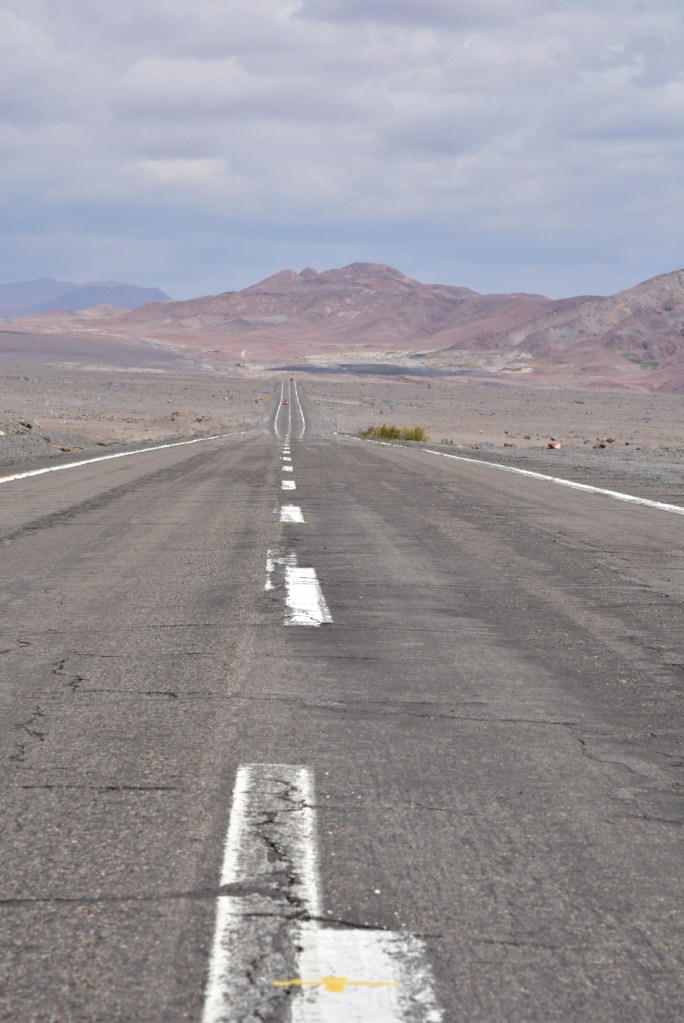
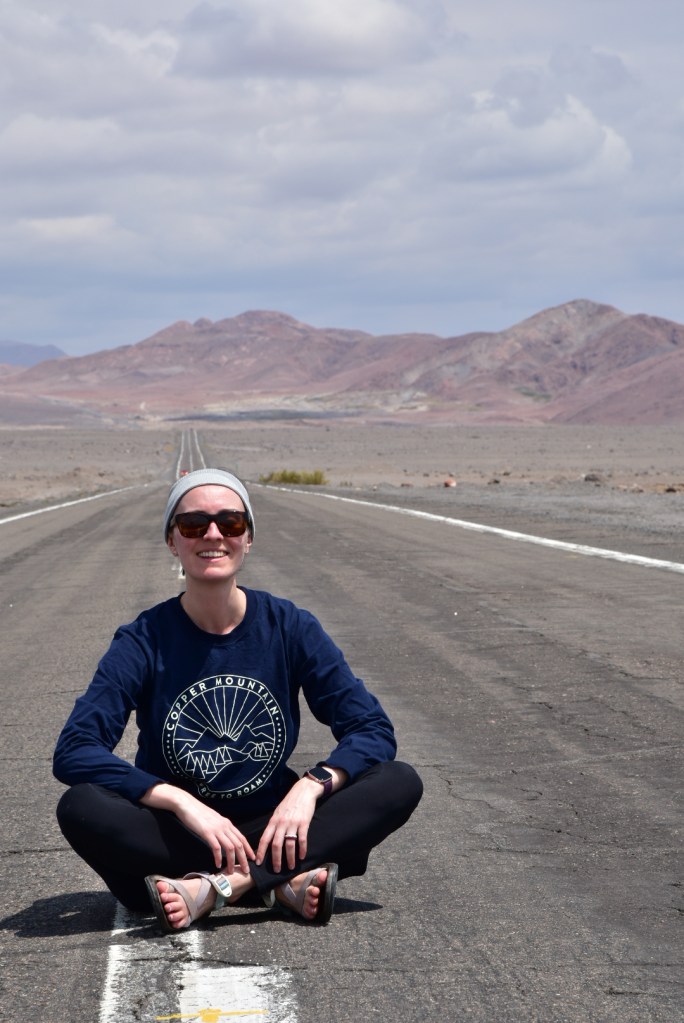
Our second reservation at Miscanti Lagoon was largely the same check-in process as Piedras Rojas. I’m glad we went to Piedras Rojas first, because it was quite foggy at M&M and we weren’t able to see much of the surrounding landscape. We saw a few flamingos at the base of the lagoon, but we were too far away to really be able to appreciate them. Driving the short distance from Miscanti to Miniques, we stayed in the car and made peanut butter and jelly sandwiches. At this point, we were lagooned out and started making our way back to San Pedro. On this route is where we actually experienced what we visualized the desert to be – a very dry, sandy, and grayish setting, almost like what I’d expect the environment of Mars to look like. On this way back, we stopped at the Tropic of Capricorn sign, where a bunch of people were taking pictures. What is the Tropic of Capricorn you ask? Great question because I also asked. It’s the southernmost point, specially 23.5 degrees south of the equator, where the sun can appear directly overhead at noon.




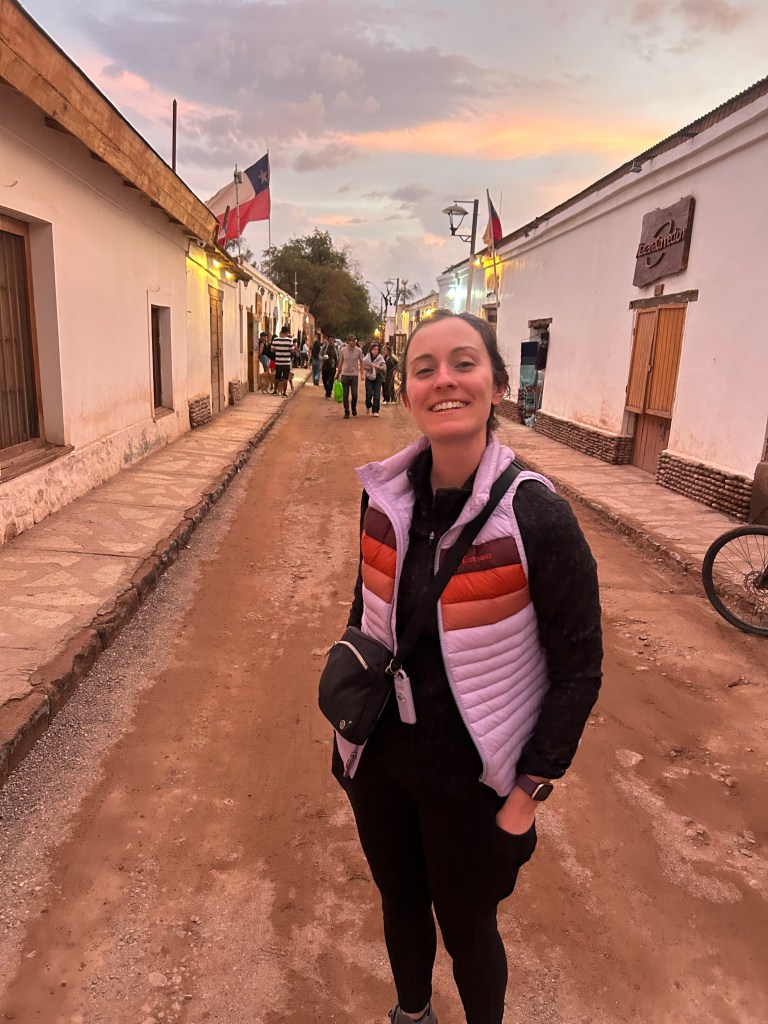
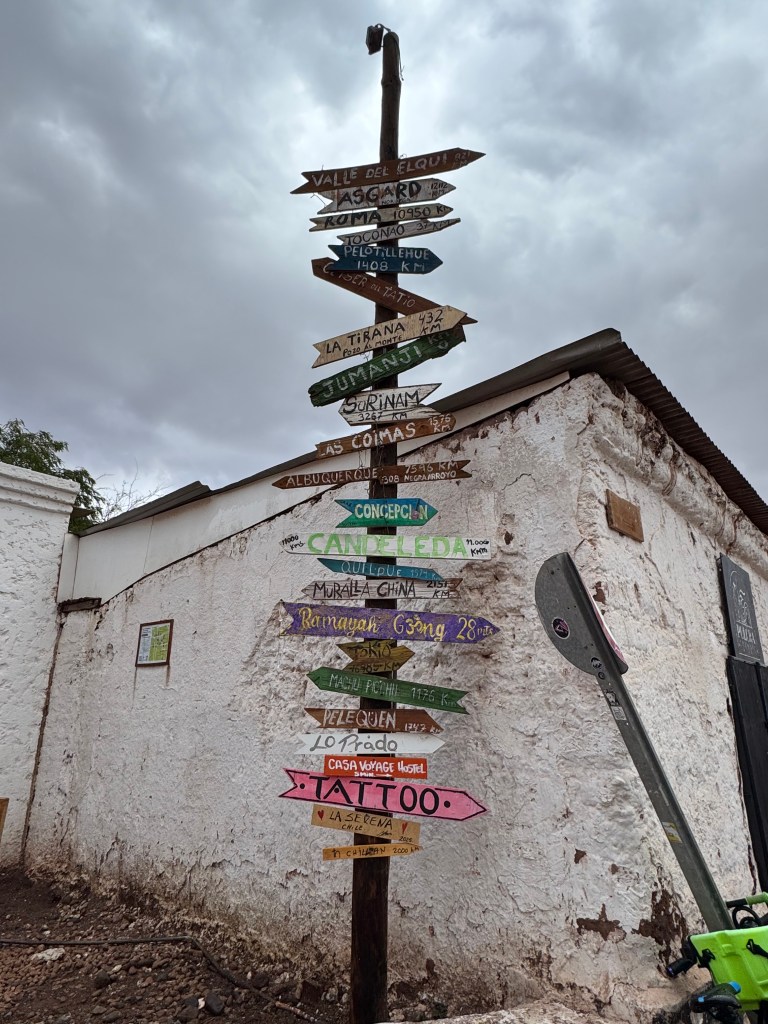
We got to the Valley of the Moon around 4:30 and struck out – the area was closed due to forecasted rain. Classic. However, it worked out because we wanted to spend some time in town walking around and exploring the shops and local bars. We walked through some local markets, and then stopped at two bars, one getting a “piscola” (rum and pisco) for the first time, and the other Cerveceria St. Peter where we got some tasty local brews (an amber ale and something called a Shopito).
Slightly inebriated, we made our way again back to the Airbnb, noticing that the back roads were being guided by members of the Chilean army due to all the recent rain in the area – because of this weather, there was a lot more car traffic than typical where we were staying and the roads were getting pretty rough. Lucky for us, we were able to make it through smoothly enough. Several other times when we’d gone back to the Airbnb, it was a fun game of chicken when we met another car along the narrow road and one of us had to back up to let the other pass. Even more lucky for us, we had leftovers in the fridge and sat out on the patio to enjoy our meal; not long there after, we heard the sound of sirens and local police making their way down the dirt road blaring an emergency message through speakers. Unlucky for us, we had no idea what they are saying but they didn’t seem too concerned when they saw us outside. Fast forward to a few hours later around 10 PM when we were sleeping, we got what sounded like an amber alert on our phone which ended up being a government-issued emergency message to evacuate the area of San Pedro due to flooding of the river! Immediately concerned, we messaged our Airbnb host, Domingo, and he calmly walked over to explain that this was a mass emergency message sent out and we shouldn’t have any concern because our part of the neighborhood wasn’t at risk and that was targeted for another high-risk area. Filled with reassurance, we went back to sleep, readying ourself for one more day to try and make it to more activities before having to leave and catch our afternoon flight.

February 15th
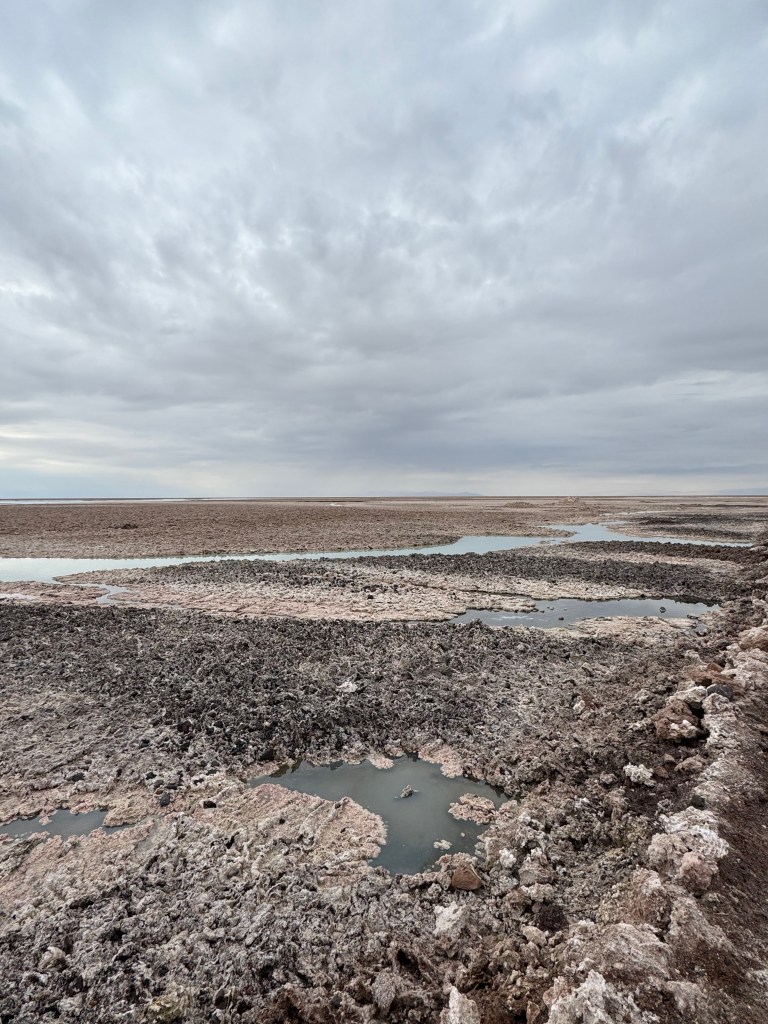
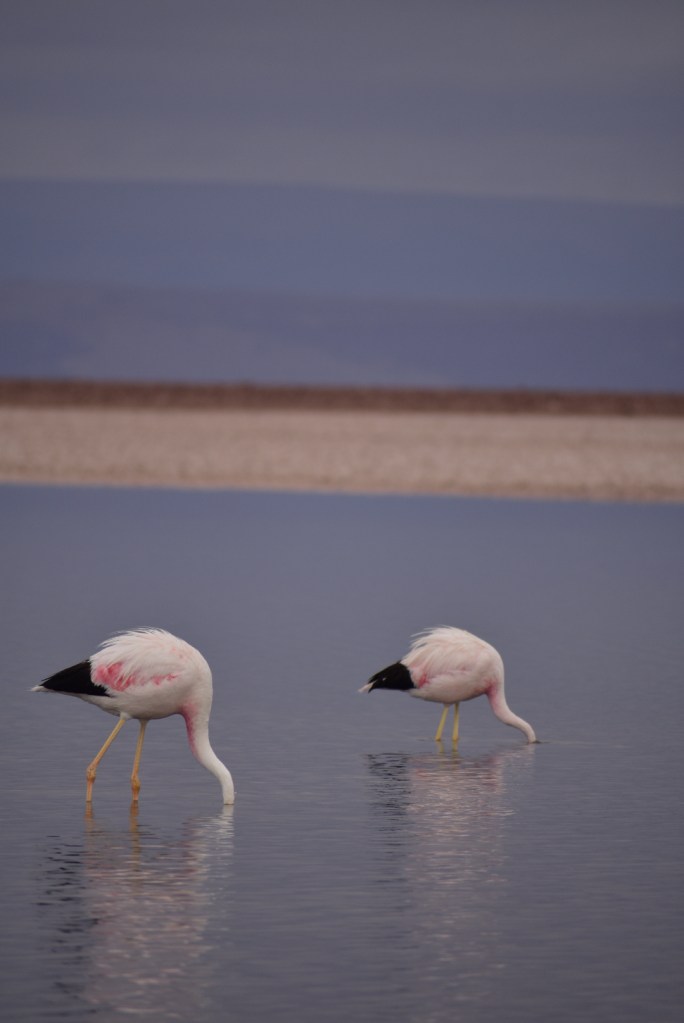
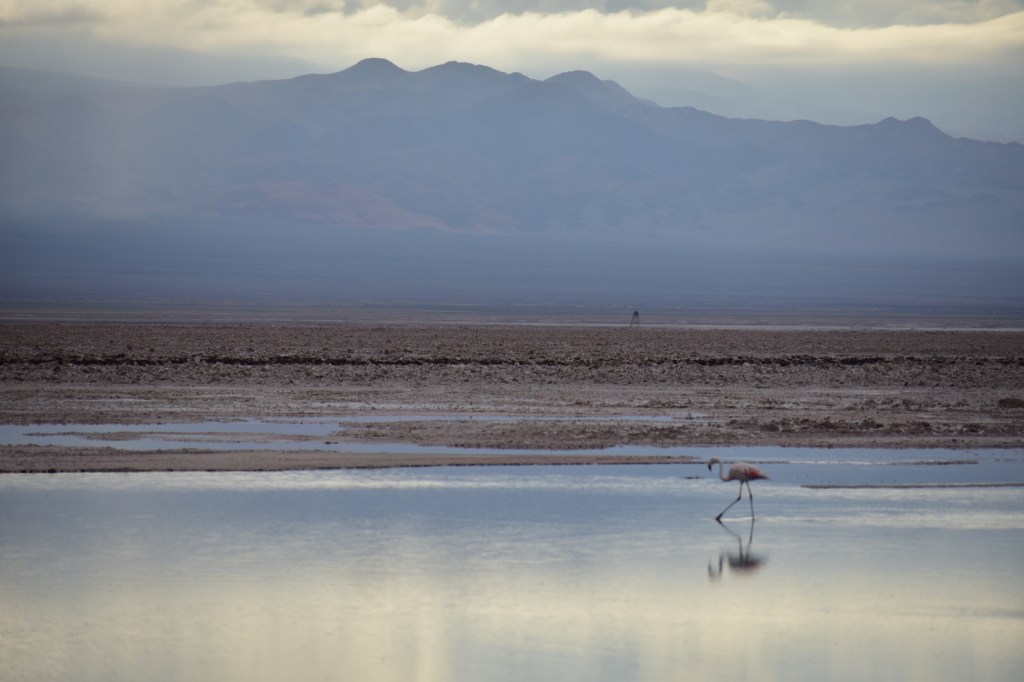
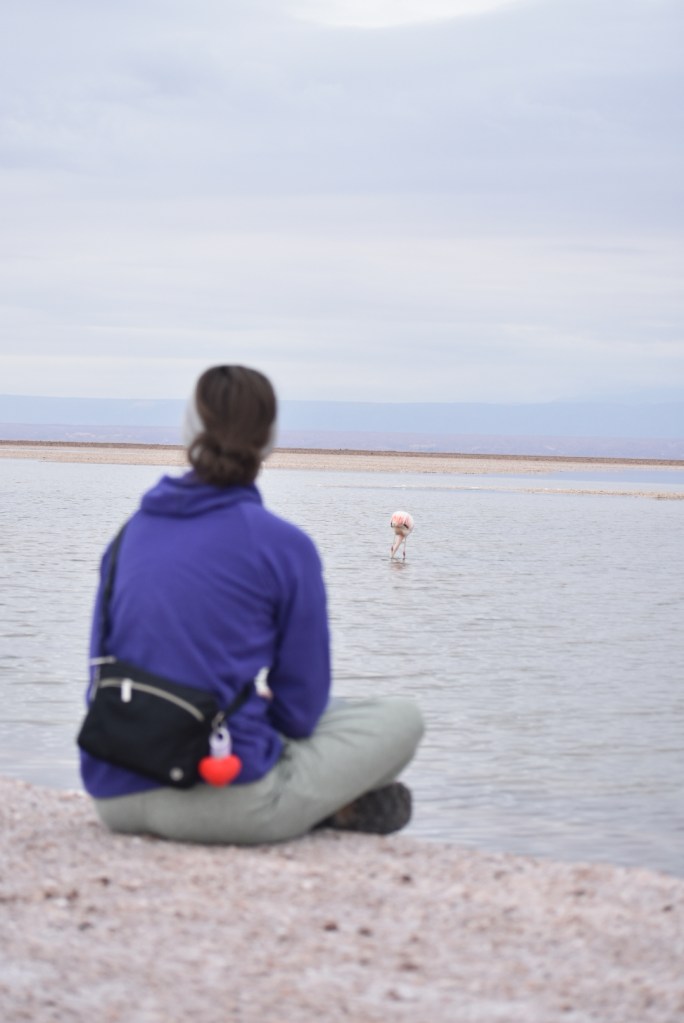
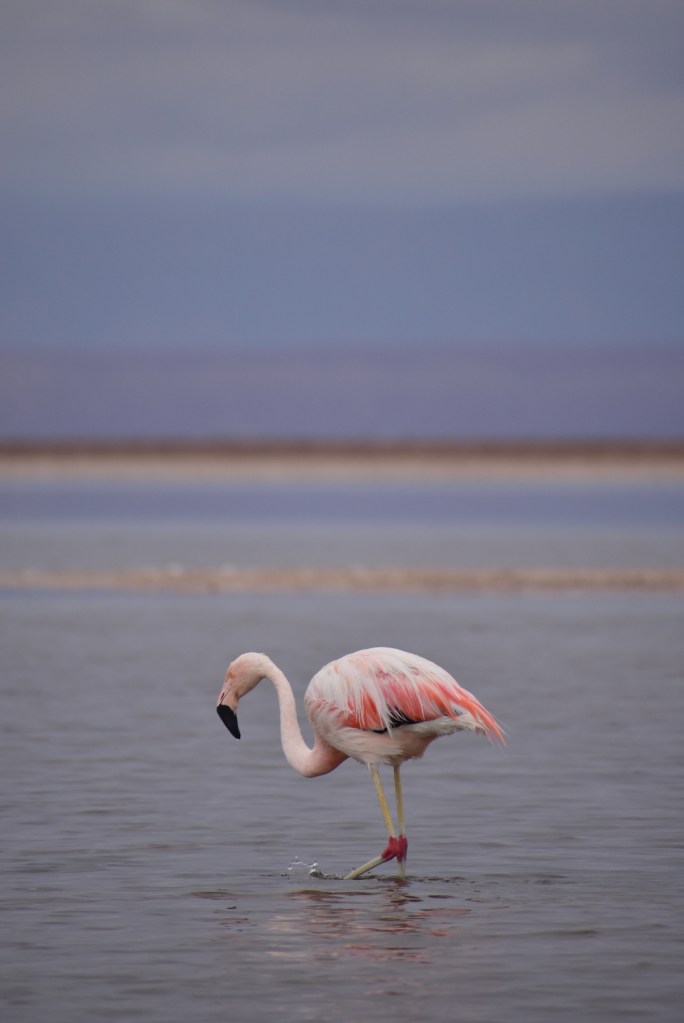
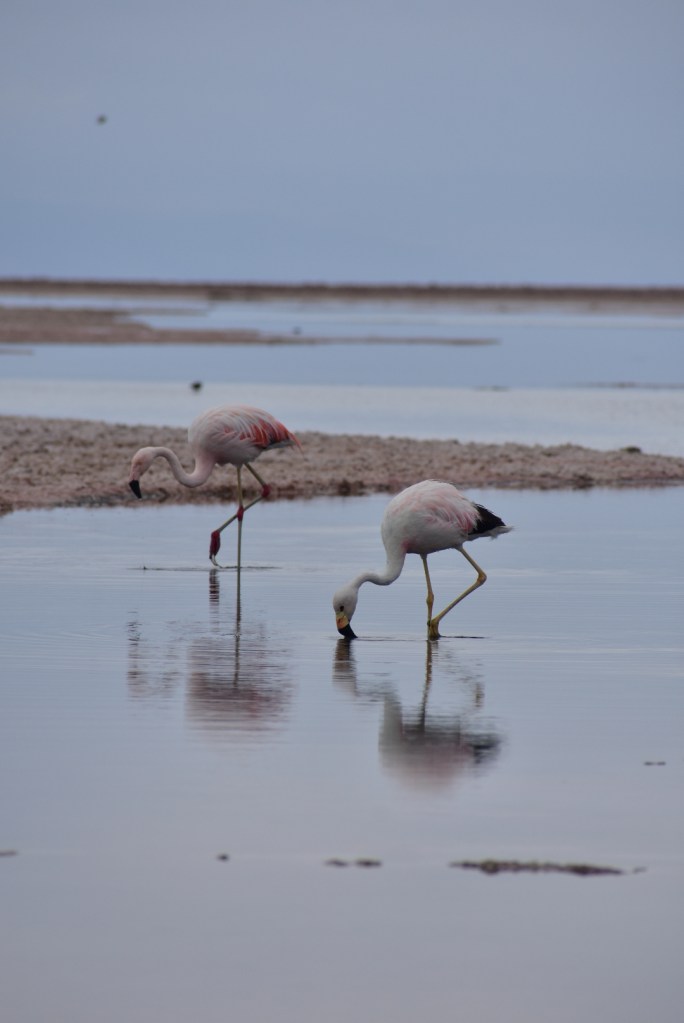
There was a strange feeling of déjà vu as we woke up early in the morning again to make it to Laguna Chaxa. The plan was always to go at sunrise, so we could see the flamingos feeding on their morning breakfast. Luck was on our side today as we arrived initially to find another CERRADO sign, but then not shortly thereafter a ranger came and opened the gates for us. The check-in station was quite tiny, and we walked in past the building to be met with dozens of flamingos with their heads submerged in the water as they ate their breakfast. Here are several fun facts we learned:
- The lagoons are home to three species of flamingos, the Flamenco de James, the Flamenco andino and the Flamenco Chileno
- Flamingos are among the oldest groups of birds that still exist – fossil evidence dates their origins back to the Cretacic Period (13 million years ago)
- Flamingos nest during the summer season and both the male and female share the incubation and chick breeding responsibilities. These birds tend to form monogamous long-lasting couples.
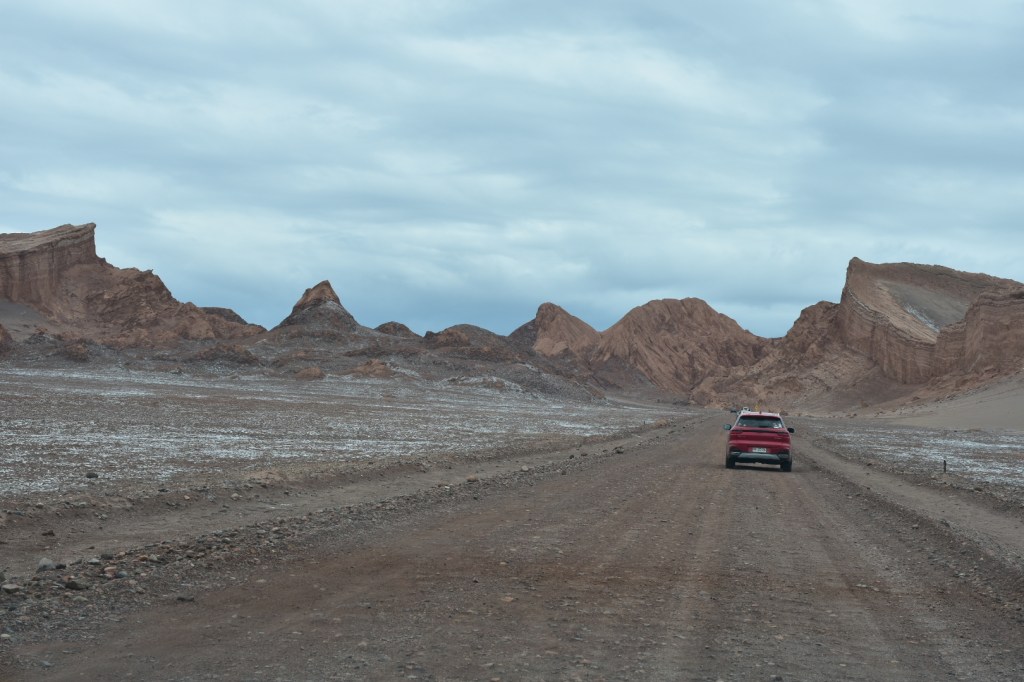
After taking no fewer than a hundred pictures and marveling in the natural beauty of our surroundings, we said goodbye to our last lagoon and made our way past town once more to Valley of the Moon. At this point, we didn’t have much free time before we had to head back to Calama for our flight, so we spent only about 30 minutes driving through the valley unfortunately. This was a really unique landscape that felt other -worldly, like its namesake, and we wish we had more time to explore here. We drove to the end of the road to the Three Marias, then turned around to head back out of the park. Now it was finally time to say goodbye to the desert and make our way back to Calama for our flight. We had another longer travel day ahead of us as we made our way down to Punta Arenas. Stay tuned!






 Tiff & Jared's adventures
Leave a comment