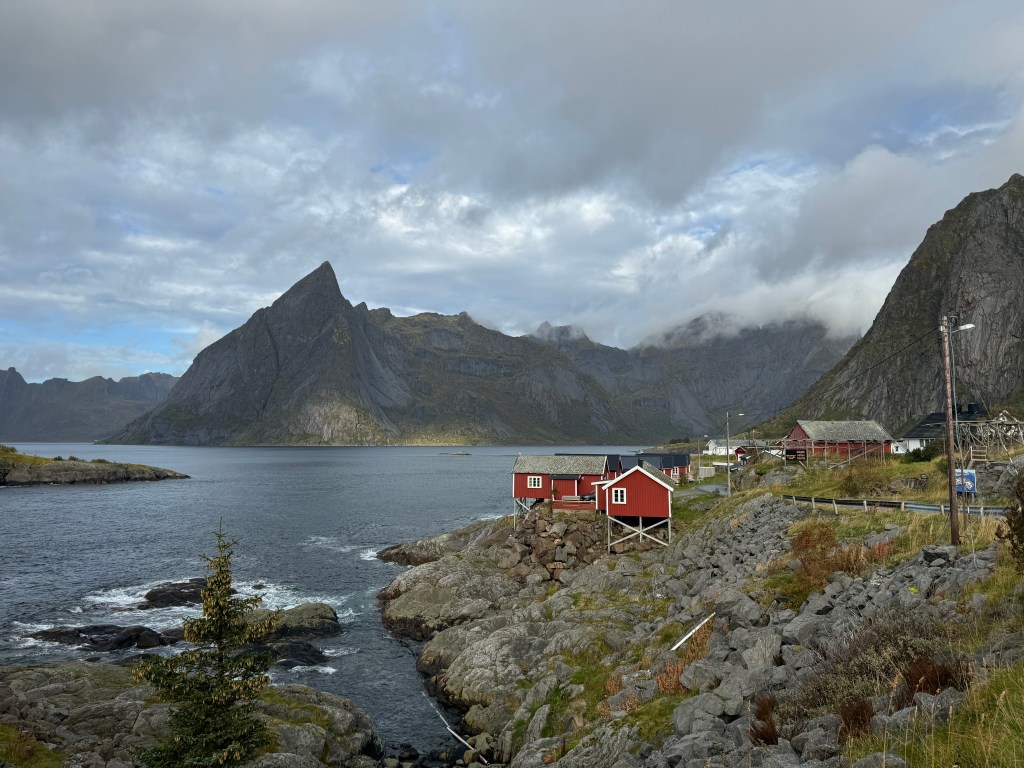
Day 2
When planning this trip, we weren’t sure if we’d have time to squeeze in the Lofoten Islands because they are far in the Arctic Circle, requiring you to fly from either Bergen or Oslo. I’m so glad we chose to spend three days here – Jared and I have been fortunate enough to travel to a lot of amazing places, but the Lofoten Islands are otherworldly.
In the far north of Nordland county in Northern Norway, the Lofoten Islands stretch out dramatically into the Norwegian Sea. Ever since the Viking Age, the islands have been a centre for fishing Norwegian Arctic cod, or skrei (pronounced ‘skrey’), which come here to spawn in the winter months.
https://www.visitnorway.com/places-to-go/northern-norway/the-lofoten-islands/fishing-culture/
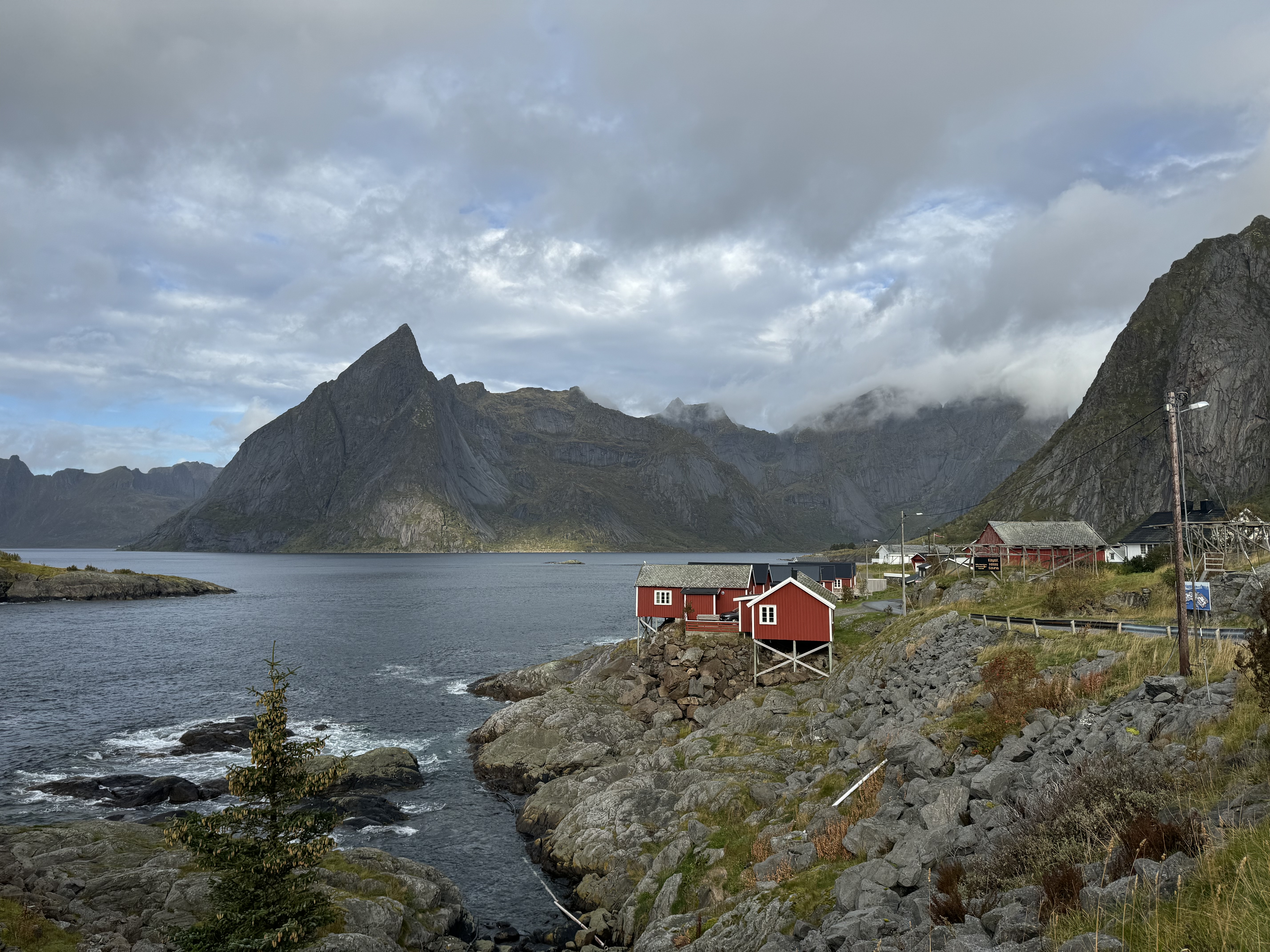
From the moment we flew into Evenes and made the ~4 hour drive west along the E10 scenic route to our accommodations in Reine, there was jaw dropping scenery along the whole way. It was to the point we were pulling off every five minutes to take pictures of the landscapes, which included rugged ridge lines, moss-covered mountains and tranquil waters. Since we visited in September, this furthered the color spectrum with fall foliage making its autumn appearance.
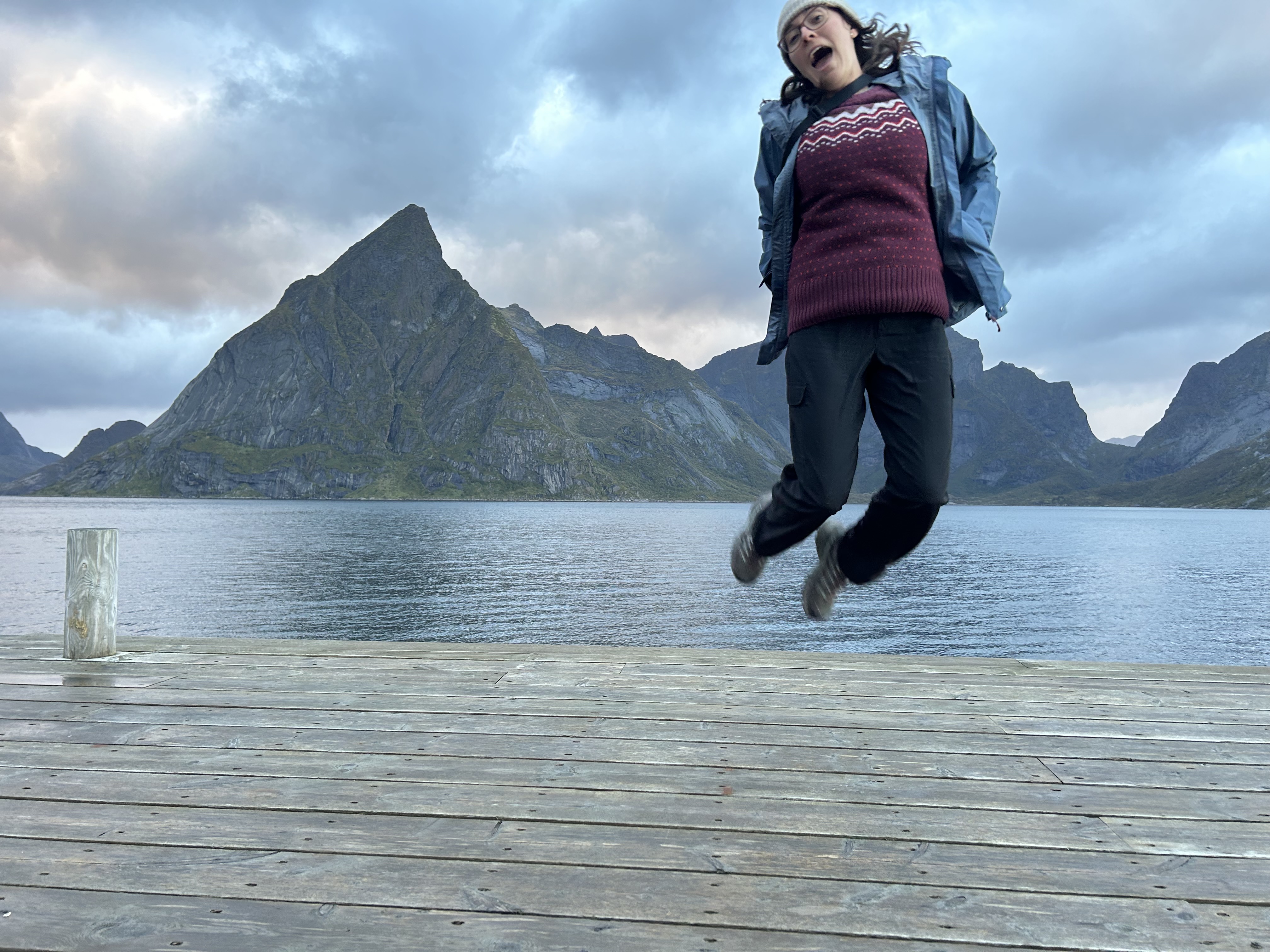

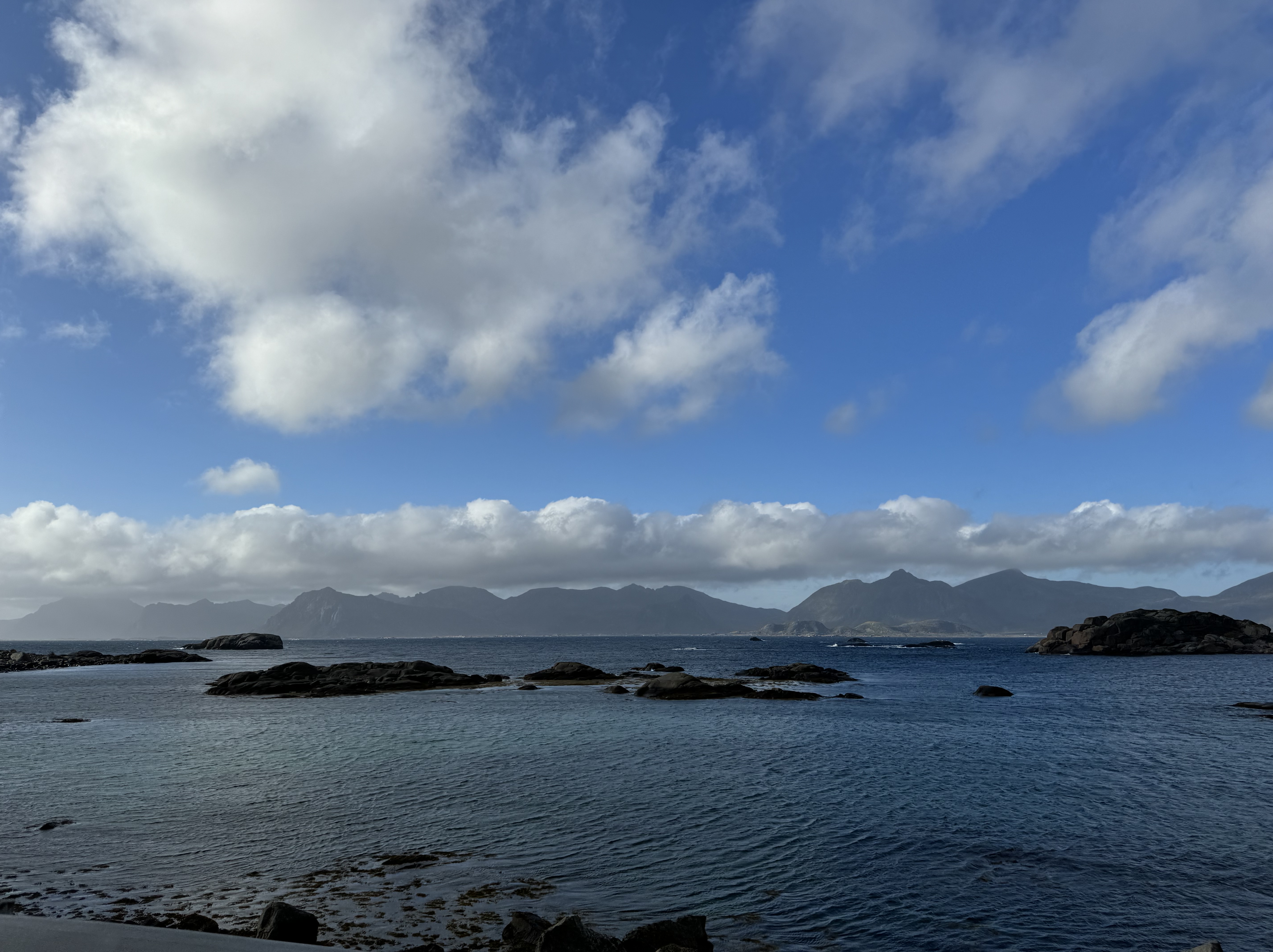
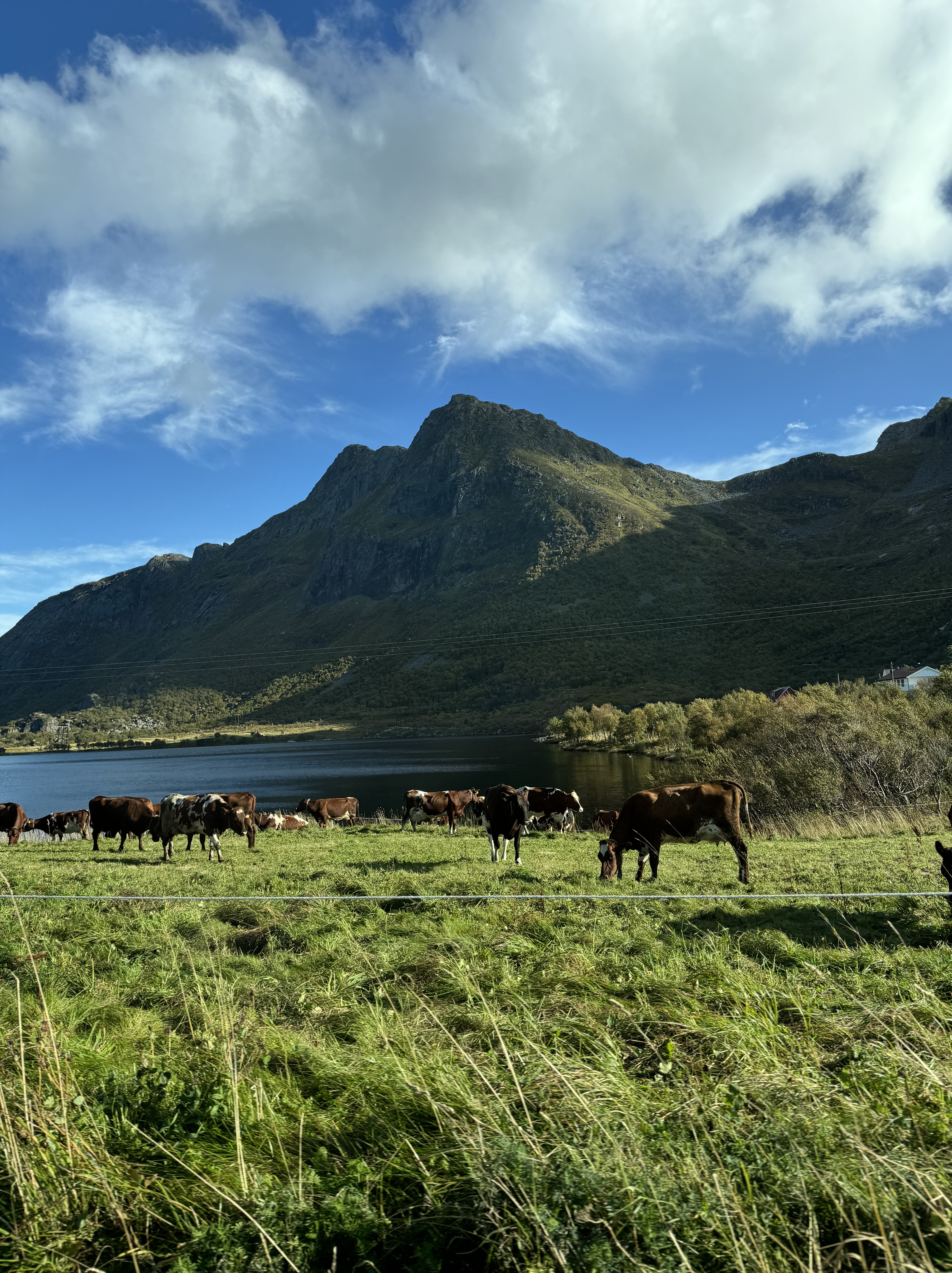
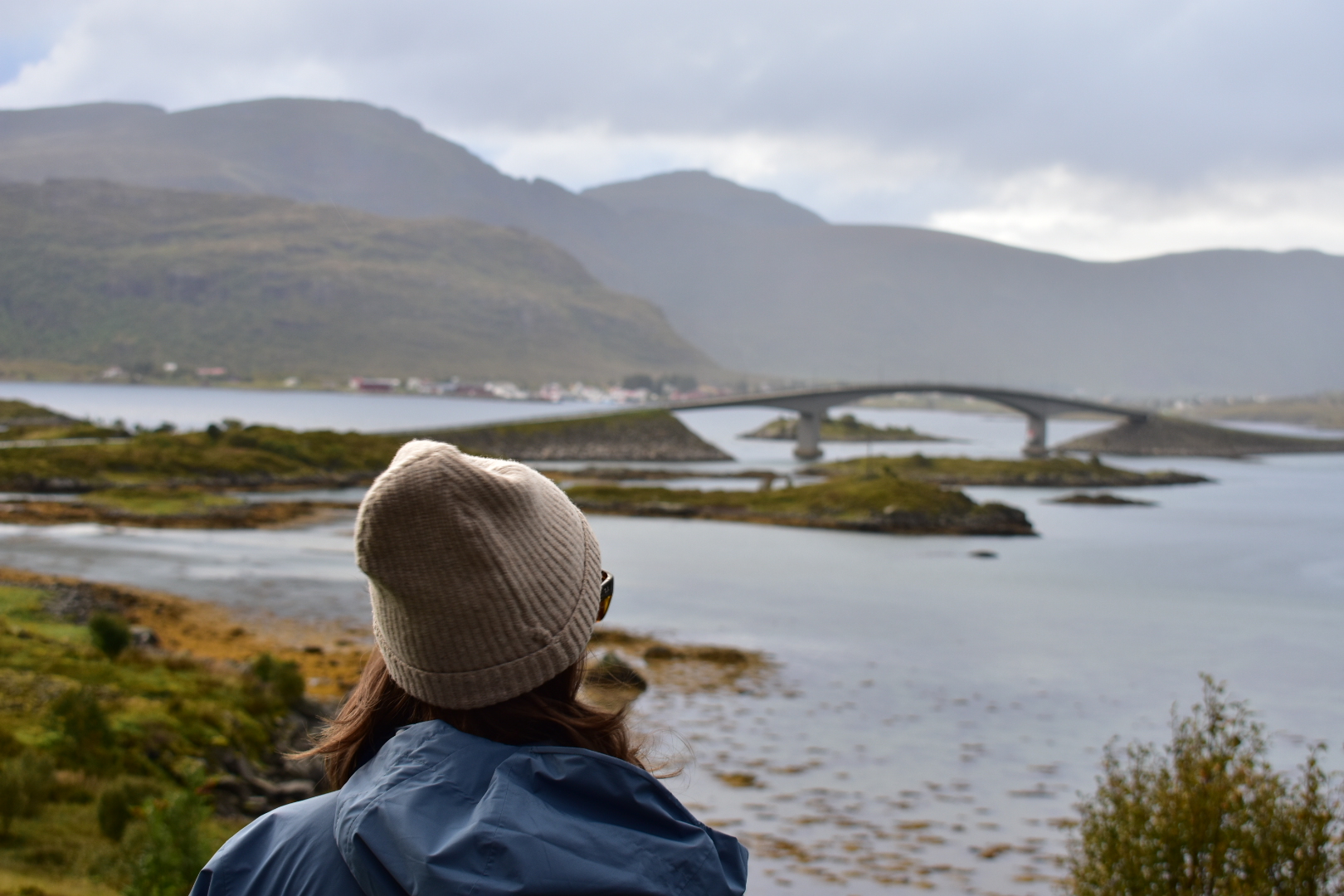


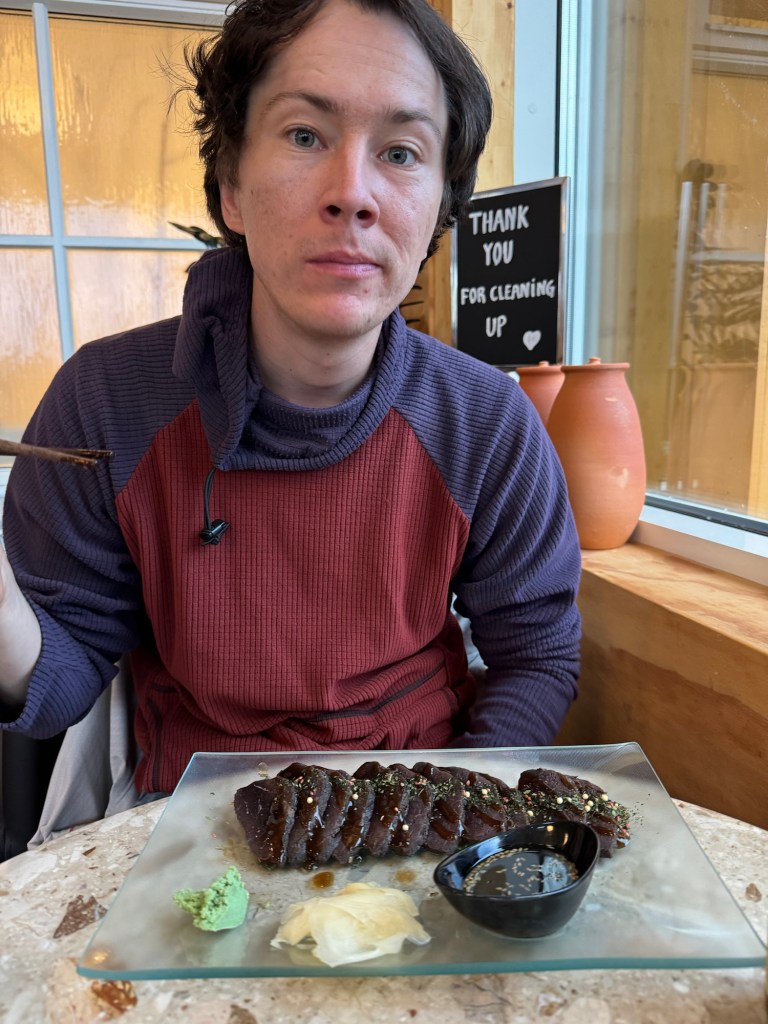
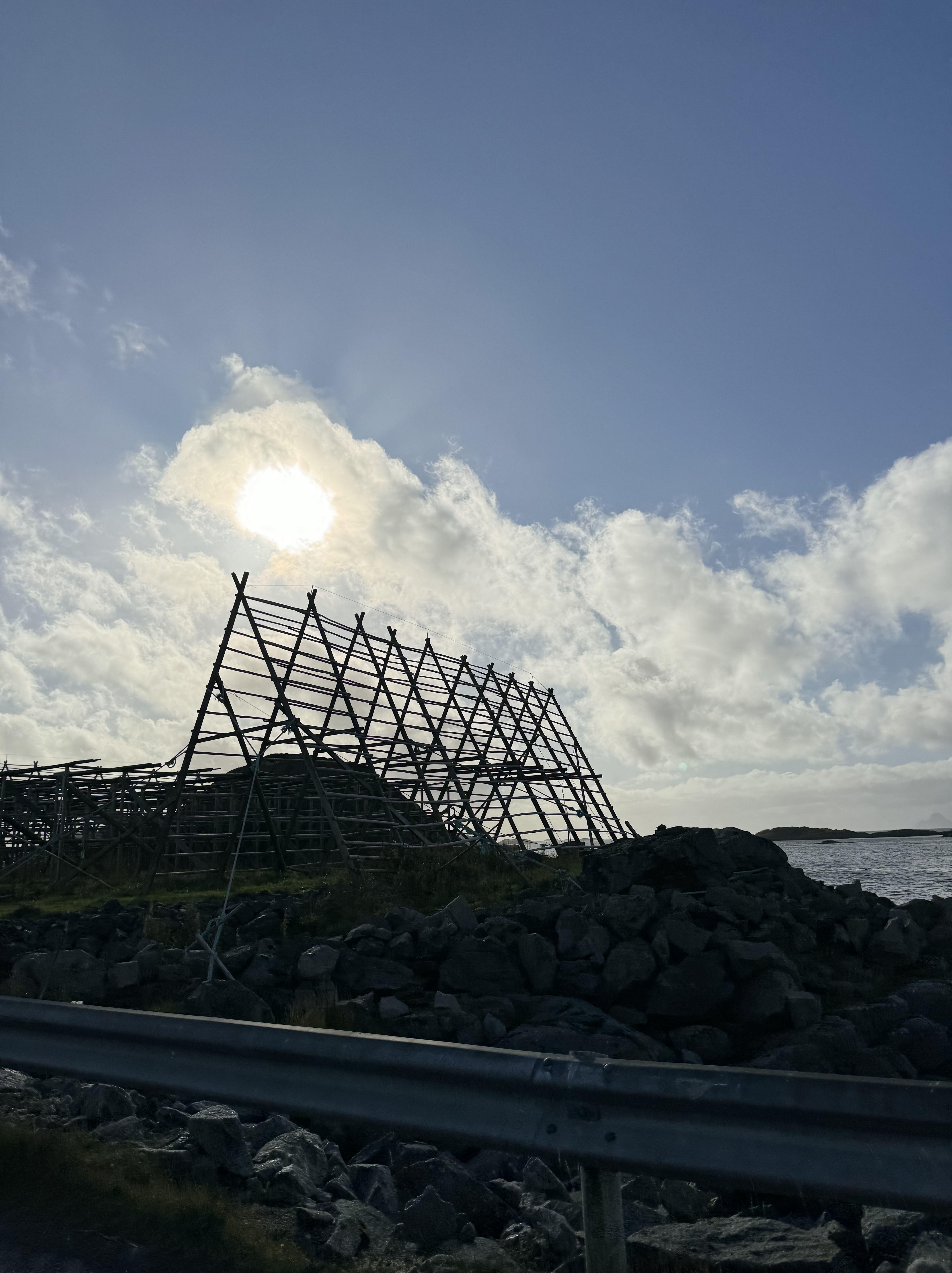
When we were choosing our place to stay, we considered several rorbus on the island, but decided to stay at Eliassen Rorbuer in Hamnøy, on the west side of Lofoten. This was close to a lot of the hikes we wanted to do, and was famous for its breathtaking scenery. Once we made it to Reine, our first stop was Anita’s Seafood, which was rumored to have a delicious fish sandwich. I got a cod filet, while Jared was more adventurous and tried whale tataki. Definitely one of the most scenic restaurants we’ve ever eaten at! Outside of the restaurant near the water, there were the traditional racks of “stockfish”.

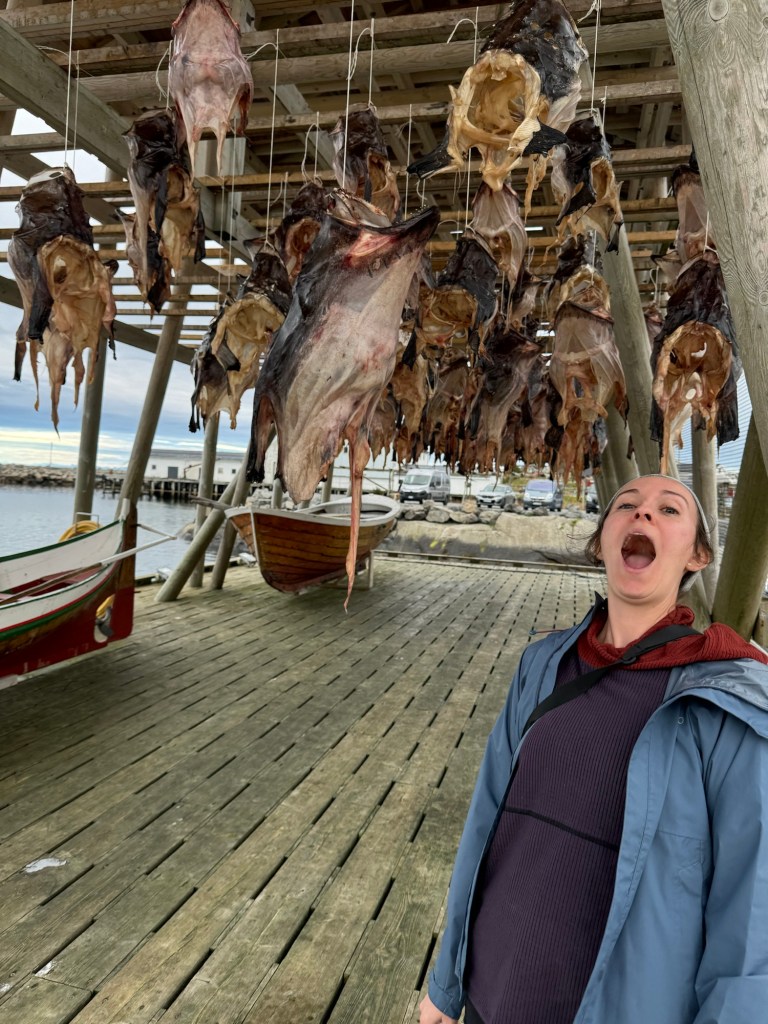
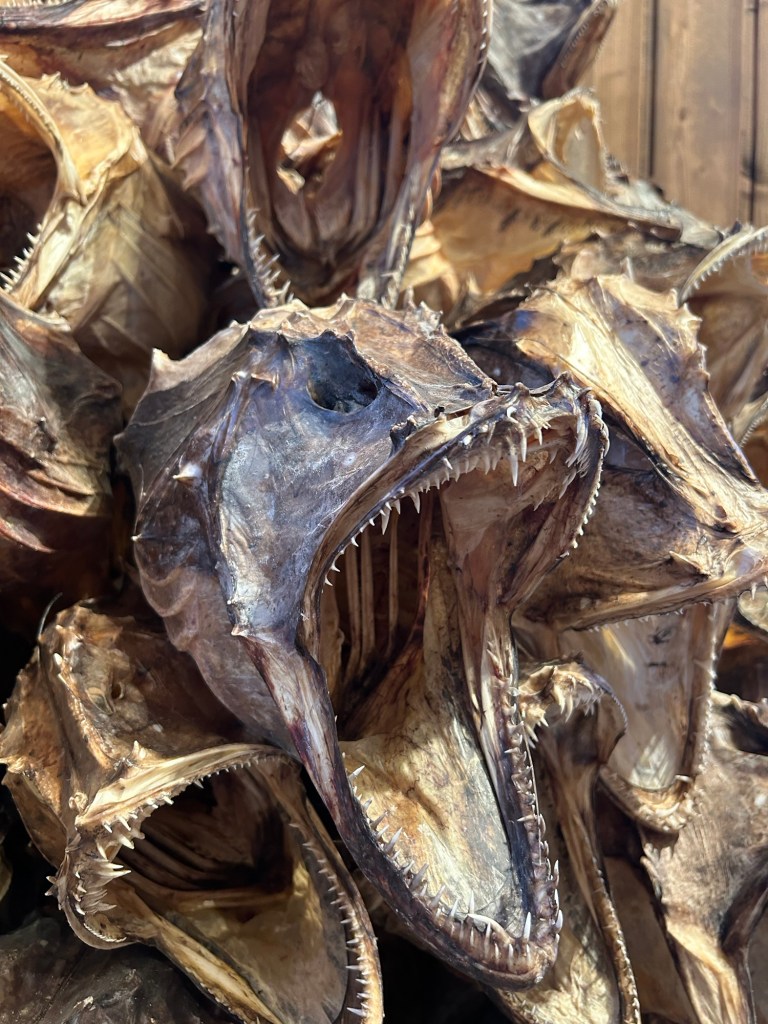
Stockfish – the most important fish product in Lofoten
Throughout the Lofoten Islands, the conditions are perfect for the natural drying of fish. Around 1100 AD, the catch and production of stockfish were so great that it gave rise to the emergence of Vágar – the first medieval town in Northern Norway. The spawning fish came in such large quantities that it was more than abundant for the population of Lofoten. Therefore, visiting fishermen from all parts of Northern Norway wanted to participate in the Lofoten fishery. They had to sail and row over great distances in open boats, many in traditional Nordland boats. Its estimated that 30,000 men could travel to Lofoten during the fishing season. They rented fishermen’s cabins (rorbu) for housing in fishing villages. They also sold their catch from these cabins. The fisherman cabin tradition is at least 1000 years old.
https://visitlofoten.com/en/the-history-of-lofoten/
It was a little early in the season to see them hanging down everywhere, but it was cool to get to see them in Reine. After dinner, we drove back to our rorbu, a short five minutes around the bend. Exhausted from a long travel day (or days), we turned in early to start the next day fresh!
https://www.switchbacktravel.com/norway/lofoten-islands/rorbuer
The brightly colored seaside wooden huts of the Lofoten Islands (rorbuer plural, or rorbu singular) are steeped in tradition, once housing scores of hardened fishermen who made the winter pilgrimage to the world’s most fertile cod fishing grounds.
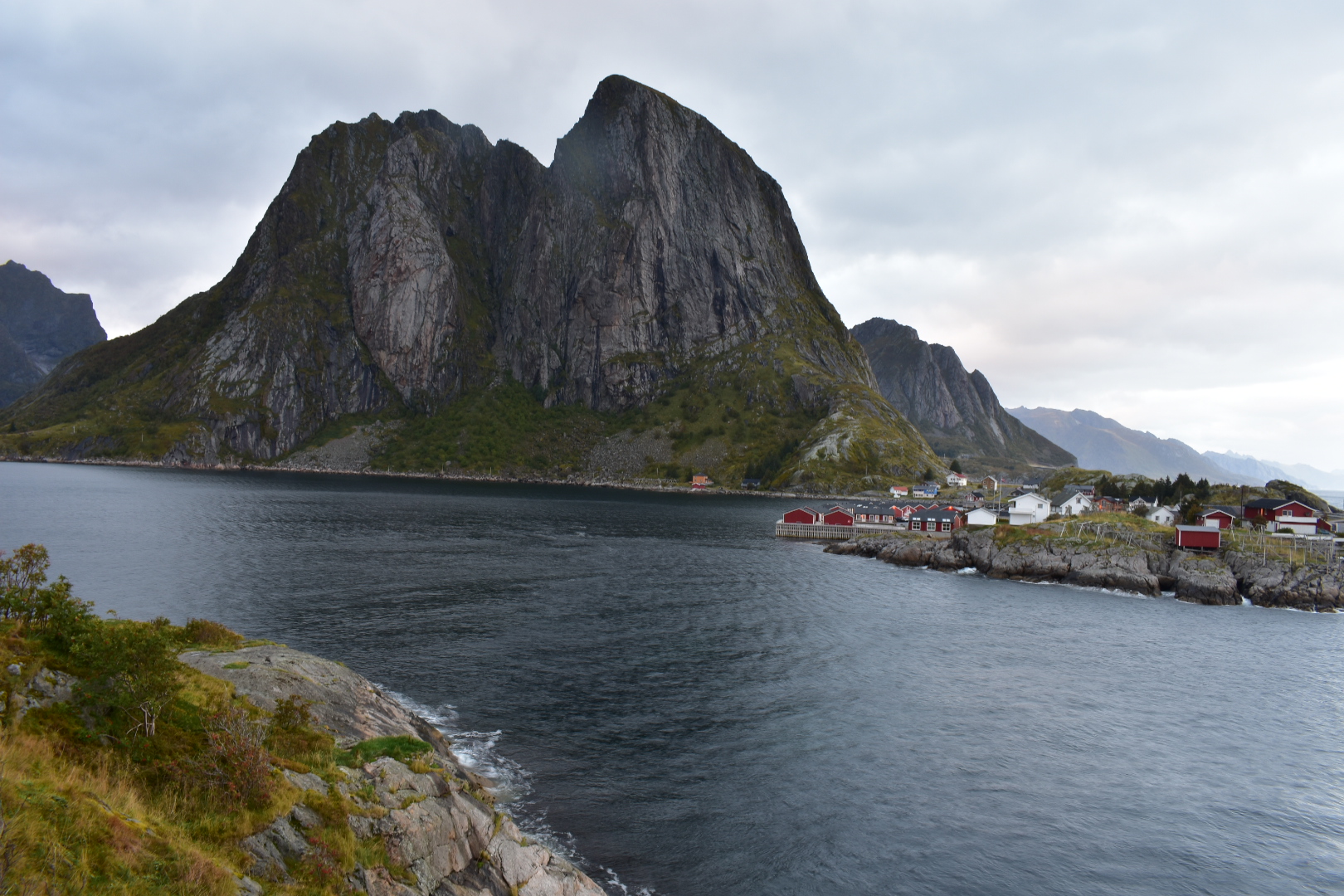
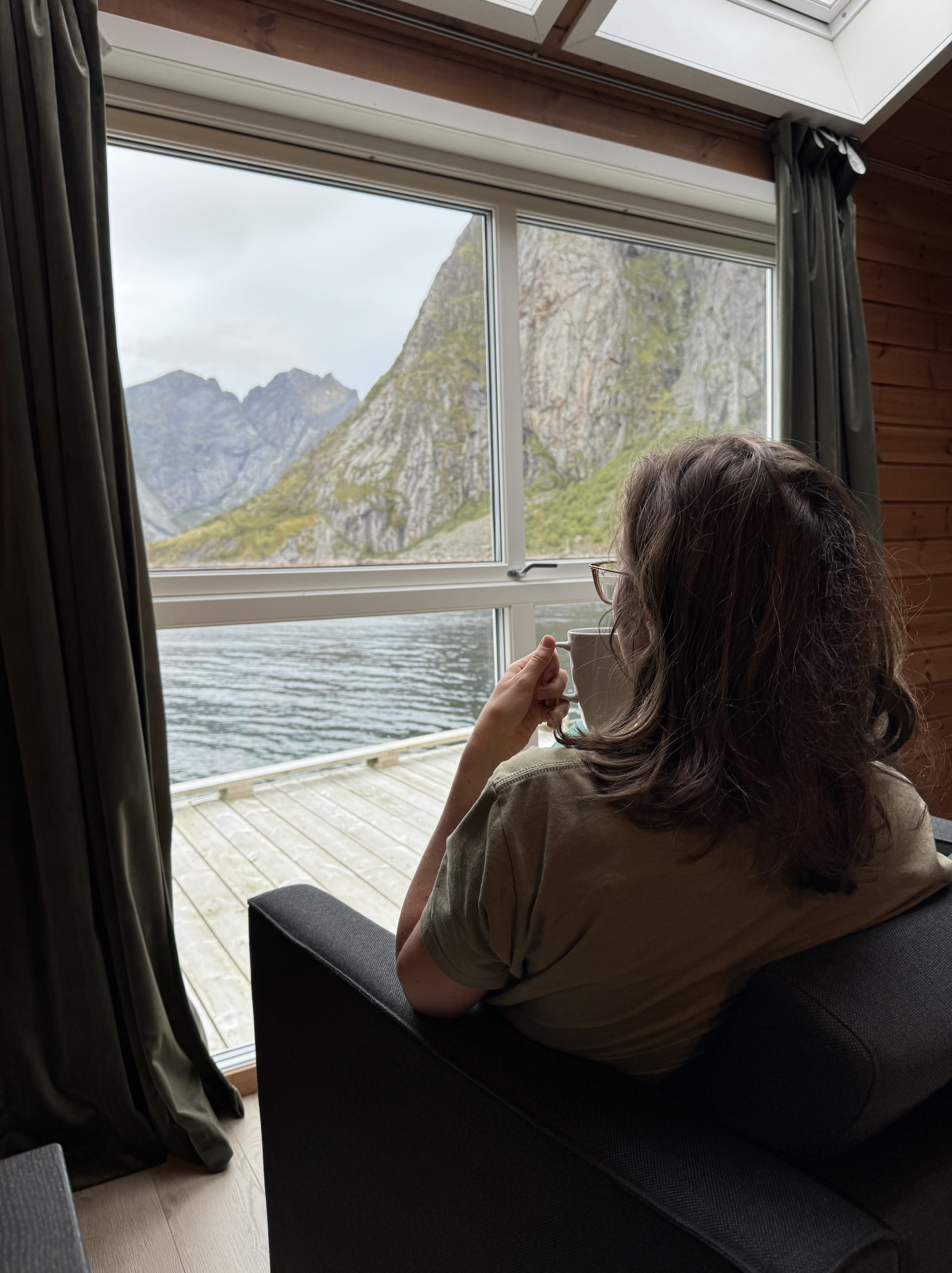

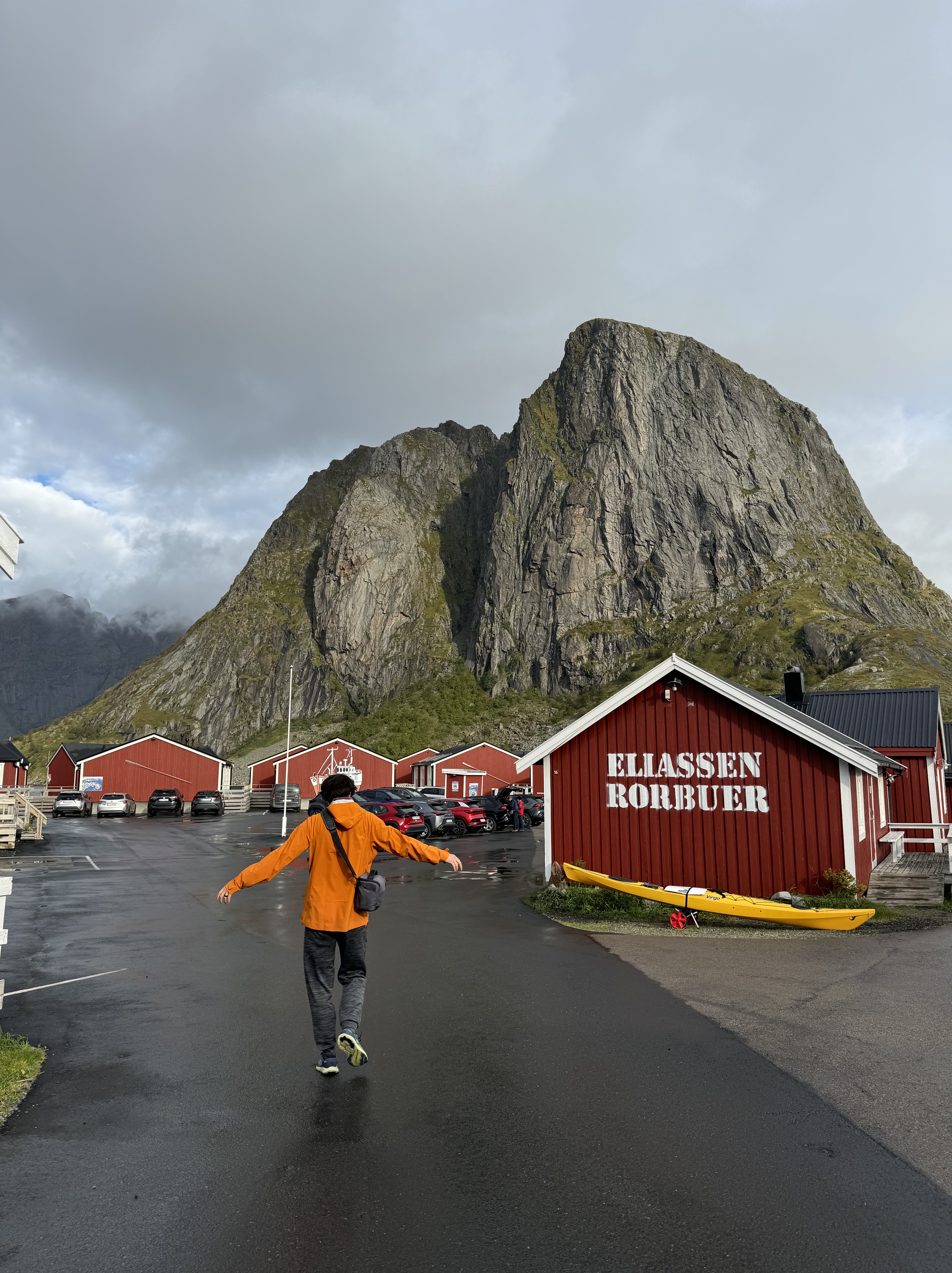
Day 3
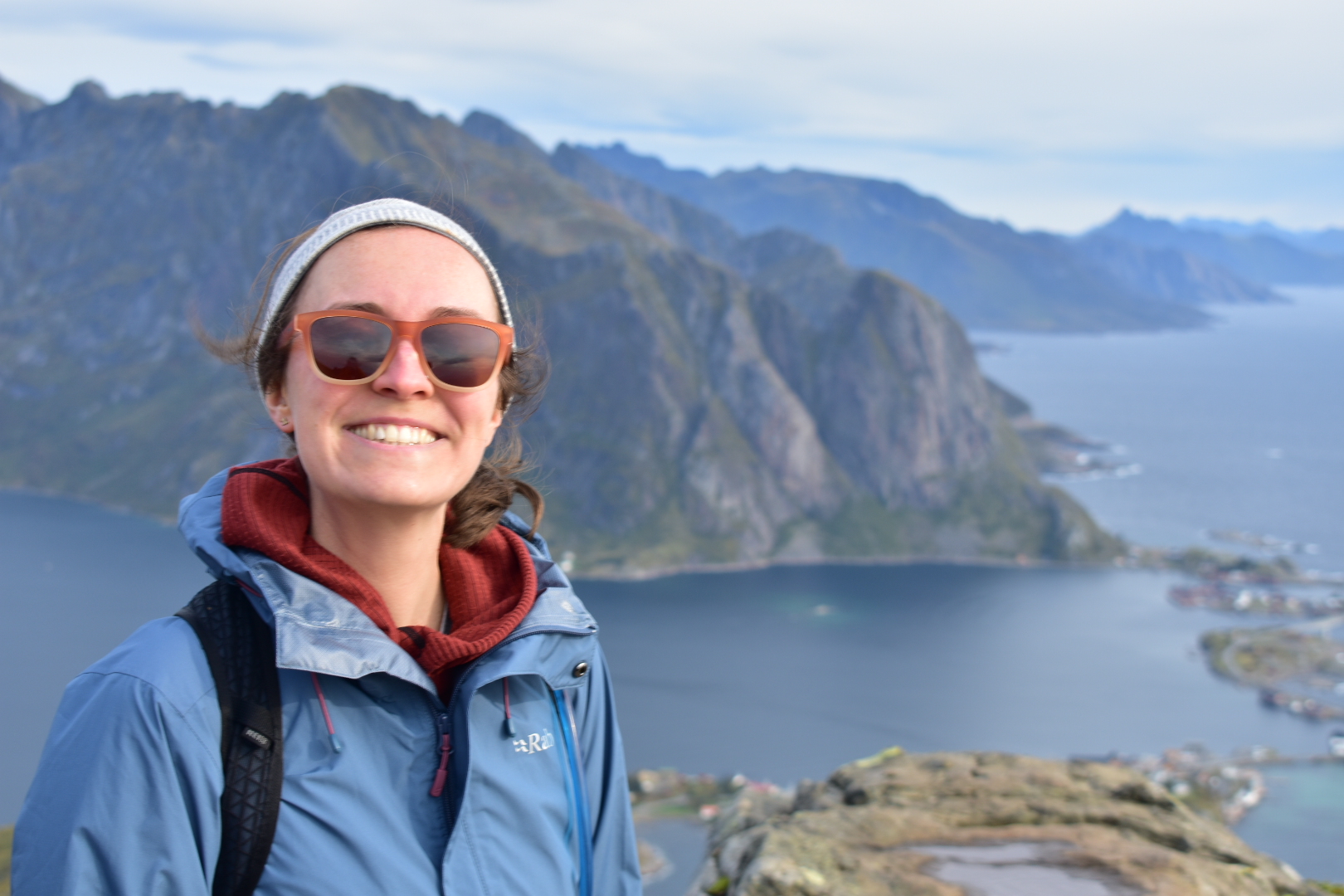
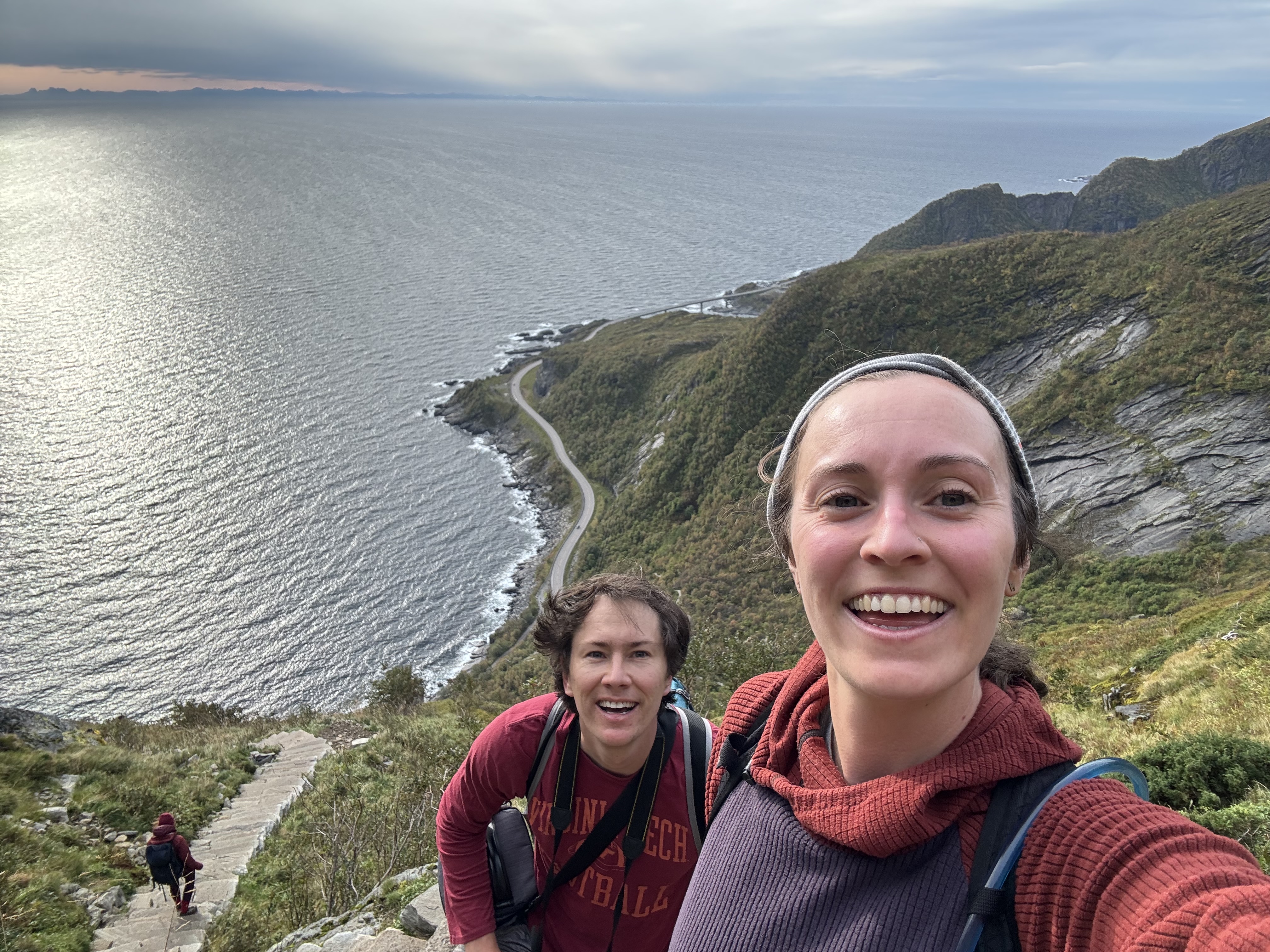
This was a go-go-go type of day – we had multiple hikes planned and a sauna reservation in the evening. After making breakfast in our rorbu, we headed a short distance away to trek the famous Reinebringen hike. This hike was quick but brutal – a trail of stone stairs continuously climbed 1,709 feet to the peak over a short amount of mileage – talk about a leg burn. We ascended fairly quickly, and were met with one of the most beautiful views we’ve seen. Looking down, we saw the town, a bunch of harbors, lakes, and mountains rising out of the sea for miles and miles. The further up the ridge we went, the more beautiful the views were (and more windy). Reluctant to leave but wanting to get to another hike, we headed down the stairs, which was honestly almost as challenging because we had to look down the whole time, and by this point the hike had become quite busy. After a grueling leg workout, we made it to the start of the trailhead and walked the remaining ~1.8 km back to our car in Reine.
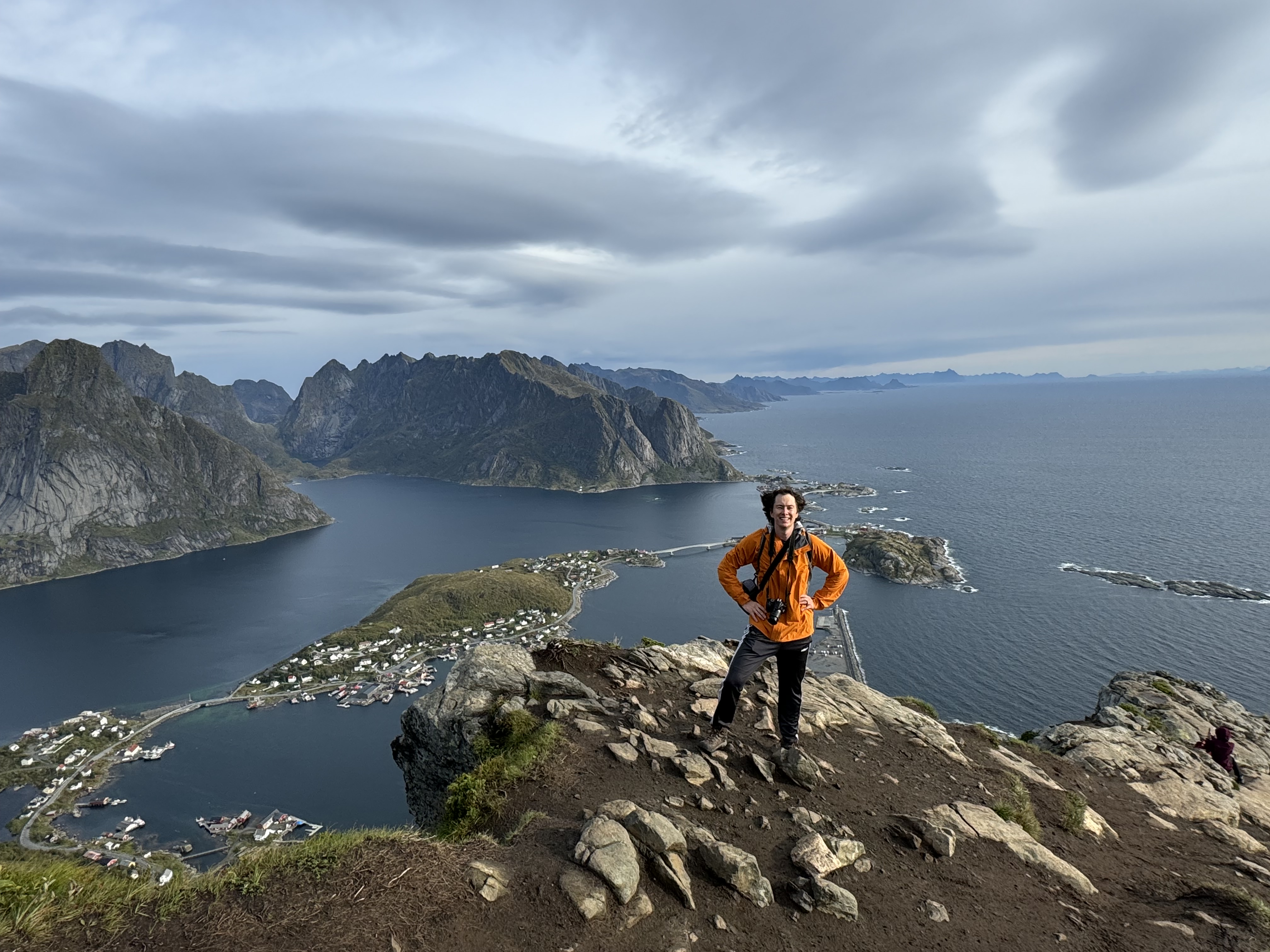

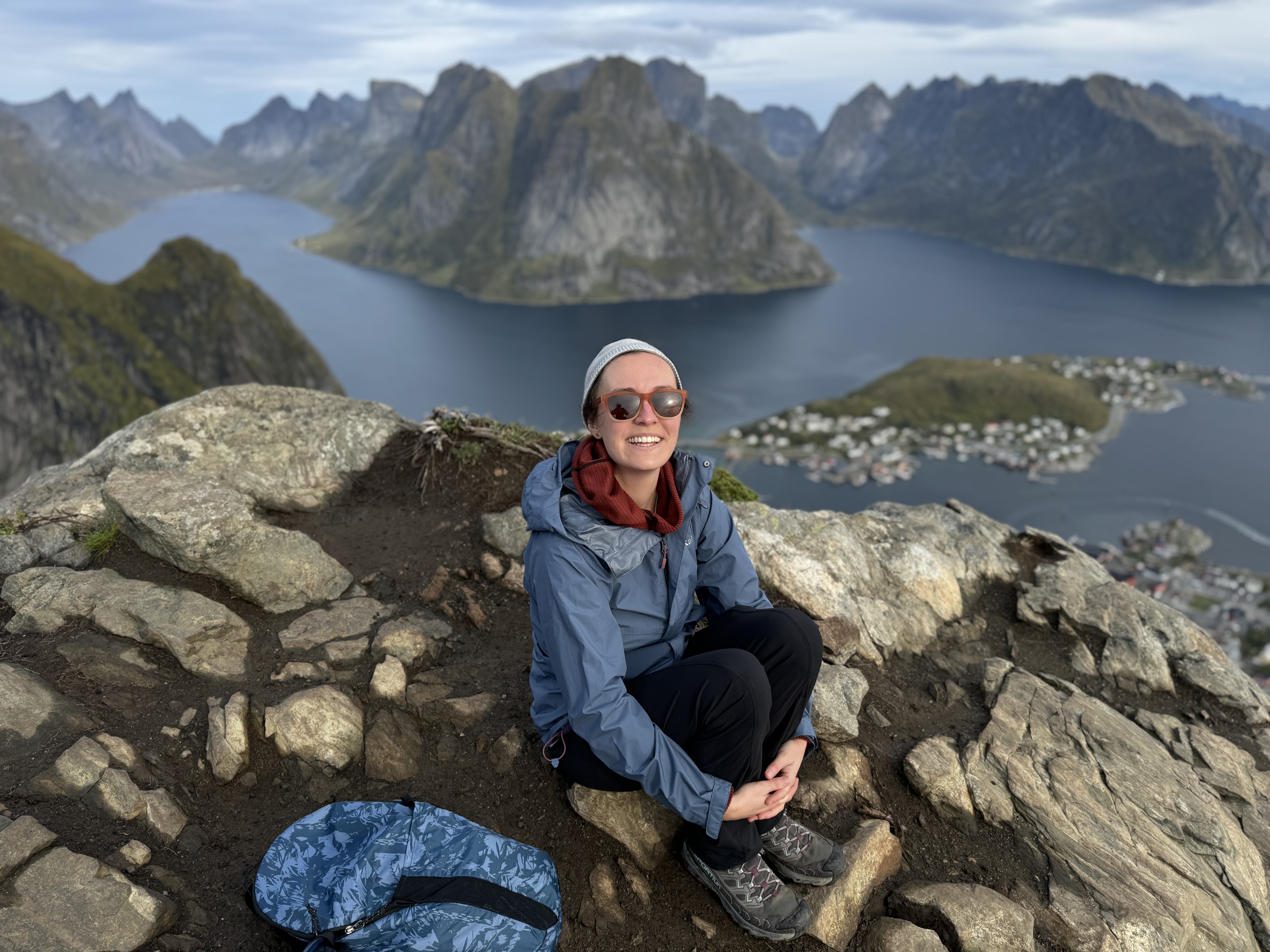

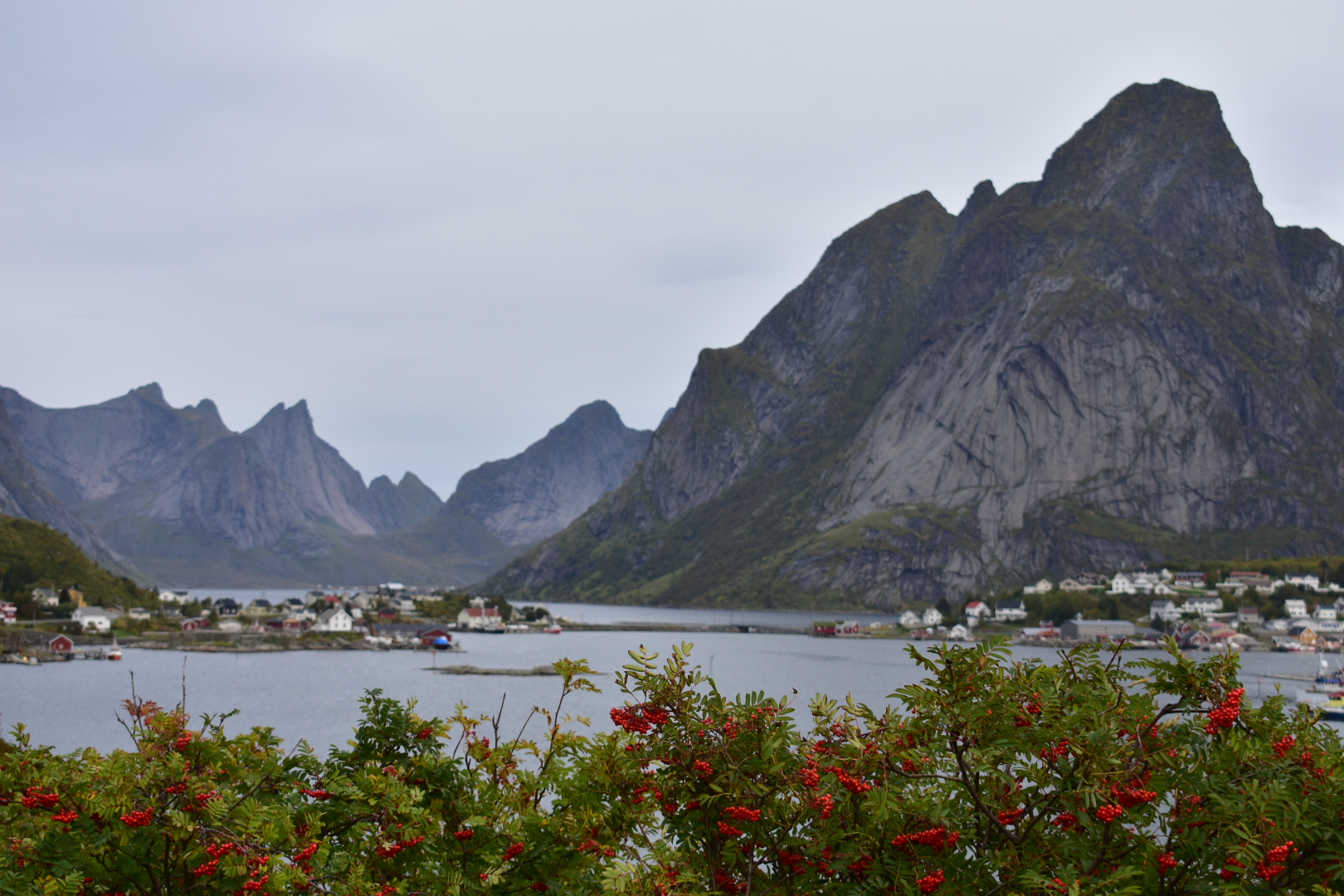
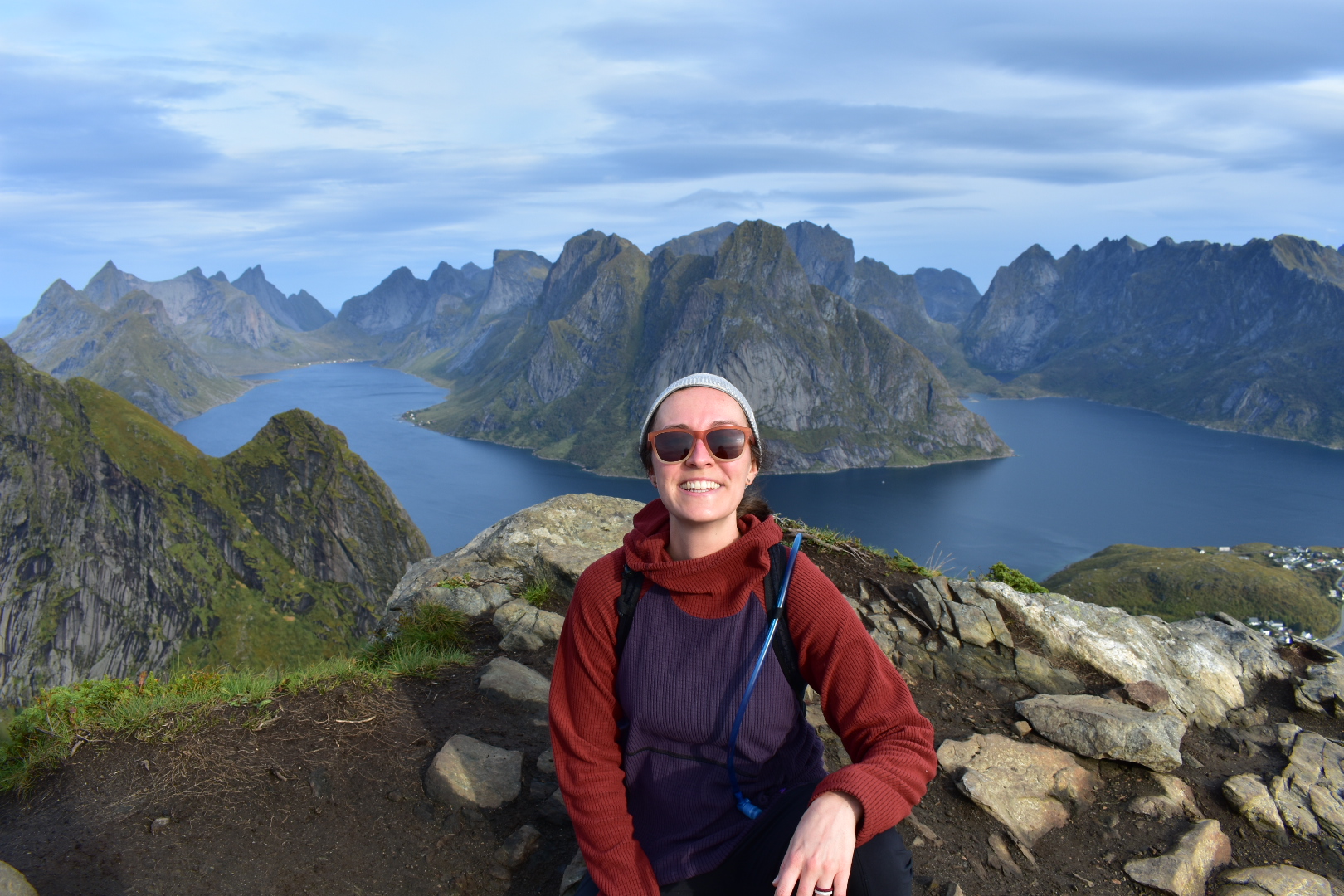
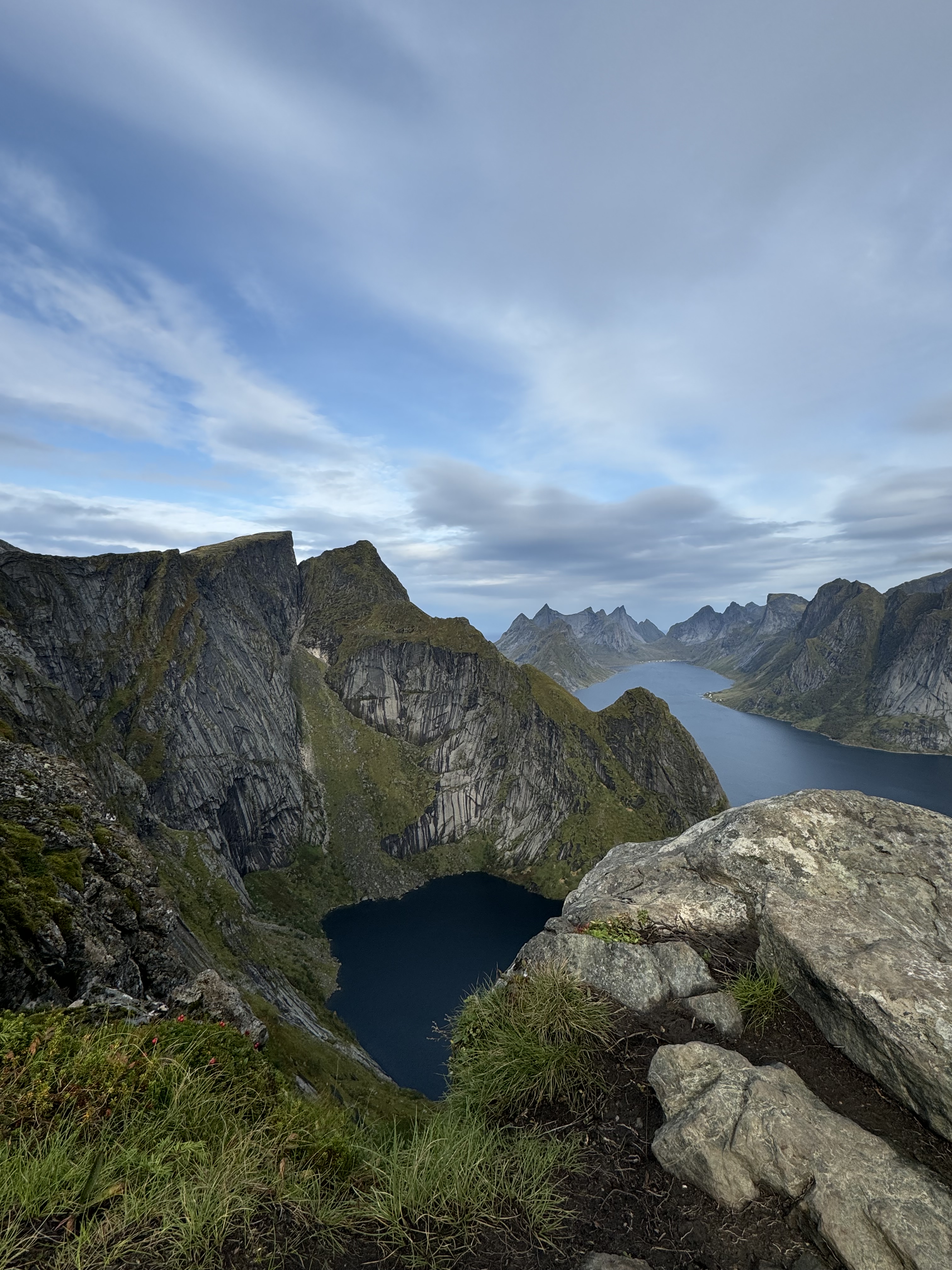


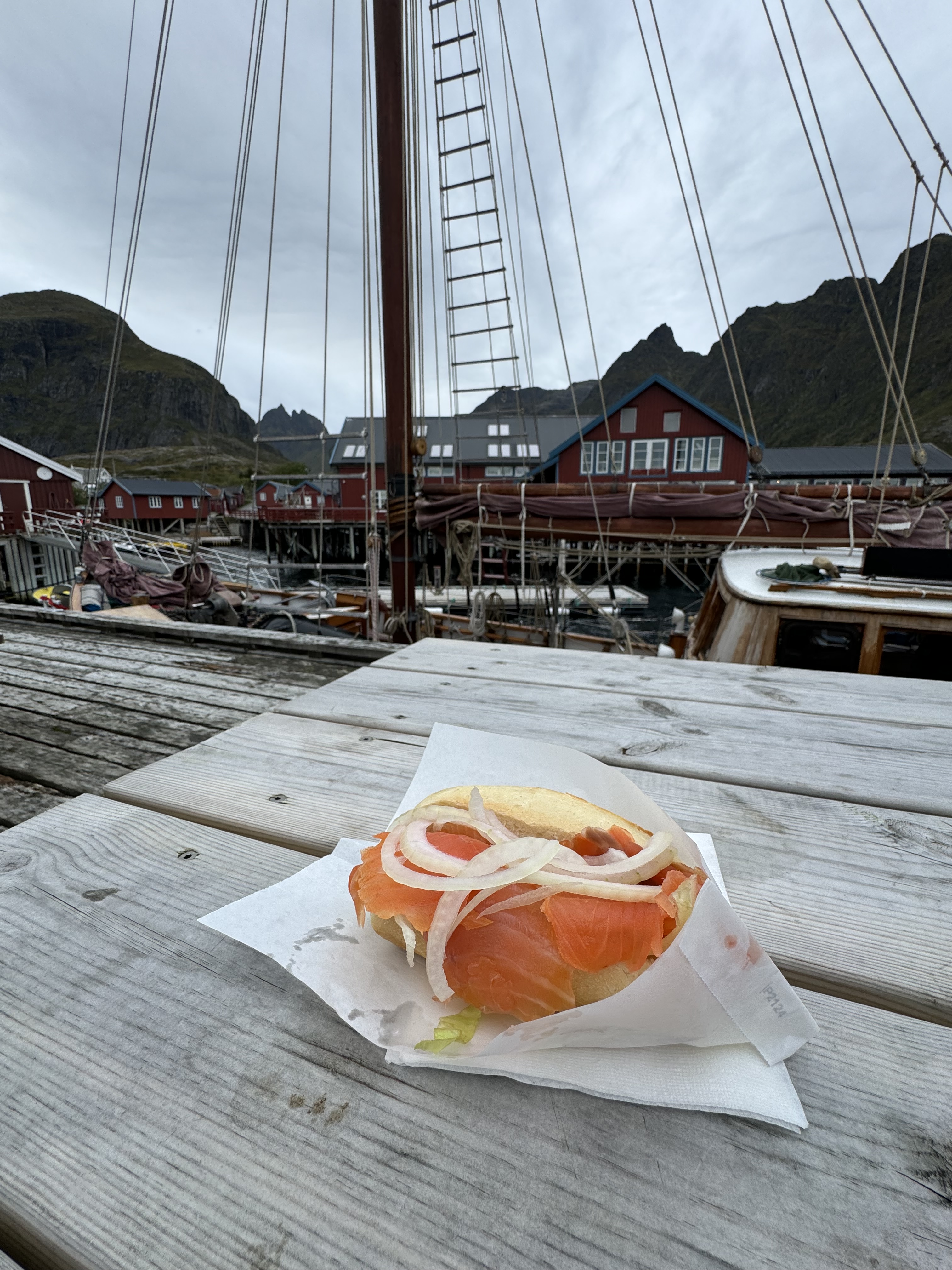
Having worked up an appetite, and also wanting to make it to the end of the E10, we decided to drive to Å, the western most village on the islands. Once here, we went to Sild and Salmon, a recommended seafood sandwich shop (we each got a smoked cold salmon and smoked mackerel sandwich, complete with raw onions and lettuce – simple but tasty.)

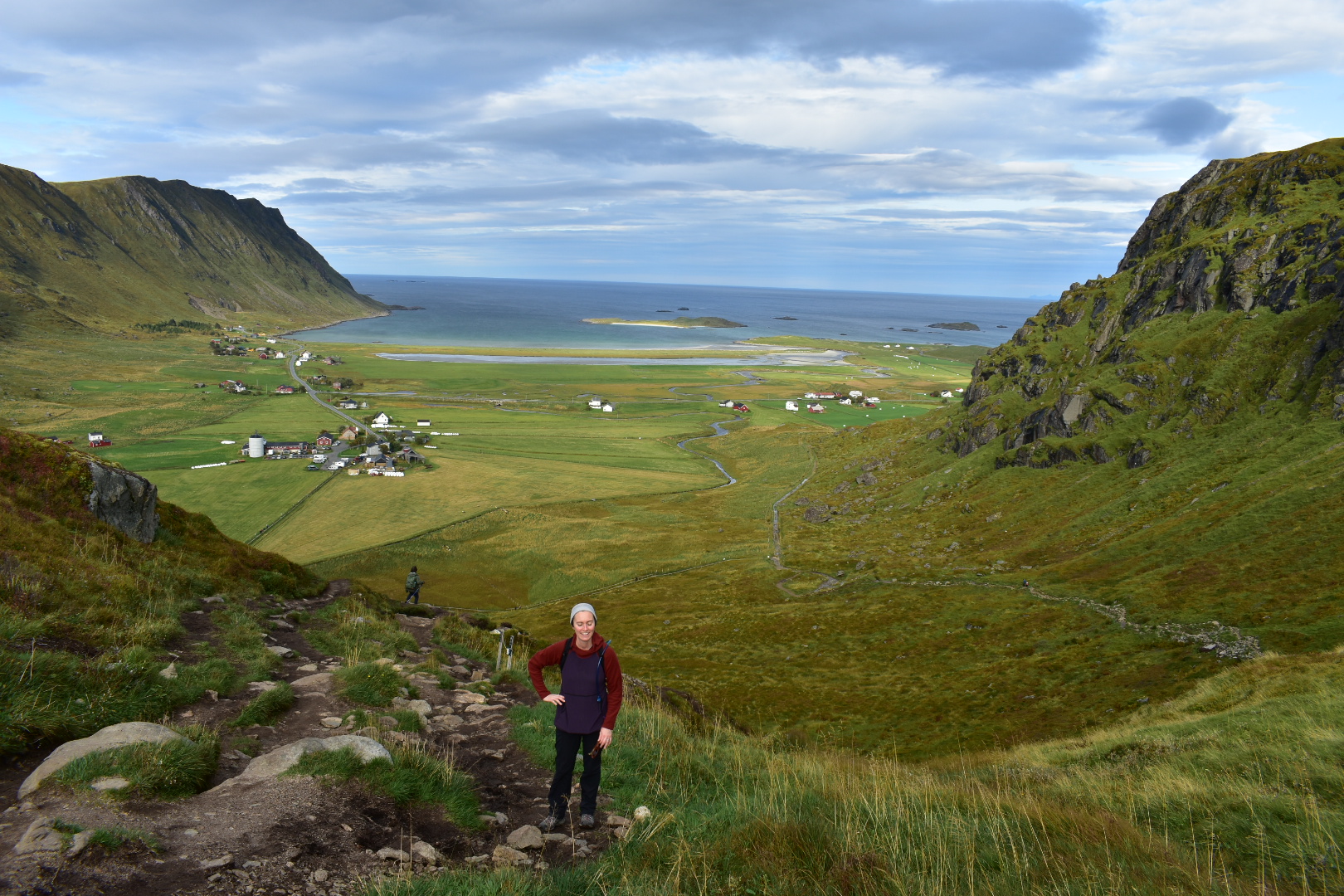
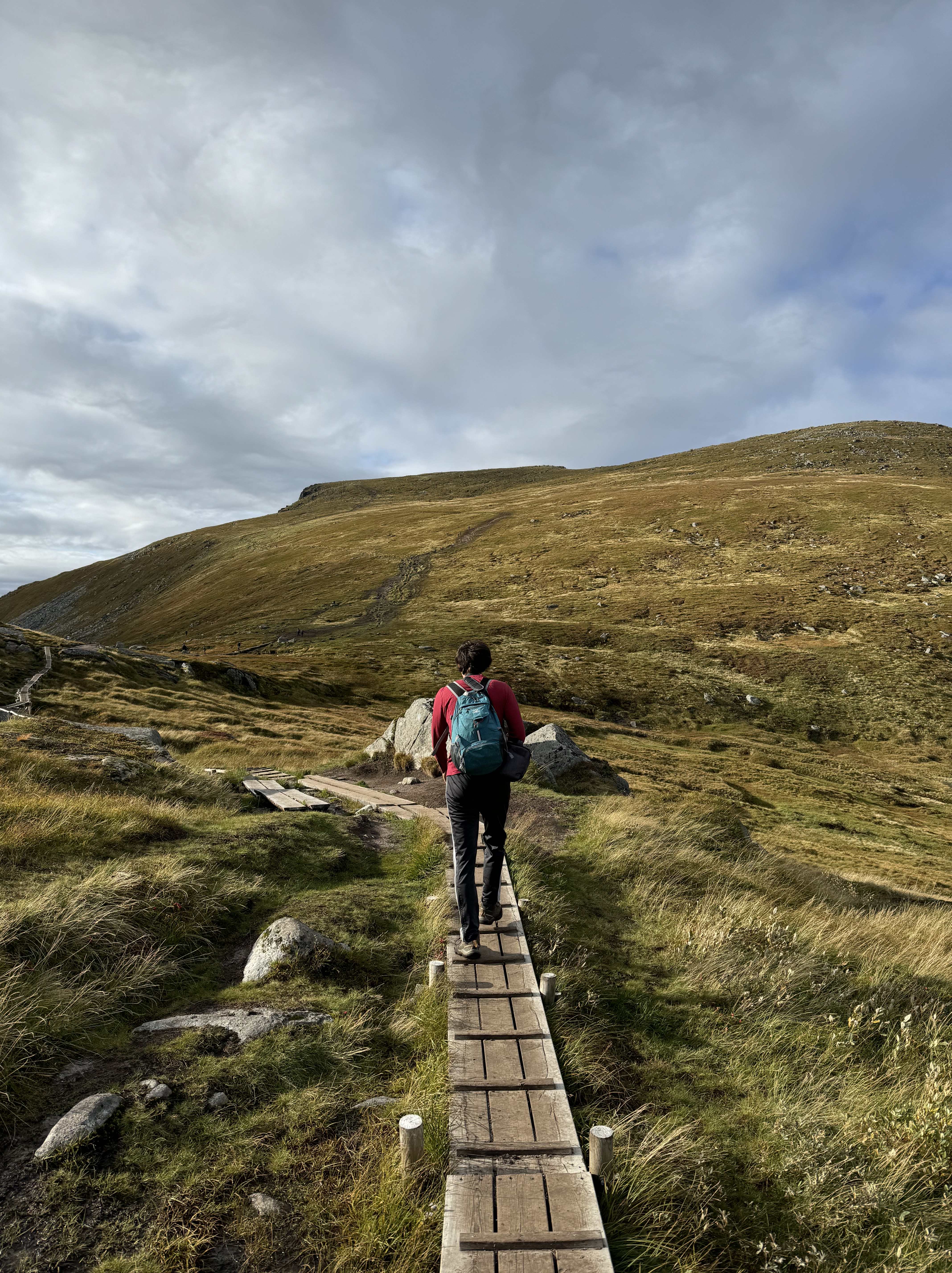
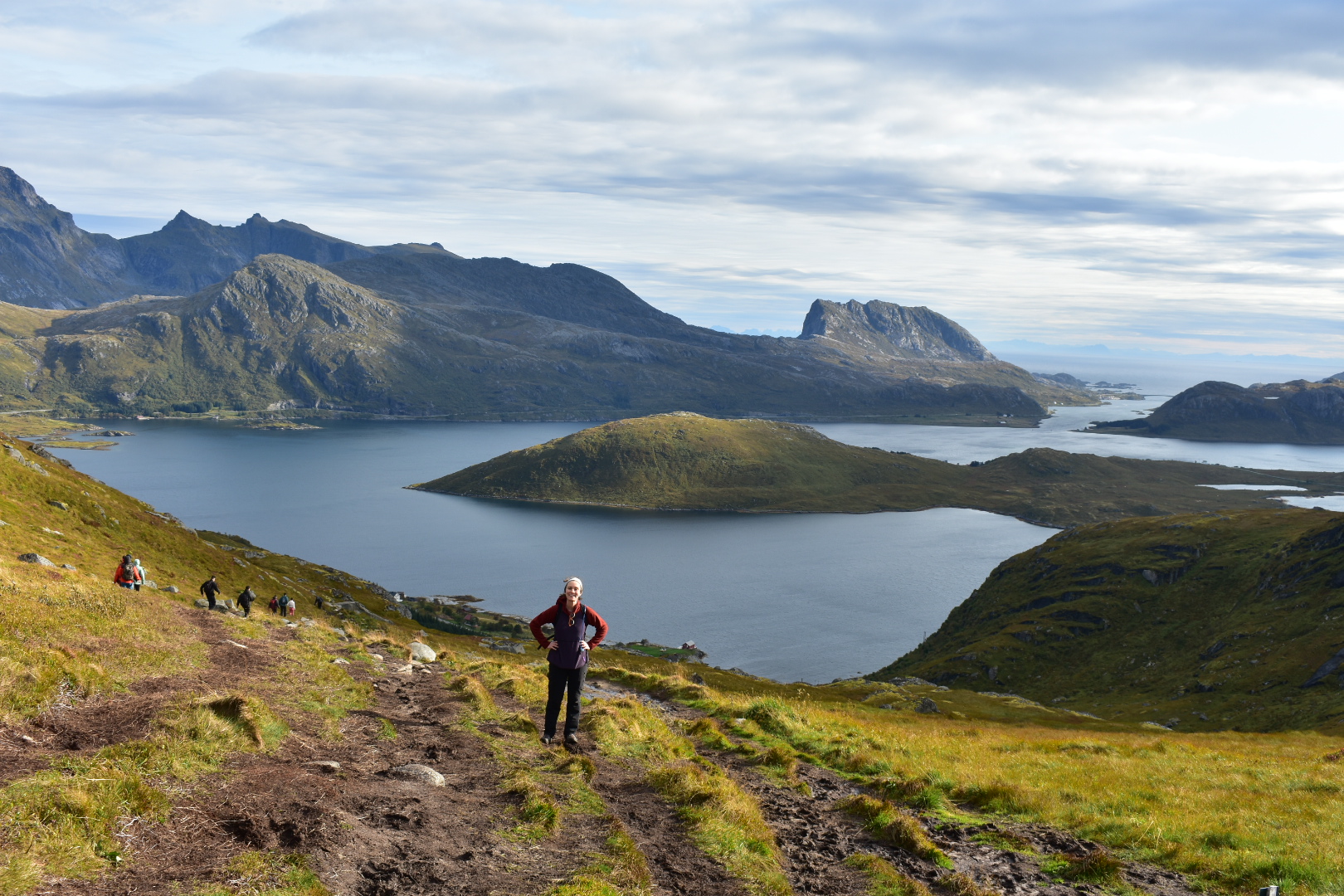
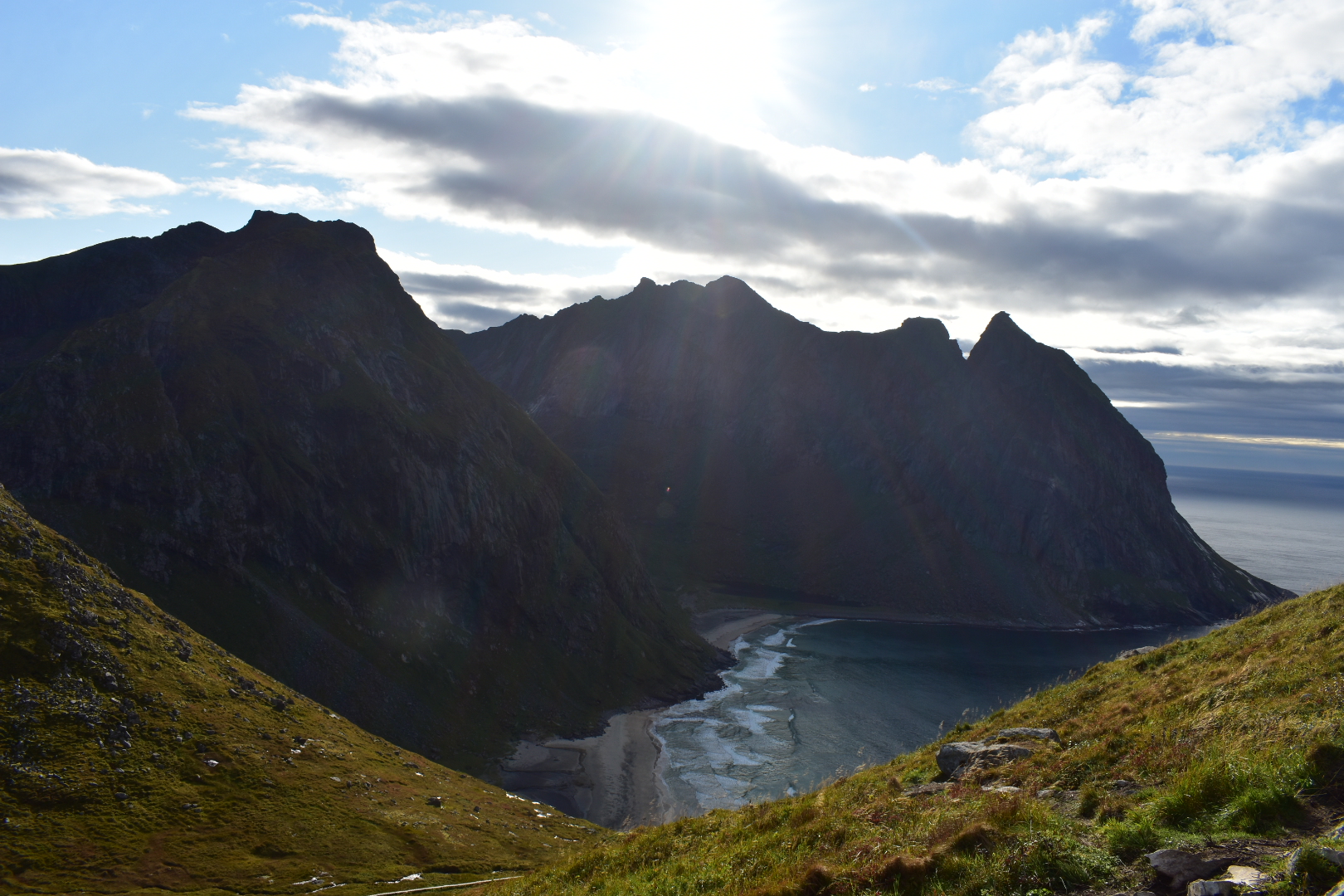
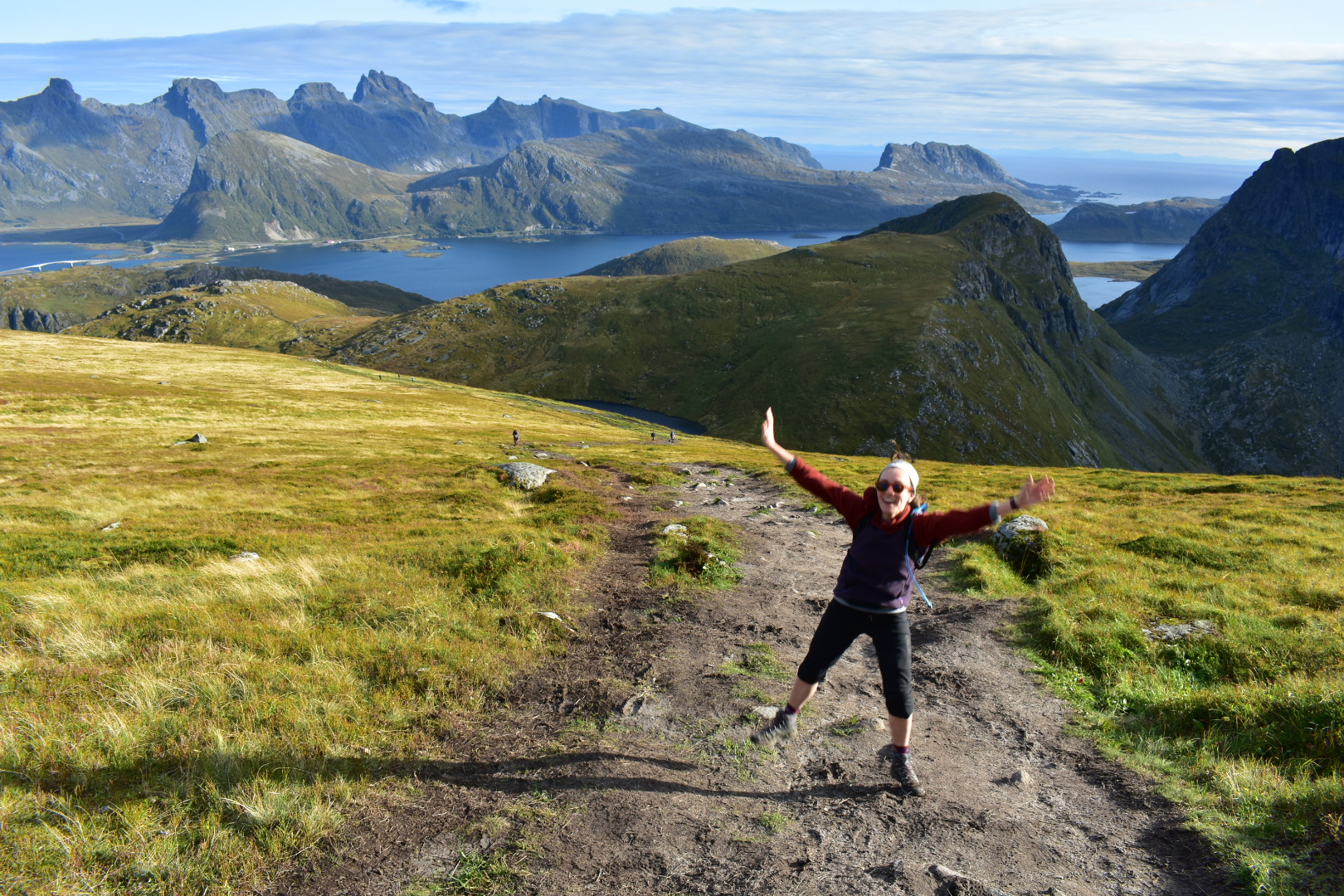
After our quick refuel, we got back in the car to head to our next hike, Ryten beach. We were on a bit of a time crunch because the hike was estimated at 2,000 feet of elevation over 4.5 miles, and our sauna reservation was at 6 so we started off hot around 2PM! The beginning of the hike was unique – the parking lot was on what I suspect private property, and they were collecting 100 Krone (about $10) per car to park in the designated lot (a few dozen of cars were here). The hike started by walking over a crudely constructed boardwalk consisting of 4×6 planks mounted together across the owner’s field (where sheep were grazing). We then quickly began ascending the hill, which connected to a series of hiking trails at the top, either to Ryten beach (our destination) or other viewpoints. The higher we climbed, the more of the landscape beyond we could see, which included small tairns, other mountain peaks and distant beaches. This hike was probably even more spectacular than the hike we’d done in the morning because there were stunning views in every direction we looked. It took us a little over two hours to fully summit, where we were able to look down on the beautiful shoreline of Ryten Beach. If we had more time, there was a trail leading from the mountain down to the beach – would love to be back here in the summer one day exploring this tucked away beach!

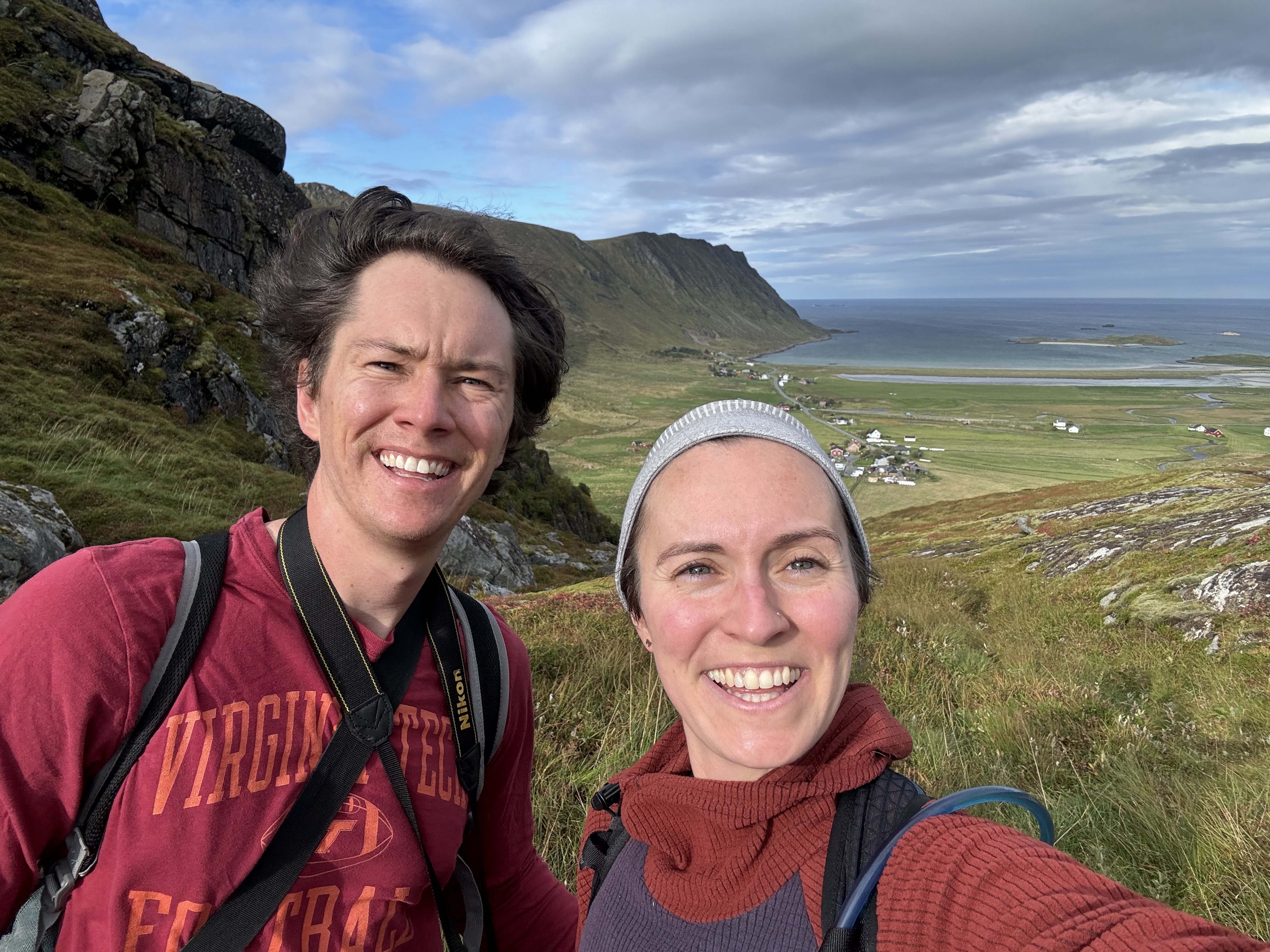
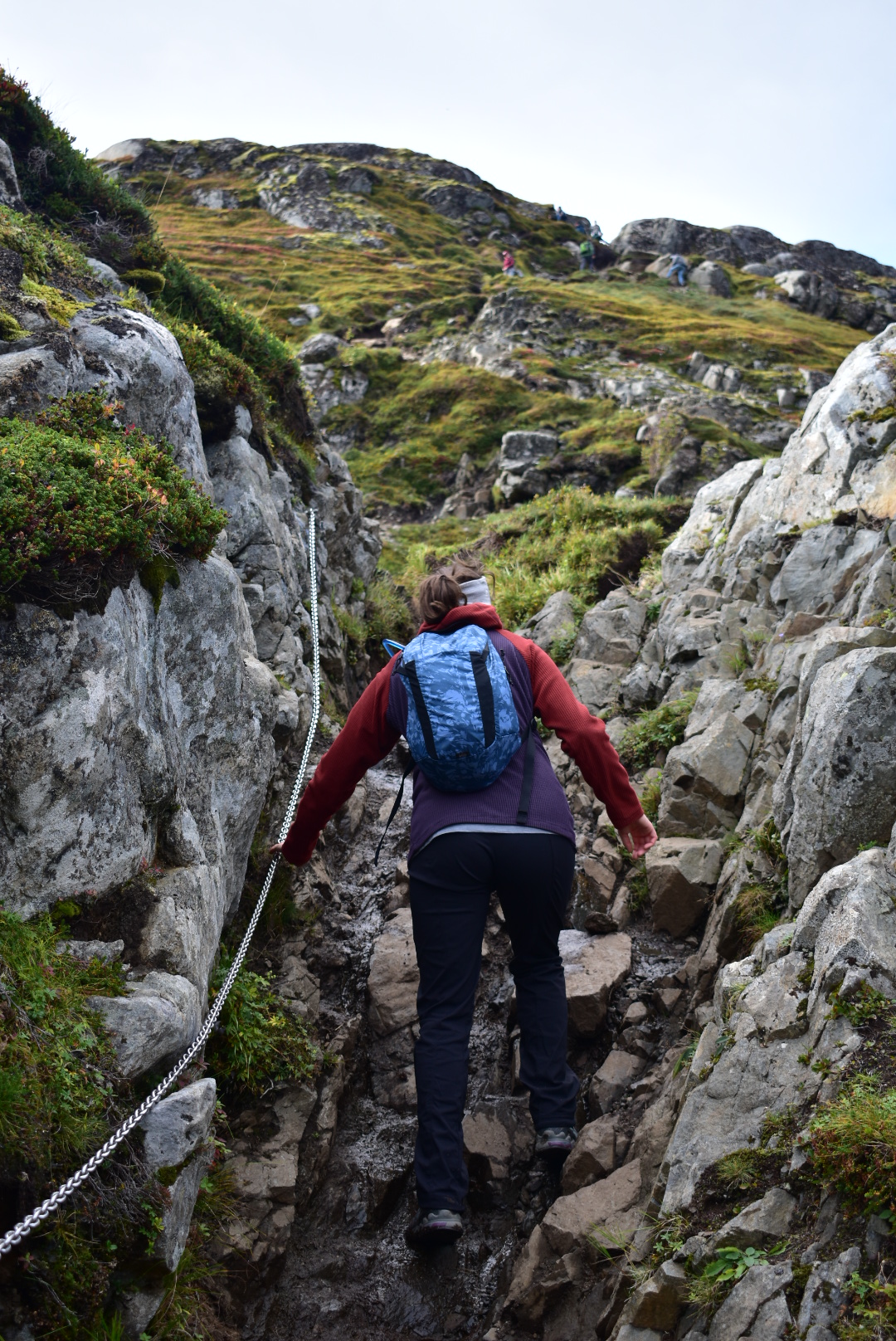
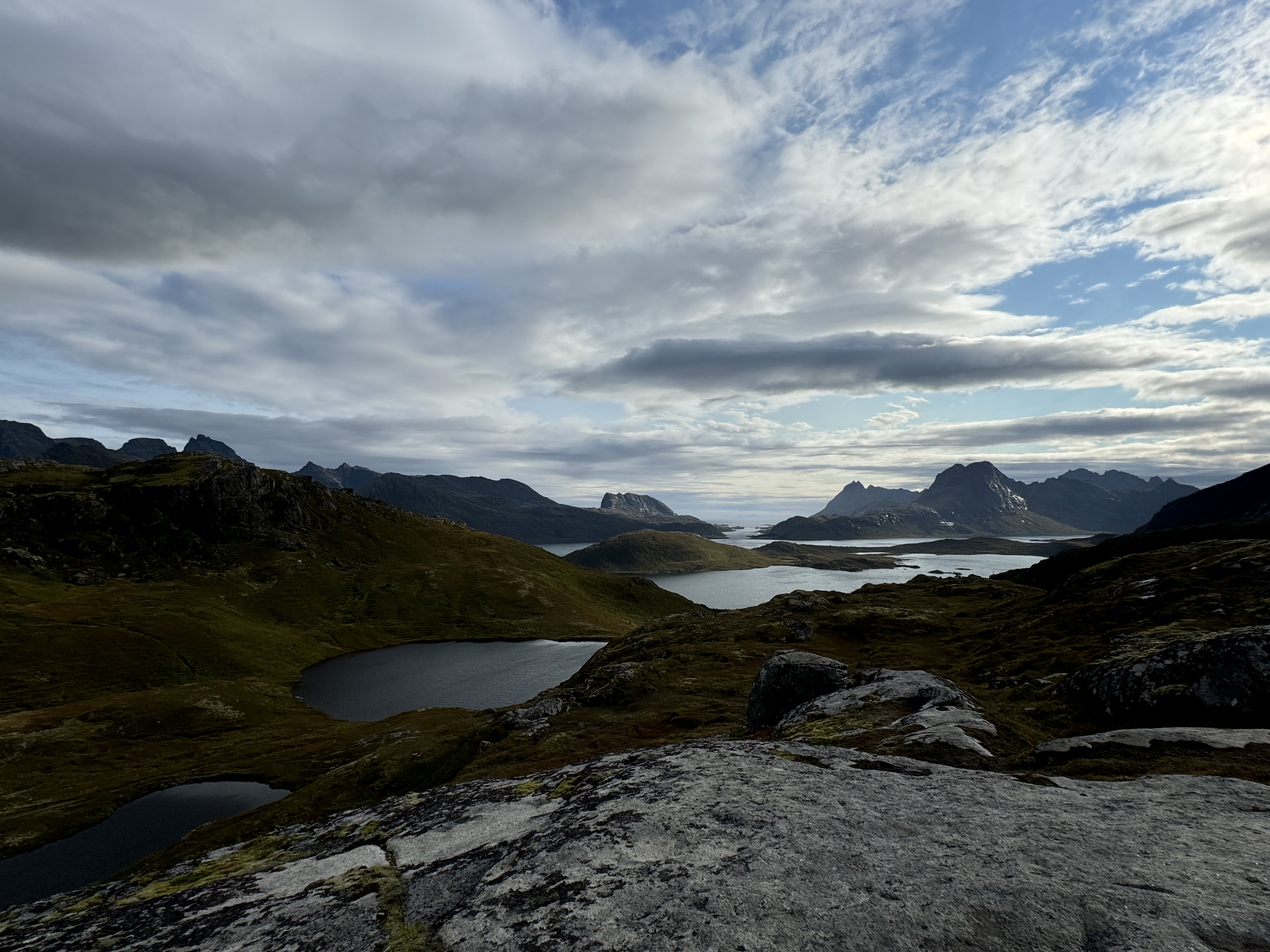
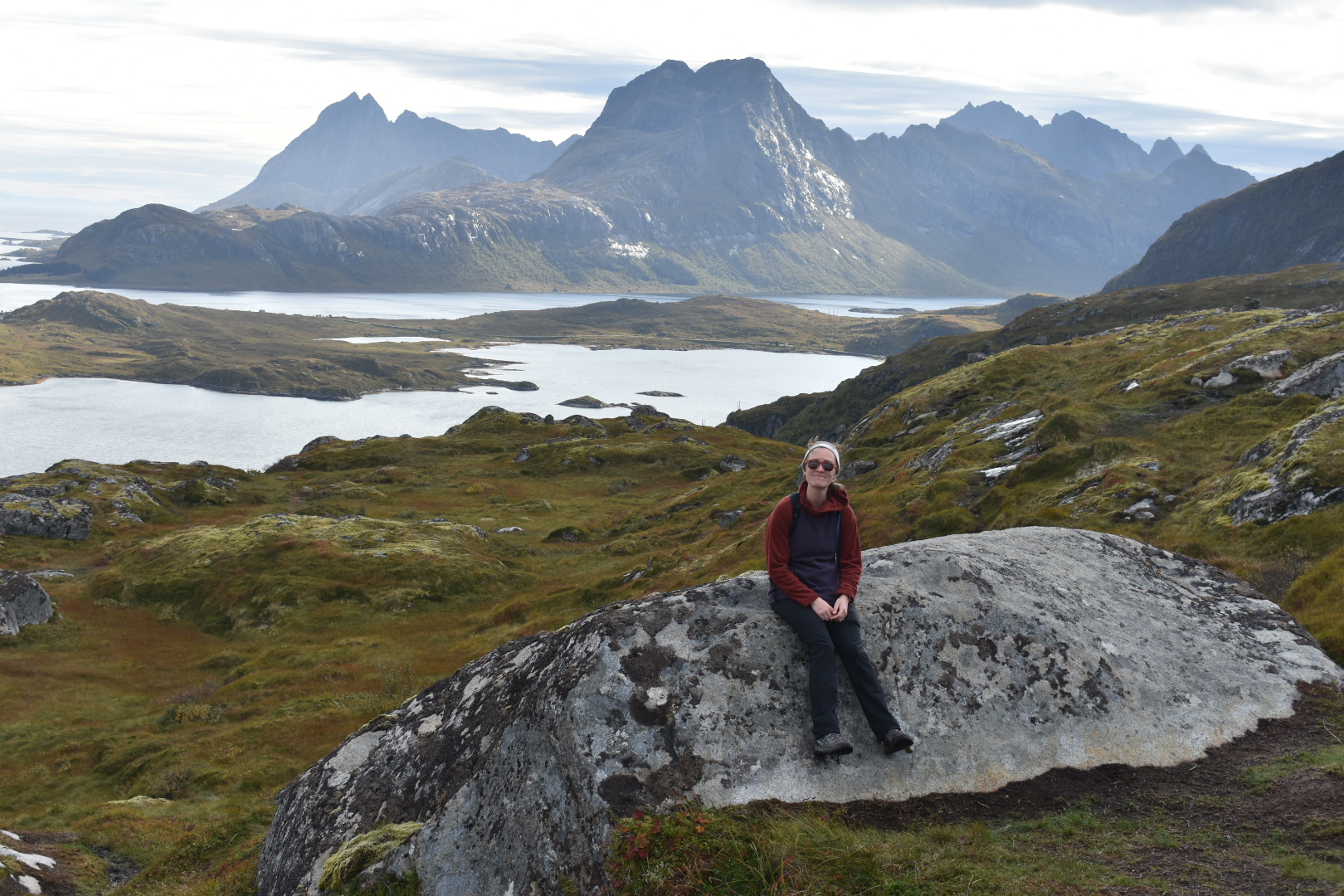

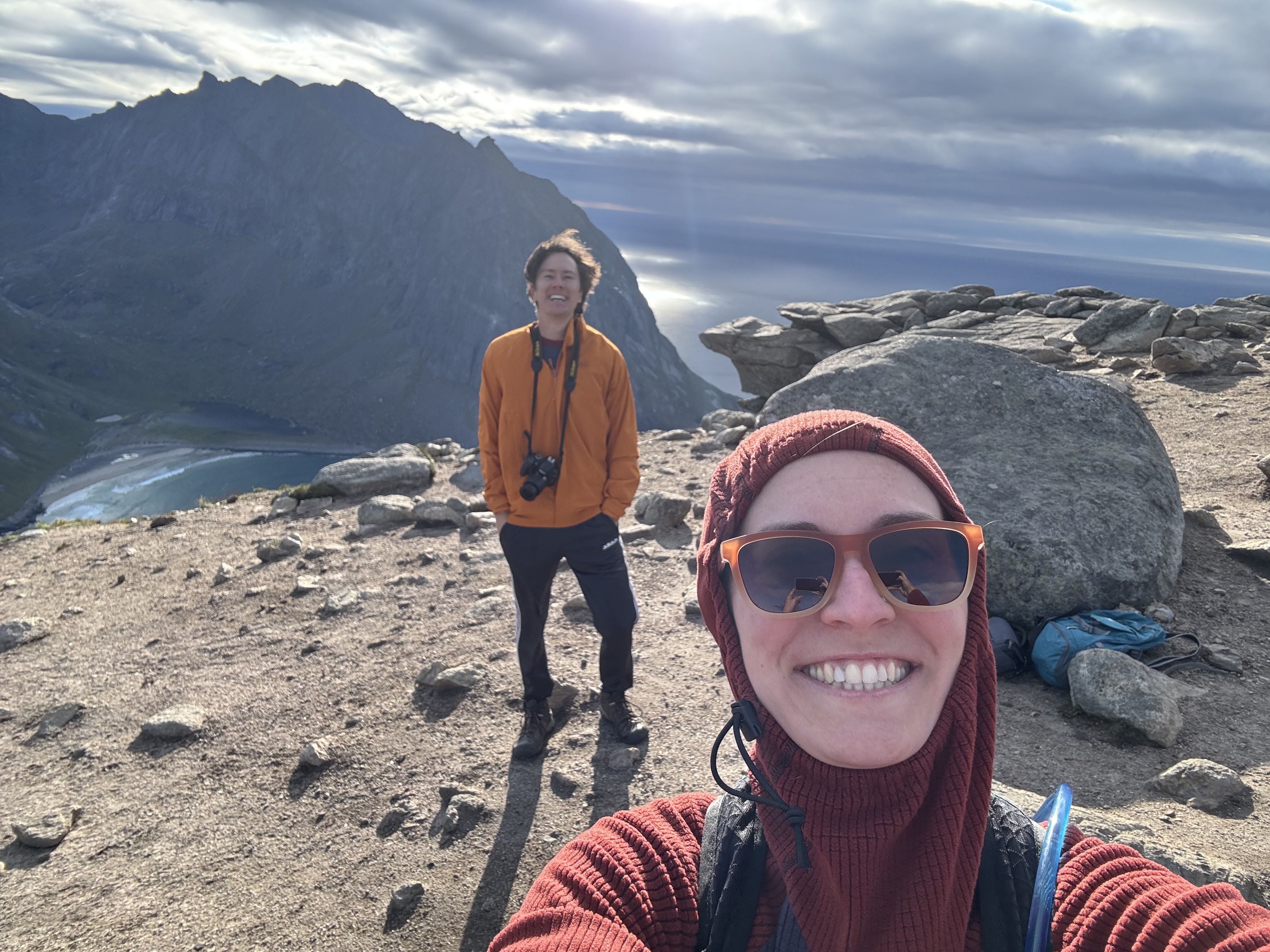

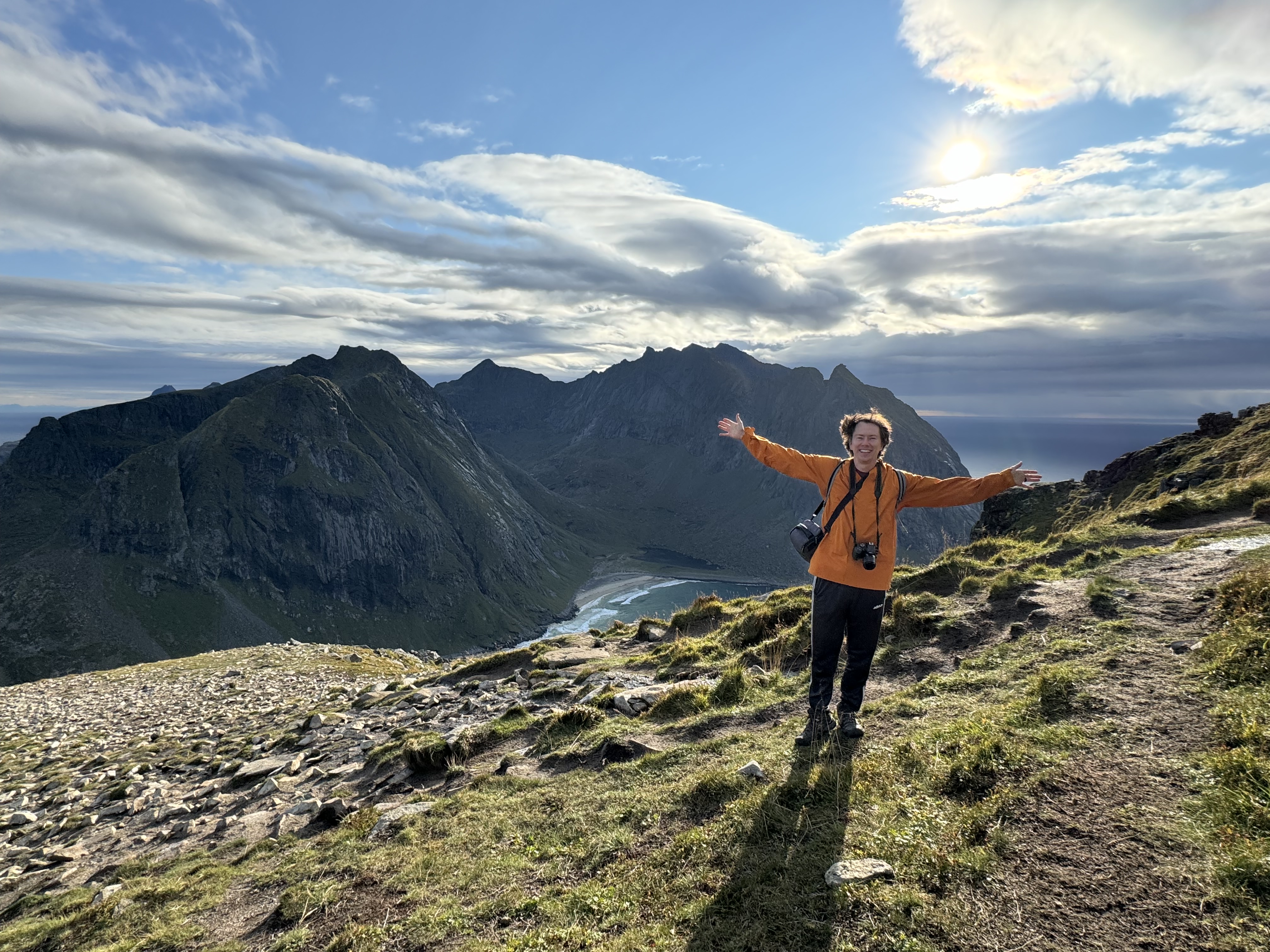

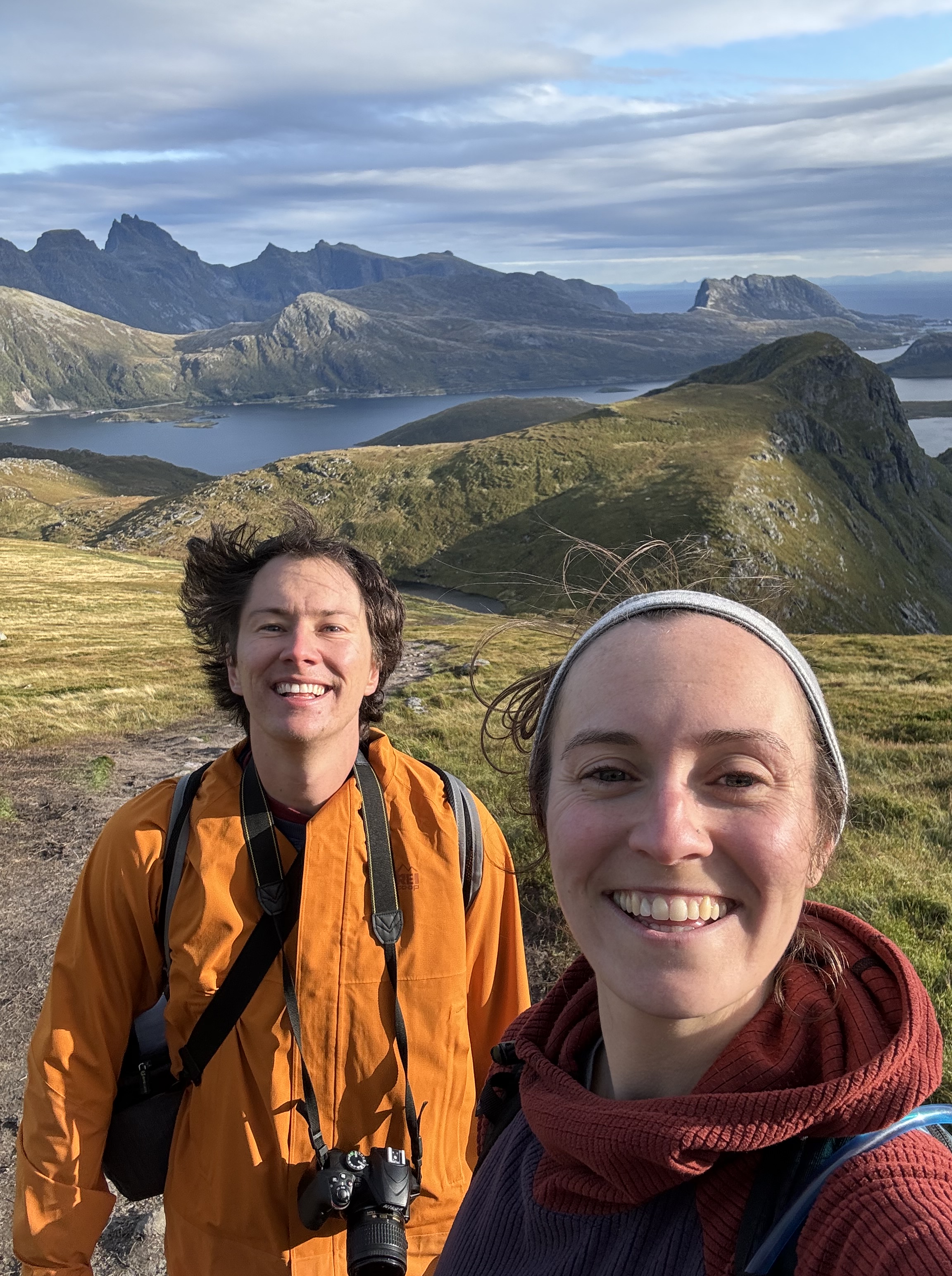


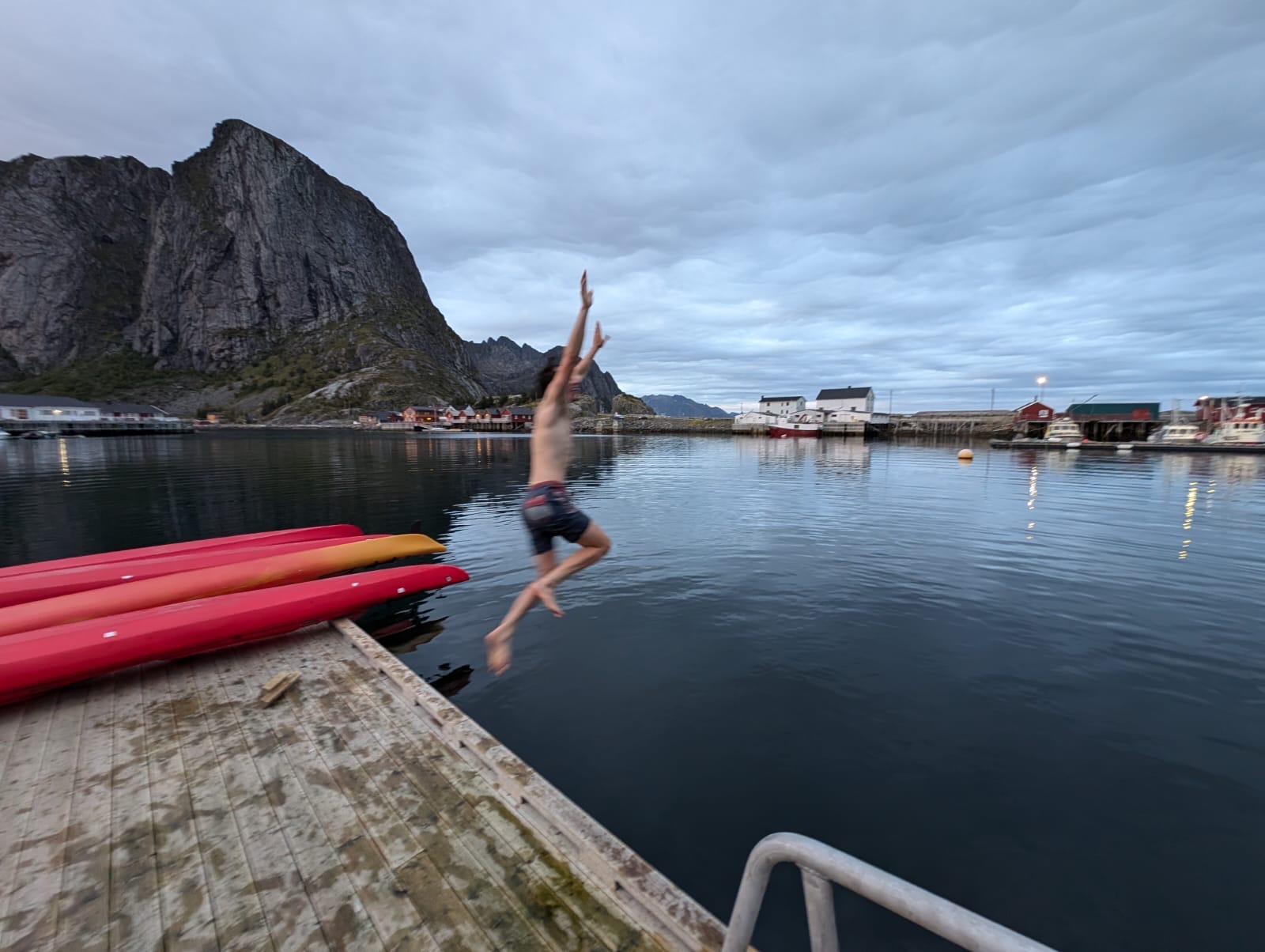
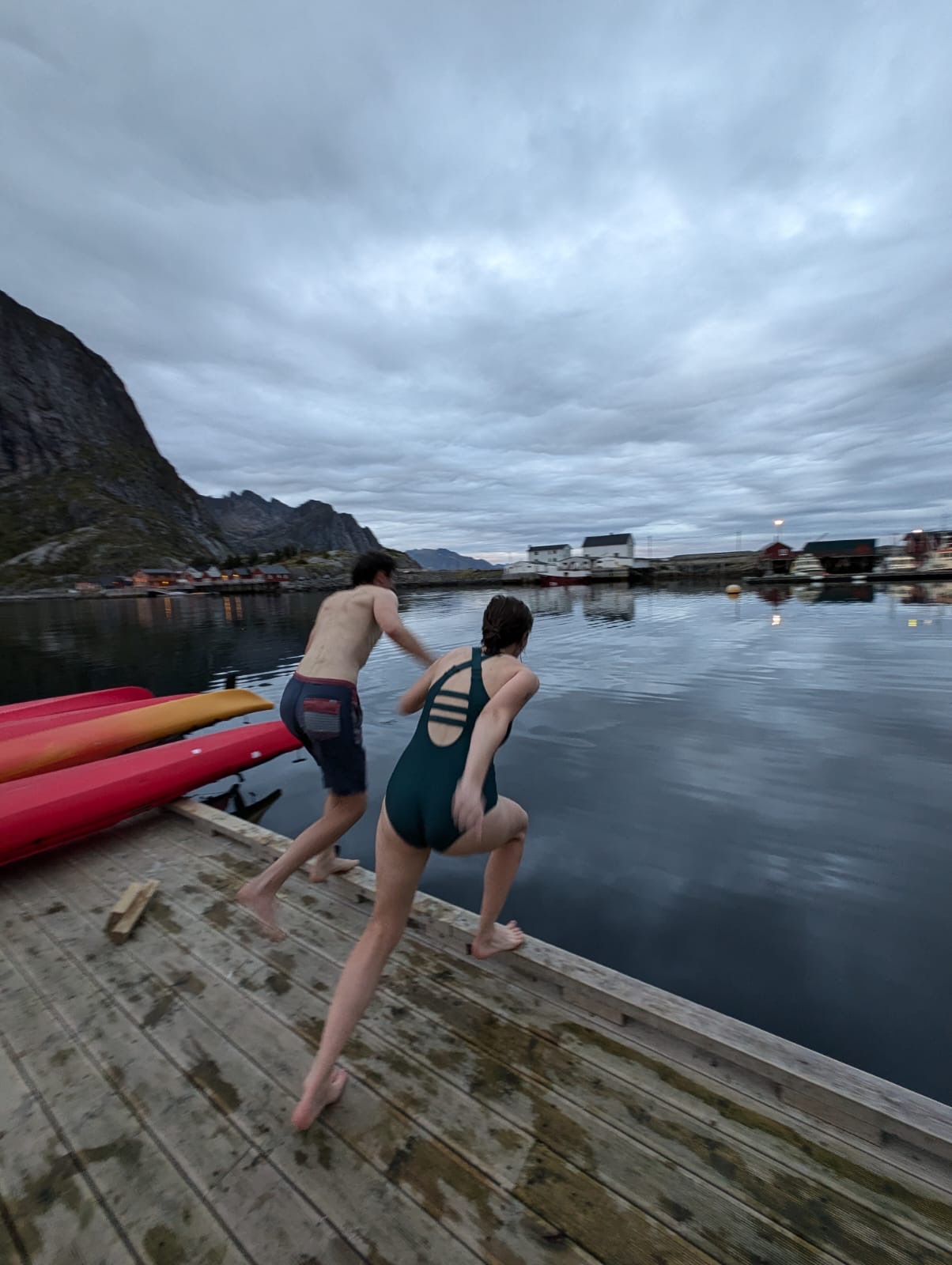
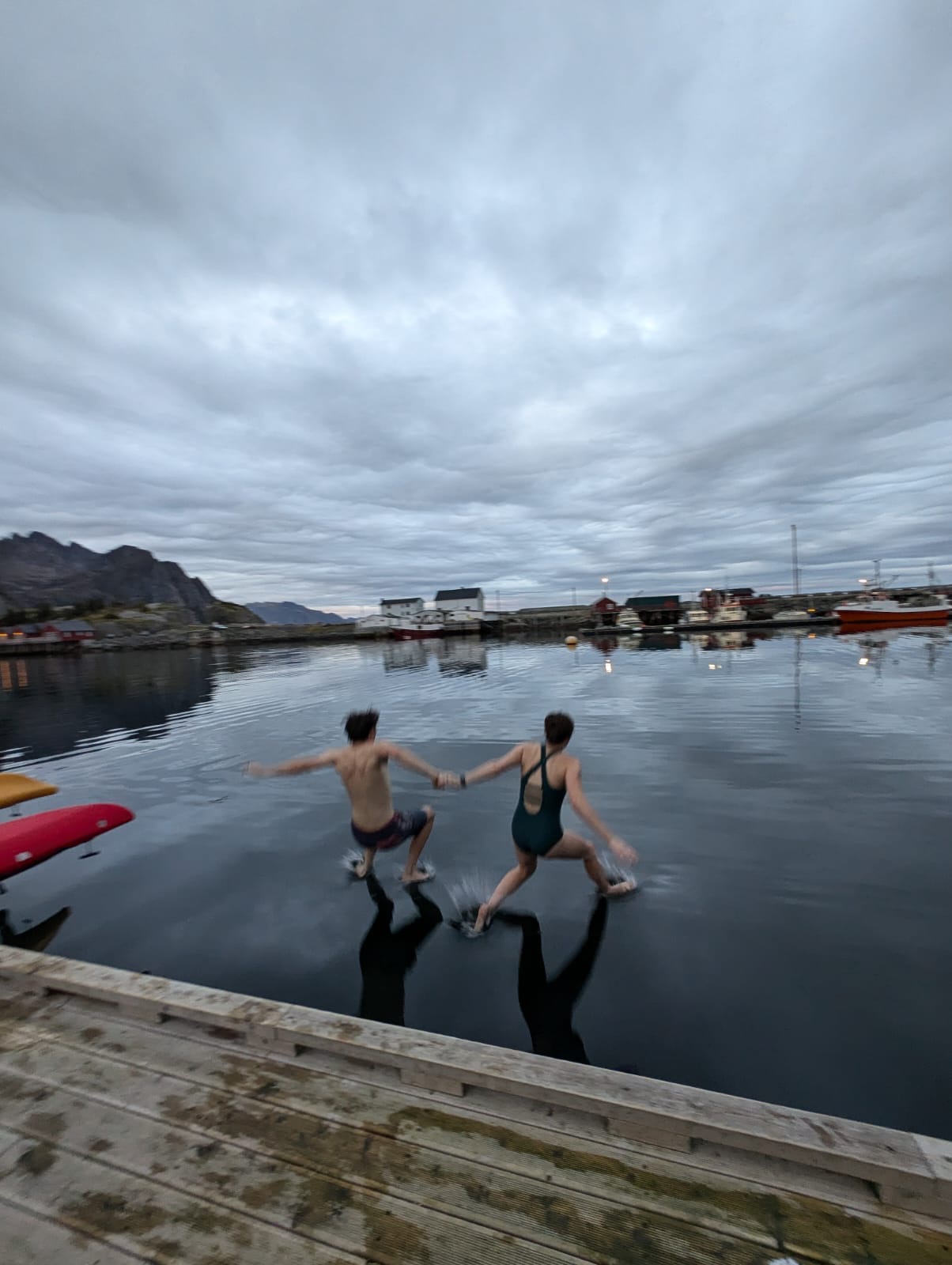
After a snack of dried stockfish and other more palatable food, we begun the hasty journey of walking back down the trail. We made it back just in time for our 6PM sauna! Our booking was a group booking for up to six people, and we were lucky enough to share the time with a couple from Michigan. The sauna was right on a pier, about fifteen feet up from the arctic fjord waters. We were there for about an hour and a half, alternating between 15 minute sauna internals and working up the courage to cold plunge into the chilly water. Nothing like positive peer pressure! While the water was freezing, it was so rejuvenating to jump in, and was the perfect end to a strenuous hike day.

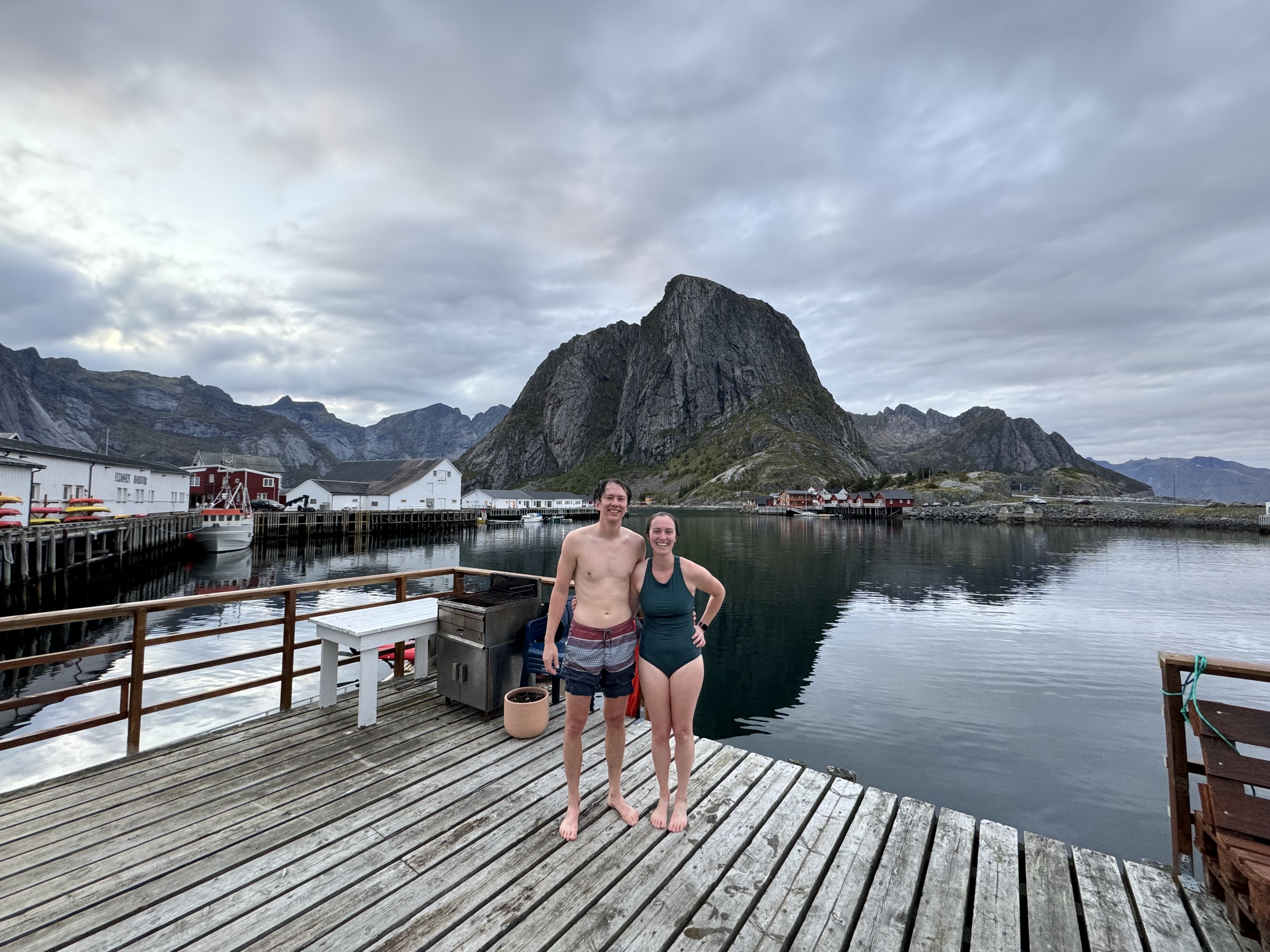
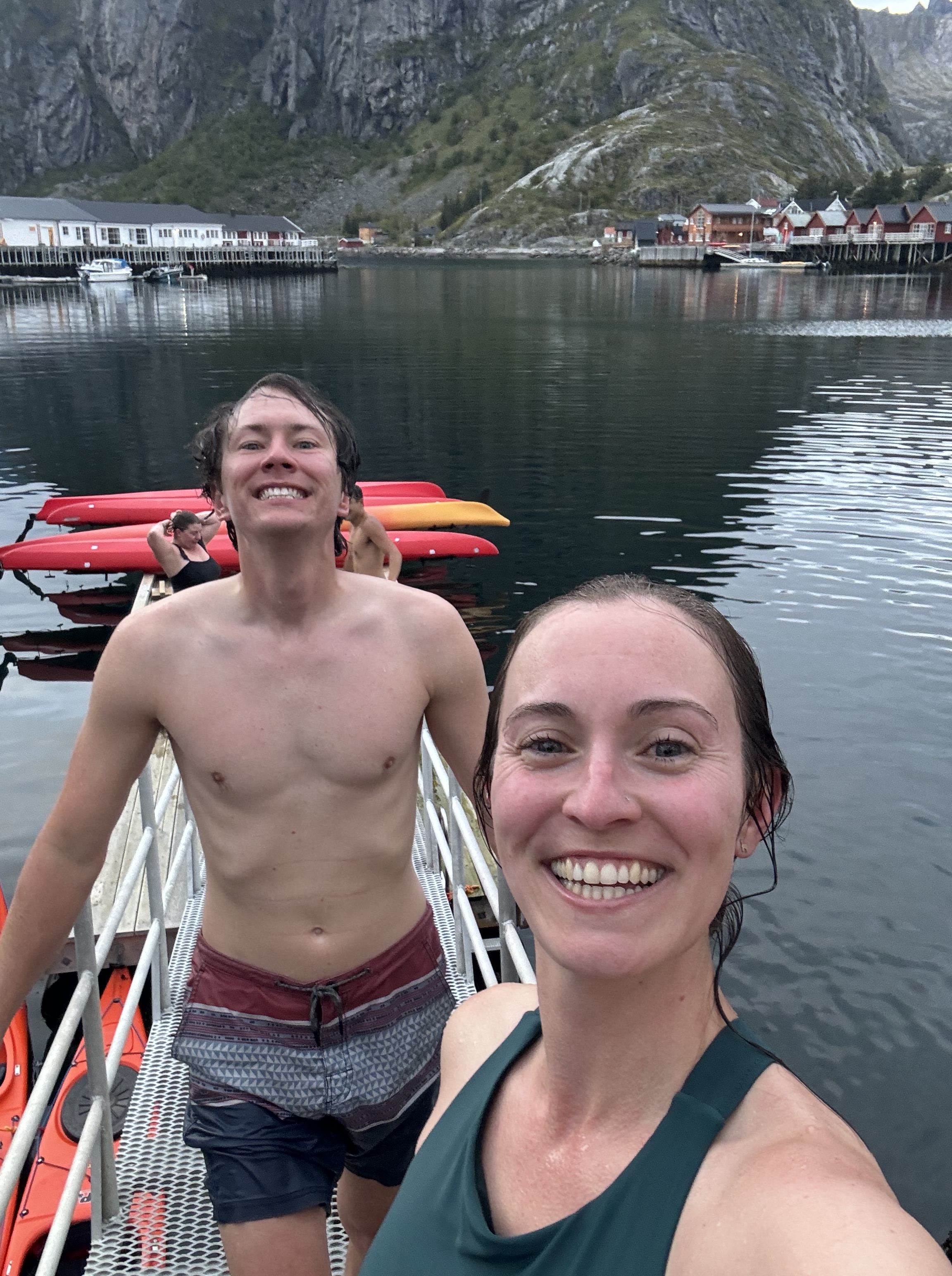


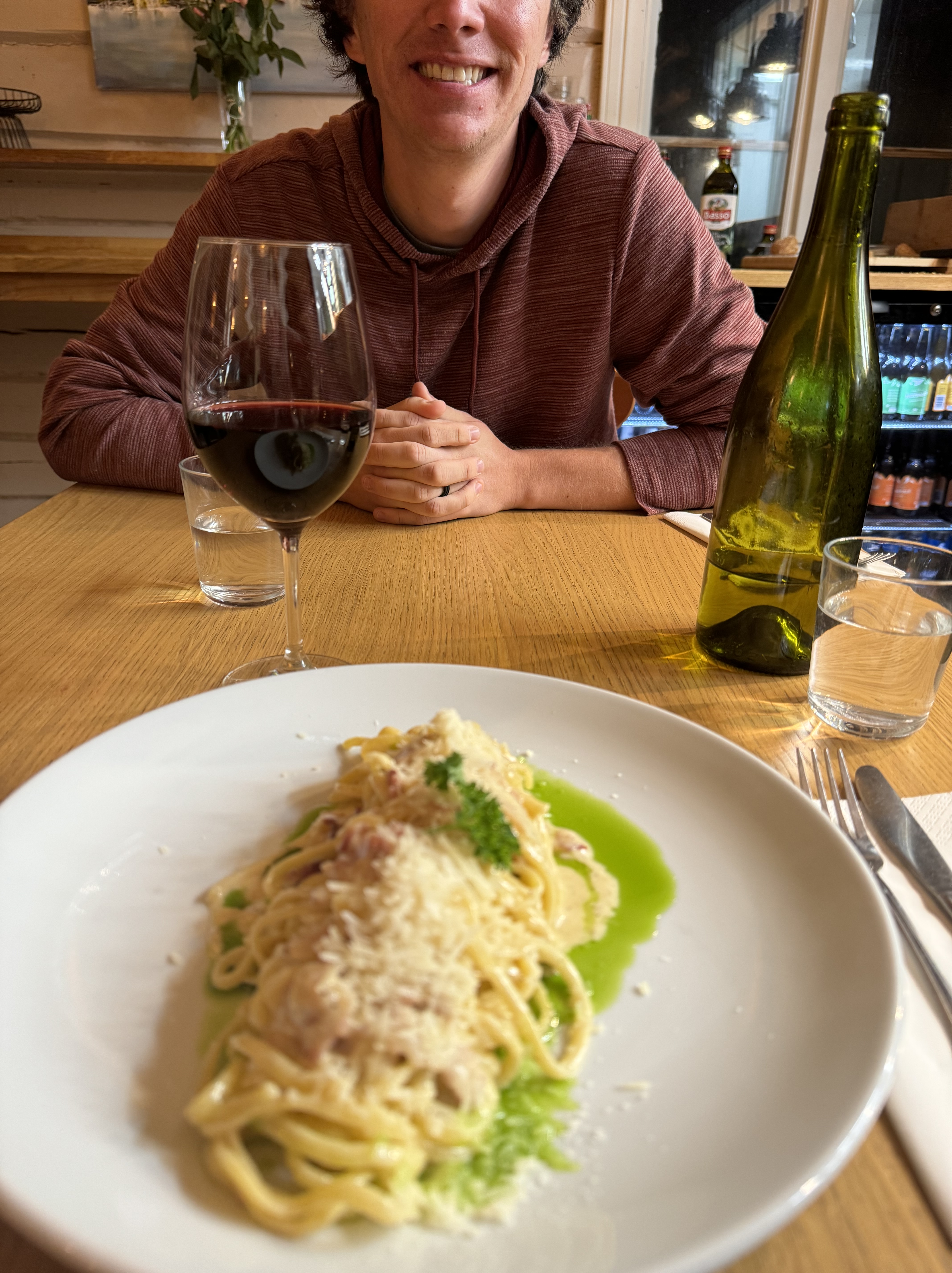
We wrapped up around 8PM, then took a quick shower and walked a few minutes from our rorbu for our reservation at Gadus, an Italian restaurant within Eliassen. We ordered some tasty carbonara pasta and fruitti de mare pasta to satiate our hunger from all the calories burned that day!
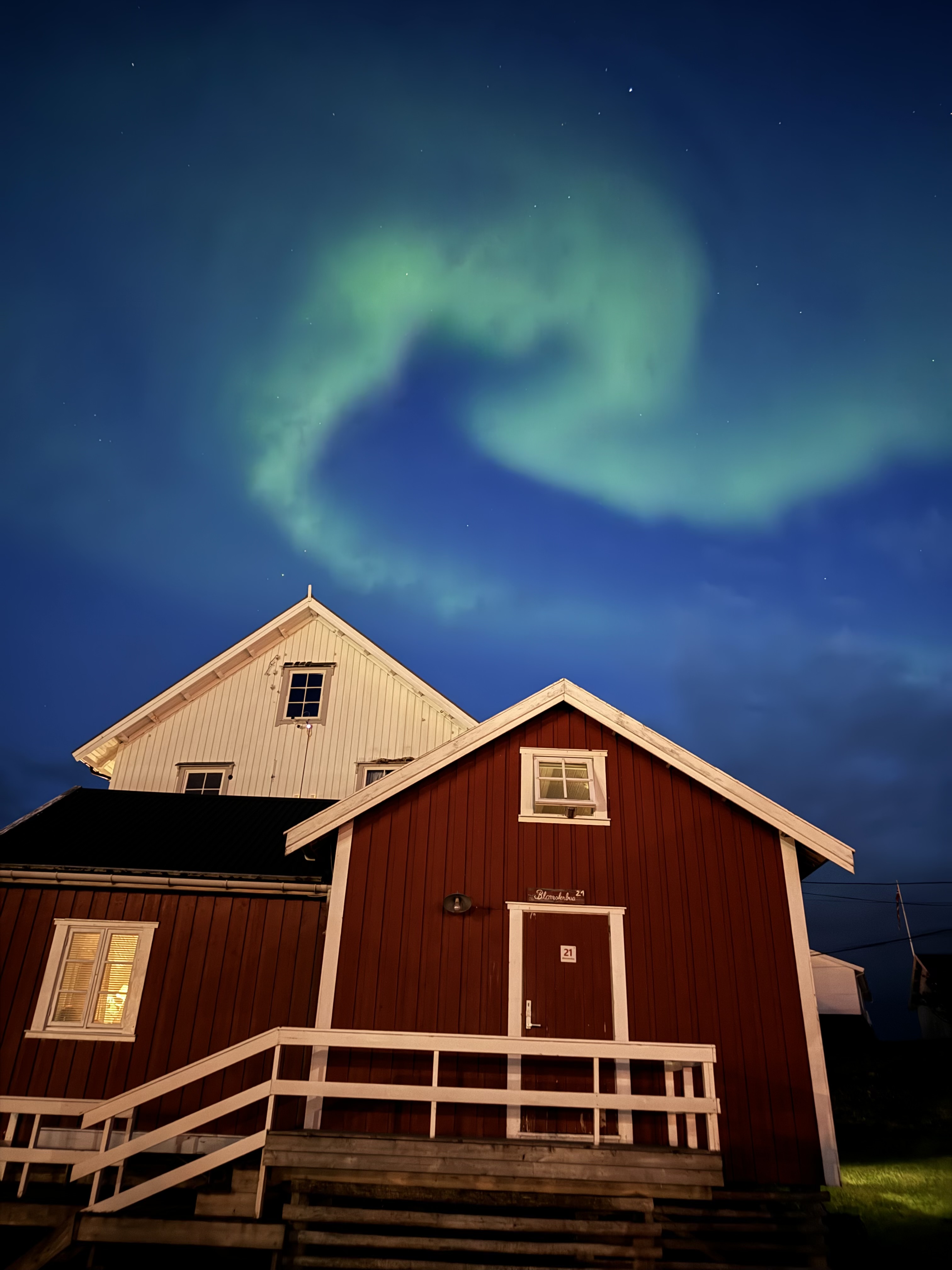
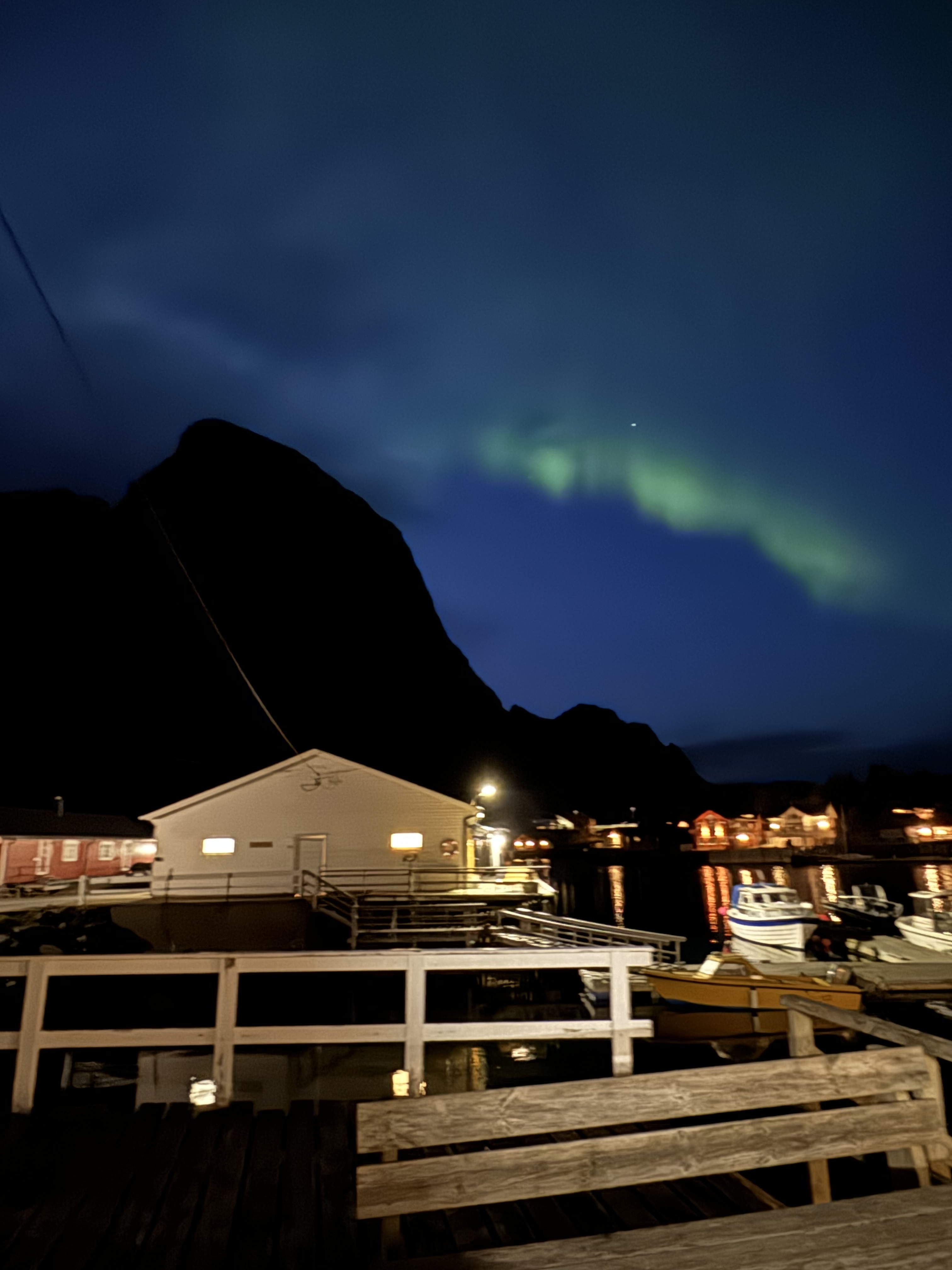
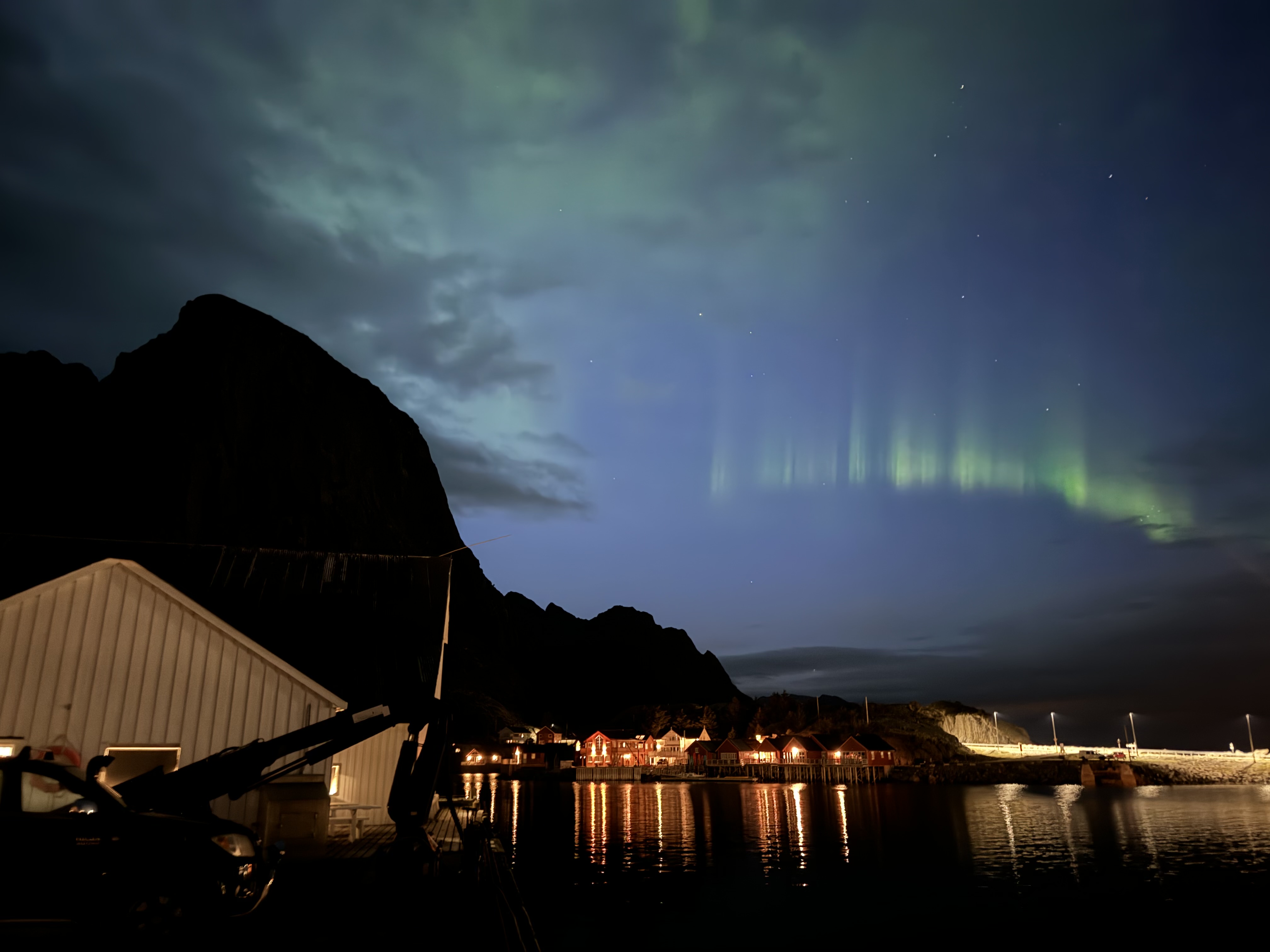
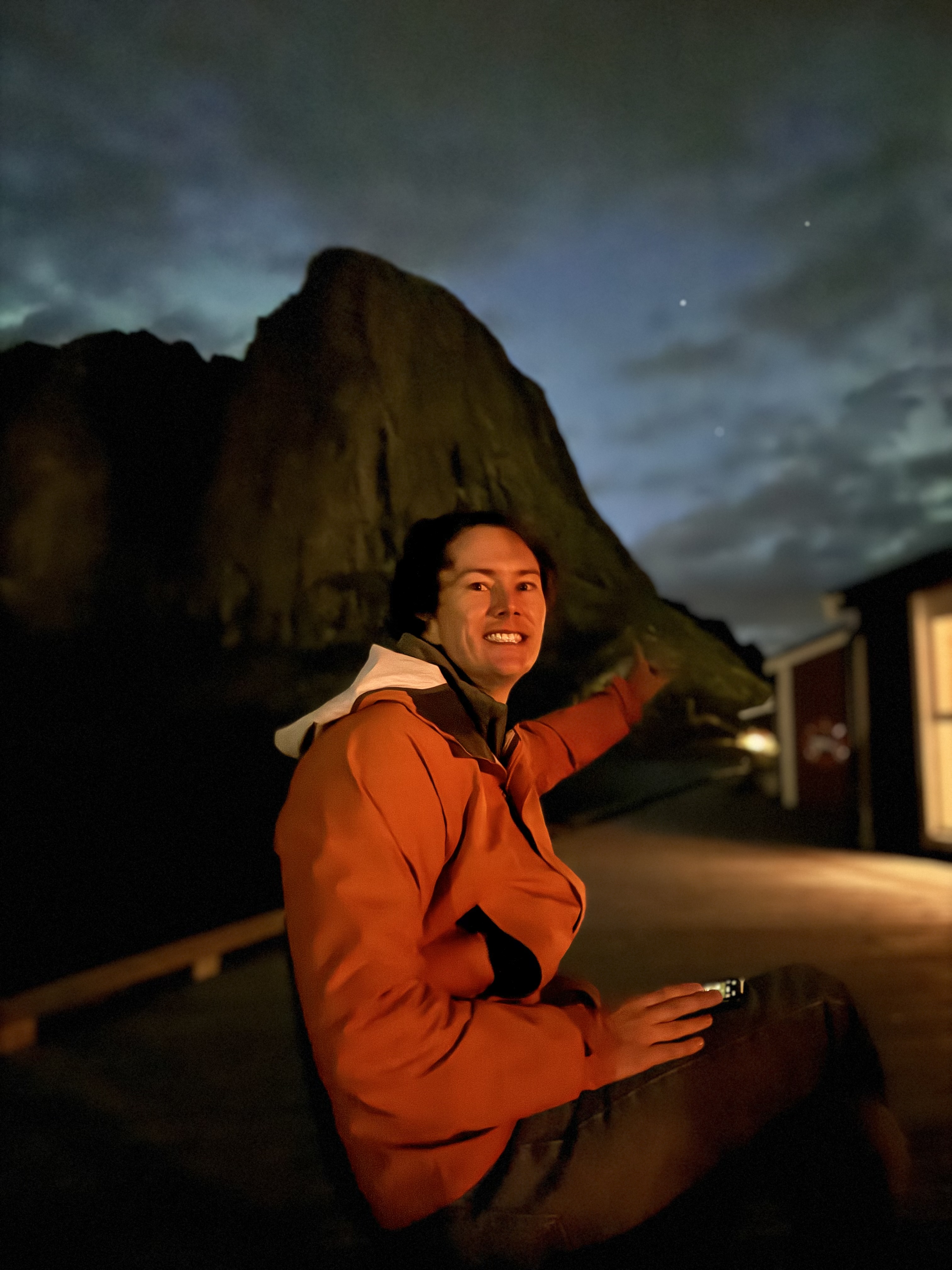
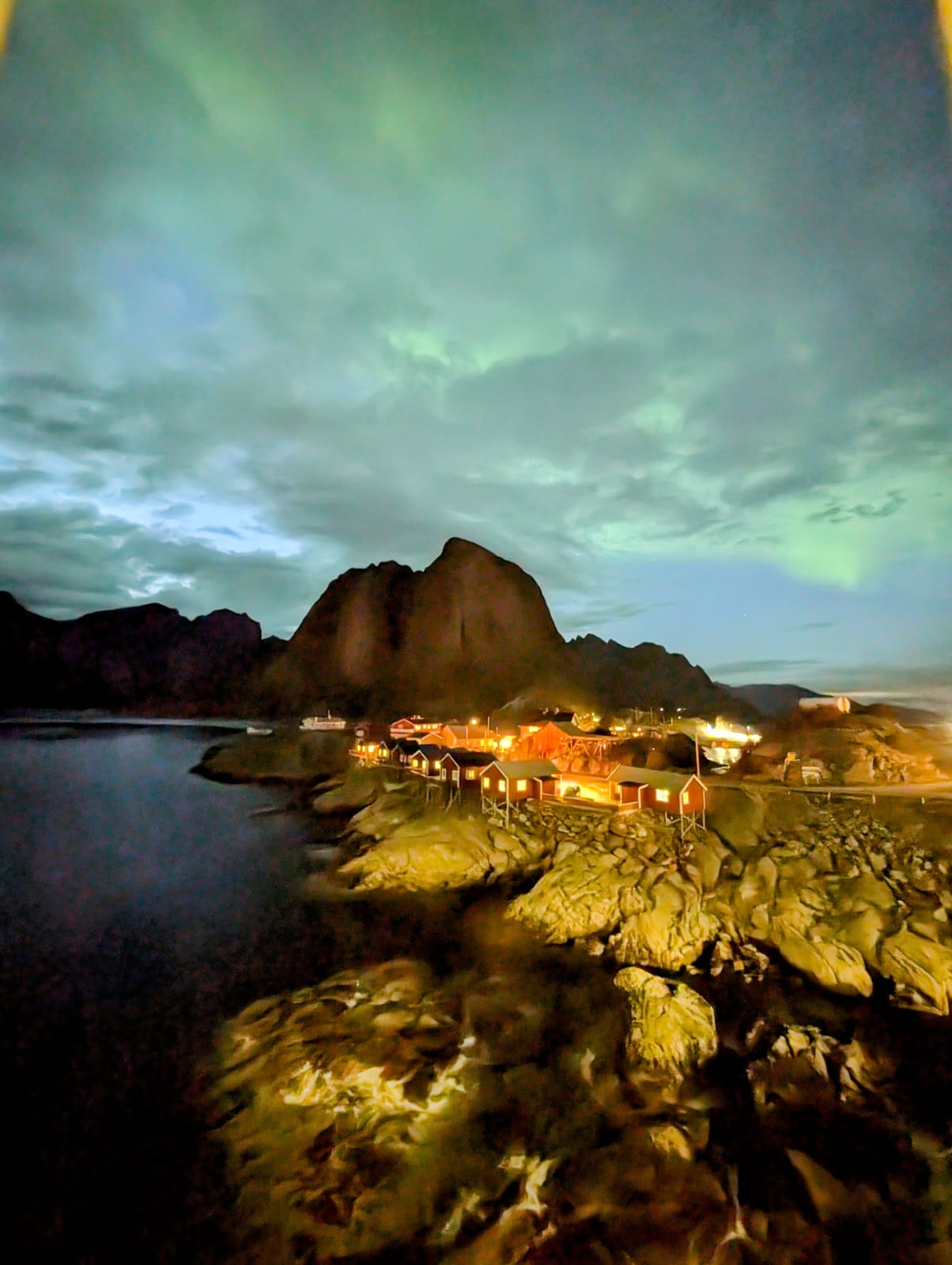
As if this wasn’t the perfect end to our day, we happened to look up on our walk back to our room and saw Northern Lights in the sky. They were definitely faint but still visible to the naked eye, and beautifully enhanced in our cameras. Excited at the possibility of seeing more, despite all the cloud coverage, we spent the next few minutes running around the village, chasing the lights before they disappeared behind the clouds. We ended up bringing chairs from our room outside and “patrolled” the skies for signs of more aurora, but unfortunately the rest of the night was predicting high cloud coverage. While we were lucky enough to see some lights, I’m already itching to come back in the winter and see more dancing lights in the long, clear night skies.



Day 4
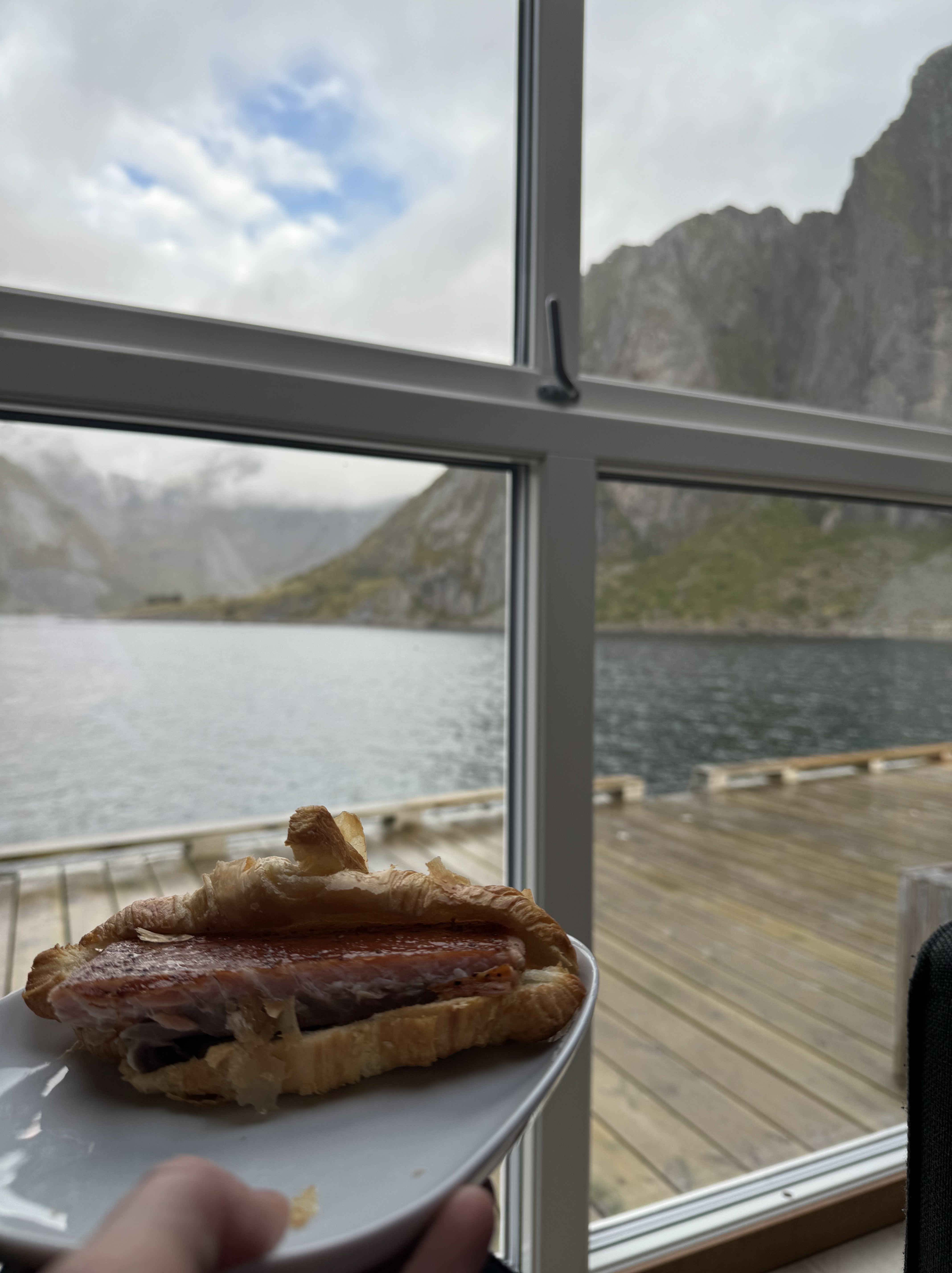
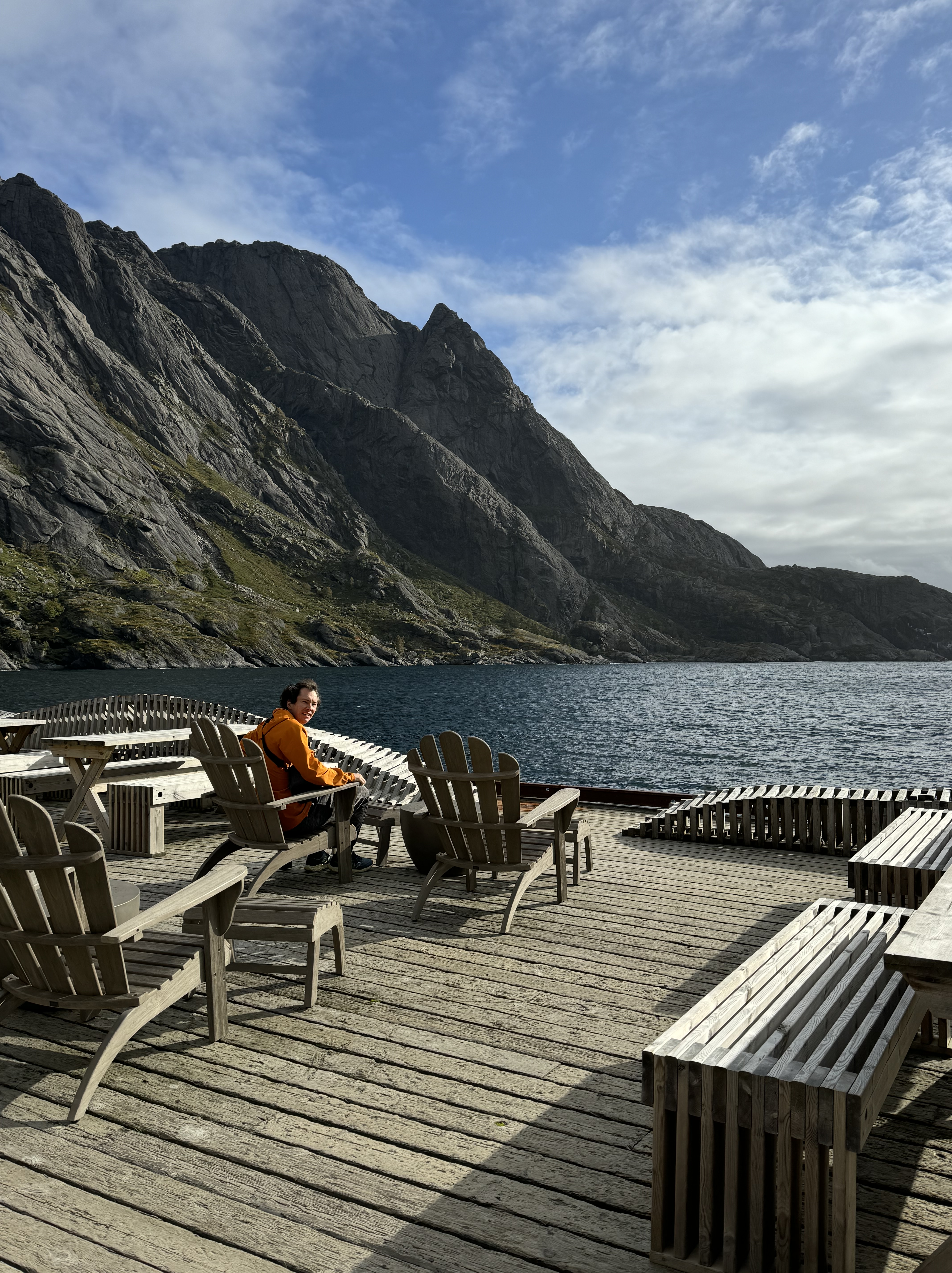
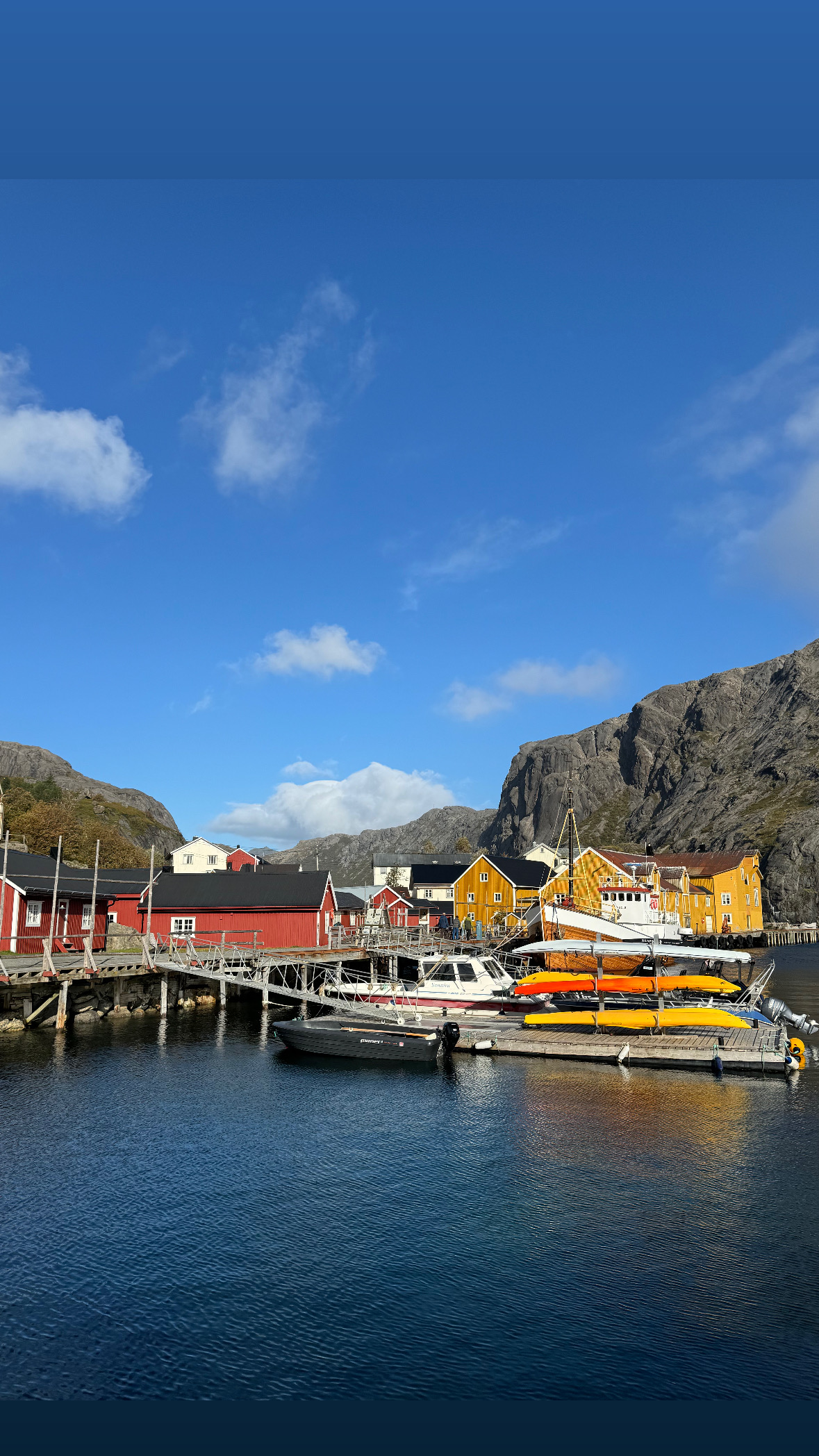
This was our last full day in Lofoten, where we meandered back east and eventually stay in Evenes for the night to catch our early morning flight back to Bergen. Worn out from our hikes the day before, we decided to sleep in a bit and have a slower day. The day started with making hot smoked salmon sandwiches (yes so much fish in the last three days) that we’d picked up from Anita’s earlier. After saying goodbye to the most scenic place we’d ever stayed, we continued on our journey, with our first stop at Nusfjord.
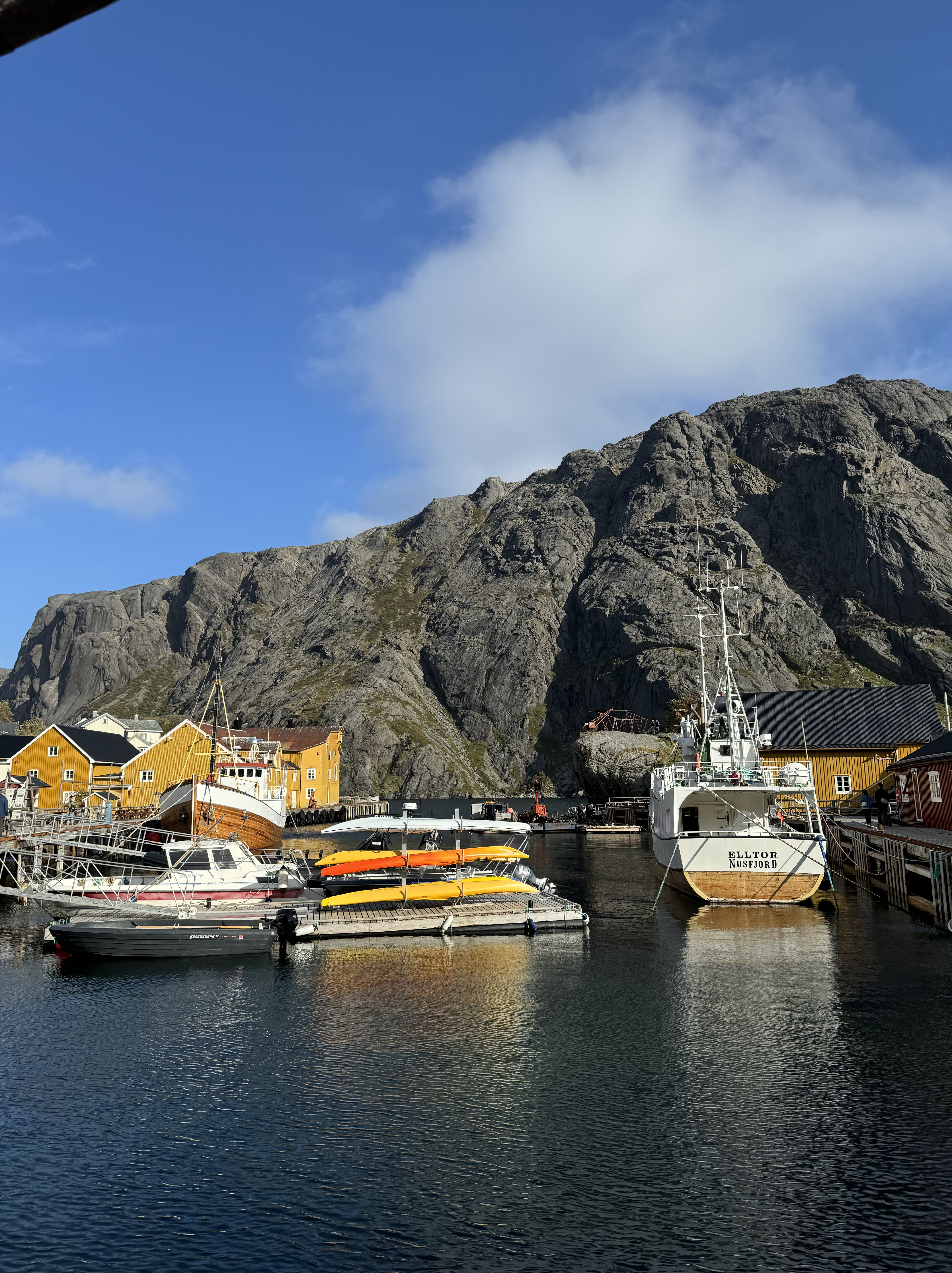
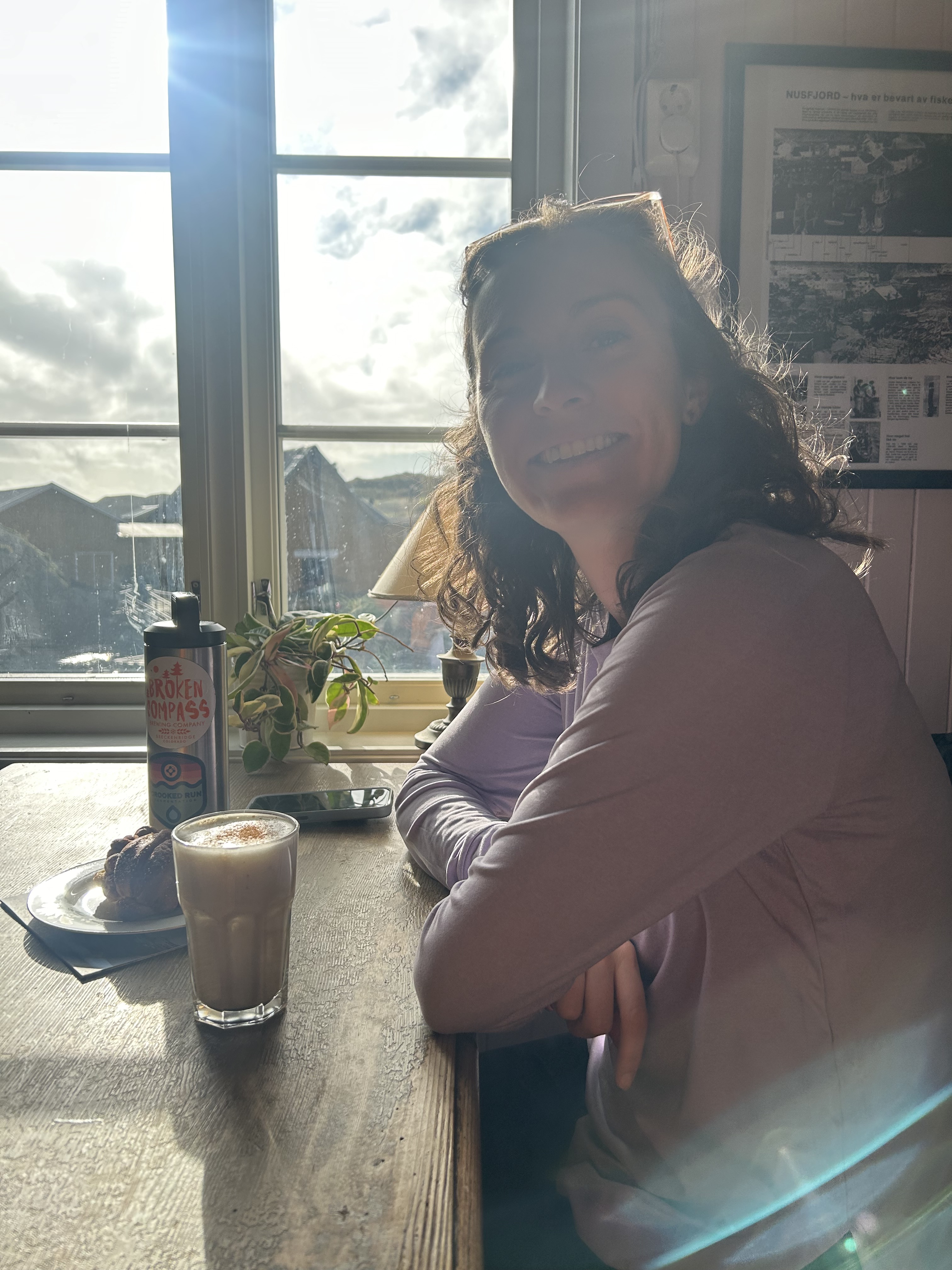
This was a small fishing community tucked a ways off the E10 (there are also rorbus here that we considered staying at). The whole village was a well-preserved, open museum, representing the livelihood of the community dating back centuries.
“Nusfjord is one of the oldest and best-preserved fishing villages in Lofoten. Today, the fishing village has 28 permanent residents, but at its peak, there were 500 boats and 1,500 men here during the annual ‘Lofotfiske’ fishing season. Not much has changed since that time.”
https://www.visitnorway.com/places-to-go/northern-norway/the-lofoten-islands/fishing-culture/
We made several more stops in Henningsvaer and Svolvær before making it to the airport hotel to catch our flight back to Bergen. Even though we were only in Lofoten for a few days, I’m so glad we decided to venture up there because it was one of the most magical places we’ve ever been.

 Tiff & Jared's adventures
Leave a comment