Mont Saint-Michel
I’ve mentioned this in a previous post, but this trip was definitely one of the most go-go-go ones we’ve done in a while. There were places we wanted to add to the itinerary that we simply could not when we were planning, like Mont Saint-Michel, a tidal island in Normandy, France and probably one of the most unique, fantastical places to visit among all the places we’d be on this trip. But – Jared and I are ambitious people. Over a 9PM dinner in Bruges, with a twinkle in his eye, Jared asked how crazy it would be if we drove six hours to Mont Saint-Michel the next day (we were already driving about 5 hours to Bayeux so not much crazier). Replying “we’ll sleep when we’re dead”, the plan was set for the morning.
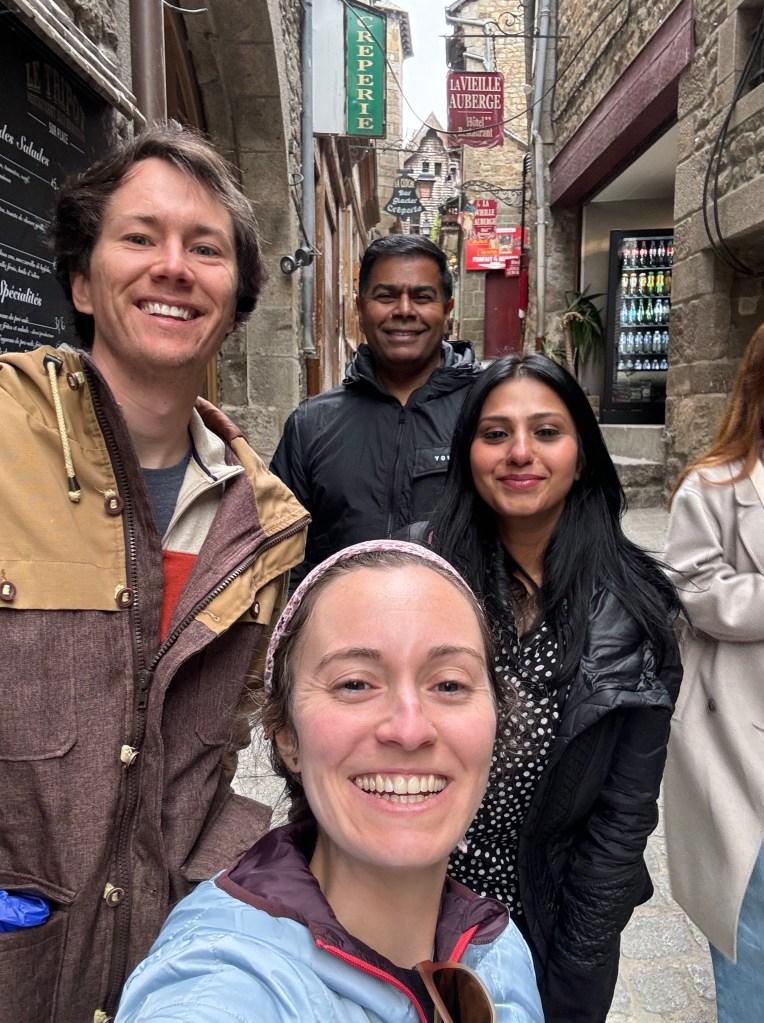
Waking up and walking around the quiet streets of Bruges, we got a tasty breakfast (fresh squeezed juice – needed this) and hit the road to the French island. This is where the story gets even nuttier – one of my coworkers was on a trip with her husband and we had been texting throughout our travels. Turns out, we were going to arriving at Mont Saint-Michel around the same time!
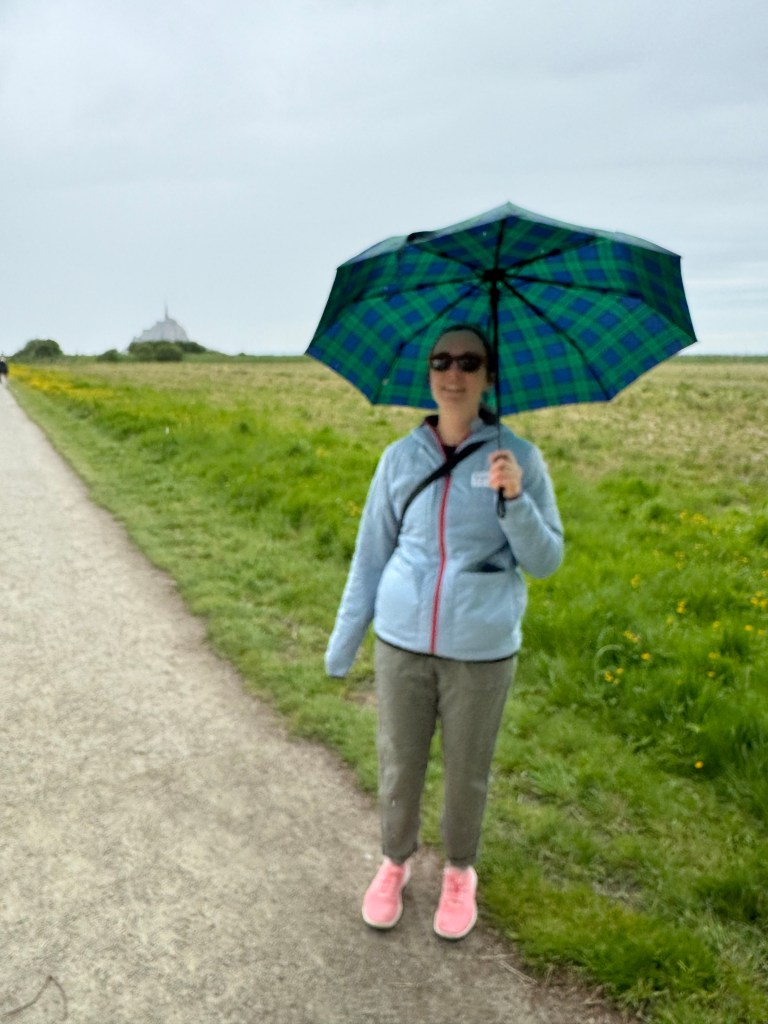
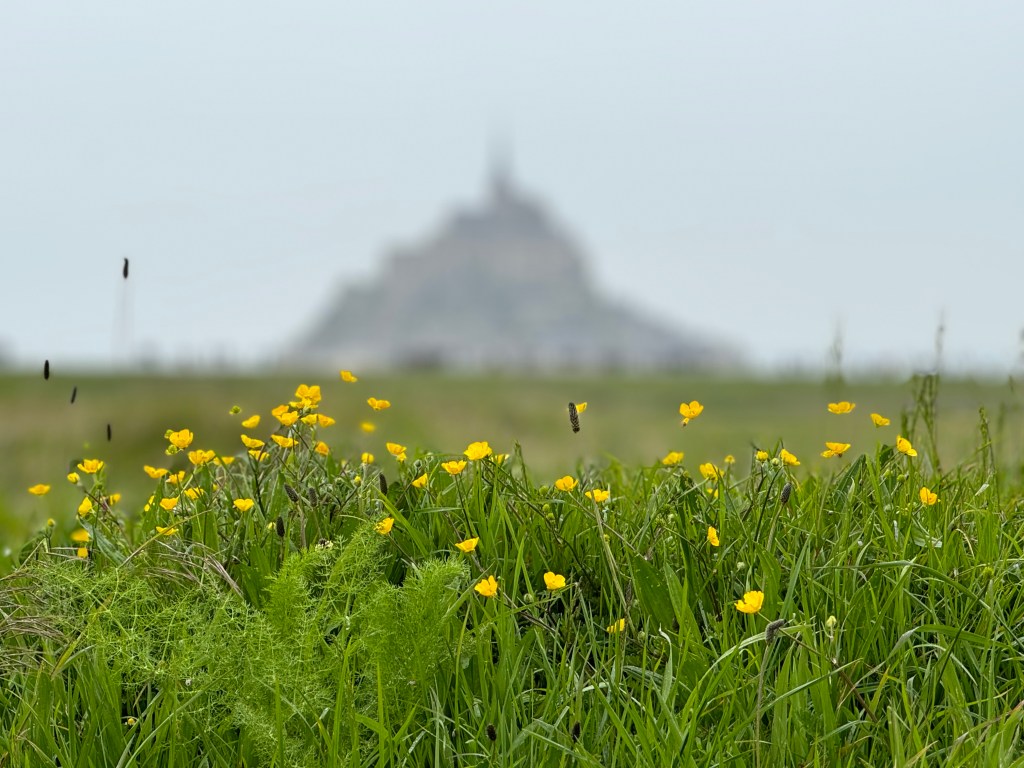
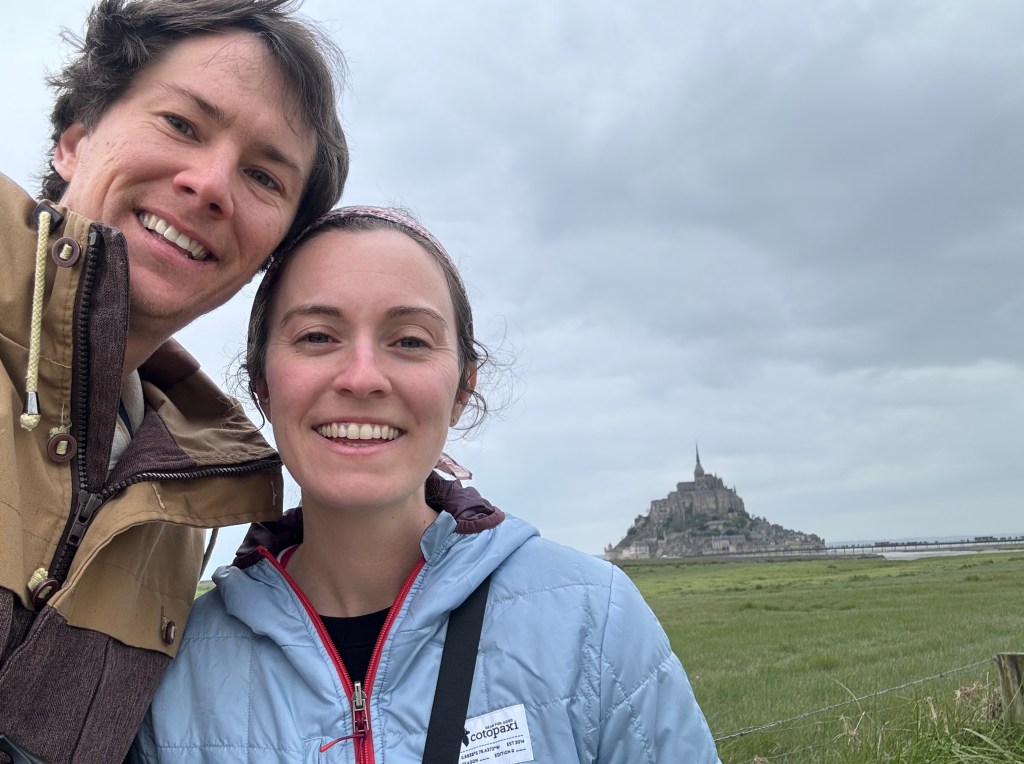
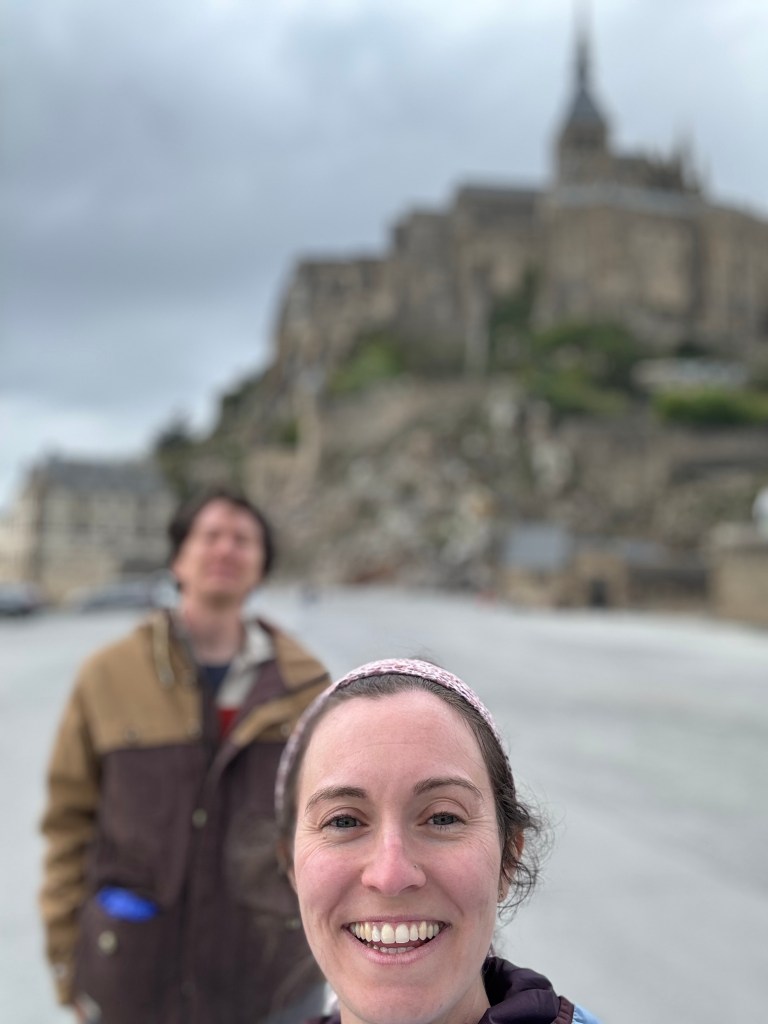
Arriving right around 2PM and meeting an overcast, slightly drizzling sky, we parked our car and geared up for the ~30 minute walk to the island. (Alternatively, there is a shuttle from the parking lot to the island but the walk is cool because you slowly move closer and closer to the island and see it stretch out before your eyes.)
Now – what the heck is Mont Saint-Michel you ask?!
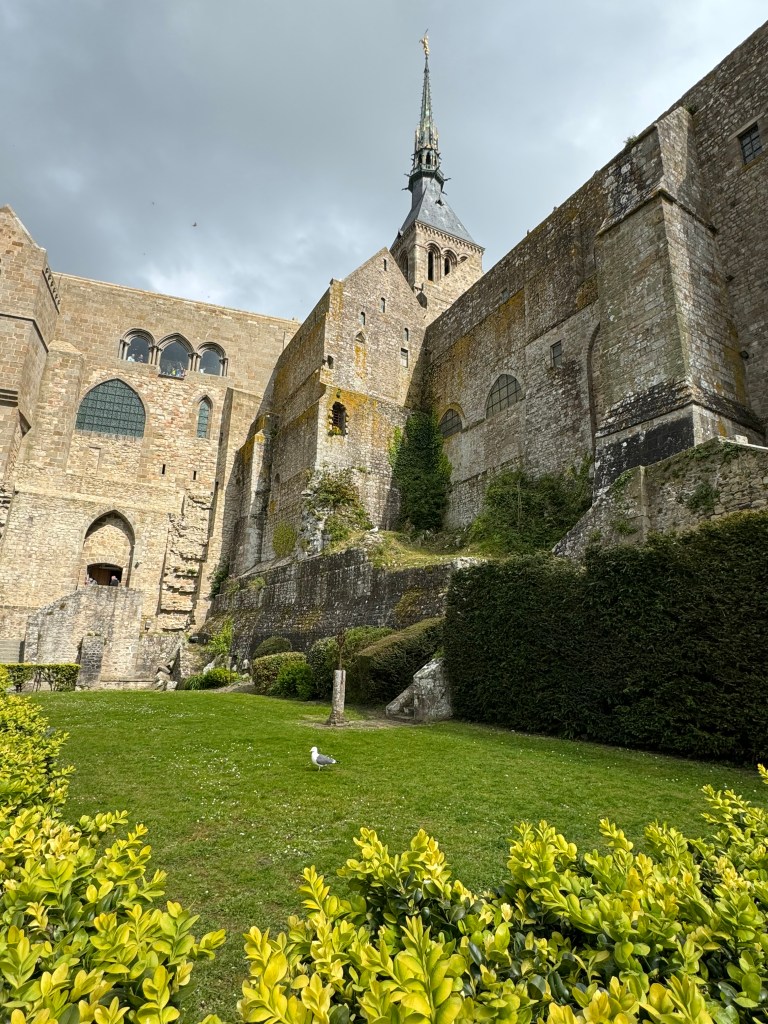
A magical island with a village and 1,000 year-old abbey sitting atop a rock, Mont Saint-Michel was inscribed on the UNESCO list of World Heritage Sites in 1979 for “its unique aesthetic and importance as a catholic site”. The site is absolutely stunning to behold, especially as the surrounding area is so flat, and also the vista changes as the bay fluctuates between low and high tide. Not only is the spiritual significance worth mentioning, but also the miraculous feat of architecture that was completed over 10 centuries ago was simply mind-blowing.
The below timeline is sourced from this website and this website, as well as the map we received at Mont Saint-Michel.
708: The archangel Michael appeared in a dream-vision to Saint Aubert, bishop of Avranches, and asked him to build a sanctuary in his name.
966: A community of Benedictines established itself and built the first church. At the same time, a village began to develop below the Mount to welcome the first pilgrims.
Middle Ages to 1860: Strategic location led to defensive fortifications. Mont Saint-Michel became a prison during King Louis XI’s reign, and later during the French Revolution.
In the 11th century, four crypts and a large abbey church are built.
In the 13th century begins the construction of the Merveille, two buildings of three floors, crowned by the cloisters and the refectory of the monks.
The Hundred Years’ War (1337-1453) made it necessary to protect the island by a set of military constructions that allowed it to withstand a siege of almost 30 years.
1874: The service of The Historic Monuments restored the building and opened it to the public.
1922 – 1966: Restoration efforts began in 1922, and by 1966, the abbey sees the return of a community.
1979: UNESCO added Mont Saint-Michel and its bay to its list of World Heritage sites.
2006 – 2015: Construction made it possible to provide access to the site in a better way to preserve the island’s nature, with over 3 million visitors annually.
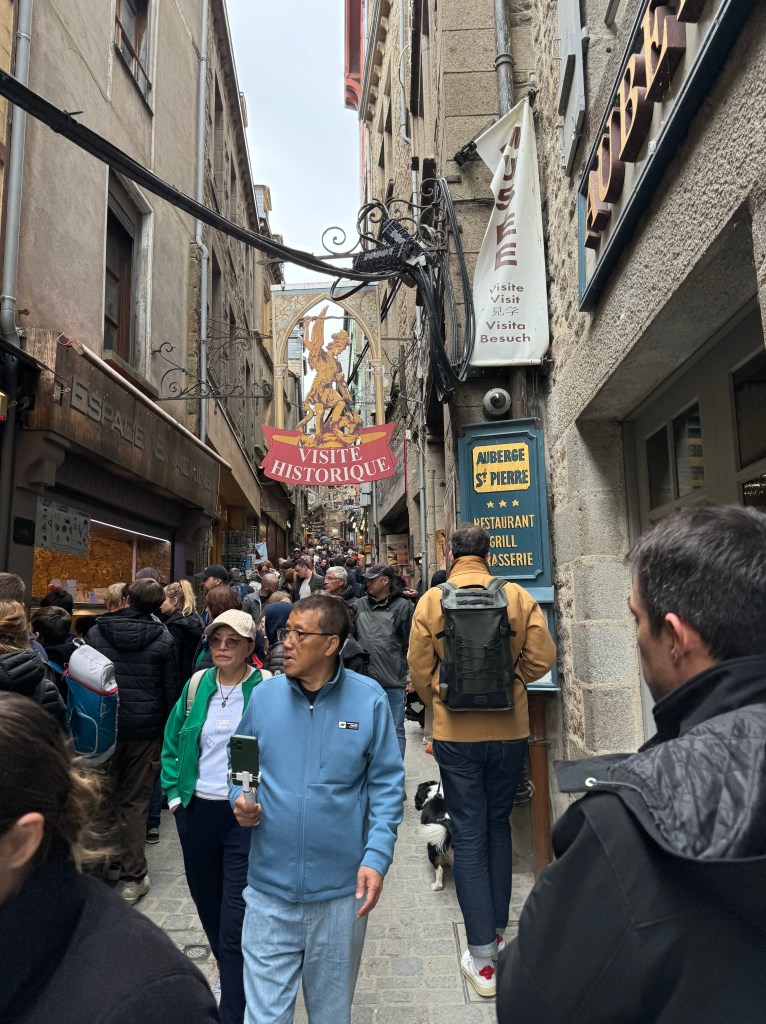
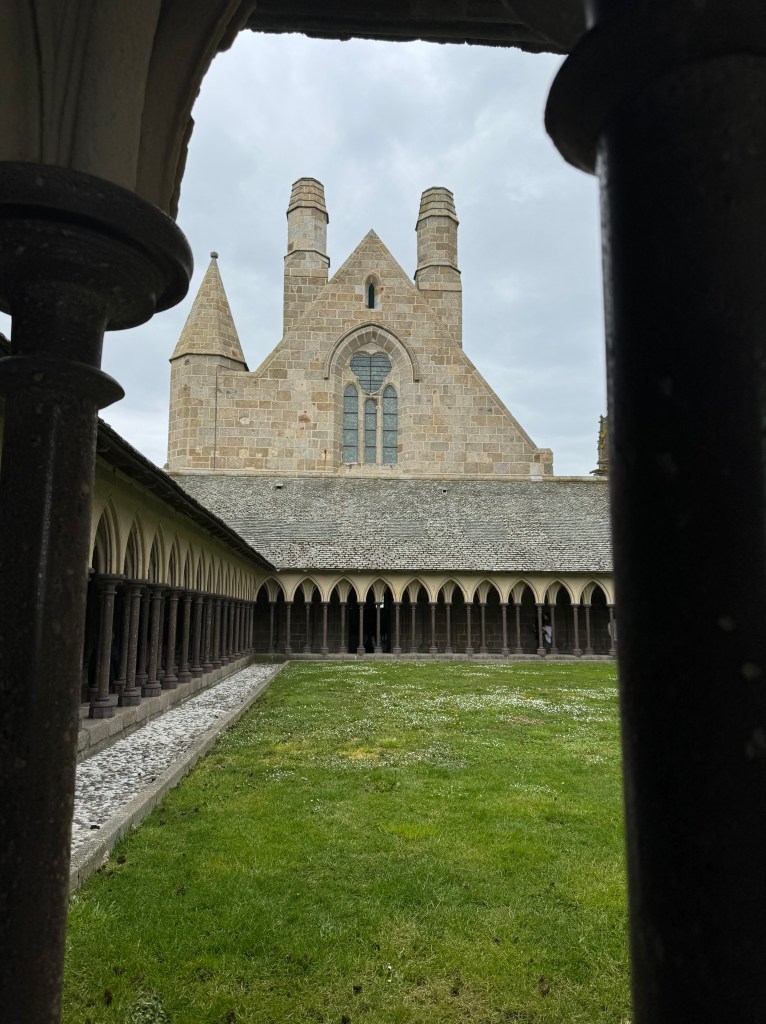
The walk up to the island was beautiful, but it was definitely a busy day. I can’t imagine what it would be during high tide and peak summer! We walked in through the village’s main entrance, and were greeted with the main street, La Grande Rue, lined with a bunch of shops and restaurants (a little touristy for my taste for such a historic and important place). However, we had to walk up the main street in order to get to the abbey, sitting atop the island. Luckily we bought our abbey entrance tickets in advance, so didn’t have to wait in the long queue. We picked up a pamphlet of the abbey, and proceeded on our self-guided walking tour (some of the facts below are sourced from noted pamphlet).

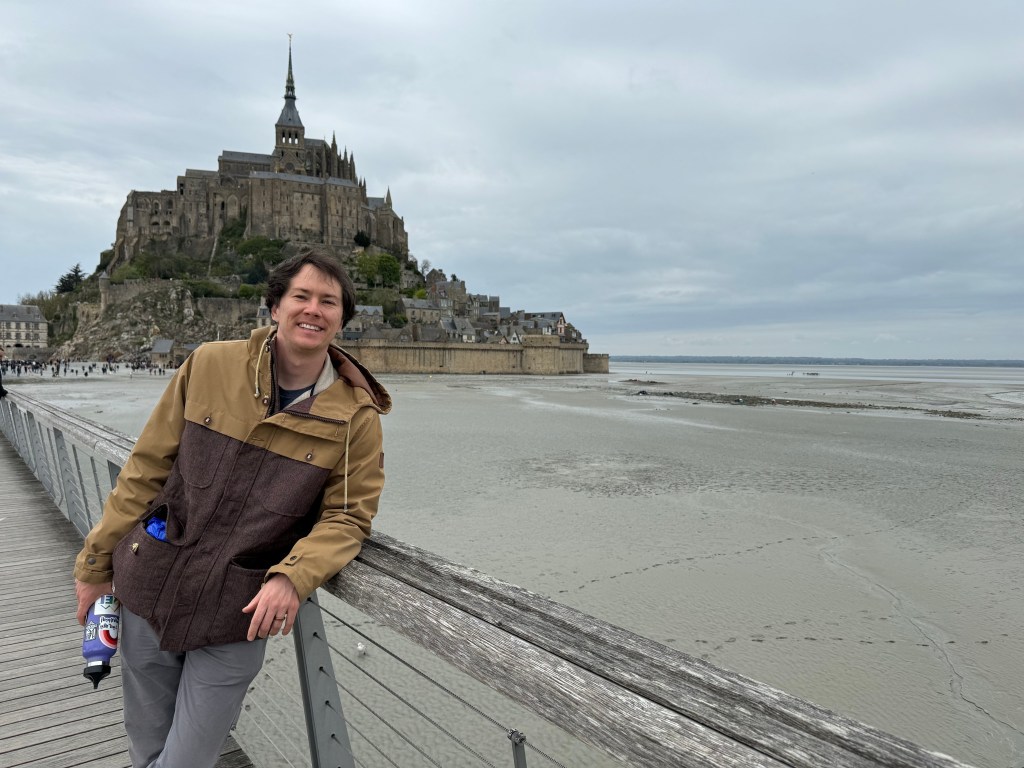
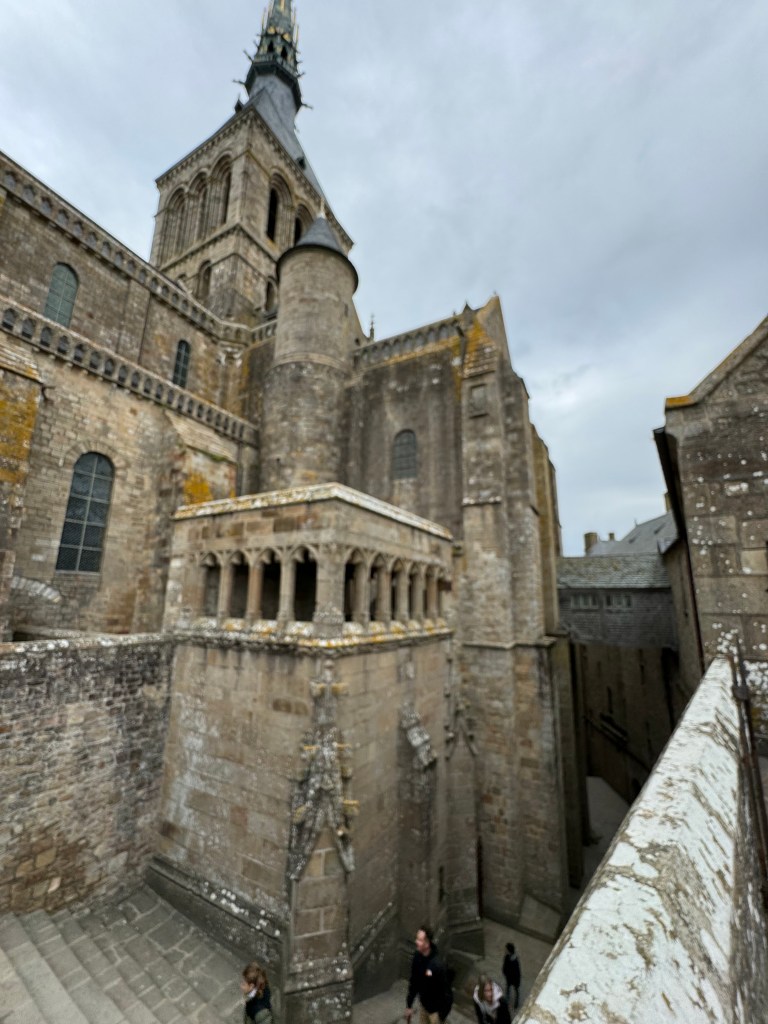
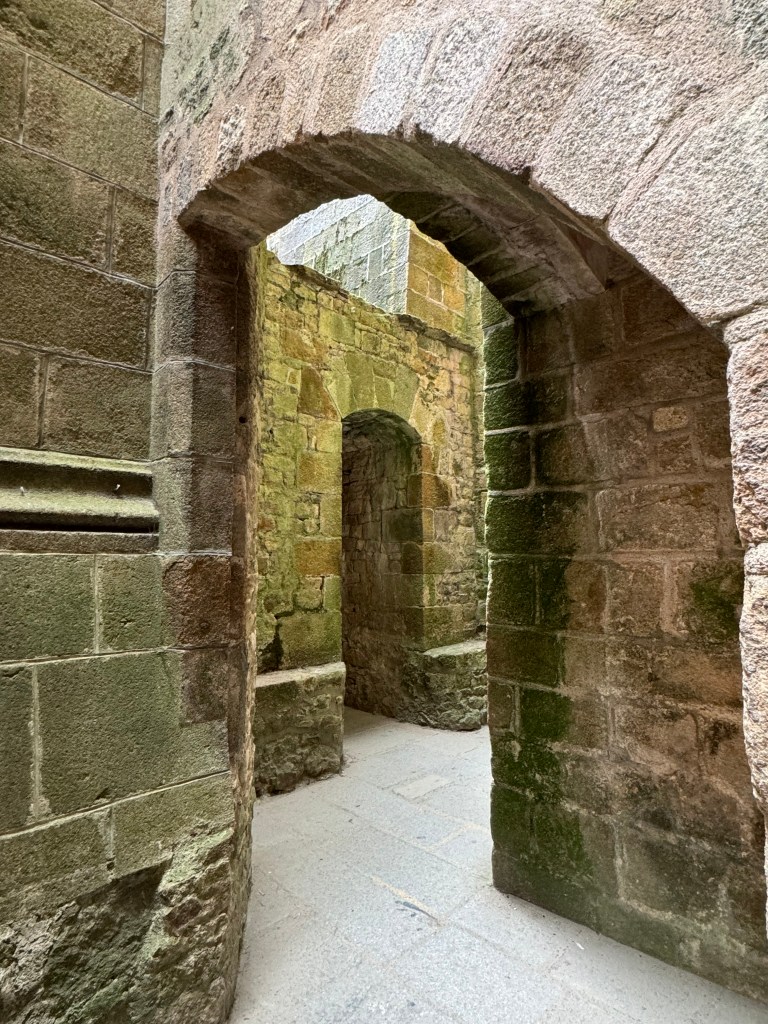
We walked through the multiple levels of the abbey, learning about its construction and various rooms. For instance, “its architectural plans were limited by the constraints of the pyramidal shape of the mount upon which it sat, forcing the medieval builders to wrap the buildings around the granite rock. The abbey church, situated on the top, stands on crypts that create a platform designed to take the weight of a church 80 meters long.”
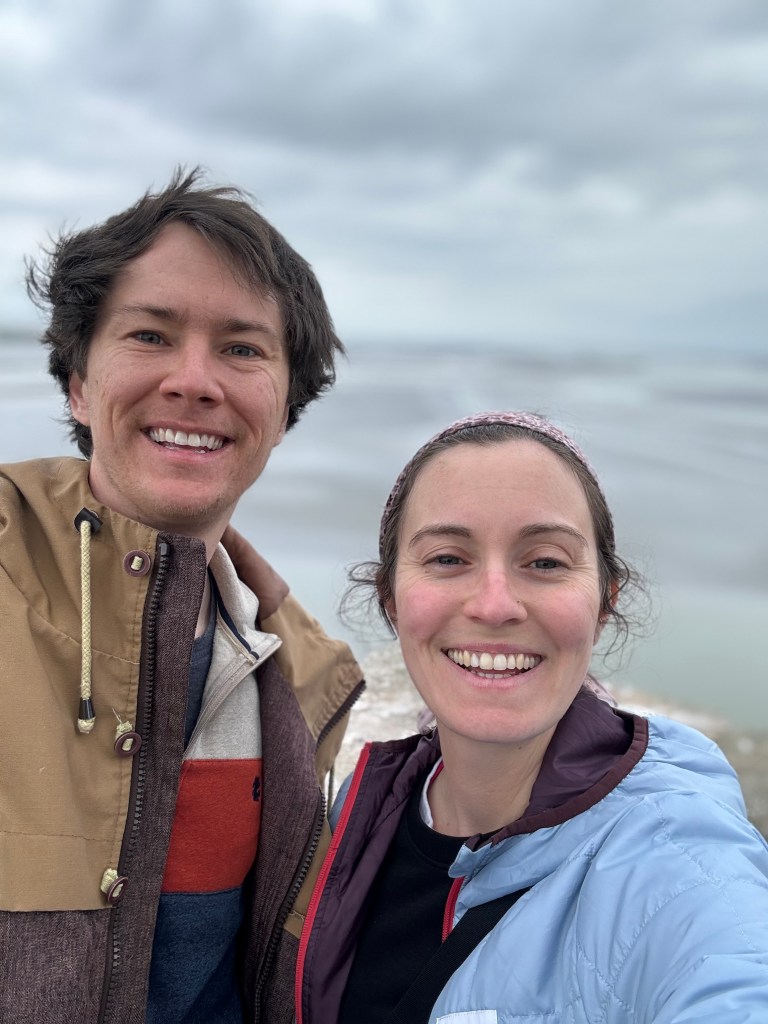
After walking through all of the various rooms of the abbey, we exited out and walked along the outer walls of the village, looking out over the bay. We ended up meeting my friend and her husband for drinks with a beautiful view of the low tide, then had to head out towards Bayeux for our Airbnb reservation, because the next day, we had a 1/2 day D-Day tour planned in Normandy.





D-Day Tour in Normandy
When we were planning this trip, knowing how much we were trying to pack into such a short itinerary, I didn’t think it was neither feasible nor at the top of my list to go to Normandy and go on a tour of the D-Day beaches. However, this was important on Jared’s list and I’m glad we ended up choosing to do a 1/2 day tour. Our tour started in downtown Bayeux, where we boarded a shuttle with eight people and the tour guide, so it was an intimate tour with us and two other families. (For anyone interested, this is the tour we did https://www.overlordtour.com/product/tour-1-omaha-half-day-tour/)
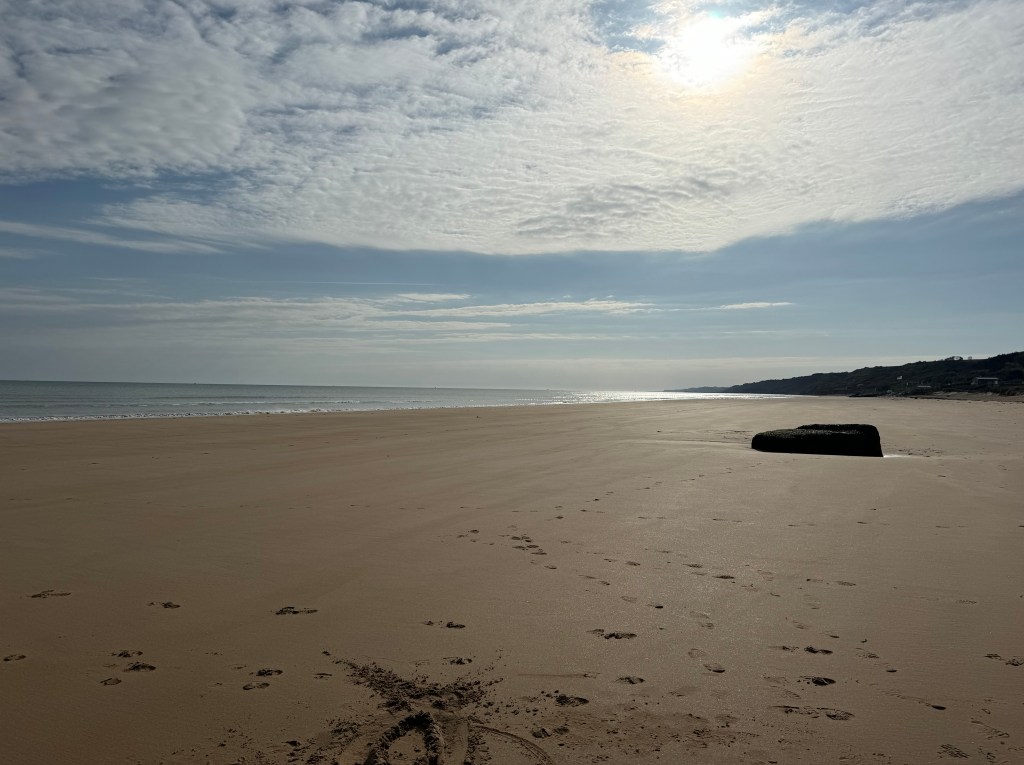
The tour started on Omaha Beach, where we learned some of the horrific yet inspiring history of the invasion landing on June 6th, 1944. We learned how the troops had so many obstacles in front of them, and how this landing, known as Bloody Omaha, was so much less fortunate than the other beach invasions. Some of the hurdles included a) the ocean being very tumultuous with waves up to six feet high as the Higgins boats were coming to shore, b) the fact that there were blockages on the beach put there by the Germans with the intent to sink our boats, and c) how it was low tide for much of the invasion so the US troops had to cover a large stretch of beach on foot before they found cover from which to hide from the German troops targeting them from above. The invasion started at 6:30AM, so the soldiers were battling exhaustion from the early morning and rough seas before even making it to shore and able to fight.

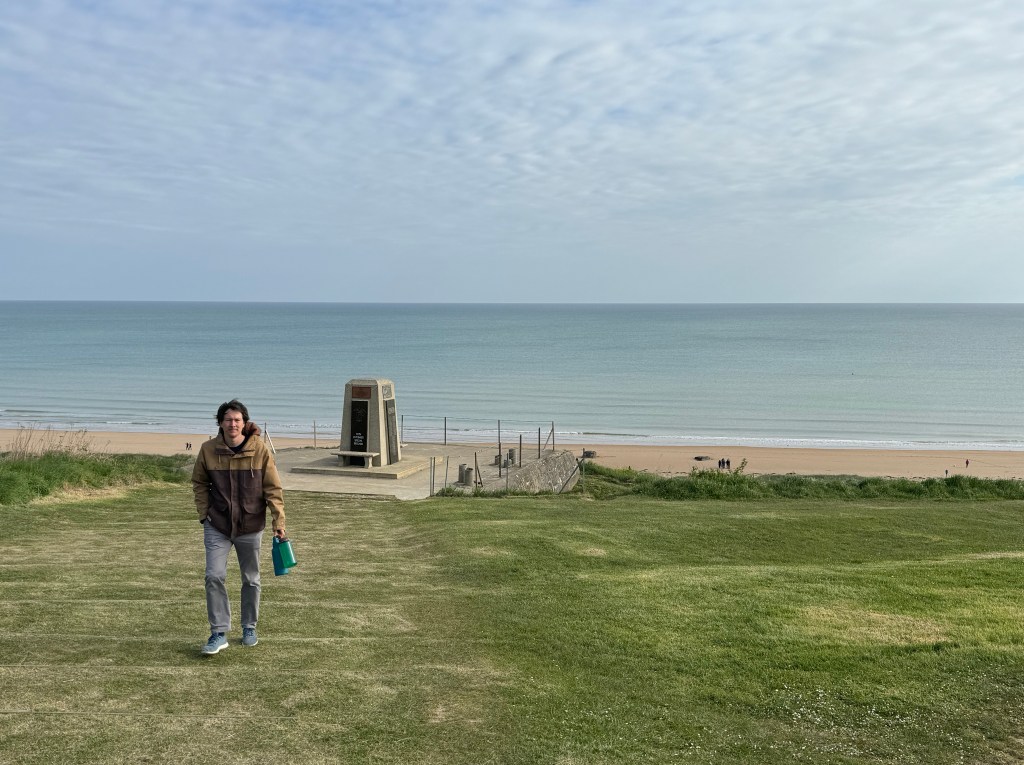

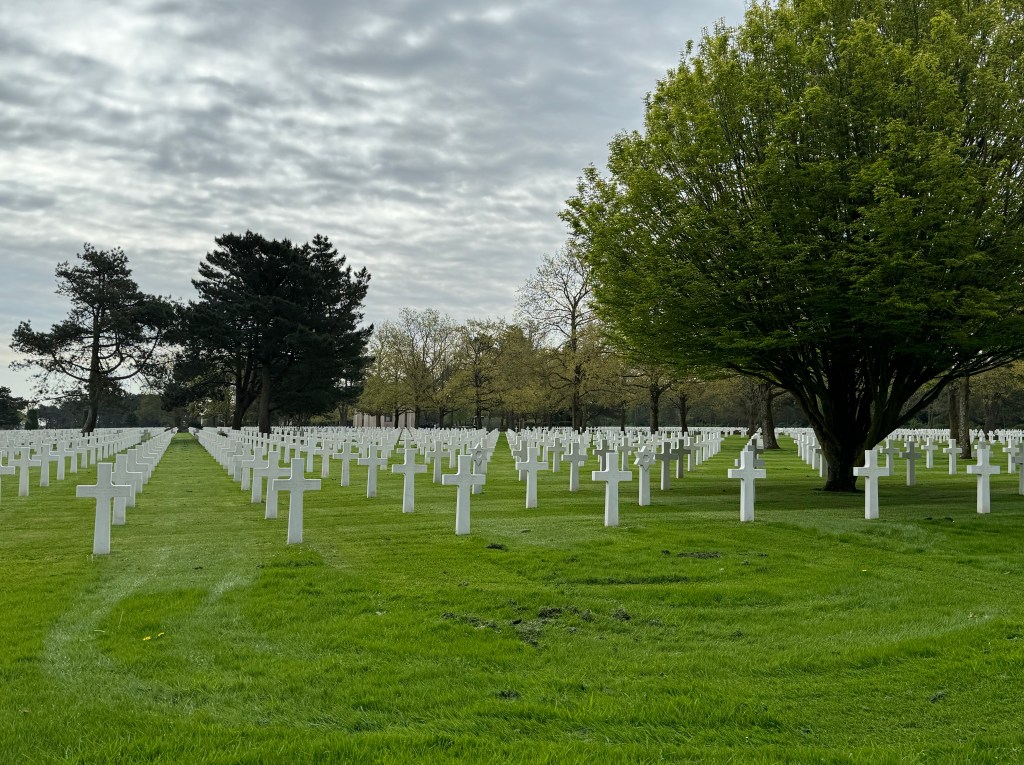
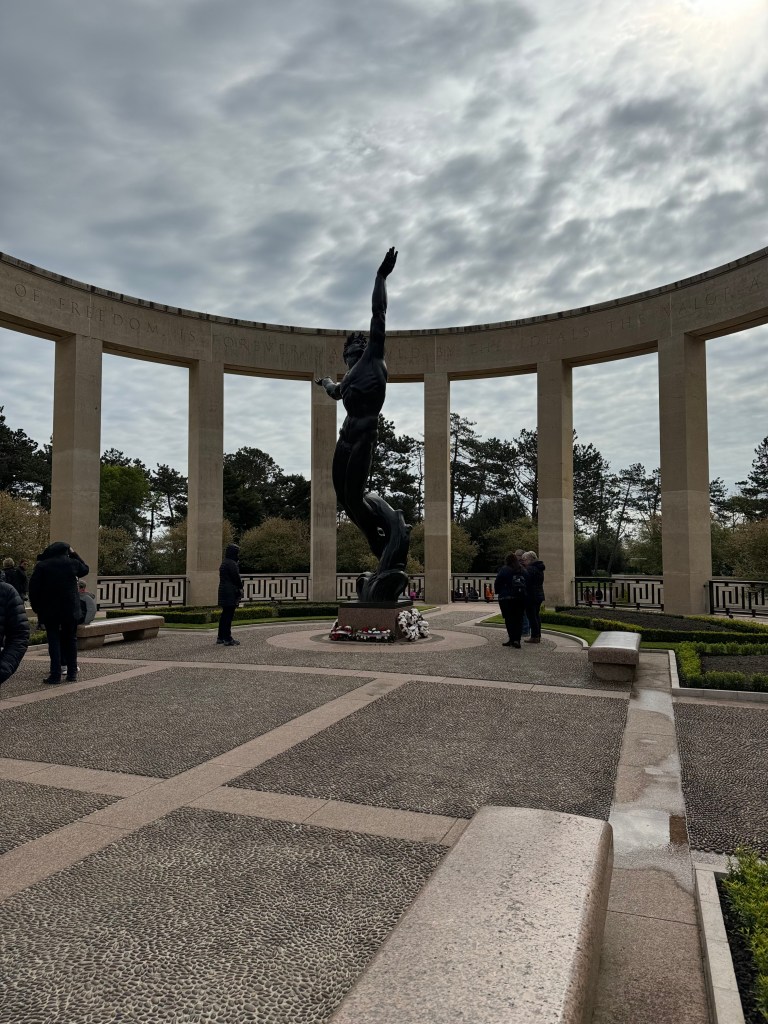
Next we went to the Normandy American Cemetery, established as the first American cemetery on European soil, where 9,387 graves mark the lives lost during the invasion and subsequent days. There is also a Walls of the Missing, of which the names of 1,557 soldiers are inscribed to represent those whose bodies were never recovered. Rosettes mark the names of those that have since been recovered and identified. There were some wild stories of soldiers’ bodies that continue to be discovered during the last few decades, including a farmer who was sowing his field and came across a fallen plane that was buried, or a renovation somewhere in France and some construction uncovered the body of a fallen soldier who had likely been wounded and hidden by his friends during battle. The cemetery was somber but beautifully kept, and was being kept up extra nice for the 80th anniversary coming up on June 6th, 2024.
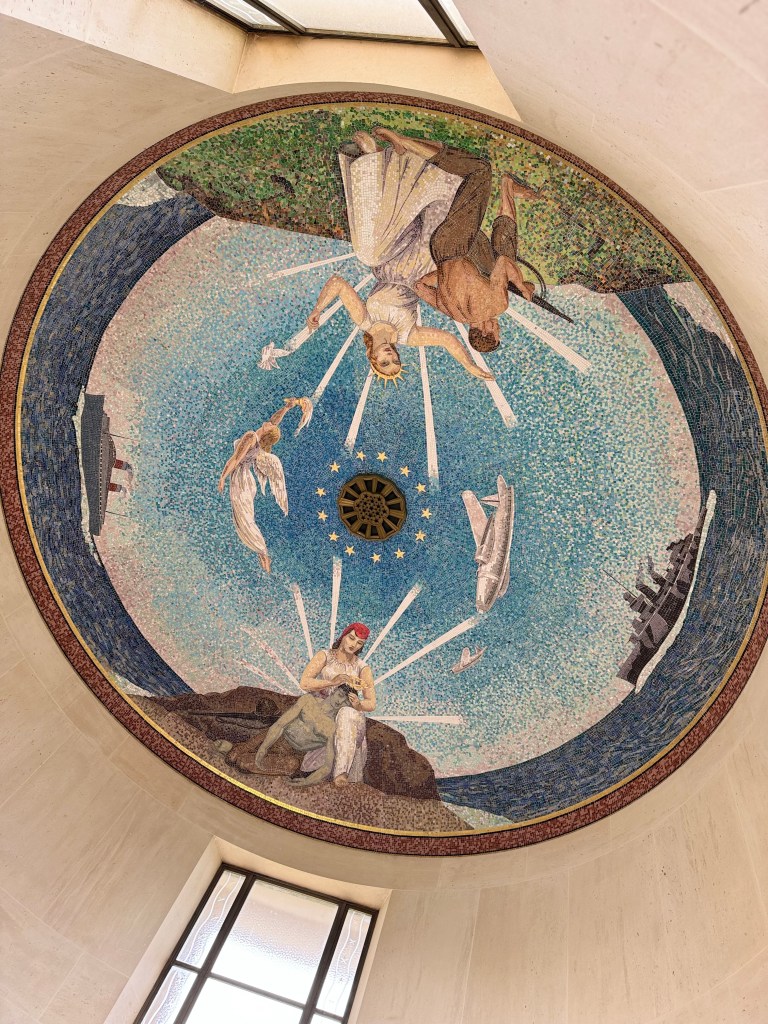
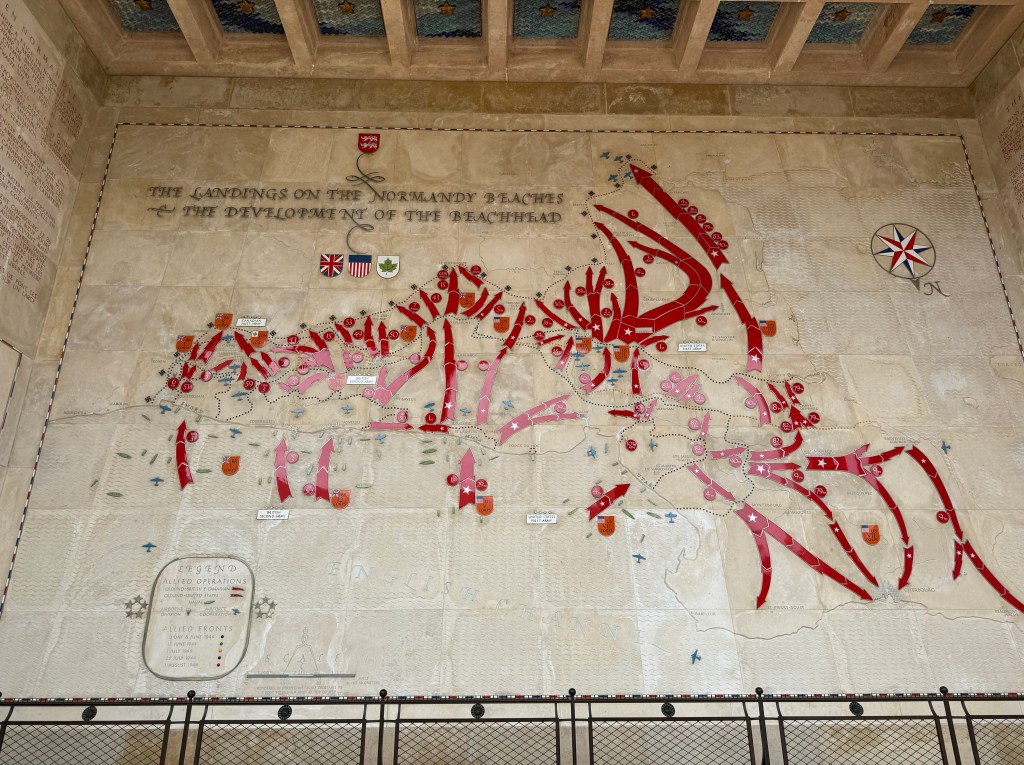
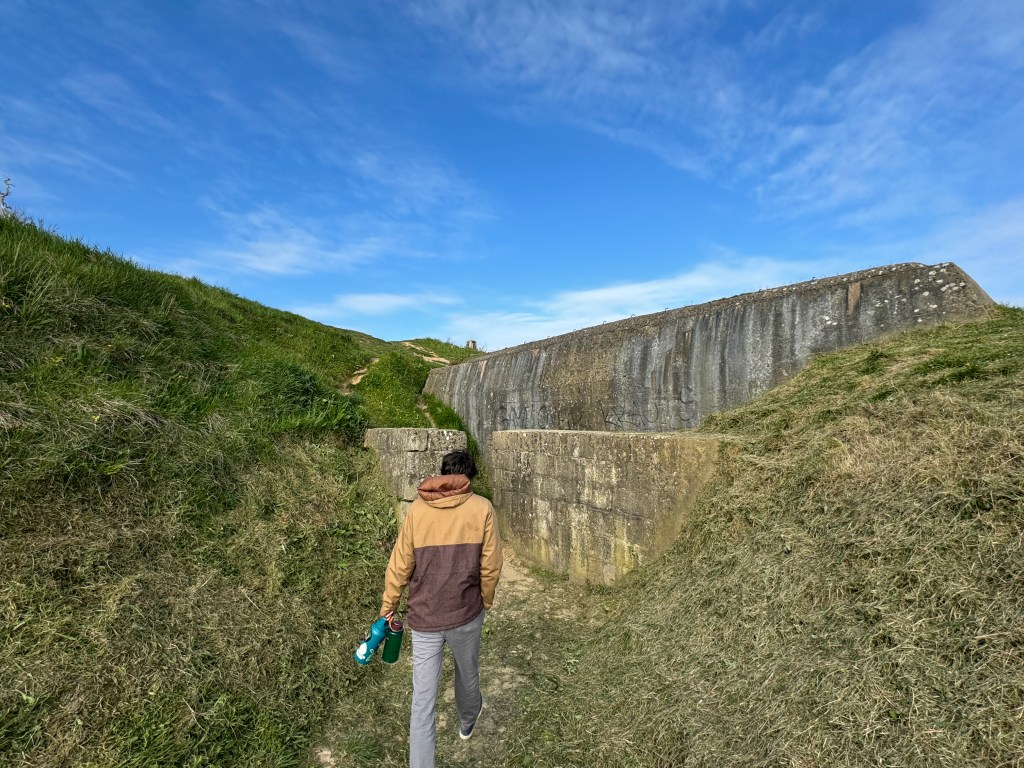
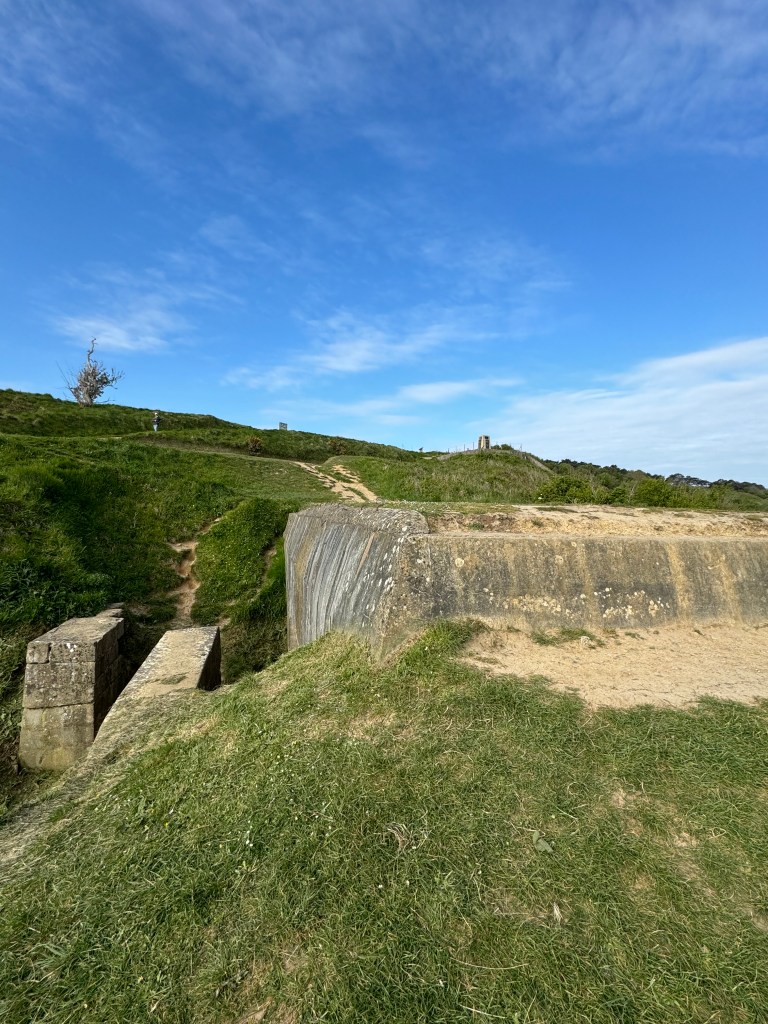
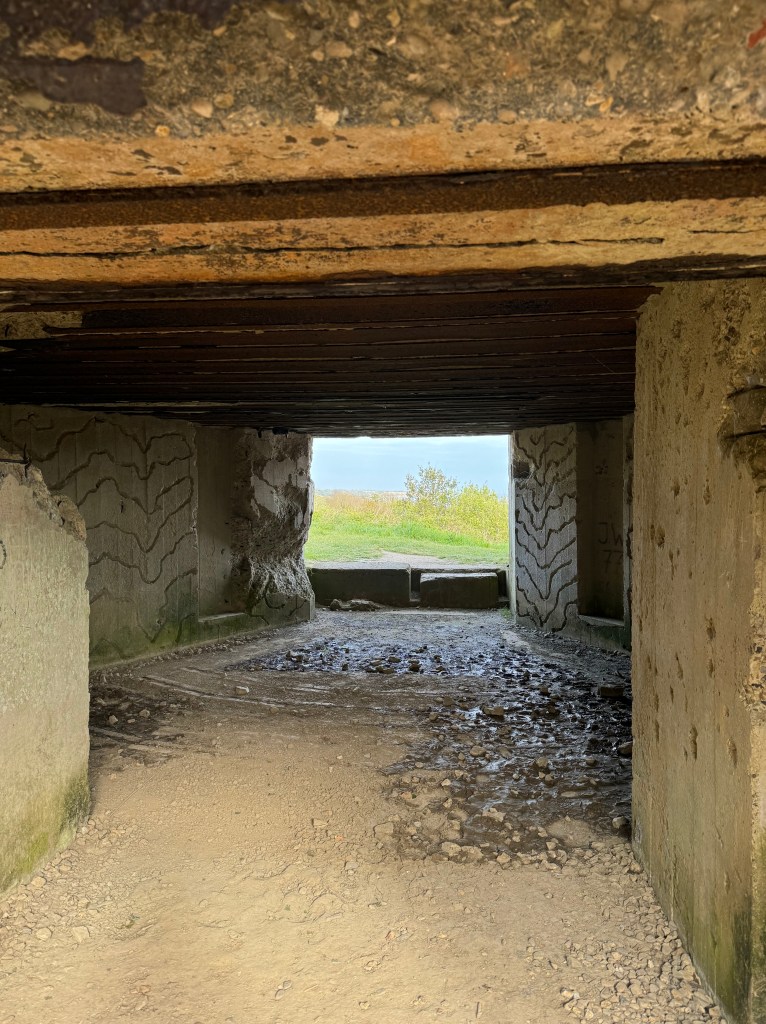
Finally, the tour wrapped up at Pointe du Hoc, a prominent position along the Normandy coast, situated between Omaha and Utah beaches. In the early hours of June 6th, “Rudder’s Rangers”, a group of about 220 rangers, were tasked with the near impossible mission of scaling the 100-foot tall cliffs of Pointe du Hoc and neutralizing the German artillery so it couldn’t fire upon American troops. We heard some crazy stories of the mission, including setbacks faced by the rangers, some paratroopers that had landed far from their drop zone and ended up joining the mission, and the rangers’ sheer grit of climbing the cliff by using their army knives and ropes. All in all, from the 220+ rangers that were part of the mission, only about 90 remained at the end. However, with a high cost of life, the troops successfully completed this impossible mission and took Allied control of Pointe du Hoc.
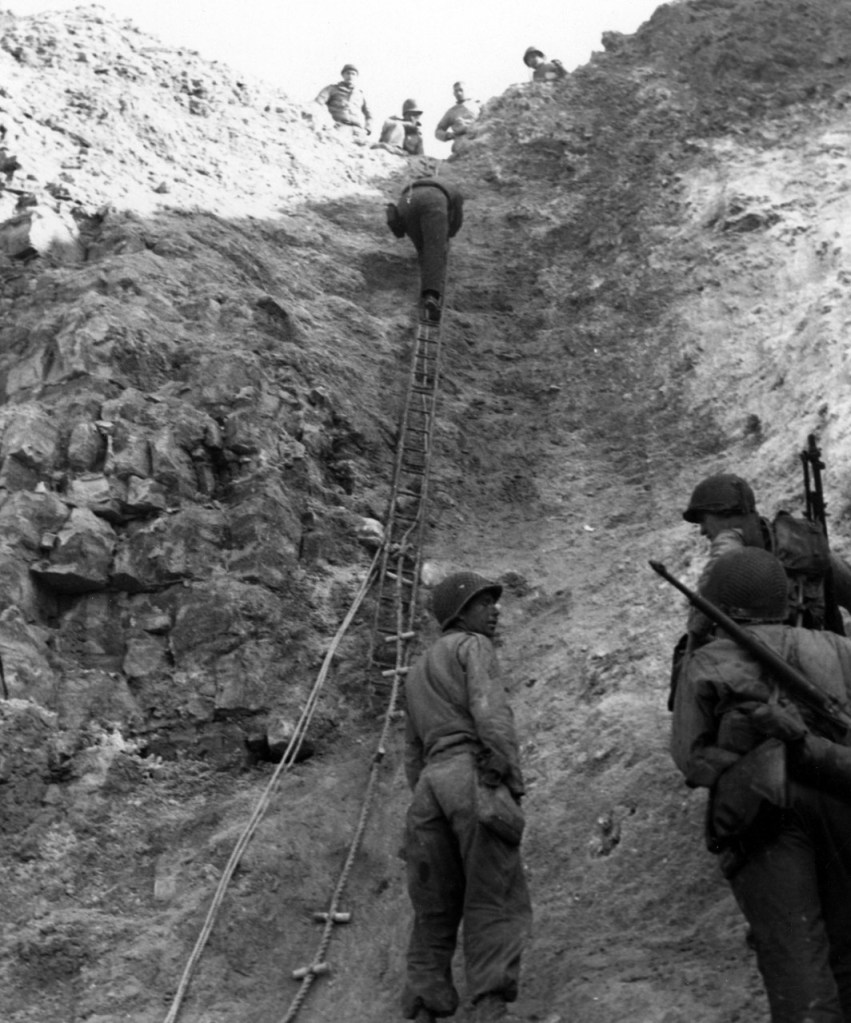
U.S. Army Rangers show off the ladders they used to storm the cliffs at Pointe du Hoc, which they assaulted in support of Omaha Beach landings on D-Day, 6 June 1944.

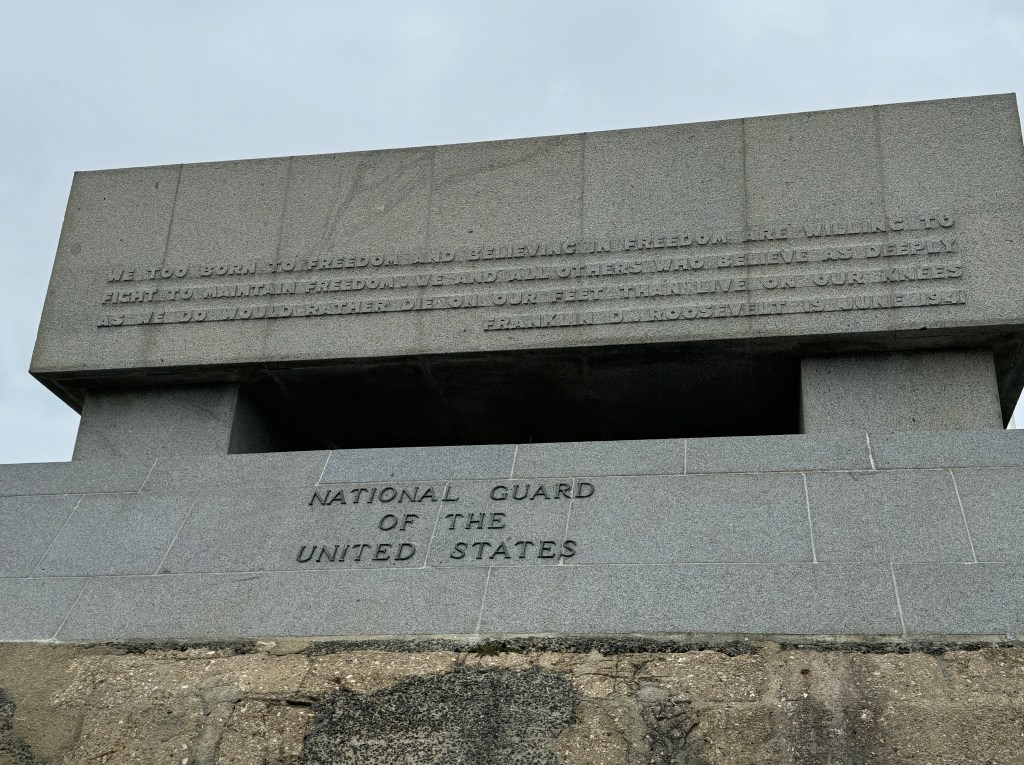

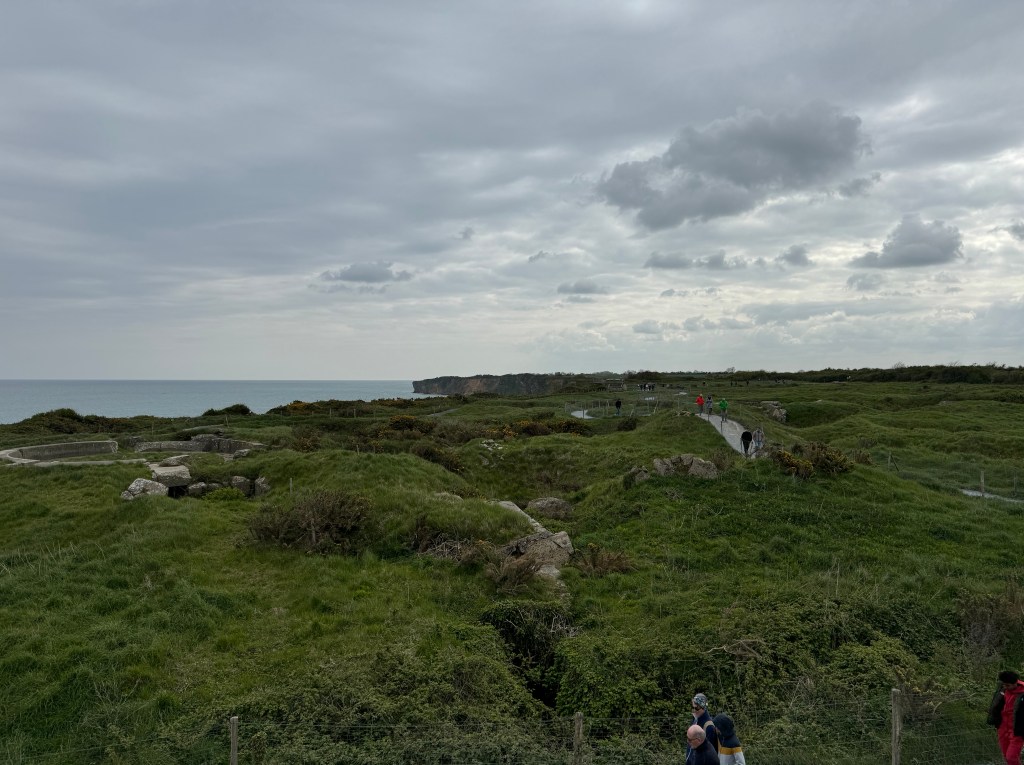

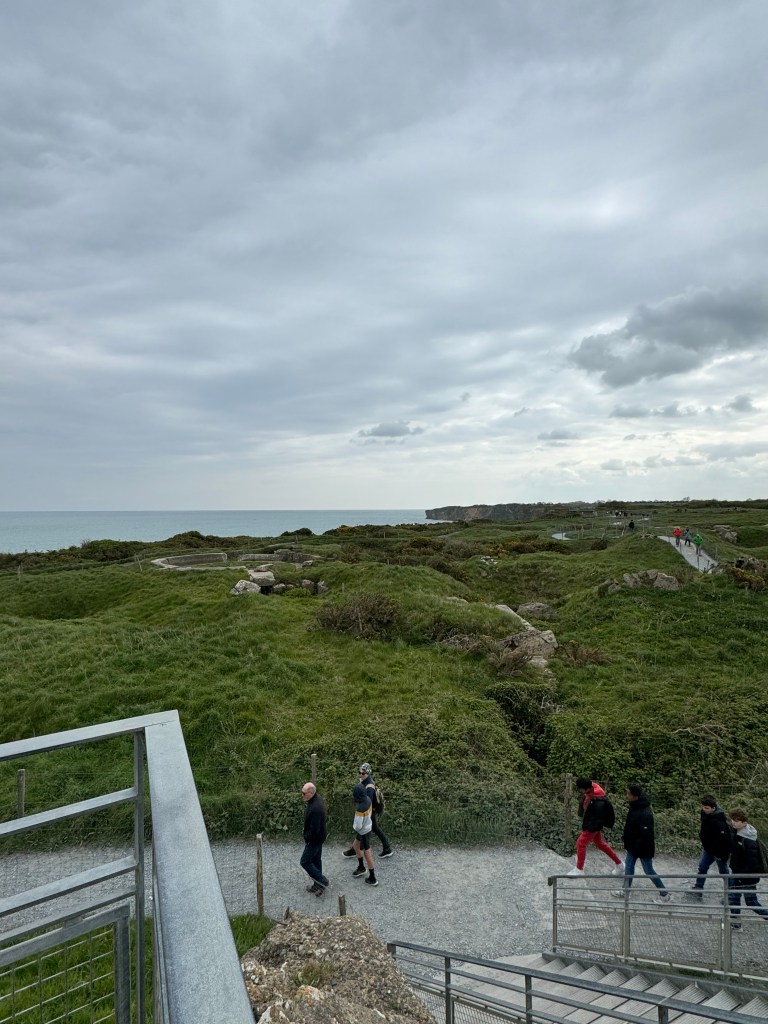
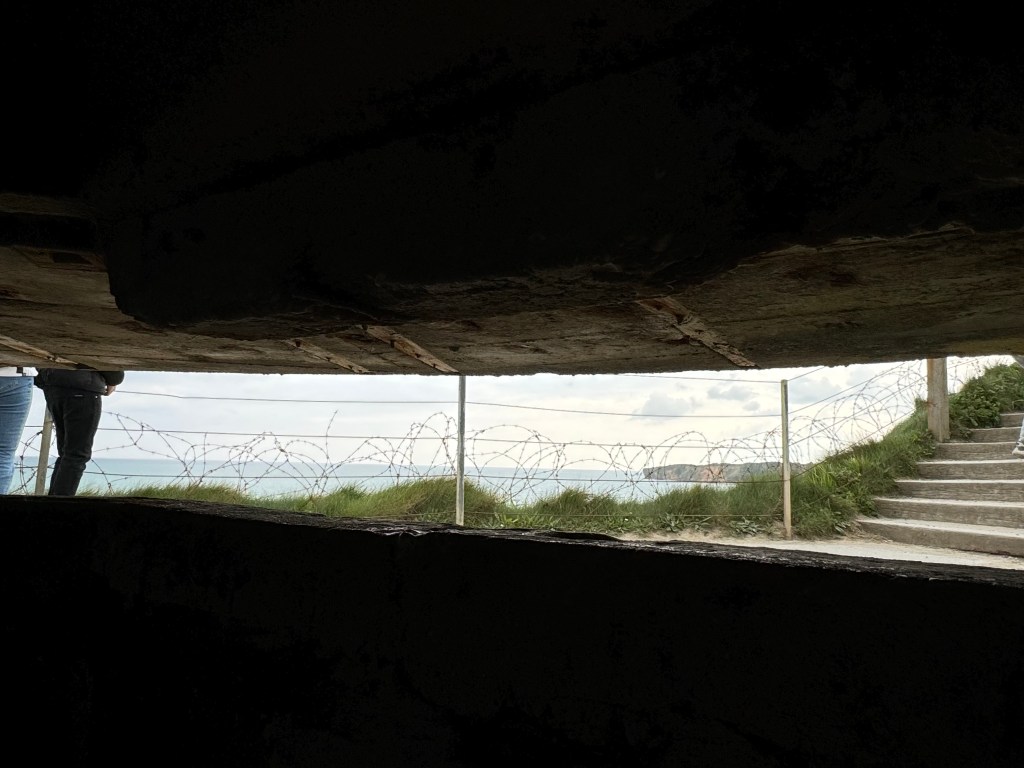
Throughout the tour, our guide kept showing us black and white pictures from the invasion, and I asked who took these photographs. During the invasion, there were many war correspondents that were right on the front line with soldiers, reporting their stories. Many war correspondents didn’t make it home, but that is where some of those incredible pictures came from.
Our tour guide said something that was intriguing to me – Normandy is like the “Disney World of World War II”. We definitely understood what he meant – between all of the beaches that were invaded during D-Day, as well as all of the random and unique museums in the area, there’s so much history in such a condensed space. It’s crazy to think that this somewhat still untouched part of the world witnessed something so horrific only 80 years ago. I was definitely glad we did this tour and learned more about the history of World War II, symbolizing all of the brave men and women who lost their lives to help ensure a free and democratic world.
Finally, around 1PM, our tour wrapped up and we were taken back to Bayeux. Another fun fact – Bayeux, unlike many of its neighboring towns and villages, was spared from any destruction during the war thanks to actions of both the Resistance and individuals. The Allies were informed that German soldiers had vacated Bayeux, thus there was no point in bombing the town and it remained unharmed. Luckily so, as this was a beautiful town! I wish we had more time to explore (motto of the trip), but we had to get to Paris, so, stopping at a boulangerie, an Italian deli store, and a bottle shop to pick up some Calvados (famous apple brandy from the region) and Pommeau (like Calvados, but less strong because it’s cut with apple cider), we were on our way to the City of Lights!

 Tiff & Jared's adventures
Leave a comment