
Bonjour my American friends! Huh huh huh (pretentious French laugh). Jared and I landed in Switzerland the other day and we hit the ground running. Geneva was kind of a bust – we flew into the airport around 5 and after *someone* forgetting their sweatshirt on the plane and *someone* going to the wrong car rental stand where we waited for thirty minutes (ended up getting a lower rate and FULL INSURANCE THOUGH for the price of the OG rental), we didn’t get to the city until late. We did some google research and after going to a restaurant for dinner and waiting a long time without getting our order in, we called it quits and dined on some quick French pizza near our AirBnB.
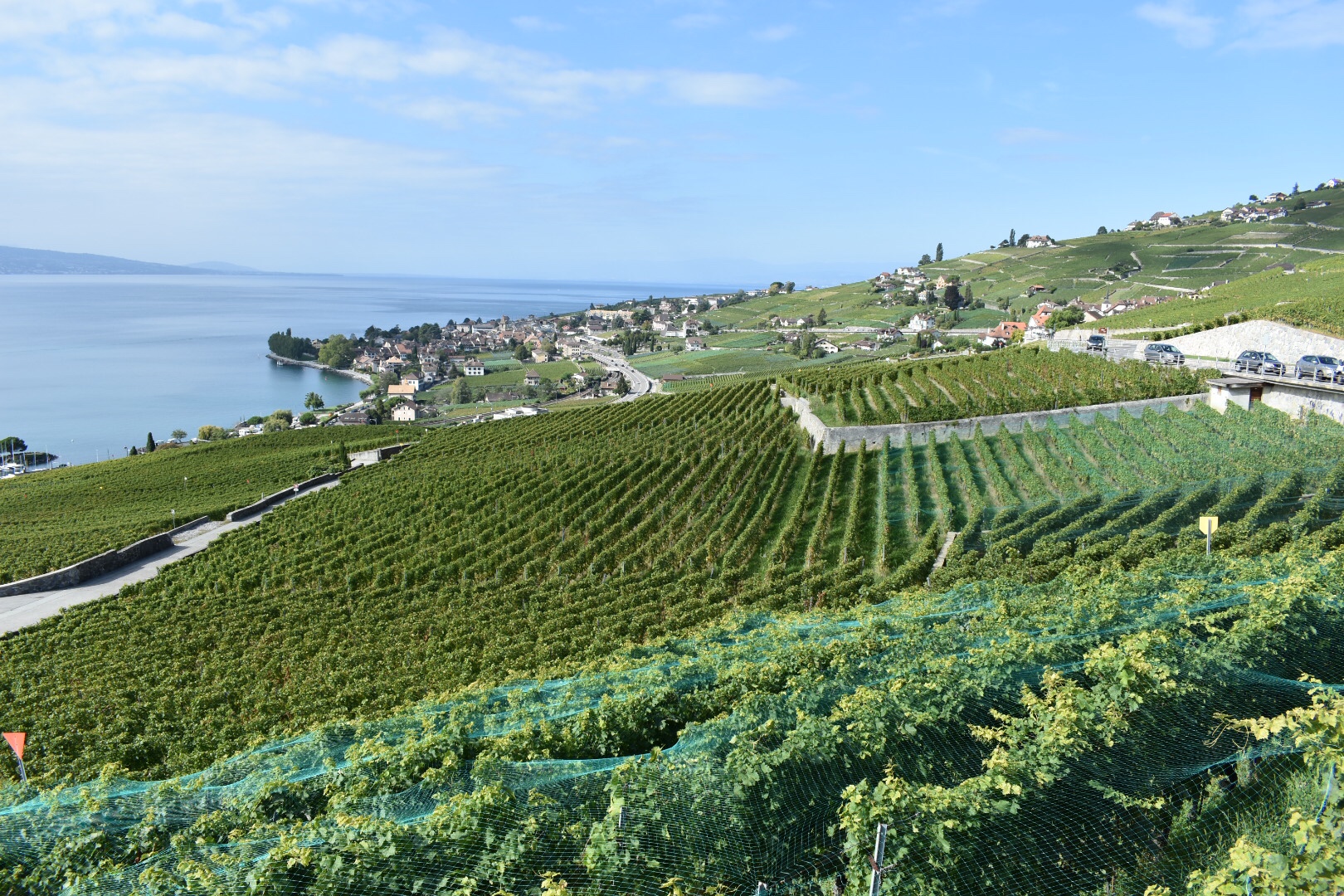
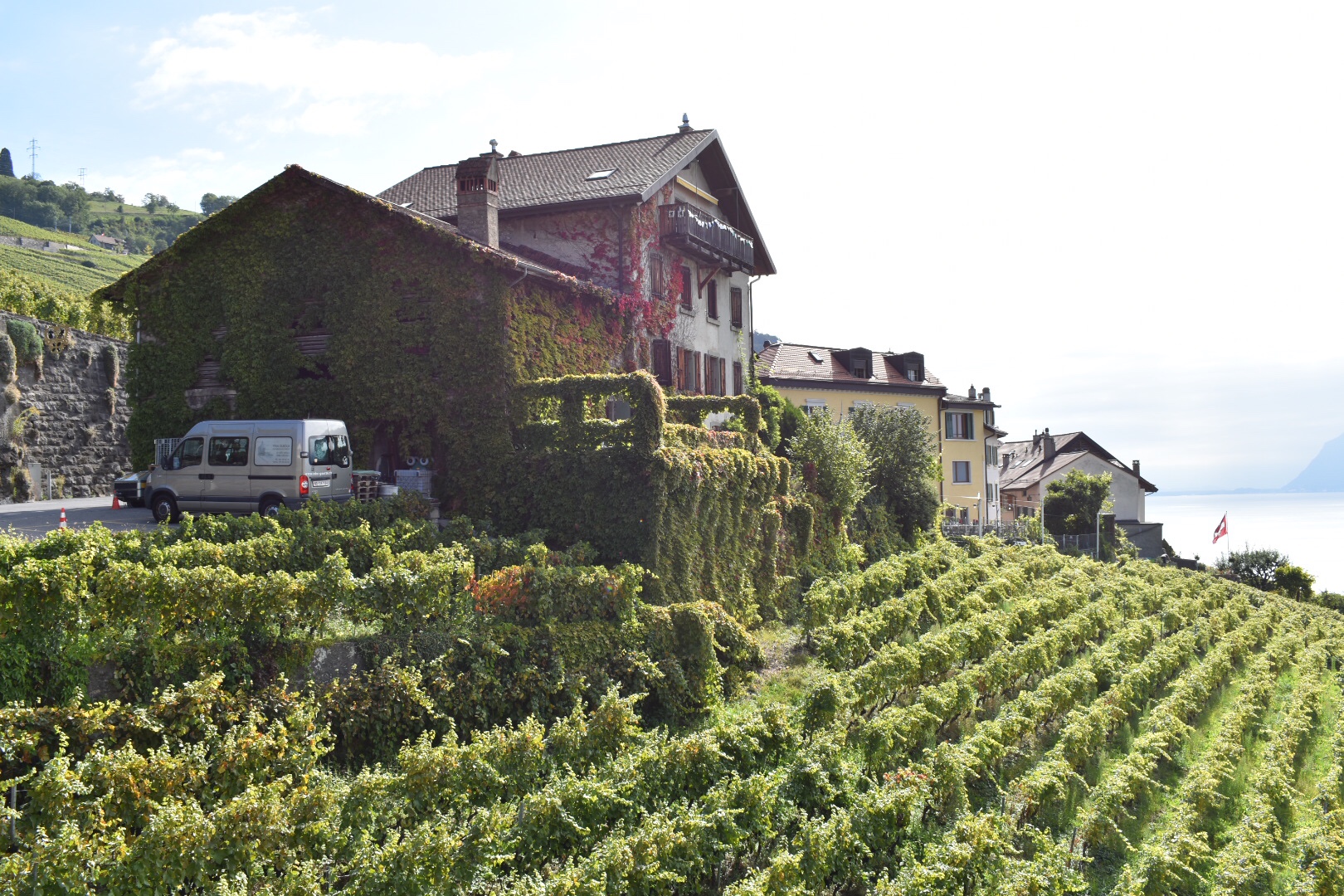
The next day (yesterday as I’m writing this), was a lot more productive. We set out from Geneva to begin our adventure into the foothills of the alps. When I was doing my research, I stumbled upon a region called Lausanne, a UNESCO region recognized for its wineries, both rich with flavor and with history. The wineries originated hundreds of years ago and were established my the monks of the area. Only recently (last couple hundred of years-ish), did ownership transfer to family wine makers. Unfortunately, we got there too early to do a tasting. The wineries’ grapes were lush and green, and sitting right next to mighty Lake Léman. We walked around a little before heading to Gruyères, but we definitely would love to go back one day and do the infamous wine trail.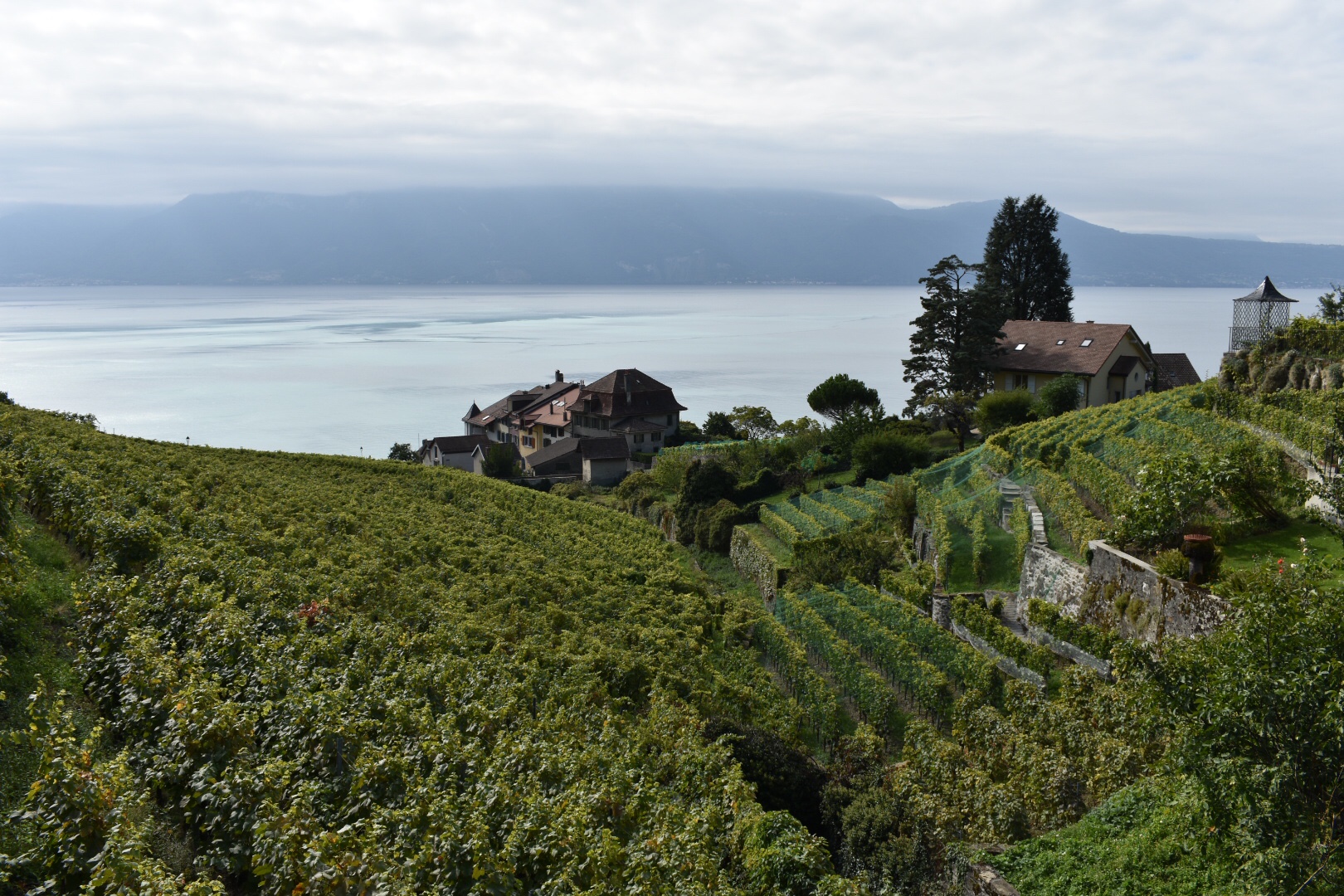




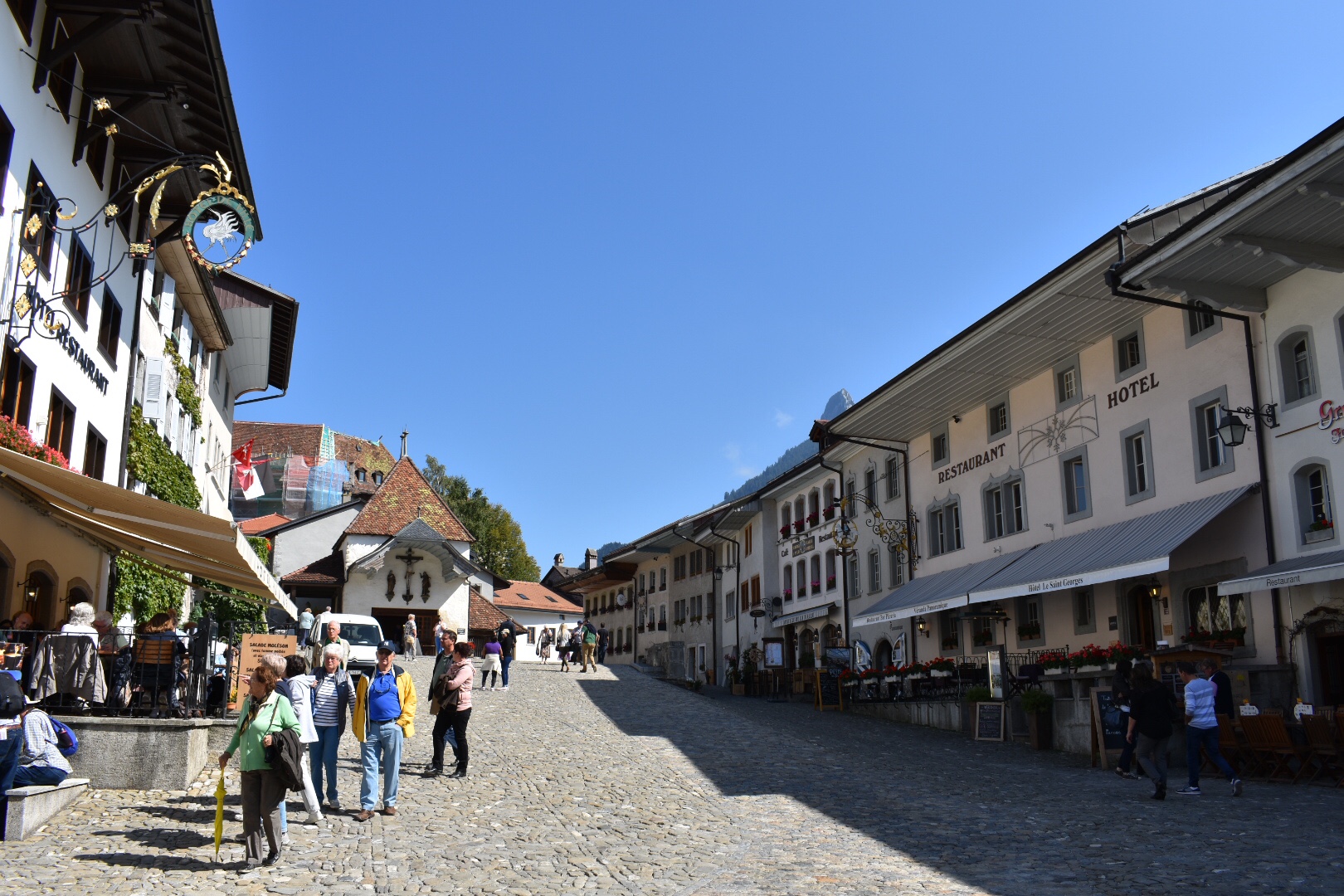
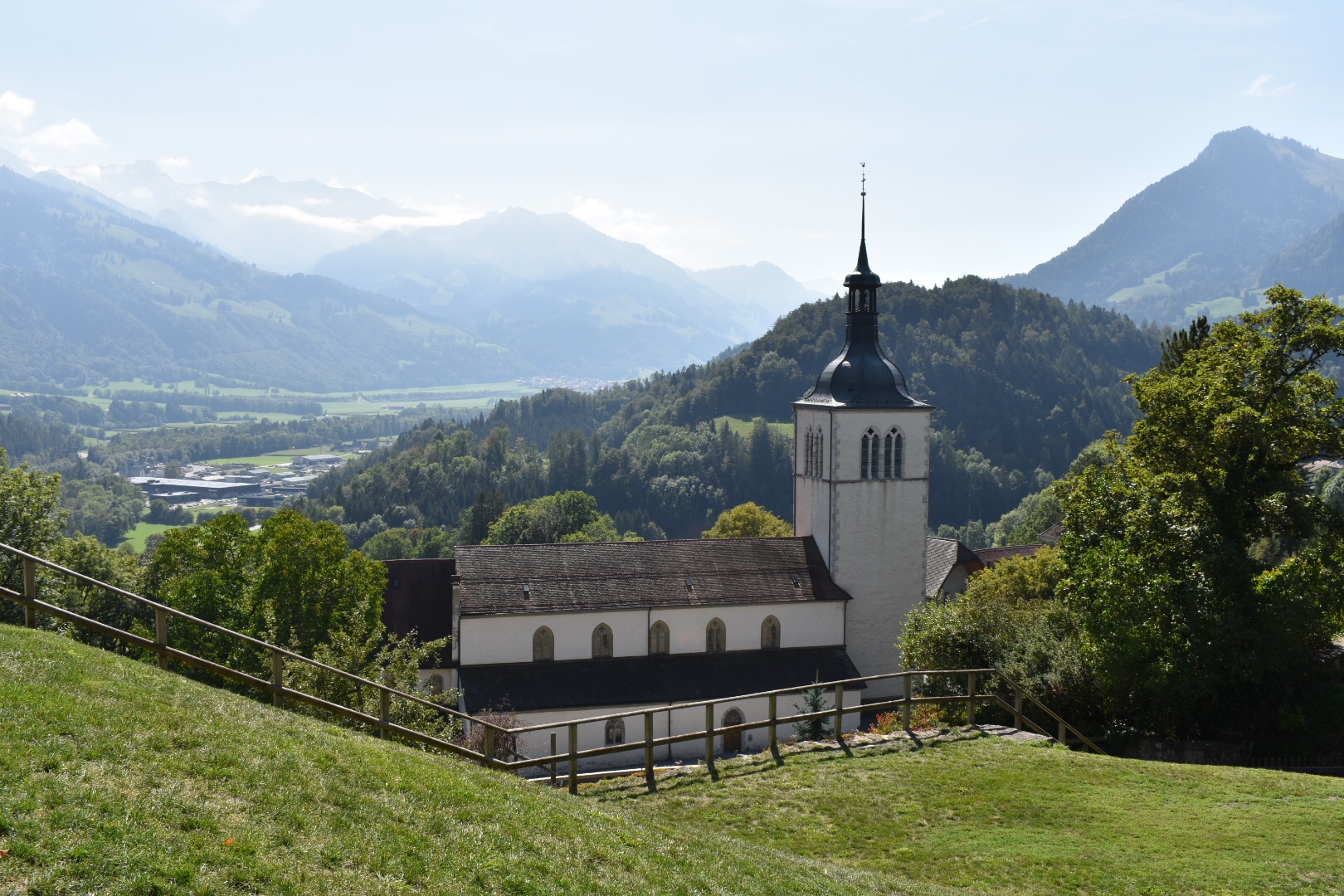
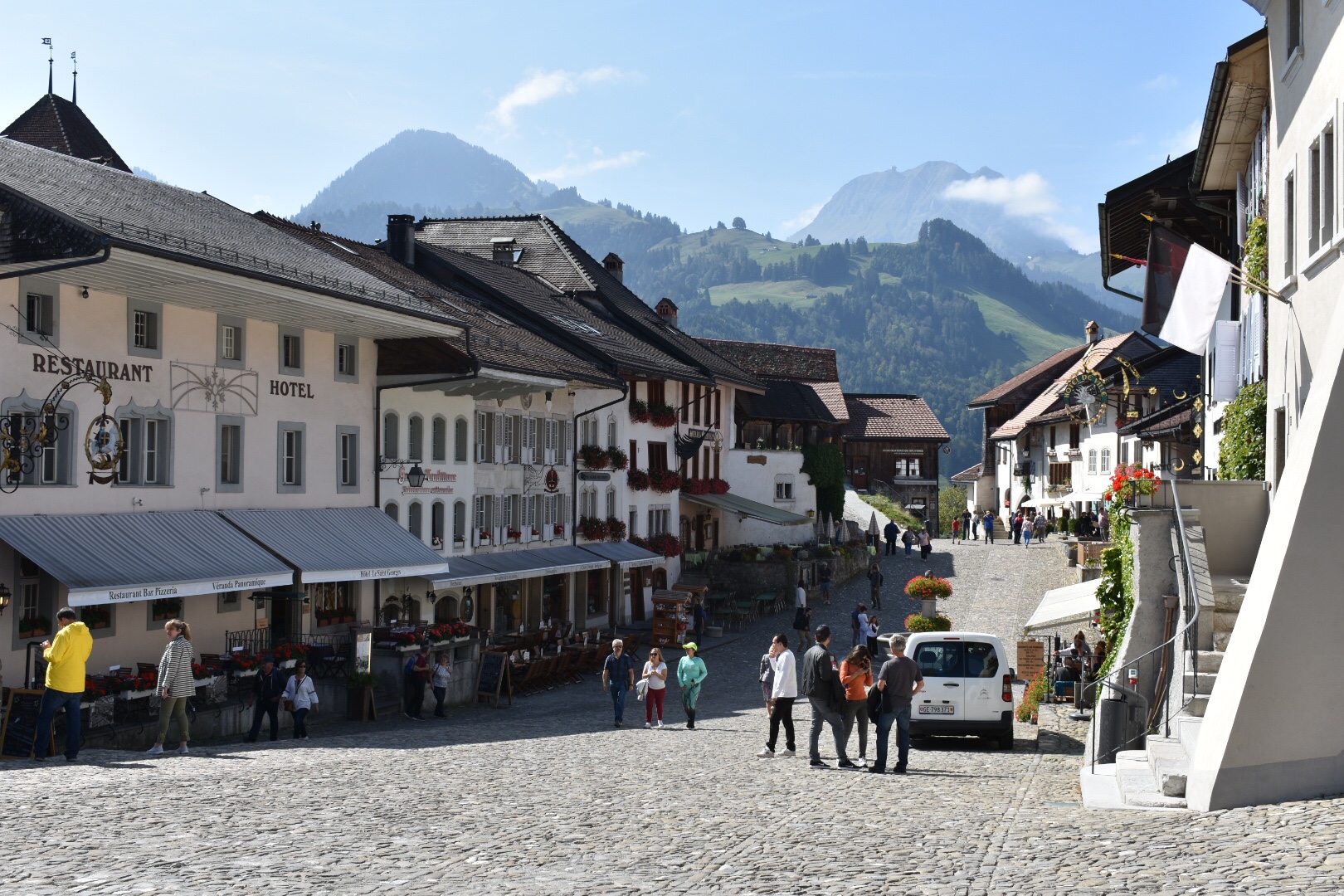
Onto Gruyères. It was a quaint, medieval town in the middle of the rolling hills of Switzerland. It’s famous for – you guessed it – Gruyere cheese. A little history about the town:
According to legend, Gruyères was founded in 400 B.C. by the Vandal King Gruerius. He saw a crane (“grue” in French) flying across the crimson evening sky and decided to build his town on that very spot. This is why the coat of arms of Gruyères depicts a crane on a red background. The symbol of the heraldic animal of the former Count of Gruyères has a significant presence throughout the region up to the present day.
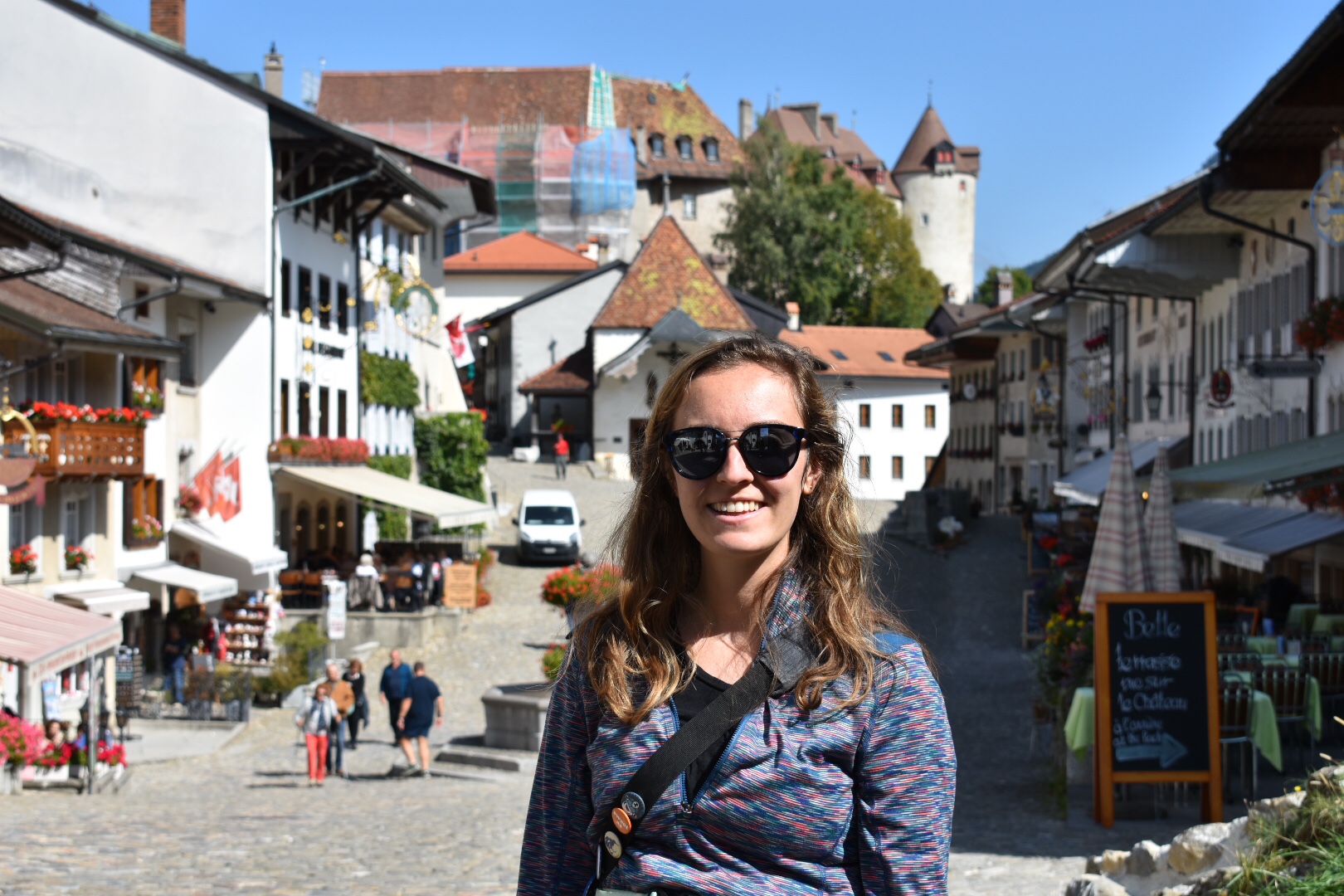
We spent a few hours roaming the cobblestone streets of the town, taking in the view of the castle and the many fondue restaurants and local shops. We breathed in the fresh air (with some bits of cow manure in there), before heading off to the third destination of the day: Bern, the capital.
Prior to researching for our trip, you probably could’ve convinced our ignorant American selves that Swiss was a language – non and nein. They mostly speak French on the southern ish half and mostly German on the northern ish half.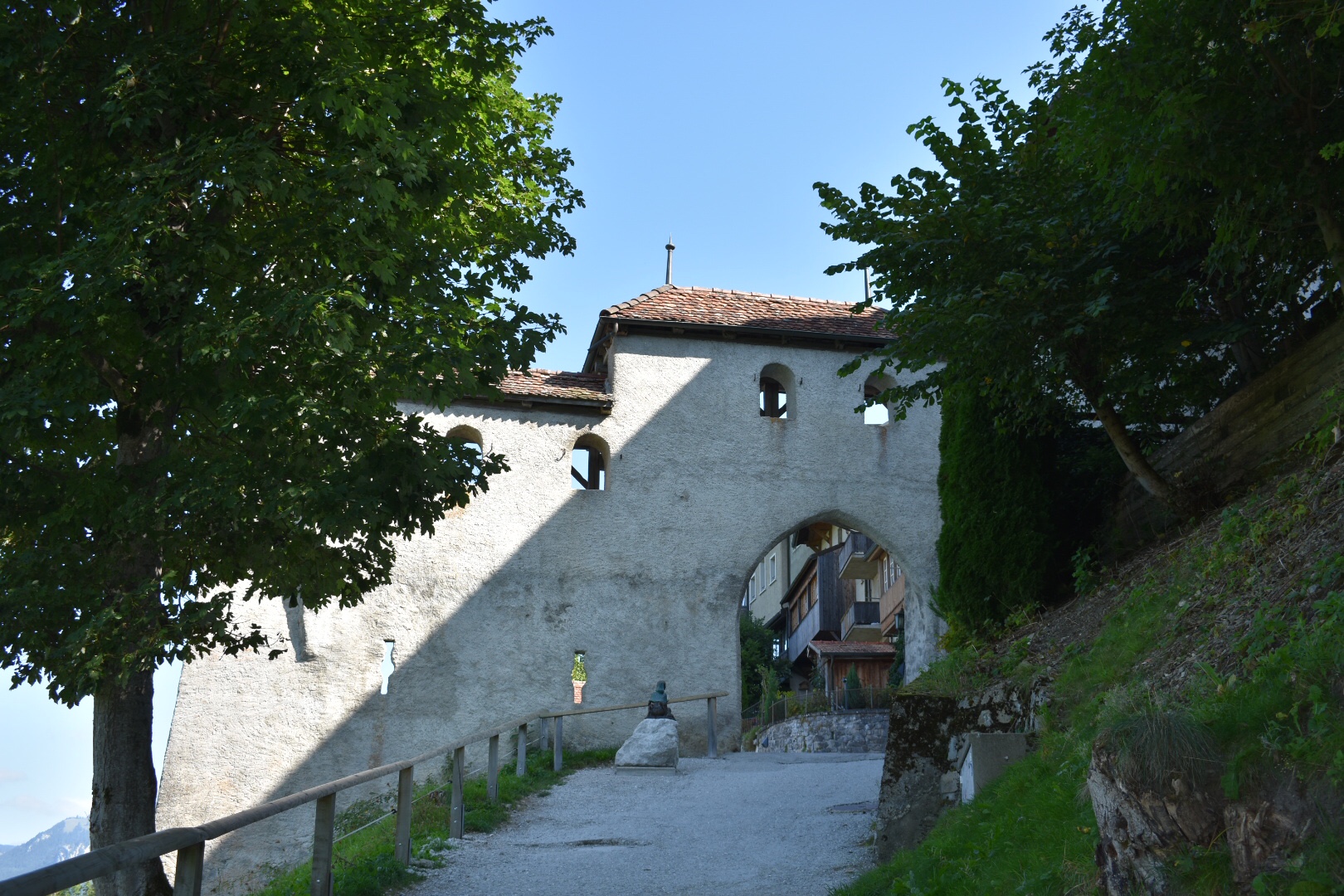


We arrived in Bern in the early afternoon, allowing a decent amount of time for site seeing. The first place we went to was Einstein’s house while he lived in the city. We learned a few interesting facts about Einstein: he divorced his first wife to marry his cousin, his Nobel prize wasn’t based on his theory of relativity but rather another revelation he had discovered, and he was asked to be the president of Israel at the end of his life. We toured his modest apartment and watched a timeline video of his life. What an accomplished man!
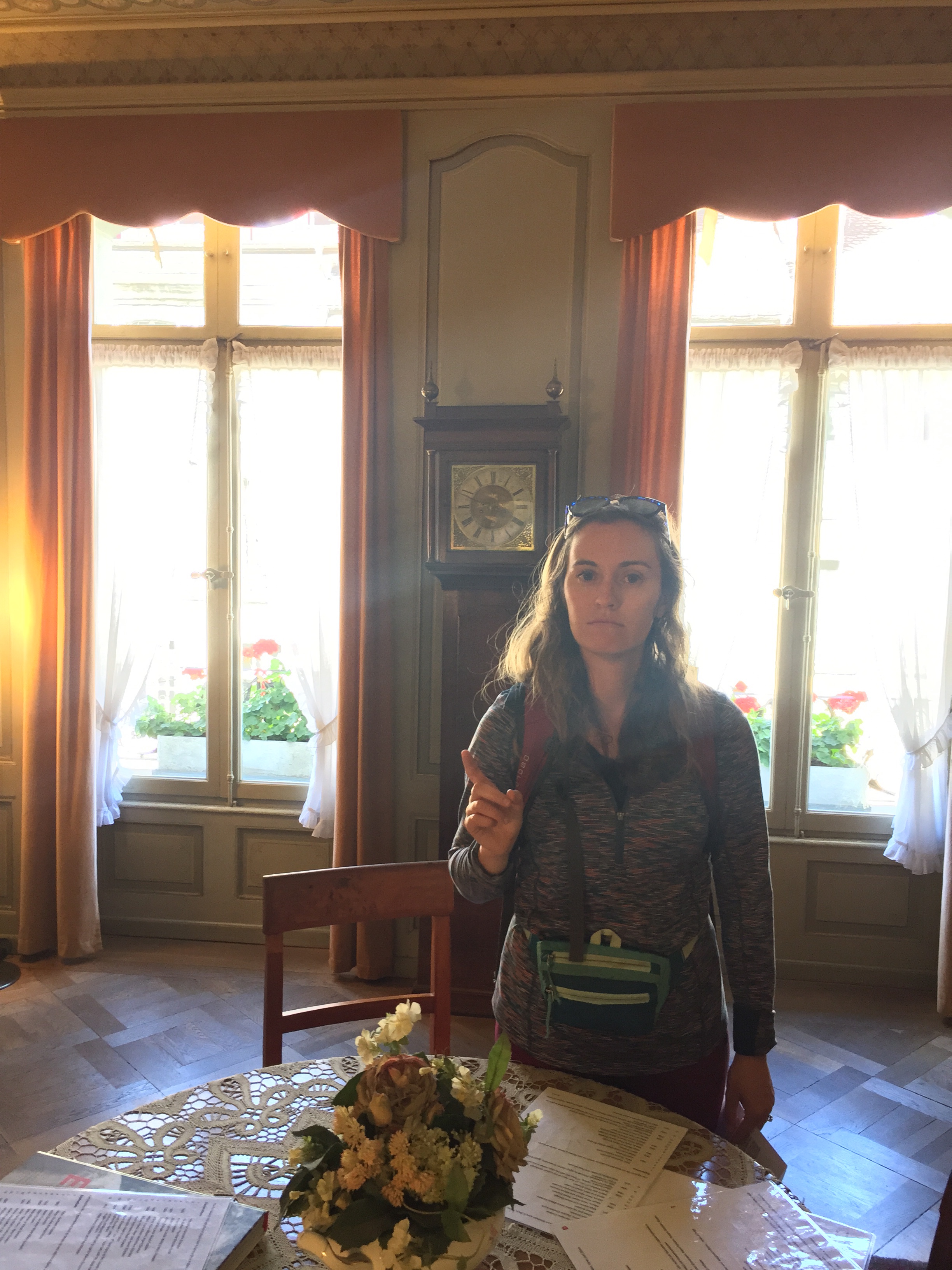
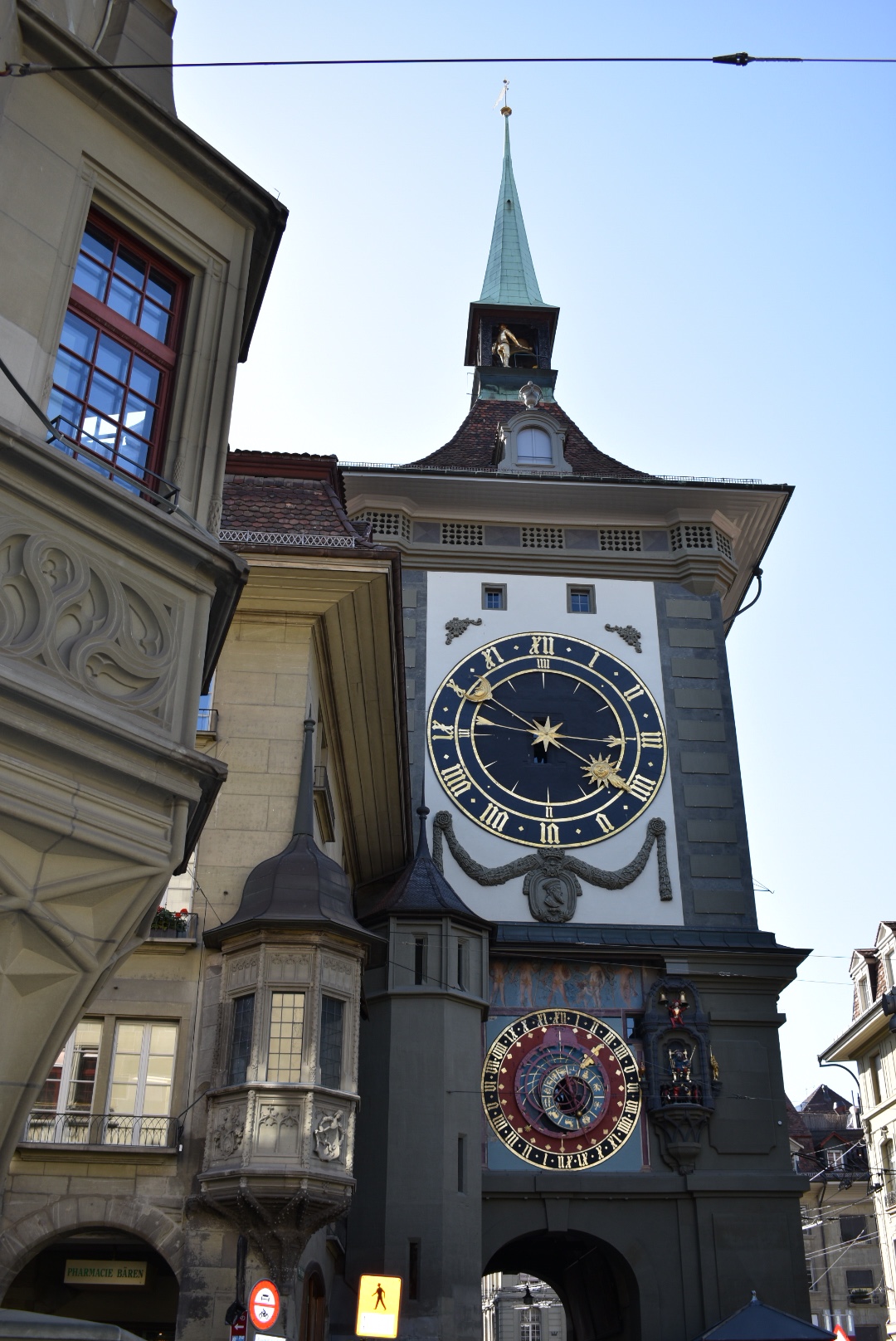
Continuing down the street, we stopped at the Clock Tower, or the Zytglogge. First it was a fortified guard tower, then a prison, a lookout and fire observation tower, and finally a clock tower. Over the centuries, this landmark has fulfilled different functions for the city of Bern but has always played a key role. Every hour, the clock strikes and puts on a show for the spectators. Jared and I were right there when it struck 5 o’clock but unfortunately didn’t know to watch for the amusing show the clock puts on each hour. Until next time. During our time in Bern, we also walked through the Old City. To quote a website that I googled:
The architectionic treasures of the UNESCO World Heritage Old Town enchant time and time again an because it was built on a little peninsula surrounded by the Aare river, all the sights are close by and easy to reach by tram, bus or on foot.
The alleys and 6 kilometers / 4 miles of arcades – typical features of the Bernese Old Town – form one of the longest covered shopping promenades of Europe. From international brands, to local boutiques or specialist shops – visitors will find certainly find what they are looking for when discovering the Bernese Old Town.
We felt like we were transported back in time. The streets were lined with cobblestone, and all of the windows were covered with beautiful flowers. There were a bunch of doors on the sidewalks, when opened, offered steps down into underground shops.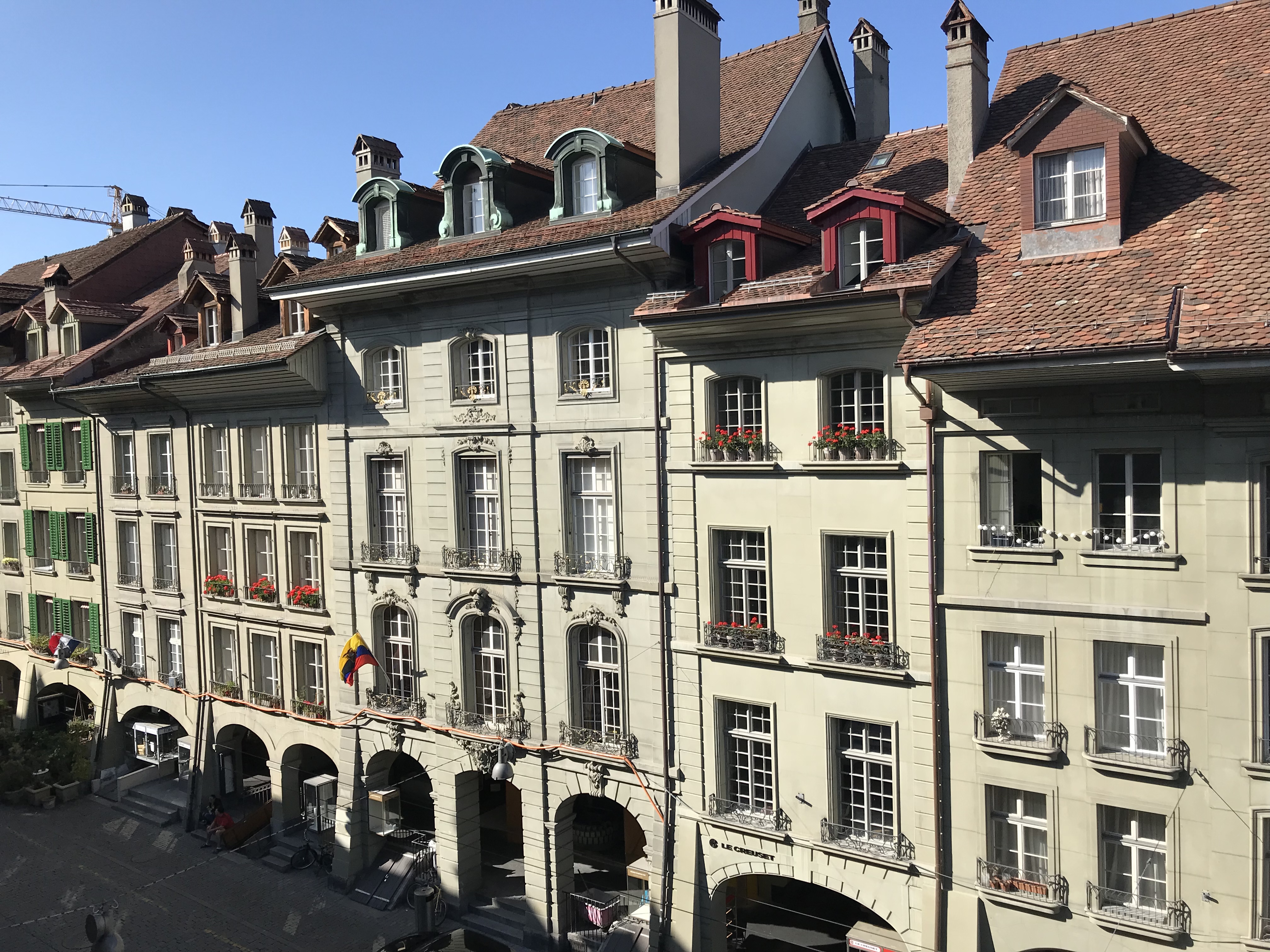

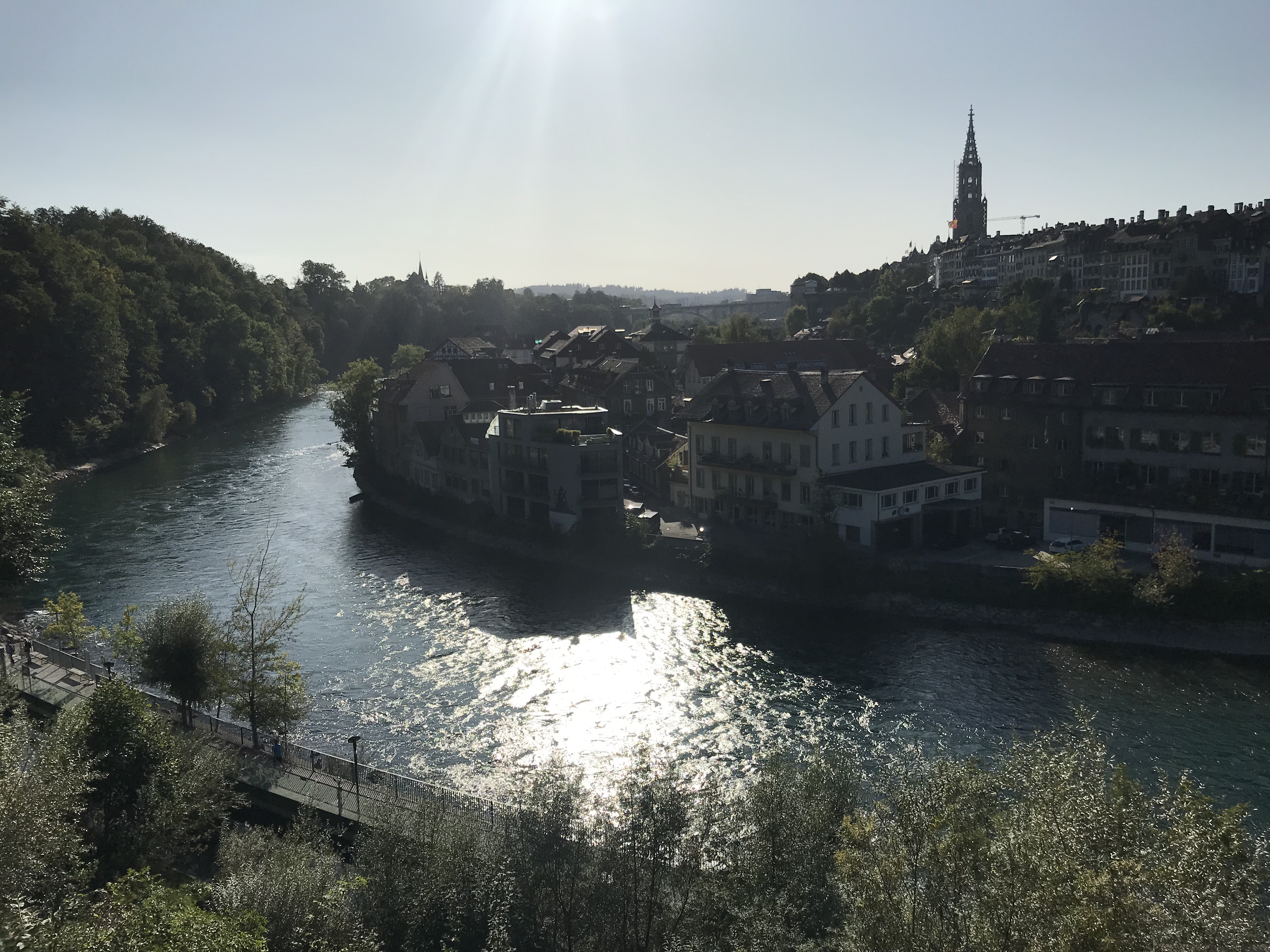
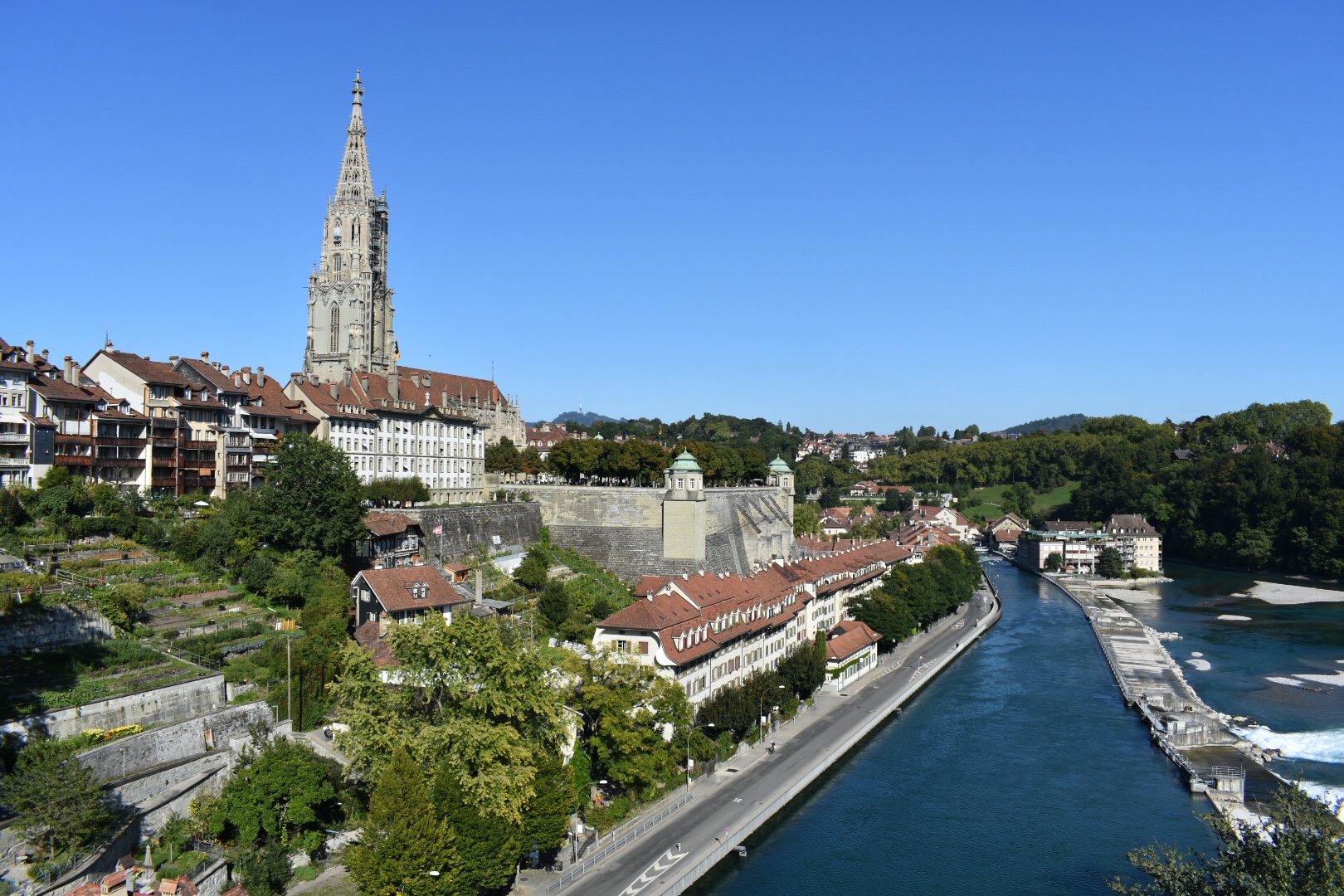
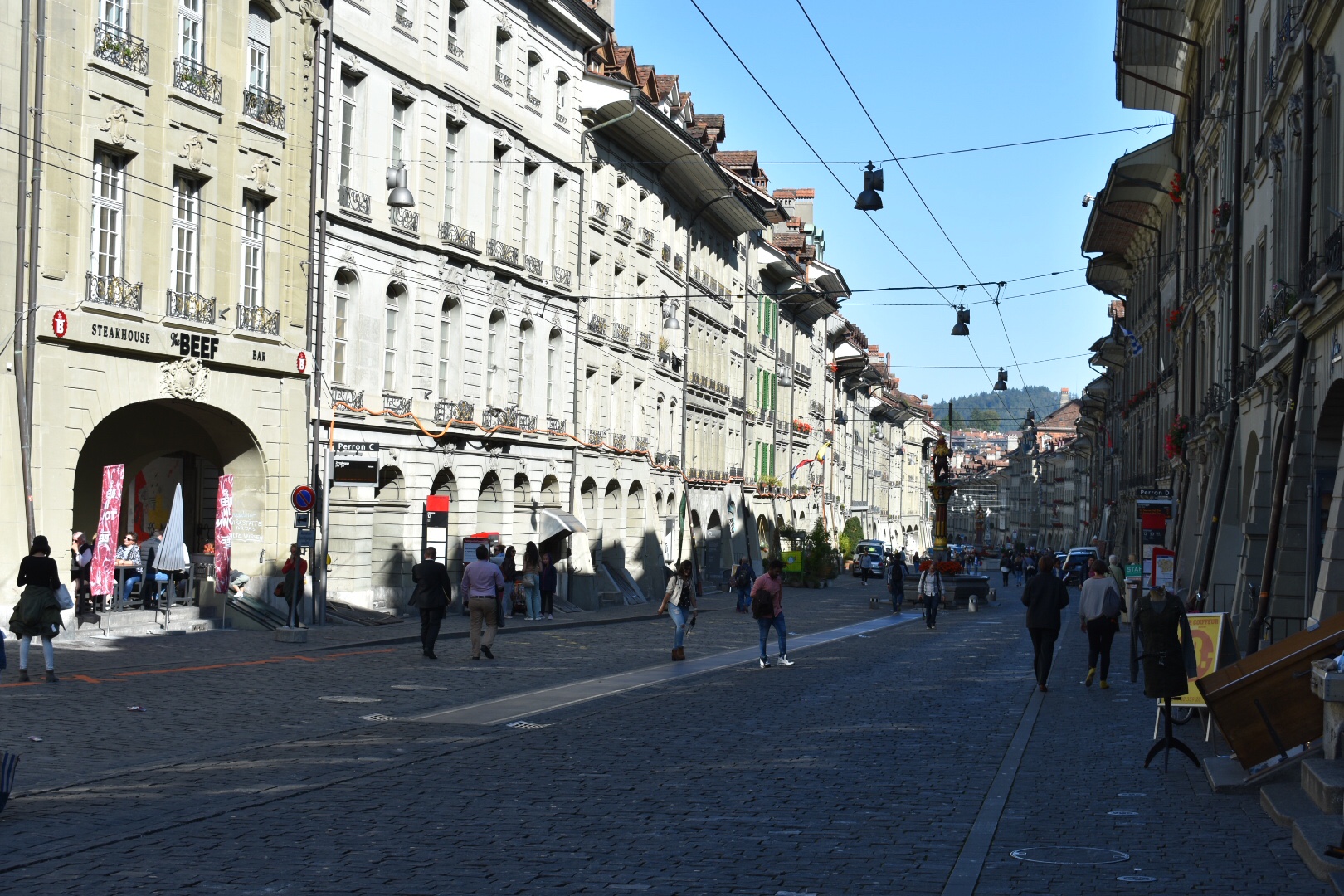

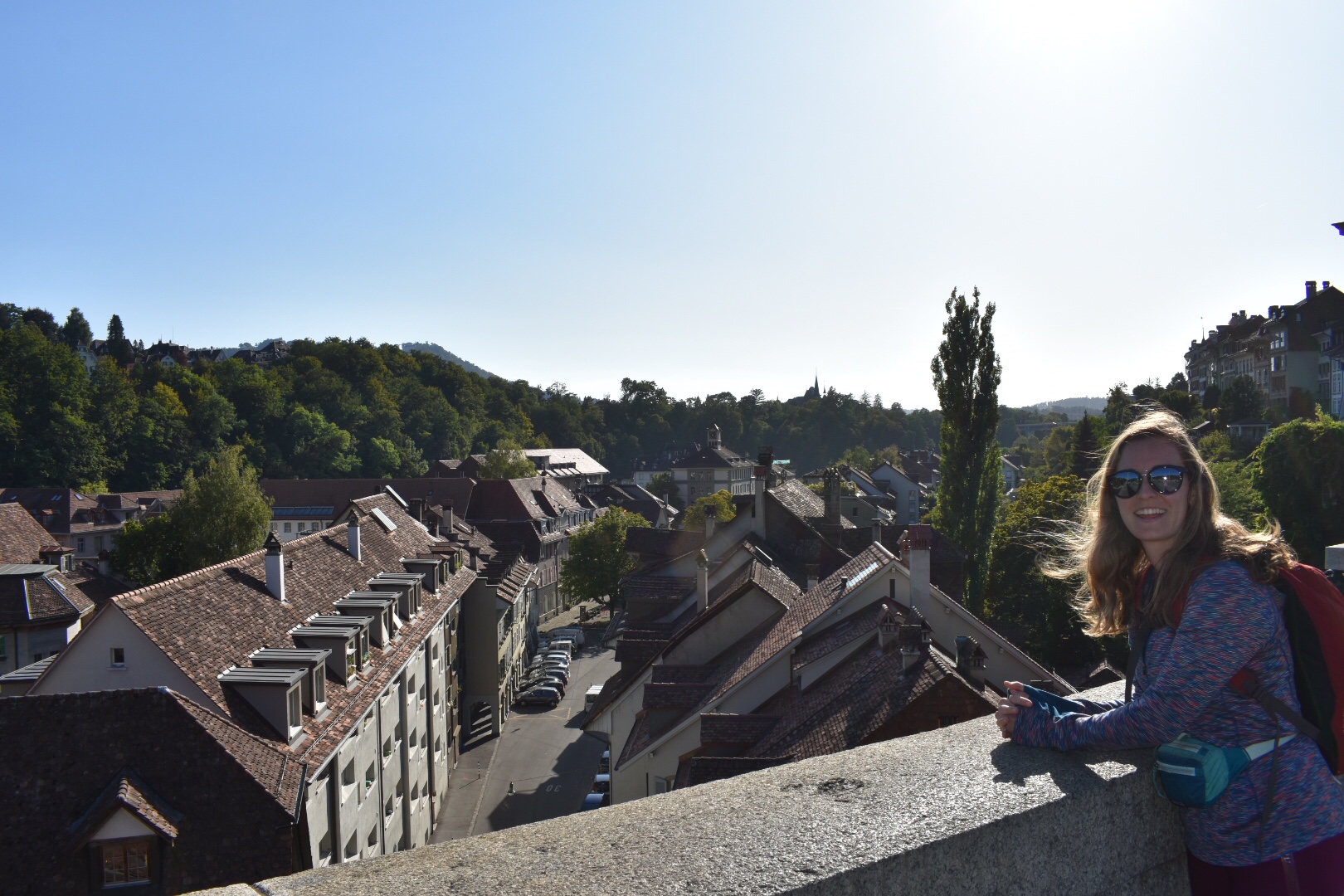


 We tramped around the city and it’s bridges, admiring the beautiful color of the Aare River. Eventually we found ourselves at the Bear Park. I’m not going to go into too much history, but bears and Bern have quite the history together.
Visitors to Bern can see bears everywhere; on the city’s coat of arms, on water fountains, rubbish bins and you can even catch a glimpse of live Pyrenean brown bears on the banks of the Aare River. Starting in 1857, the town began to keep bears in a town pit known as the Bärenplatz for viewers to gaze. Bern got its act together and finally realized a small pit was no place to keep such beautiful animals, and build a more natural reserve along the River for the bears to enjoy. When we went, there were three bears able to walk freely around a few acres right up against the Aare River; it’s still not perfect since they’re not in the wild, but a step in the right direction.
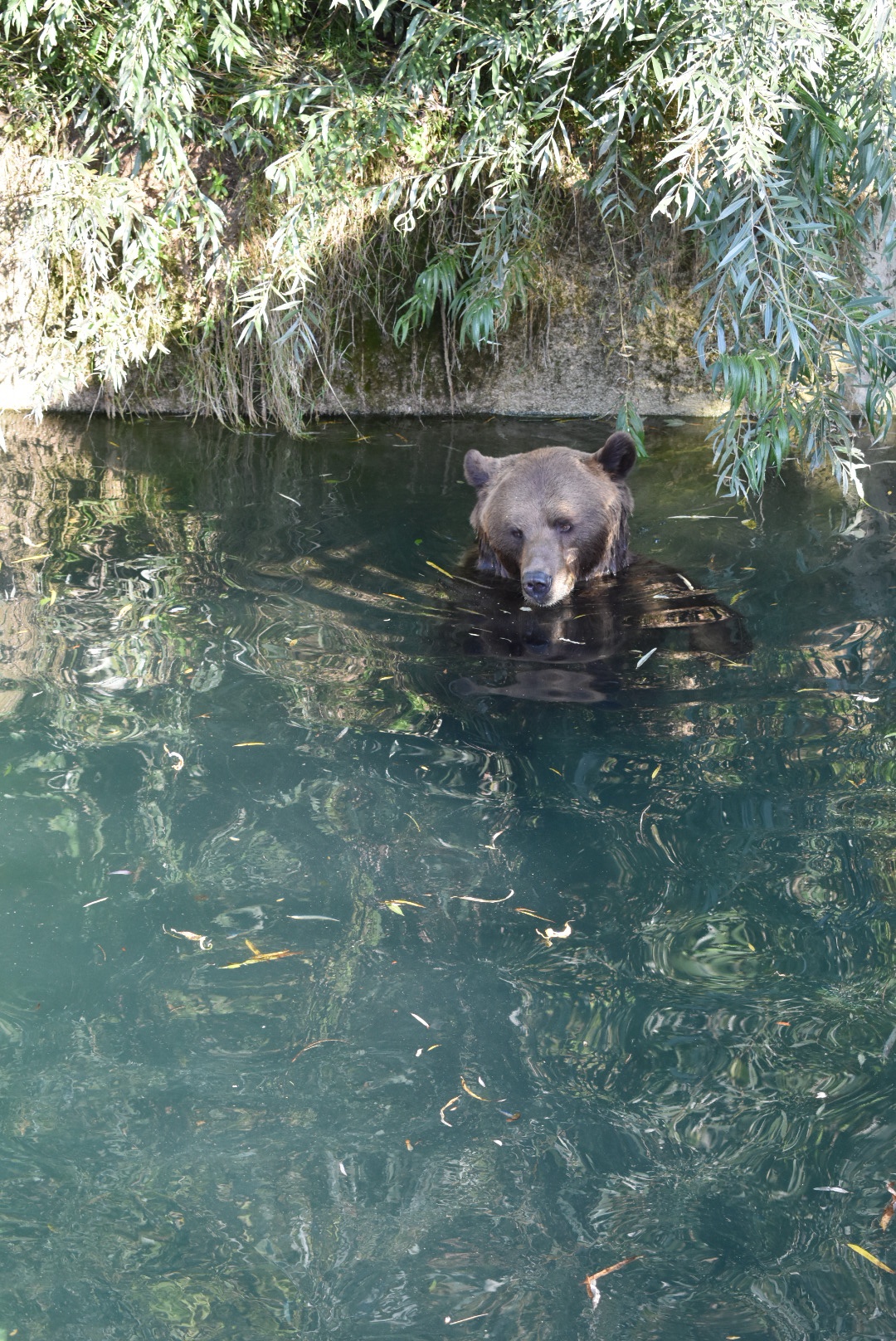


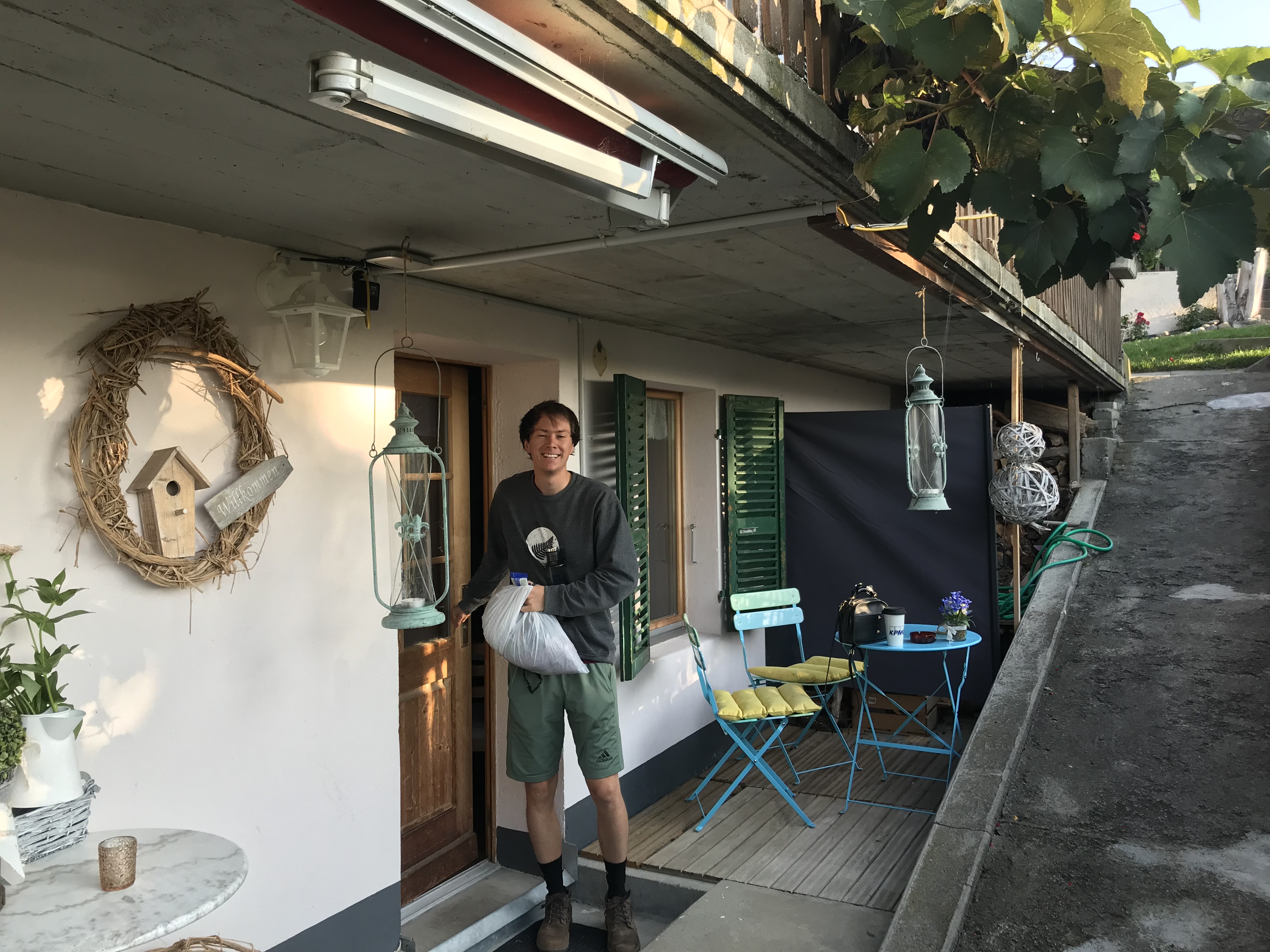
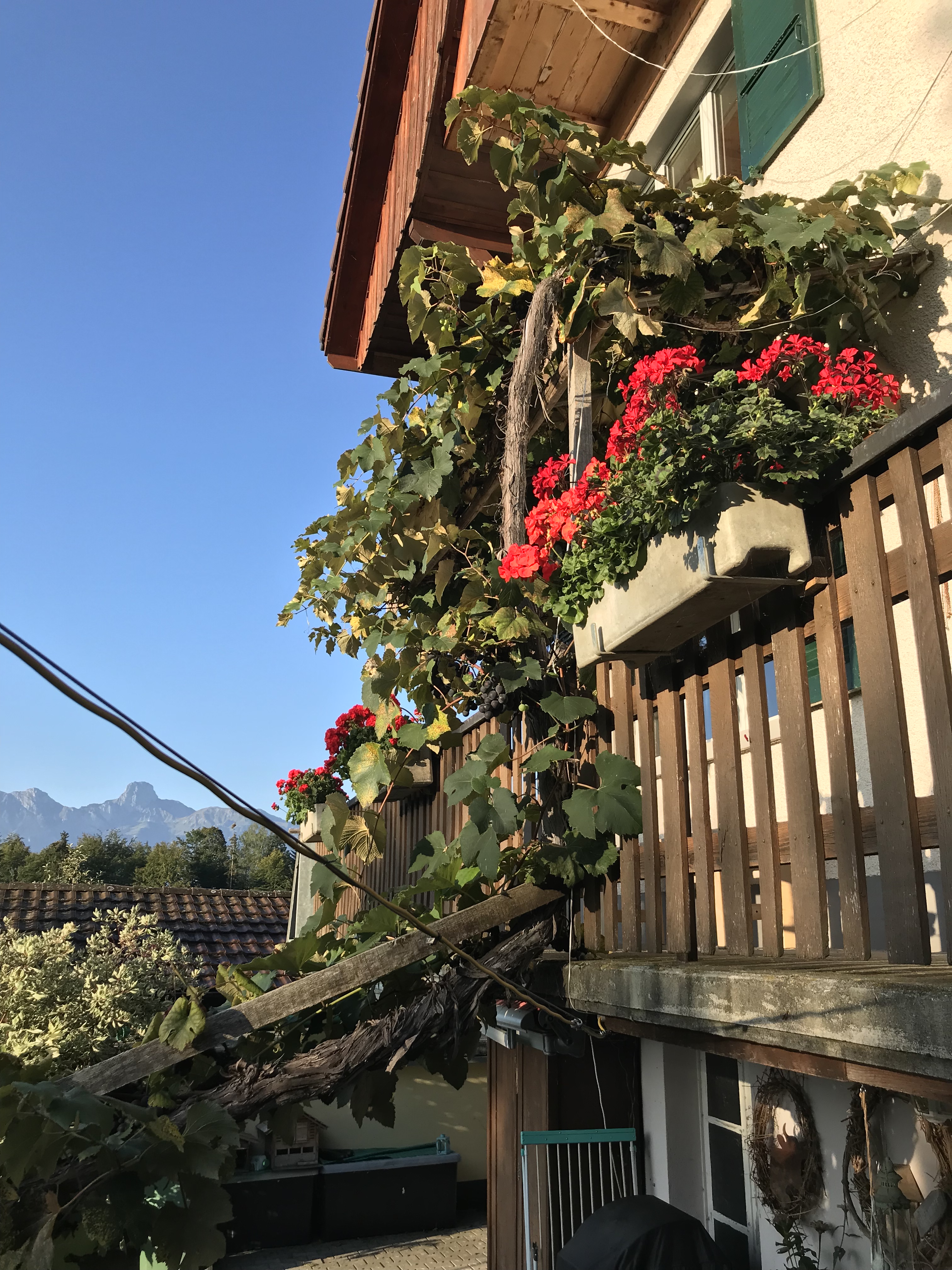
After exploring Bern on foot for a few hours, we made our way to the AirBnB in Thun, a small village about thirty minutes from the capital. I think this was the best AirBnB I’ve ever stayed in.
“Hallo! Können sie Englisch sprechen?” We asked as our host opened the door to her farmhouse. Two nights so far and neither host spoke any English – thanks Google Translate and Duolingo! Definitely a cultural immersion.
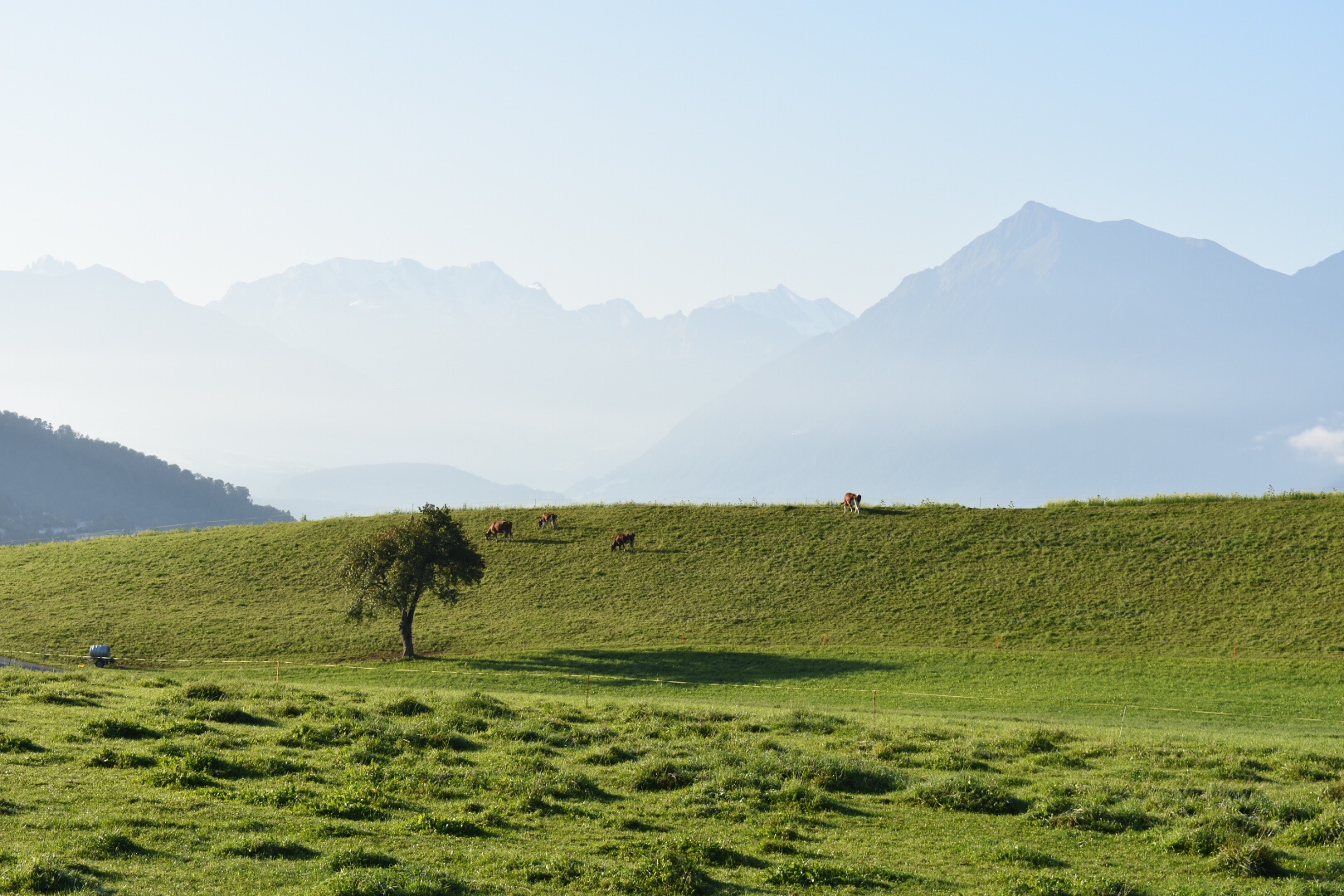
The AirBnB itself was a beautiful working farm with dairy cows, a very cute cattle dog and other farm animals. Nothing better than waking up to the sound of cowbells (what’re they good for besides keeping track of your cows??) and a view of the far-off Alps! 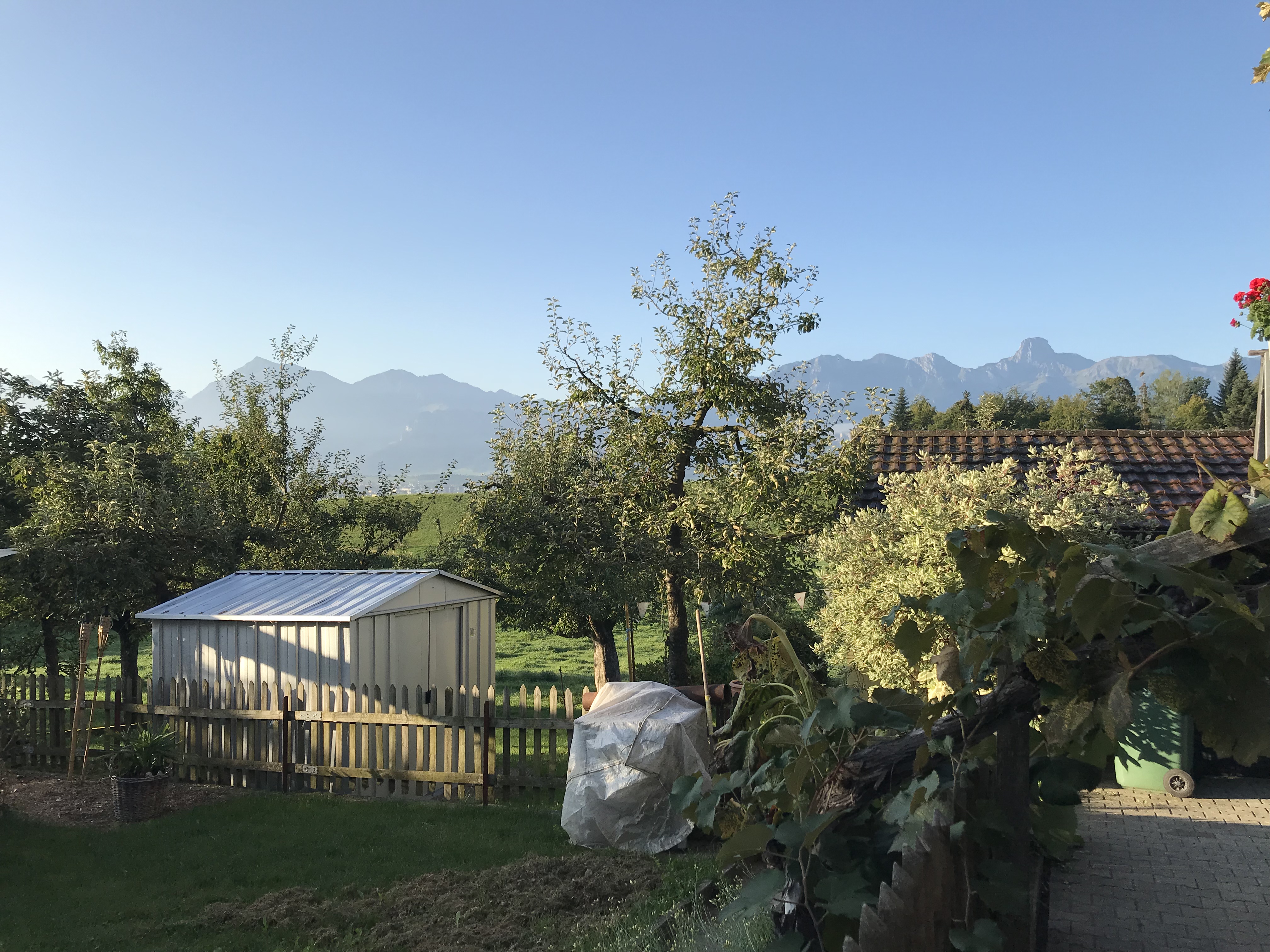



Overall, Bern was beautiful and we would definitely go back. Can’t imagine too much has changed in the past hundreds of years in the city. Now, onto Interlaken and the Swiss Alps!
 Tiff & Jared's adventures
Leave a comment